
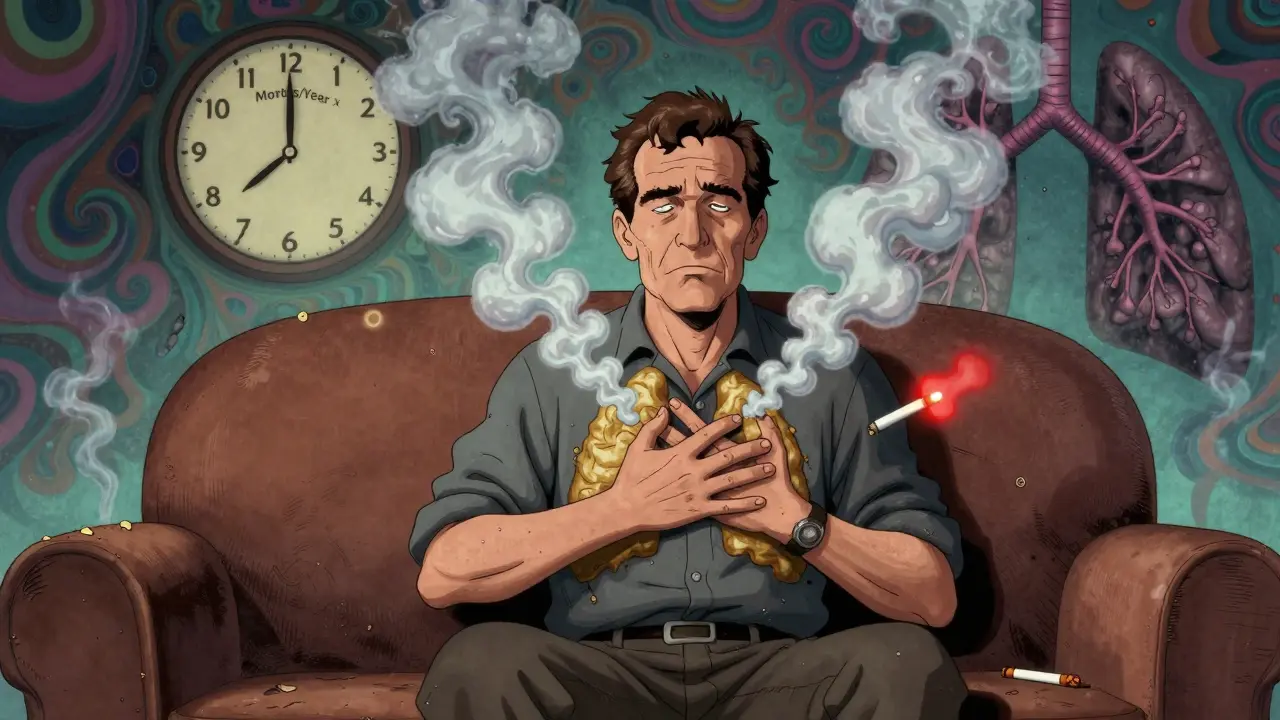
When you’ve been coughing up mucus every day for years - not just a few weeks, but three months out of each year for two years straight - you’re not dealing with a cold. You’re dealing with chronic bronchitis. It’s not something that goes away with rest or over-the-counter remedies. It’s a long-term lung condition that changes how you breathe, how you move, and how you live. And the hardest truth? The only thing that can truly slow it down is quitting smoking.
What Chronic Bronchitis Really Feels Like
Most people think of bronchitis as a temporary annoyance - a hacking cough after a virus. But chronic bronchitis is different. It’s not just a cough. It’s a constant, heavy feeling in your chest. You wake up with phlegm. You cough through meetings. You get winded walking to the mailbox. This isn’t normal aging. This is your airways inflamed, swollen, and flooded with mucus because of long-term damage.
According to the American Academy of Family Physicians, chronic bronchitis is one of the main forms of COPD - a disease that kills 40,000 Americans every year. It affects about 10 million people in the U.S. alone. And for half of those diagnosed, it will shorten their life by 10 years. The most common sign? A daily cough with sputum that lasts for at least three months each year, for two years in a row. That’s the clinical definition. But what it feels like is heavier: chest tightness, wheezing, fatigue, and breathlessness during simple tasks like dressing or climbing stairs.
Over 75% of people with chronic bronchitis in the U.S. have smoked - or used to. Even if you quit decades ago, the damage can linger. But it’s not just smokers. Long-term exposure to air pollution, chemical fumes at work, or even secondhand smoke can also trigger it. And in rare cases, a genetic condition called alpha-1 antitrypsin deficiency plays a role. But for most, it starts with cigarettes.
Why Smoking Is the Root Cause - And Why Quitting Changes Everything
Let’s be clear: there is no cure for chronic bronchitis. No pill, no inhaler, no surgery will reverse the scarring in your lungs. But there is one thing that does more than any treatment - quitting smoking.
A 30-year study tracked smokers over time. The results were stark: 42% of current smokers developed chronic bronchitis. Among former smokers? 26%. And those who never smoked? Only 22%. That means quitting cuts your risk nearly in half. But it gets better. Once you stop, your lungs begin to heal. The mucus production slows. The cough eases. And the rate of lung function decline drops by 60% compared to those who keep smoking.
Dr. John Walsh of the COPD Foundation says quitting is the single most effective intervention. And it’s not just theory. A 2022 survey from the COPD Foundation found that 68% of people who got structured help quitting - like counseling, nicotine patches, or prescription meds - successfully stopped smoking. Without support? Only 22% made it. That’s a threefold difference.
It’s not about willpower. It’s about support. And that’s where real change happens.
What Treatments Actually Help - And What Doesn’t
Doctors have tools to manage symptoms, but they’re not magic. Bronchodilators - inhalers that open your airways - give short-term relief. Short-acting ones work in 15 minutes and last 4 to 6 hours. Long-acting versions help all day. But they don’t fix the underlying damage. They just make breathing easier.
Inhaled steroids? They reduce inflammation, but they come with serious risks. Long-term use increases your chance of osteoporosis by 23%, high blood pressure by 18%, and diabetes by 15%. One patient on PatientsLikeMe shared that despite taking calcium supplements, she broke two vertebrae in 18 months from steroid use. That’s not worth it unless your symptoms are severe.
Antibiotics? Only if you have an infection. Chronic bronchitis itself isn’t caused by bacteria. But if you catch a cold or flu, your lungs can’t fight back. That’s when infections flare up - and antibiotics like amoxicillin-clavulanate help 82% of the time.
And then there’s the debate over mucolytics - drugs meant to thin mucus. The American College of Chest Physicians says they don’t help much. But the Global Initiative for Chronic Obstructive Lung Disease (GOLD) recommends them. Studies show they reduce flare-ups by about one episode every three years and improve quality of life scores by 12%. It’s not a game-changer, but for some, it’s enough.
What works better than any drug? Pulmonary rehabilitation.
Pulmonary Rehab: The Most Underused Tool
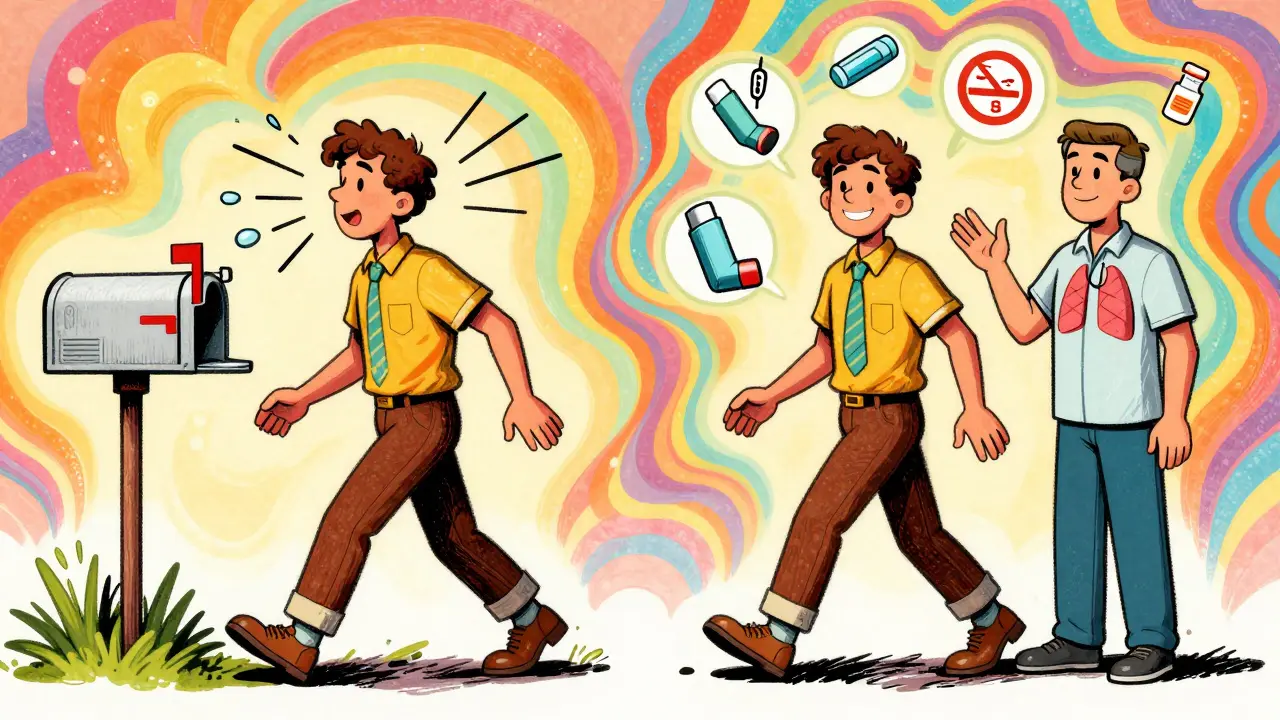
Pulmonary rehab isn’t a luxury. It’s a lifeline. It’s a program that combines exercise training, breathing techniques, nutrition advice, and education. You learn how to breathe efficiently. You build strength without overexerting. You get support from others who get it.
One study showed patients improved their 6-minute walk distance by 78 meters on average. That might not sound like much, but if you used to stop after 50 feet, now you can walk to the end of your driveway without gasping. Hospital visits drop by 37%.
And the numbers don’t lie. On the American Lung Association’s online community, 78% of people who finished rehab said their daily life improved. Sixty-three percent could do things they hadn’t done in years - like gardening, playing with grandkids, or walking the dog.
Dr. MeiLan Han from the University of Michigan says rehab should be standard care for everyone with chronic bronchitis - no matter how mild. And she’s right. It’s not expensive. It’s not experimental. It’s just not widely offered.
Why Most People Fail - And How to Succeed
Here’s the ugly part: most people don’t stick with treatment.
Only 54% take their inhalers as prescribed. Nearly two-thirds of those on oxygen therapy don’t use it the full 15+ hours a day. And 41% quit home exercise programs within three months.
Why? Because it’s hard. Inhalers are tricky. There are at least 10 different types, and each requires a different technique. The average person needs 4.7 sessions with a respiratory therapist to get it right. Many never do.
And quitting smoking? It’s harder than most realize. But when you combine support systems - counseling, nicotine replacement, and medication like varenicline - success rates jump from 7% (trying alone) to 45% at six months.
The best results? When smoking cessation and pulmonary rehab happen together. One Cochrane Review found that combined programs had a 52% quit rate after a year. Standalone cessation? Only 28%.
You don’t have to do this alone. Talk to your doctor. Ask for a referral to a rehab program. Ask about smoking cessation support. It’s covered by Medicare and most private insurers.
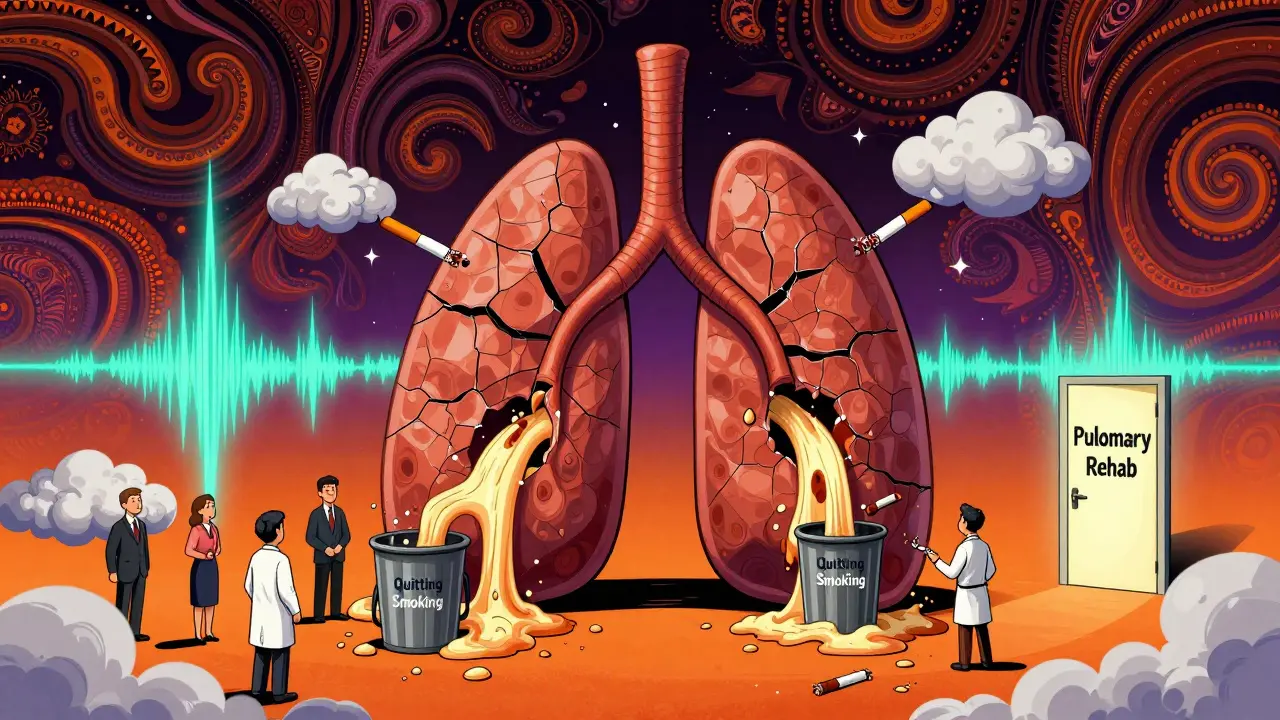
The Bigger Picture: Cost, Innovation, and Hope
The global market for COPD treatments is growing fast - hitting $18.7 billion by 2028. But the real cost isn’t in pills. It’s in hospital stays, lost work, and early deaths. Medicare spends over $3,250 more per year per person with COPD than without it. That adds up to $32 billion annually.
New drugs are coming. Ensifentrine, approved in 2023, improved walking distance by 42 meters and cut flare-ups by 15%. Researchers are now studying gene variants that could predict who benefits most from mucus-thinning drugs. AI-powered inhaler sensors are being tested to track usage and send reminders.
But none of this matters if you keep smoking.
The American Thoracic Society says every $1 spent on smoking cessation programs saves $5.60 in healthcare costs within two years. That’s the highest return on investment in all of chronic disease care.
What You Can Do Today
If you have chronic bronchitis:
- Stop smoking - now. No delay. No "I’ll quit later."
- Ask your doctor for a referral to pulmonary rehabilitation.
- Get your flu shot every year - it cuts flare-ups by 42%.
- Ask about pneumococcal vaccine - it protects against pneumonia.
- Don’t skip inhaler training. Practice with a nurse or respiratory therapist until you get it right.
- Join a support group. You’re not alone. Others have walked this path.
If you’re still smoking and have a chronic cough with mucus - this isn’t just a bad habit. It’s a warning. Your lungs are telling you something. Listen.
You can’t undo the damage. But you can stop it from getting worse. And that’s the only real chance you have.
Is chronic bronchitis the same as COPD?
Chronic bronchitis is one type of COPD - chronic obstructive pulmonary disease. COPD includes two main conditions: chronic bronchitis (inflamed airways with excess mucus) and emphysema (damaged air sacs). Many people have both. But chronic bronchitis is defined by a daily cough with sputum lasting three months a year for two years. It’s a clinical diagnosis, not just a label.
Can you get better from chronic bronchitis?
There’s no cure, but you can absolutely improve. Quitting smoking stops the damage. Pulmonary rehab helps you breathe better and move more easily. Vaccines prevent dangerous flare-ups. With the right steps, many people live full lives - even with the condition. It’s not about reversing damage; it’s about preventing more.
How long does it take to see results after quitting smoking?
Within weeks, your cough and shortness of breath start to improve. After 3 to 6 months, lung function begins to stabilize. The real change happens over years. People who quit see their rate of lung decline slow by 60% compared to those who keep smoking. The sooner you quit, the more you protect what’s left.
Are inhalers the only treatment I need?
No. Inhalers help manage symptoms, but they don’t stop progression. The most effective treatment plan includes quitting smoking, pulmonary rehab, vaccines, and sometimes oxygen therapy. Medications are tools - not solutions. Lifestyle changes are the foundation.
I quit smoking years ago. Can I still benefit from pulmonary rehab?
Absolutely. Even if you quit decades ago, your lungs still struggle with mucus and stiffness. Pulmonary rehab improves breathing efficiency, builds strength, and reduces flare-ups - no matter how long you’ve had the condition. It’s never too late to start.
Does Medicare cover pulmonary rehab and smoking cessation?
Yes. Medicare covers pulmonary rehabilitation if you have COPD or chronic bronchitis and your doctor certifies it’s medically necessary. It also covers smoking cessation counseling - up to eight sessions per year - and approved medications like nicotine patches, gum, or varenicline. Check with your provider to confirm coverage details.
Releted Post

Andy Dargon
Hi, I'm Aiden Lockhart, a pharmaceutical expert with a passion for writing about medications and diseases. With years of experience in the pharmaceutical industry, I enjoy sharing my knowledge with others to help them make informed decisions about their health. I love researching new developments in medication and staying up-to-date with the latest advancements in disease treatment. As a writer, I strive to provide accurate, comprehensive information to my readers and contribute to raising awareness about various health conditions.
I’ve been coughing for 8 years. Quit smoking at 42. Took 18 months for the phlegm to stop. Now I can climb stairs without feeling like I’m running a marathon. 🙌 You’re not broken. Your lungs just need a break.
The pharmaceutical-industrial complex has no incentive to promote smoking cessation. The real cure is not mentioned in this article: government-mandated air filtration systems in all public buildings. The CDC has been suppressing data on particulate-induced bronchial hyperreactivity since 1998. This is a manufactured epidemic.
You people are so naive. Smoking? That’s the *least* of your problems. The real cause? Fluoride in the water. Glyphosate in the bread. 5G towers vibrating your alveoli. And now they want you to believe that quitting cigarettes will fix it? HA! They’re keeping you docile with nicotine patches while they poison your tap water. Wake up. The lung damage? It’s not from tar-it’s from the chemtrails they’ve been spraying since 2003.
I’ve been a respiratory therapist for 14 years. I’ve seen hundreds of patients. The ones who quit? They breathe easier. The ones who didn’t? They end up on oxygen at 52. This isn’t a moral issue. It’s biology. And yeah, rehab works. It’s not magic-it’s muscle memory. You retrain your body. It’s not about willpower. It’s about practice. And yeah, I know it’s hard. I’ve cried with patients who tried five times. But the 6th time? That’s the one that sticks.
How utterly predictable. A 3000-word essay on the obvious. Of course smoking causes bronchitis. But let’s not pretend this is a medical breakthrough. The real tragedy? People who are told to "just quit" without access to counseling, or a living wage, or clean air. This article reads like a corporate wellness pamphlet written by someone who’s never met a person who actually smokes.
I quit smoking after 22 years and started rehab two months later. I didn’t think it’d do anything. I was wrong. First week? Still coughing. Second week? Still tired. Third week? I walked to the end of my street without stopping. Fourth week? I played with my niece without gasping. I didn’t even know I’d been holding my breath for 20 years. Rehab taught me how to breathe again. Not like a gym workout. Not like yoga. Like your body remembers how to do something it forgot. I’m 58. I’m not cured. But I’m alive. And I’m not alone. There are groups. There are nurses. There are people who get it. You don’t have to do this alone. I promise.
The body remembers what the mind forgets. Damage is not erased but its progression can be arrested. The act of quitting is not a moment but a return to alignment. The lungs do not need punishment. They need silence. And time. And perhaps above all, the absence of the belief that they are beyond repair. There is no miracle. Only patience. And the quiet courage to stop.
Bro. I get it. Quit smoking. But let’s be real. Most people who smoke are poor. They’re stressed. They’re lonely. And now you want them to quit without offering housing, therapy, or a job? This whole thing feels like rich people telling the poor to just stop being sick. Meanwhile, the same people who wrote this article probably don’t even know what a pack of cigarettes costs in rural Alabama. Chill.
In my village in Kerala, we have elders who smoked bidi for 60 years. They still walk to the temple. They still cook. They still laugh. They never saw a pulmonologist. They drank ginger tea. They breathed the sea air. They never gave up tea. But they never stopped working. Maybe the West over-medicalizes this. Maybe the answer is not just quitting-but living, anyway. Not with fear. Not with pills. But with dignity.
I find it deeply offensive that this article frames smoking as the primary villain. What about the coal plants? The industrial emissions? The fact that 80% of air pollution comes from corporate sources? This narrative is designed to shift blame onto individuals while protecting the real polluters. You are being manipulated. Your lung damage is not your fault. It is the consequence of systemic negligence. And now they want you to feel guilty for not being perfect enough to survive it.