
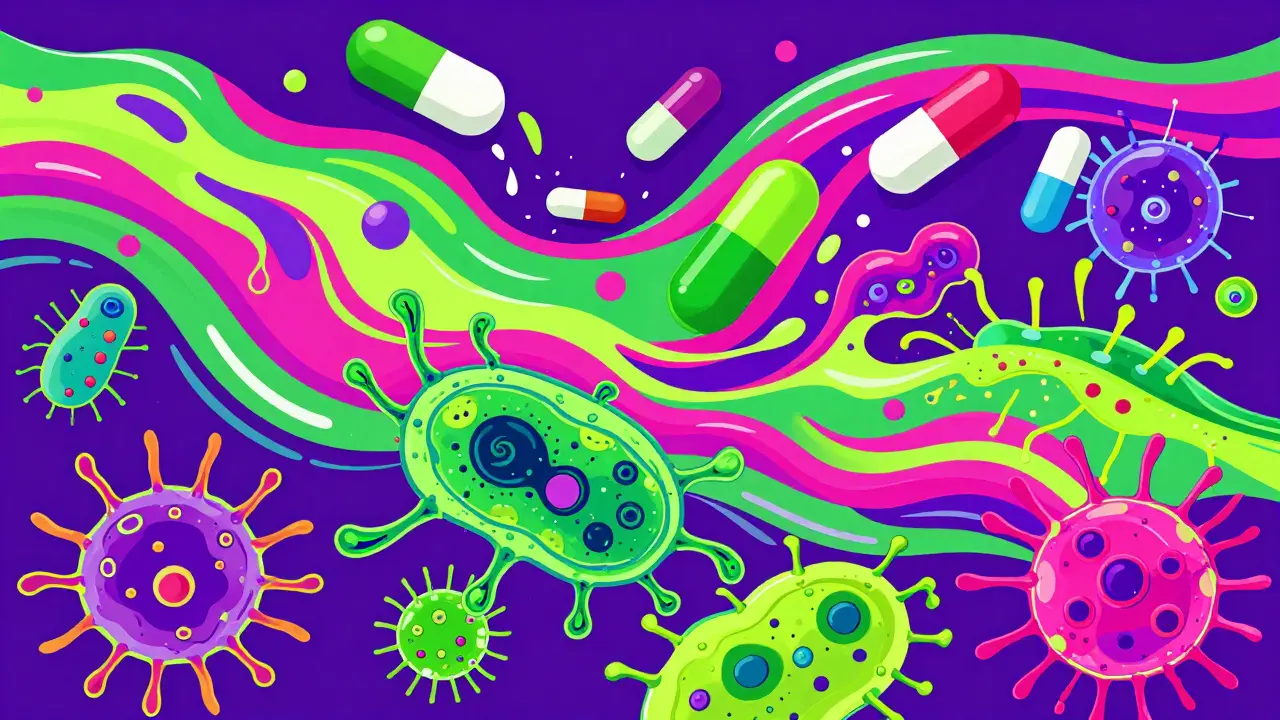
Antibiotic Stewardship Knowledge Check
Loading question...
Quiz Complete!
The core problem is that bacteria are incredibly adaptable. Every time you take an antibiotic, the drug kills the weak bacteria, but the strongest ones-those with a lucky mutation-survive. These survivors then multiply, creating a new generation of "superbugs." This process is accelerated by horizontal gene transfer, where bacteria literally swap pieces of DNA like trading cards to share resistance secrets. The more often we expose bacteria to these drugs, the faster they learn how to ignore them.
The Dangerous Cycle of Repeated Use
Many of us have been there: feeling a cold coming on and pleading with a doctor for a "Z-Pak," or stopping a course of medication the moment we feel better because we don't want to keep taking pills. This is exactly how resistance takes hold. When you stop a treatment early, you leave the most resilient bacteria alive. When you take antibiotics for a viral infection (like the flu), where they have zero effect, you're essentially practicing "selective pressure" on the healthy bacteria in your gut, turning them into resistant strains.
The data is staggering. The World Health Organization reports that in some regions, 1 in 5 urinary tract infections caused by E. coli are now resistant to standard treatments like ampicillin. We are seeing a shift where first-line treatments fail, forcing doctors to use "last-resort" drugs. The problem? Bacteria are now evolving to resist those too. The OECD predicts that resistance to these last-resort antibiotics could double by 2035 compared to 2005 levels.
The Rise of the Superbugs: NDM-CRE and MRSA
Not all resistant bacteria are created equal. Some are common nuisances, while others are genuine killers. Take NDM-CRE (New Delhi metallo-beta-lactamase-producing Carbapenem-resistant Enterobacterales). This is a nightmare scenario for doctors. According to the CDC, infections from this specific strain surged by 460% in the U.S. between 2019 and 2023. For bloodstream infections caused by NDM-CRE, the mortality rate can be as high as 40-50% because there are so few drugs left that actually work.
Then there is MRSA (Methicillin-resistant Staphylococcus aureus). While MRSA is more well-known and has seen some stabilization thanks to better hospital protocols, it still represents a massive burden on the healthcare system. Beyond bacteria, we're even seeing this in fungi. Candida auris is a fungal pathogen that is resistant to all three major classes of antifungal meds in 90% of clinical cases. This tells us that the problem isn't just about one type of pill; it's a systemic failure of our antimicrobial arsenal.
| Pathogen | Threat Level | Primary Concern | Typical Mortality Risk |
|---|---|---|---|
| NDM-CRE | Urgent | Resistant to last-resort carbapenems | 40-50% (Bloodstream) |
| MRSA | Serious | Skin and soft tissue infections | Variable (Moderate to High) |
| C. auris | Urgent | Multidrug-resistant fungal pathogen | Very High |
| Drug-resistant TB | Serious | Resistance to Isoniazid/injectables | High (due to long treatment) |
Real-World Consequences: Beyond the Statistics
Numbers like "1 million deaths annually" (as reported by the GRAM Project) are hard to wrap your head around. But the human cost is much more visceral. Imagine being a 32-year-old with cystic fibrosis and fighting an infection of drug-resistant Pseudomonas aeruginosa. In one documented case, a patient required 18 months of continuous IV antibiotics, suffered multiple treatment failures, and racked up over $1.2 million in hospital bills. That is the physical and financial toll of AMR.
For many, the struggle isn't just the infection, but the wait. A survey by the AMR Industry Alliance found that 68% of patients with resistant infections face treatment delays, averaging over 9 days while doctors scramble to find a drug that actually works. This delay often leads to longer hospital stays-averaging nearly 15 days compared to just 5 days for a regular infection. It’s a grueling cycle of uncertainty, where the emotional toll of not knowing if the medicine will work can be as heavy as the physical illness.
Why We Can't Just "Make More" Antibiotics
You might wonder why pharmaceutical companies don't just invent new drugs to replace the old ones. The truth is, the pipeline has dried up. In the 1980s, we were approving over 100 new antibiotics a year. Now? We're lucky to find a few. The problem is economic. Developing a new antibiotic is incredibly expensive, but since the goal is to use them *sparingly* to prevent resistance, the return on investment is terrible. A Boston Consulting Group analysis found that developers often recover only $0.20 for every $1 invested. Because of this, many big pharma companies have simply quit the market.
There is a glimmer of hope, though. The FDA approved cefepime-taniborbactam in early 2025, specifically to target NDM-CRE. There are also new legislative efforts, like the PASTEUR Act in the US, which proposes a "subscription model." Instead of paying for every pill sold, the government would pay companies for the *availability* of the drug, removing the incentive to oversell and overprescribe.
How to Protect Yourself and the Future
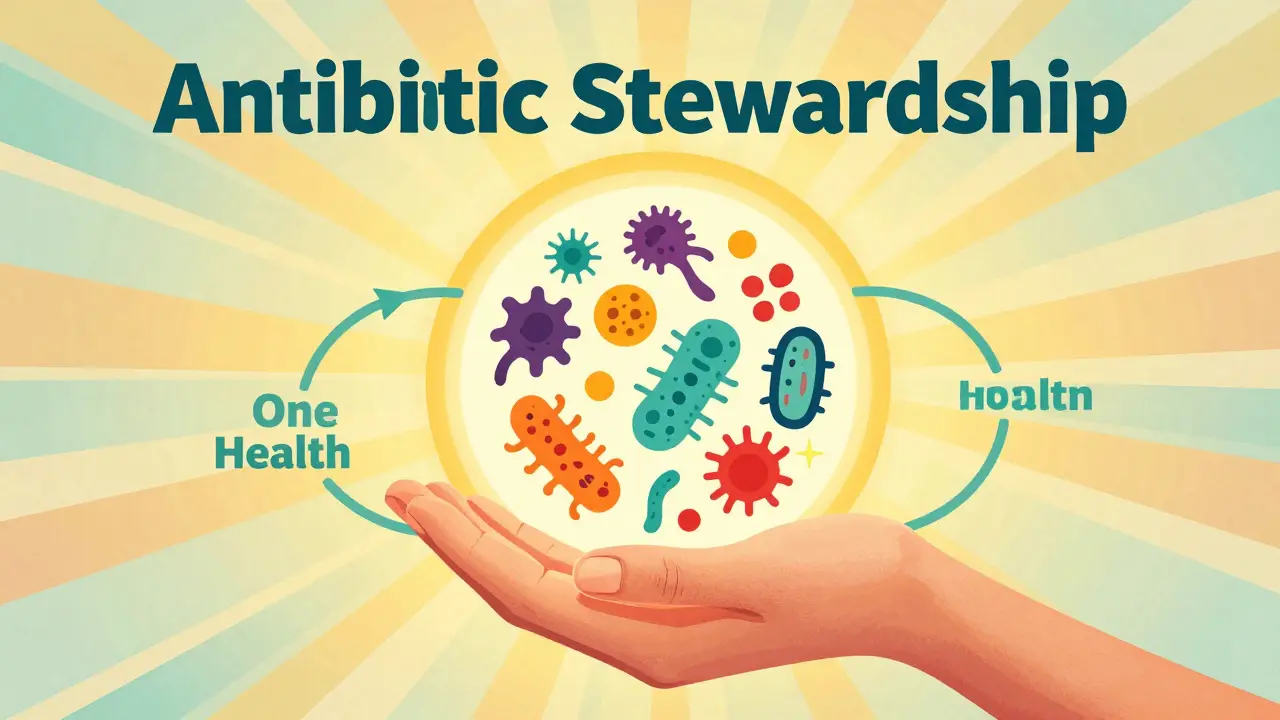
We can't fix the global pipeline overnight, but we can change how we interact with these medicines. Antibiotic stewardship isn't just for doctors; it's for every patient. The goal is to use the right drug, at the right dose, for the right amount of time.
- Stop the "Just in Case" Request: If you have a viral infection (like a common cold or most sore throats), antibiotics will not help you. They only kill bacteria. Taking them anyway only damages your microbiome and feeds resistance.
- Finish the Entire Course: Even if you feel 100% better after three days, finish the prescription. If you stop early, you leave the toughest bacteria alive to mutate and return stronger.
- Prevent Infections: The best way to avoid needing antibiotics is to not get sick. Simple hygiene and keeping vaccinations up to date reduce the need for antimicrobial intervention.
- Demand Diagnostics: Ask your doctor if a culture or rapid test is possible before starting a broad-spectrum antibiotic. Targeted treatment is far less likely to drive resistance.
Countries that take a "One Health" approach-looking at how antibiotics are used in humans, livestock, and the environment-have seen resistance rates drop by up to 22%. For example, Sweden's Strama program has successfully reduced both antibiotic use and resistance rates significantly since the 90s. It proves that when we stop treating antibiotics as a commodity and start treating them as a finite resource, we can actually make a dent in the problem.
What happens if I stop taking antibiotics before the bottle is empty?
When you stop early, you may have killed the most susceptible bacteria, but the most resilient ones remain. These survivors can then multiply, potentially leading to a relapse of the infection that is now harder to treat because the bacteria have developed a level of resistance to the drug you were using.
Are "superbugs" only found in hospitals?
While hospitals are hotspots because of high antibiotic use and sick patients, resistant bacteria are everywhere. They are found in the community, in our food supply (due to agricultural use), and in the environment. You can pick up a resistant strain from a surface, another person, or even through contaminated food.
Can a person become "resistant" to antibiotics?
No. It is the bacteria that become resistant, not the human body. Your body doesn't change its reaction to the drug; rather, the bacteria infecting you change their biological structure so the drug can no longer kill them.
What are the alternatives if antibiotics don't work?
Doctors may try "last-resort" antibiotics, which often have harsher side effects. In some cases, they may use bacteriophage therapy (using viruses that eat bacteria) or combination therapies. However, for some highly resistant strains like NDM-CRE, options are extremely limited, which is why prevention is so critical.
Do non-antibiotic medications contribute to resistance?
Interestingly, yes. Recent research suggests that certain non-antibiotic medications can also put pressure on bacteria or trigger stress responses in them that inadvertently make them more resistant to actual antibiotics. This expands the complexity of how we need to manage drug use.
Next Steps for Patients and Caregivers
If you or a loved one are dealing with a chronic infection, the first step is to request a sensitivity test. This tells the doctor exactly which drugs the bacteria are susceptible to, preventing the "guess-and-check" method that wastes time and fuels resistance. For those in healthcare settings, ensure your facility has a formal antibiotic stewardship program in place. If you're simply looking to protect your future health, be an advocate for your own care-question the necessity of every antibiotic prescription and commit to a full course every single time.
Releted Post

Andy Dargon
Hi, I'm Aiden Lockhart, a pharmaceutical expert with a passion for writing about medications and diseases. With years of experience in the pharmaceutical industry, I enjoy sharing my knowledge with others to help them make informed decisions about their health. I love researching new developments in medication and staying up-to-date with the latest advancements in disease treatment. As a writer, I strive to provide accurate, comprehensive information to my readers and contribute to raising awareness about various health conditions.
Comments
Post Comment