
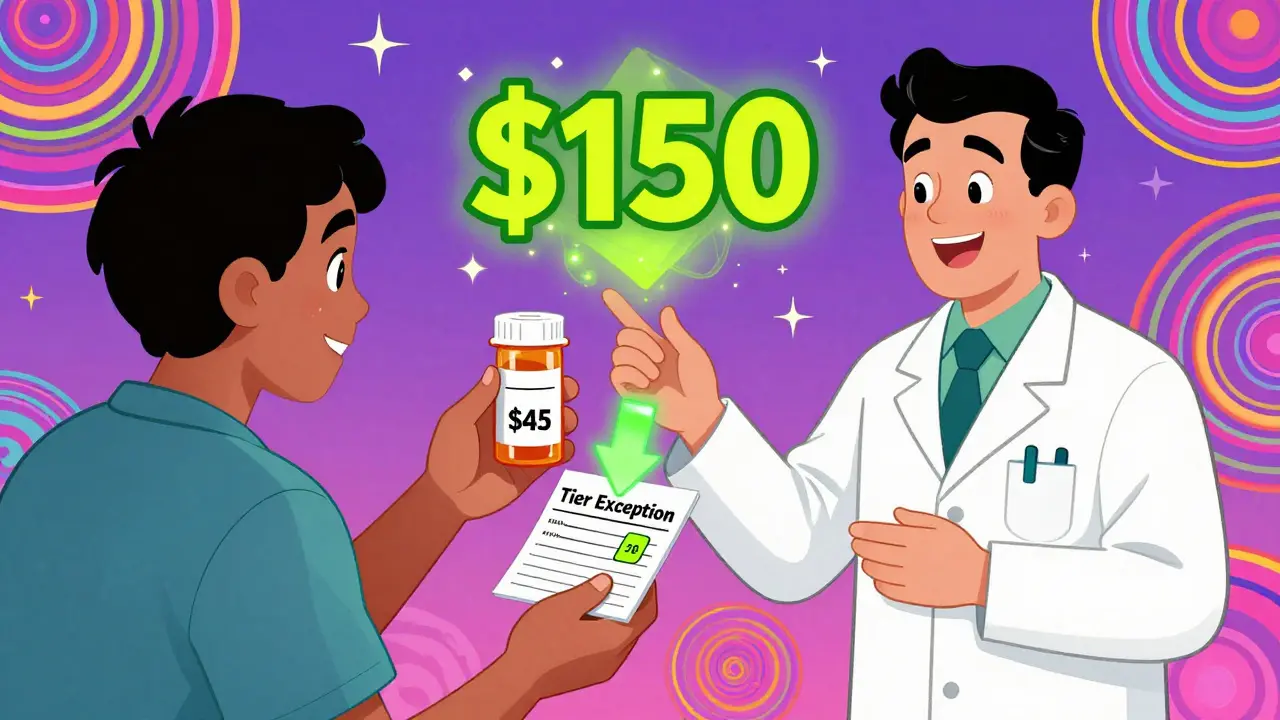
Getting hit with a $150 monthly copay for your medication isn’t just annoying-it can make you skip doses or skip filling the prescription altogether. But what if you could cut that cost to $45-or even $0-without switching drugs? The answer lies in something most people don’t know about: a tier exception.
Here’s the reality: your Medicare Part D or private insurance plan puts your medications into tiers. Tier 1 is usually generic drugs with a $0-$10 copay. Tier 2 is preferred brand-name drugs at $10-$20. Tier 3? That’s where non-preferred brands live, often $30-$100. And then there’s Tier 4 or 5-the specialty tier-for drugs like Humira, Xarelto, or Orencia, where you might pay 30-40% of the list price, which can be $1,000+ per month.
But here’s the key: if your drug is on the formulary (meaning it’s covered), but stuck in a high tier, you can ask for a tier exception. This isn’t about getting a drug added to the list. It’s about moving an already-covered drug down to a lower, cheaper tier. And it works more often than you think.
How Tier Exceptions Actually Work
Think of your drug plan like a store with price tags. Some drugs are on sale (Tier 1). Others cost more because the insurer didn’t negotiate a good deal on them. A tier exception is your way of saying: "This drug isn’t just expensive-it’s medically necessary for me, and the cheaper alternatives won’t work."
According to CMS (Centers for Medicare & Medicaid Services), a tier exception is a formal request to lower your cost-sharing for a drug that’s already covered. It’s not a loophole. It’s a built-in part of the Medicare Part D rules, created back in 2006. And it’s used by millions-just not nearly enough.
Take Humira. A typical copay on Tier 4 might be $150. But if you get a tier exception approved and move it to Tier 3, that drops to $45. Move it to Tier 2? You’re looking at $20. And if you’re lucky and your doctor makes a strong case? It could drop to Tier 1-$0.
The difference isn’t small. One patient in San Diego saved $1,380 last year just by getting her rheumatoid arthritis drug moved from Tier 4 to Tier 2. That’s over $100 a month. That’s groceries. That’s gas. That’s not choosing between meds and rent.
Who Can Request a Tier Exception?
You can request one yourself. So can your doctor. Or someone helping you manage your care. But here’s the catch: the request must come with a statement from your prescriber. No doctor note? No exception.
Your doctor doesn’t just say, "I think this is better." They have to explain why the lower-tier alternatives won’t work for you. For example:
- "Patient developed severe GI bleeding on warfarin, requiring a switch to apixaban. Warfarin is not safe for this patient."
- "Patient has severe allergy to sulfa-based diuretics, making hydrochlorothiazide contraindicated. The prescribed alternative, chlorthalidone, is not on a lower tier."
- "Patient tried two preferred alternatives for multiple sclerosis but experienced debilitating nausea and dizziness. This medication is the only one they can tolerate."
Generic statements like "My patient prefers this drug" or "They’ve been on it for years" won’t cut it. You need clinical facts. Real outcomes. Specific side effects. Hospitalizations. Lab results. That’s what approval hinges on.
How to Get a Tier Exception Approved
The process is simple, but it takes action. Here’s how to do it right:
- Check your copay-When you get your prescription filled and see a high cost, don’t just pay it. Ask your pharmacist: "Is this drug on a higher tier? Can we request a tier exception?"
- Call your insurance-Ask for the tier exception request form. Most plans have one. Some even have downloadable PDFs on their website. If they can’t find it, ask for the name of the form: "I need the Medicare Part D tier exception form for non-preferred drugs."
- Get your doctor involved-Give them the form. Ask them to complete it and attach a short letter (1-2 pages) explaining medical necessity. Use the exact language CMS requires: efficacy, tolerability, or safety concerns with alternatives.
- Submit it ASAP-Don’t wait. Submit the request before you fill the prescription. If you’ve already paid full price, you can still request it-but you might not get a refund for what you already paid.
- Track it-Plans must respond within 72 hours if it’s urgent (your health is at risk) or 14 days for standard requests. Call the number on your card if you haven’t heard back in 10 days.
Pro tip: Many doctors now submit tier exceptions at the same time as the original prescription. That’s called a "proactive tier exception." One study showed 89% of those get approved the same day. Reactive requests? Only 67%.
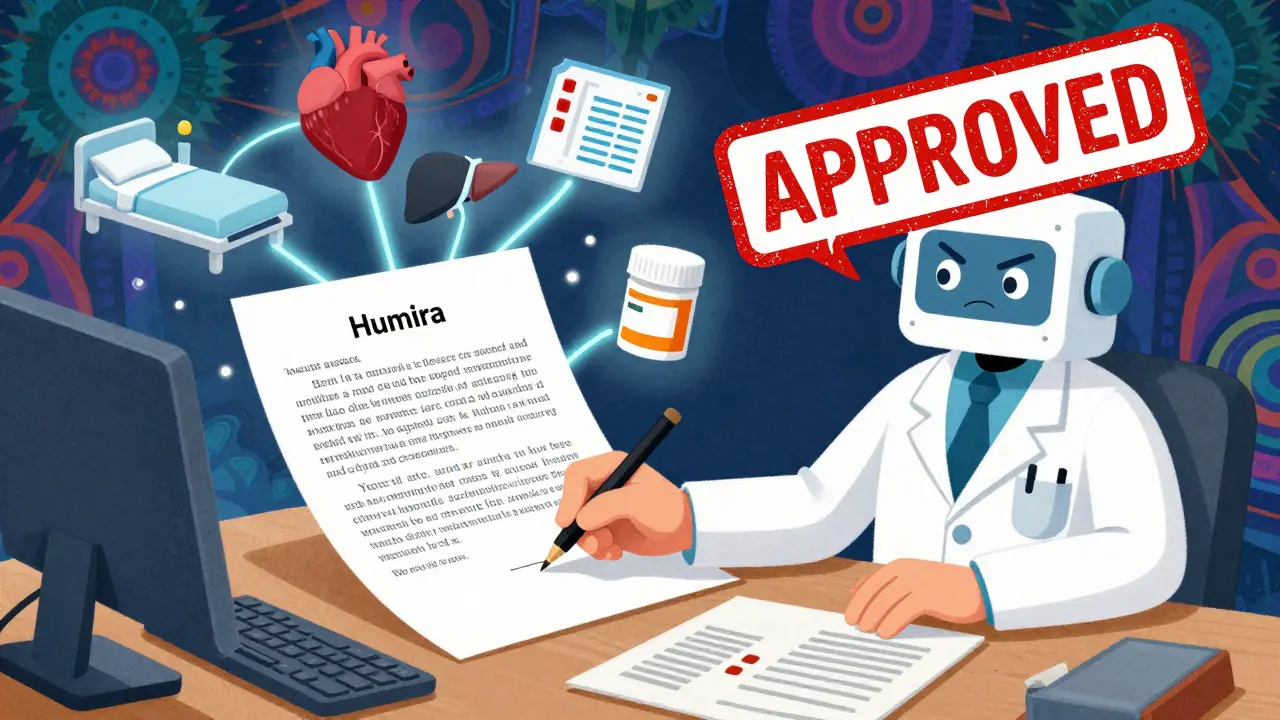
What Gets Approved? Real Examples
Not every drug gets moved. But certain conditions have high success rates:
- Rheumatoid arthritis - Biologics like Humira, Enbrel, Orencia are frequently moved from Tier 4 to Tier 2 or 3.
- Multiple sclerosis - Drugs like Tysabri, Lemtrada, and Gilenya often qualify because side effects make alternatives unusable.
- Heart failure or blood clots - Xarelto, Eliquis, Pradaxa are commonly moved if patients had bleeding events or kidney issues with older drugs.
- Diabetes - Newer GLP-1s like Ozempic or Trulicity sometimes qualify if insulin caused hypoglycemia or weight gain.
According to the Medicare Rights Center, 58% of tier exception requests succeed. And when they do, the average savings per fill is $37.50. Multiply that by 12 fills a year? That’s $450 saved. For specialty drugs? You could save $300-$600 per month.
Why Most Requests Fail (And How to Fix It)
Dr. Robert Johnson of UnitedHealthcare says 37% of initial requests get denied-not because they’re invalid, but because the documentation is weak. Common mistakes:
- "My patient has been on this drug for 5 years." → Too vague. Why does that matter? What happened when they tried alternatives?
- "They don’t like the side effects." → Not enough. What side effects? How bad? Did they go to the ER?
- No lab results, no hospital records, no specific diagnosis codes.
Here’s how to fix it: Your doctor should include:
- Specific diagnosis (e.g., "Rheumatoid arthritis, active, with joint erosion on X-ray")
- Previous drugs tried and why they failed (e.g., "Leflunomide caused liver enzyme elevation >3x ULN")
- Current drug’s benefits (e.g., "Humira reduced CRP from 12 to 2.1 in 8 weeks")
- Any adverse events (e.g., "Patient required hospitalization for GI bleed on aspirin")
If you get denied, don’t give up. The appeal rate is 78%. Submit the same request with more documentation. Add a copy of your medical records. Include a note from your pharmacist if they’ve seen side effects firsthand.
What’s Changing in 2026?
The Inflation Reduction Act caps out-of-pocket drug costs at $2,000 per year starting in 2025. That sounds like good news-but it doesn’t eliminate tier exceptions. Why? Because that cap only kicks in after you hit the threshold. If you’re paying $150/month for a drug now, you’ll hit that cap fast. But if you move that drug to a lower tier? You’ll never reach it. You’ll pay less all year.
Also, new tools are helping. UnitedHealthcare’s automated pre-check system lets doctors see if a tier exception is likely to be approved before they even submit it. Other insurers are rolling out similar tools. That means faster decisions, fewer denials.
And usage is rising. Analysts predict a 22% annual increase in tier exception requests through 2026. More people are learning about it. More doctors are doing it. And the savings are real.
Bottom Line: Don’t Pay More Than You Have To
If you’re paying more than $20-$30 a month for a drug that’s already covered, you’re leaving money on the table. A tier exception isn’t a complicated legal maneuver. It’s a simple, legal, and widely available tool built into your plan.
You don’t need to be a Medicare expert. You don’t need to call a hotline. You just need to ask two questions:
- "Is this drug on a high tier?"
- "Can we request a tier exception?"
If your doctor says yes, they’ll handle the paperwork. If they say no, ask why. If they’re unsure, ask them to call the plan. Most doctors are happy to help-they’ve seen patients skip doses because of cost. And if you’re managing your own care? Download the form. Fill it out. Submit it. It takes 15 minutes. The payoff could be hundreds-or thousands-of dollars a year.
Don’t assume your copay is fixed. It’s not. And you have more power than you think.
What’s the difference between a tier exception and a formulary exception?
A tier exception moves a drug that’s already on your plan’s formulary down to a lower, cheaper tier. A formulary exception requests that a drug be added to the formulary at all-because it’s not covered. Tier exceptions are more common and easier to get because the drug is already approved; you’re just asking for a lower price.
Can I request a tier exception for any drug?
Only if the drug is already on your plan’s formulary. If it’s not covered at all, you need a formulary exception instead. Tier exceptions only apply to drugs you can get-but are being charged more for because they’re in a higher tier.
How long does a tier exception take to process?
Standard requests take up to 14 days. If your doctor says your health is at risk without the drug (e.g., you’re at risk of hospitalization), you can request an expedited review, which must be decided within 72 hours. Most approvals happen within 5-7 business days if the paperwork is complete.
Will my copay be lowered retroactively?
Sometimes, but not always. Most plans won’t refund what you already paid. But once approved, your copay drops immediately for future fills. If you’ve already paid full price, ask your pharmacy to apply the new tier rate going forward. Some plans may adjust future bills or credits, but don’t count on it.
Do all insurance plans offer tier exceptions?
Yes. All Medicare Part D plans and most private insurance plans use tiered formularies and offer tier exceptions. If you’re on a Medicare Advantage plan with drug coverage, you’re covered. If you’re on a commercial plan through your employer, check your plan documents or call customer service. They’re required by law to offer this option.
Releted Post

Andy Dargon
Hi, I'm Aiden Lockhart, a pharmaceutical expert with a passion for writing about medications and diseases. With years of experience in the pharmaceutical industry, I enjoy sharing my knowledge with others to help them make informed decisions about their health. I love researching new developments in medication and staying up-to-date with the latest advancements in disease treatment. As a writer, I strive to provide accurate, comprehensive information to my readers and contribute to raising awareness about various health conditions.
just found out my $120/month copay for my biologic could drop to $45? i’ve been paying this for 2 years. my dr never mentioned this. i feel ripped off.
you know what’s wild? this whole system was designed so that people like me-people who don’t have time to fight insurance companies-just give up and skip doses. it’s not broken. it’s built this way. the paperwork alone is a barrier. and don’t get me started on how often docs just say "nah, too much hassle" instead of pushing for you. i’ve seen patients cry over this. not because they’re weak. because the system’s cruel.
so let me get this straight… the government lets pharma charge $1000 for a pill, then says "oh but here’s a form you gotta fill out with a doctor’s scrawl to make it cheaper"? this isn’t healthcare. this is a game of charades with a clipboard.
the real issue isn’t tier exceptions-it’s the fact that the entire pharmaceutical supply chain is a cartel masquerading as innovation. tier exceptions are a band-aid on a hemorrhage. the system was engineered to extract maximum profit while making you feel like you’re "solving" your own problem. they want you to believe this is fairness. it’s not. it’s exploitation dressed up as bureaucracy. and the fact that 58% of requests get approved? that’s not a win. that’s a failure rate of 42%. that’s 42% of people who are literally being denied life-saving treatment because of paperwork.
as a pharmacy tech, i see this daily. patients come in with receipts for $150, then ask "is there any way to make this cheaper?" and we walk them through the tier exception process. the key is the doctor’s letter-specifics matter. "Patient had recurrent DVT on warfarin" beats "they don’t like the other one." we’ve saved people $400+/month. it’s not magic. it’s just knowing the rules.
my cousin got her Humira moved from tier 4 to tier 2 last year. saved her $110/month. she’s got RA. her dr literally wrote: "patient developed GI bleed on all 3 alternatives. Humira is the only viable option." submitted it on day one. approved in 4 days. i wish more people knew this was a thing. it’s not rocket science. it’s just… not talked about.
bruv, this is why i say UK’s NHS is the only sane model. no tiers. no exceptions. no "why is my insulin $200?" nonsense. here in the US, you’re basically a customer in a casino where the house always wins. and don’t even get me started on how insurers use "formulary management" as a euphemism for "we’re gonna make you suffer until you beg for mercy." 😅
i cried when i got mine approved. i was choosing between my med and my kid’s school supplies. now i don’t have to. thank you for writing this. someone should’ve told me this years ago.
honestly, this is the most useful thing i’ve read all year. i’ve been on Orencia for 3 years. never knew i could ask for this. i called my dr’s office today and asked if we could do it. they said "oh yeah, we do this all the time." i felt dumb. why didn’t anyone tell me? i’m sending this to 5 friends. seriously. share this.
the fact that you’re even asking for a "tier exception" is a symptom of a broken system. we should not be negotiating for basic healthcare. if a drug is medically necessary, it should be accessible without bureaucratic gymnastics. this isn’t a solution-it’s a compromise with a corrupt industry. and you’re celebrating a band-aid as if it’s surgery.
wait… so… are you saying… the government… and the drug companies… are in cahoots? like… this isn’t an accident? it’s intentional? to make people suffer so they’ll pay more? oh my god. i just realized… my sister died because she couldn’t afford her med… and they told her "just apply for an exception"… but she didn’t know how… and no one helped her…
the fact that you need a doctor’s letter to prove you’re not a scammer just to get a drug you’ve been on for 7 years is insane. this isn’t healthcare-it’s a performance review. your life depends on whether your doc has time to write a paragraph that sounds like a legal brief. meanwhile, the CEO of the pharma company is sipping champagne on his yacht. i hate this system.
thank you for sharing this. i didn’t know this was an option. i’ve been paying $90/month for my diabetes med. i’m calling my doctor tomorrow. you just made my month.