
Triptans & SSRIs Risk Assessment Tool
Medication Selection
Risk Assessment Result
Based on clinical evidence
The combination of triptans and SSRIs is safe with negligible risk of serotonin syndrome.
Evidence Summary
A 2019 study in JAMA Neurology examined over 61,000 patients taking both triptans and SSRIs/SNRIs for nearly 30 years. Not a single case of serotonin syndrome was found. The study confirmed that triptans do not activate the 5-HT2A receptor (which triggers serotonin syndrome) and that this combination is safe for most patients.
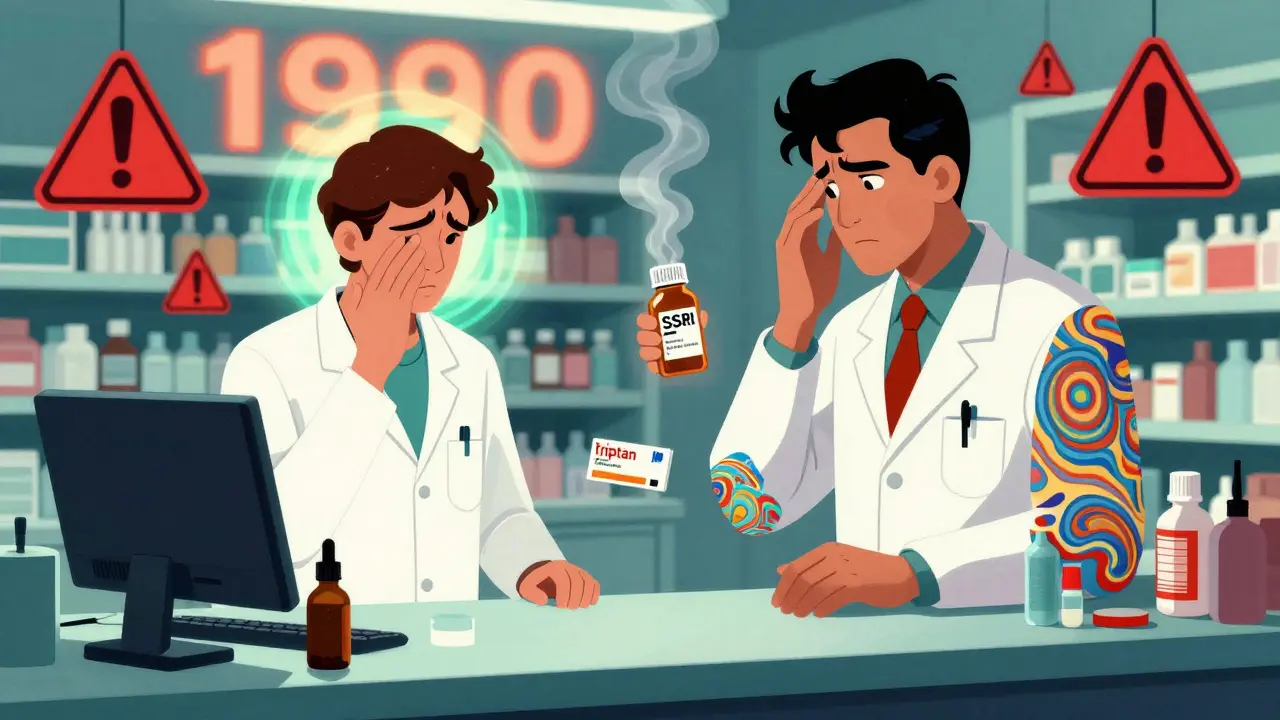
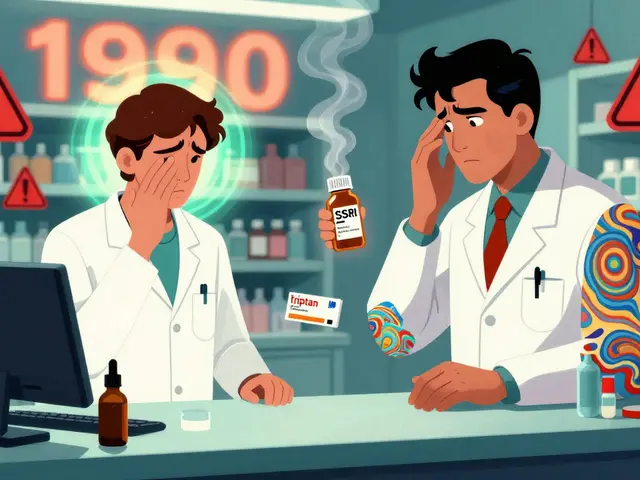
For over 15 years, patients with migraines who also take antidepressants have been told the same thing: don’t combine triptans with SSRIs. It’s dangerous. It could kill you. The warning came from the FDA in 2006, and for years, it stuck. Pharmacists refused to fill prescriptions. Doctors hesitated. Patients went without effective migraine relief because they were scared-or because their providers were.
Here’s the reality: there’s no meaningful risk.
A 2019 study in JAMA Neurology looked at more than 61,000 patients who used both triptans and SSRIs or SNRIs over nearly three decades. Not a single case of serotonin syndrome met diagnostic criteria. Zero. Not one. That’s not luck. That’s evidence. And yet, the myth persists.
What Are Triptans and SSRIs, Really?
Triptans-like sumatriptan, rizatriptan, and eletriptan-are not antidepressants. They’re migraine-specific drugs. Developed in the 1990s, they work by targeting 5-HT1B and 5-HT1D serotonin receptors in the brain. These receptors help narrow inflamed blood vessels and block pain signals. Triptans don’t flood your system with serotonin. They don’t increase serotonin levels at all. They just activate a specific set of receptors to stop a migraine in its tracks.
SSRIs-selective serotonin reuptake inhibitors-are different. Medications like fluoxetine (Prozac), sertraline (Zoloft), and escitalopram (Lexapro) work by blocking the reabsorption of serotonin in the brain. More serotonin stays in the space between nerve cells. That’s why they help with depression and anxiety. But this increase in serotonin availability is what *can* lead to serotonin syndrome… but only under very specific conditions.
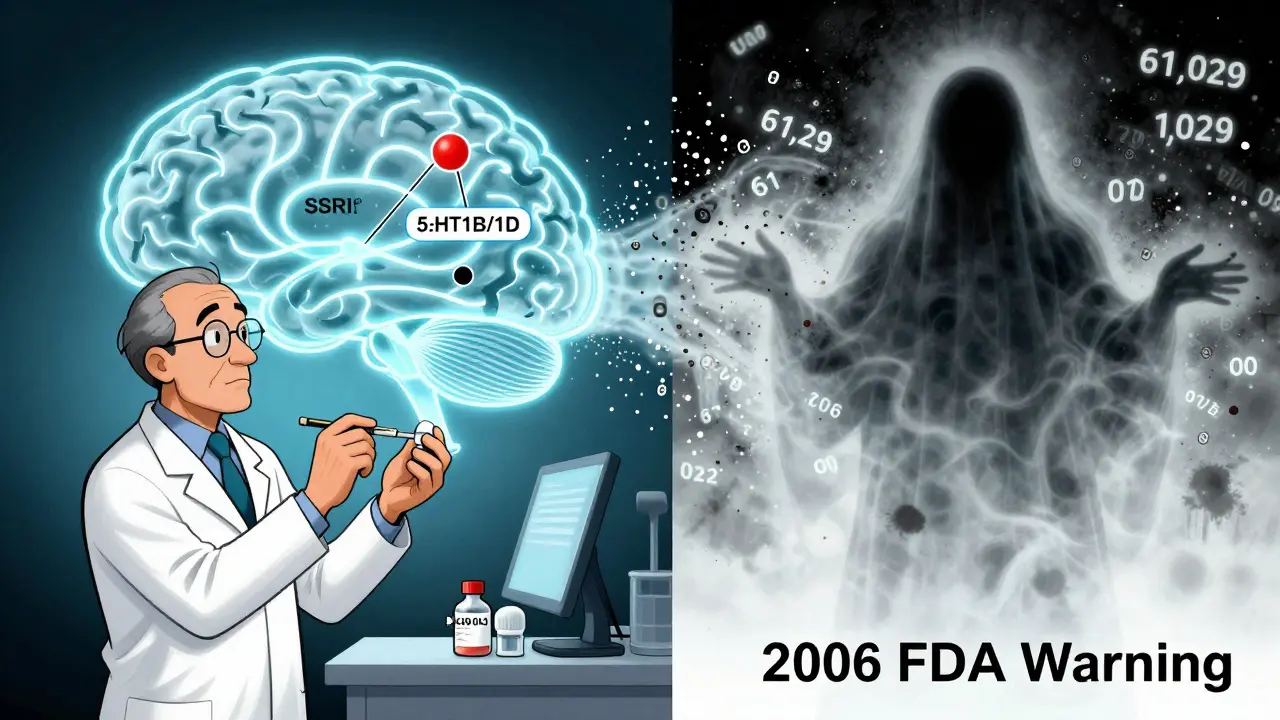
And here’s the key: serotonin syndrome isn’t caused by just any serotonin-boosting drug. It’s caused by overstimulation of the 5-HT2A receptor. Triptans barely touch that receptor. They’re like a key that only fits one lock. SSRIs? They turn up the volume on serotonin everywhere. But even then, serotonin syndrome is rare. Studies show it happens in less than 1 in 1,000 patients per month on SSRIs alone. And it almost always happens with overdose, multiple drugs, or MAOIs-not with a simple combination of an SSRI and a triptan.
The FDA Warning: A Case of Overreaction
The FDA issued its warning in 2006 based on theoretical risk-not real-world data. Back then, there were no large studies. Just pharmacology textbooks and a handful of anecdotal reports. The agency said: "It’s possible. Better safe than sorry." But "possible" isn’t the same as "probable." And "better safe than sorry" doesn’t work when it keeps millions of people from effective treatment.
At the time, about 37 million Americans were on SSRIs. Ten million had migraines. Many of those people needed both drugs. But instead of prescribing them together, doctors started avoiding triptans entirely. Some patients were forced to switch to weaker painkillers, nerve blocks, or even opioids. Others just suffered through migraine attacks without relief.
Dr. P. Ken Gillman, a leading expert in migraine pharmacology, called the FDA’s warning a "misunderstanding about serotonin syndrome." In a 2010 review, he pointed out that triptans have negligible activity at the 5-HT2A receptor-the one that triggers serotonin syndrome. He wrote: "There is neither significant clinical evidence, nor theoretical reason, to entertain speculation about serious serotonin syndrome from triptans and SSRIs."
The Evidence That Changed Everything
The 2019 JAMA Neurology study was a game-changer. Researchers didn’t rely on case reports or lab models. They looked at real patient records from the University of Washington Medical Center-from 1990 to 2018. They found 61,029 patients who used triptans and SSRIs or SNRIs together. They checked for every sign of serotonin syndrome: muscle rigidity, high fever, confusion, rapid heartbeat, tremors.
Nothing. Not one confirmed case.
Other studies confirmed it. A 2022 survey of 1,200 migraine patients by the American Migraine Foundation found that 42% had been denied triptans because they were on an SSRI. Yet not one of those 1,200 had ever experienced serotonin syndrome from the combination.
Pharmacists still get alerts in their systems. Pharmacy software still blocks prescriptions. Why? Because the old warning hasn’t been updated. UpToDate, a trusted clinical reference, now says the risk is "negligible." But many electronic health record systems still flag the combination as dangerous. That’s not science. That’s inertia.
What Do Experts Actually Say Today?
The medical community has moved on. A 2021 survey of 250 headache specialists found that 89% routinely prescribe triptans with SSRIs or SNRIs without any special precautions. The American Headache Society’s 2022 consensus statement says: "Clinicians should not avoid prescribing triptans to patients taking SSRIs or SNRIs due to theoretical concerns."
Dr. John Rothrock, a neurologist and migraine specialist, put it plainly: "The actual incidence of serotonin syndrome associated with this drug combination appears to be exceedingly rare."
The European Medicines Agency never issued a warning. Why? Because they looked at the data-and saw nothing. The same goes for Canada and Australia. Only the U.S. stuck with the outdated alert.
Even pharmaceutical companies are quietly adjusting. The 2023 prescribing label for sumatriptan (Imitrex) still includes the FDA warning-but now adds: "Epidemiological studies have not shown an increased risk of serotonin syndrome with concomitant use of triptans and SSRIs/SNRIs."
Why This Myth Still Lives
It’s not about science anymore. It’s about fear, habit, and outdated software.
Patients still get turned away at the pharmacy. One Reddit user from r/migraine shared: "My pharmacist said, ‘I can’t fill this. You’ll die.’ I’ve been on Zoloft for 8 years and sumatriptan for 6. Never had an issue."
Another patient in New Zealand told her doctor she’d been denied triptans three times. Her neurologist finally wrote: "The serotonin syndrome risk is a myth. This combination is safe."
And yet, many medical schools still teach the old warning. Medical boards still test it. Pharmacists still get trained on it. It’s a textbook case of how a single advisory can become dogma-even when the evidence flips.
What Should You Do?
If you take an SSRI or SNRI and have migraines:
- You can safely take triptans.
- There’s no need to stop your antidepressant.
- There’s no need to switch to a different migraine drug.
- There’s no need to monitor for serotonin syndrome unless you’re on other high-risk drugs (like MAOIs or dextromethorphan).
If you’re a clinician:
- Don’t avoid prescribing triptans to SSRI/SNRI users.
- Update your prescribing habits. The evidence is clear.
- Correct misinformation when you hear it. Patients deserve better.
And if you’ve been denied a triptan because of your antidepressant? Ask for the evidence. Point to the 2019 JAMA Neurology study. Ask if your pharmacist has read it. If they haven’t, they’re working off a 17-year-old fear-not today’s science.
The Bottom Line
Triptans and SSRIs together? Safe. Effective. Common.
The serotonin syndrome scare was never grounded in real data. It was a theoretical ghost. And now, after more than a decade of real-world use, we know the truth: the risk isn’t just low. It’s practically nonexistent.
Millions of people are still being denied relief because of a warning that doesn’t hold up. It’s time to let go of the myth. Migraine patients deserve better. And so do the doctors who want to help them.
Can you really take triptans with SSRIs without risk?
Yes. Large, real-world studies-including one of over 61,000 patients-found zero cases of serotonin syndrome from combining triptans with SSRIs or SNRIs. The theoretical risk has not translated into real harm. Major medical organizations now agree: the combination is safe.
Why did the FDA warn against it if there’s no risk?
The FDA issued the warning in 2006 based on pharmacological theory-not clinical evidence. At the time, there were no large studies. The agency chose caution over data. Since then, multiple studies have shown no increased risk. Experts now call the warning outdated and misleading.
What causes serotonin syndrome, then?
Serotonin syndrome is caused by overstimulation of the 5-HT2A receptor, usually from combining multiple serotonin-affecting drugs-like an SSRI with an MAOI, dextromethorphan, or certain opioids. Triptans don’t activate this receptor significantly. Even with SSRIs, the risk remains extremely low unless multiple high-risk drugs are involved.
Are there any patients who should avoid triptans with SSRIs?
No-not because of the combination. Patients with uncontrolled high blood pressure, heart disease, or a history of stroke should avoid triptans regardless of antidepressant use. But the SSRI itself doesn’t add risk. The only real contraindication is if you’re also taking an MAOI, which is rare today.
Why do pharmacists still refuse to fill these prescriptions?
Many pharmacy software systems still trigger alerts based on the 2006 FDA warning. They haven’t been updated to reflect current evidence. Pharmacists are following system flags, not clinical guidelines. If you’re refused, ask for the clinical evidence-or ask your doctor to write a note explaining the safety of the combination.
Releted Post

Andy Dargon
Hi, I'm Aiden Lockhart, a pharmaceutical expert with a passion for writing about medications and diseases. With years of experience in the pharmaceutical industry, I enjoy sharing my knowledge with others to help them make informed decisions about their health. I love researching new developments in medication and staying up-to-date with the latest advancements in disease treatment. As a writer, I strive to provide accurate, comprehensive information to my readers and contribute to raising awareness about various health conditions.
So you're telling me we've been scaring people away from effective treatment for over a decade because of a theoretical risk?
Wow. Just wow.
Medical dogma at its finest.
Let me get this straight - the FDA scared half the medical community into paralysis because of a pharmacology textbook theory, while real-world data sat quietly in databases for 12 years waiting to be noticed?
Classic. We're still using 2006 software to make 2024 decisions.
Pharmacists are just automated warning bots with bad posture and caffeine addiction.
Meanwhile, patients are suffering because someone's EHR alert hasn't been updated since Obama was in office.
It's not incompetence - it's institutional laziness dressed up as caution.
And now we're supposed to be impressed that a 2019 study with 61k patients found ZERO cases?
Yeah. Because that's how science works. Not because we're smart. Because we finally bothered to look.
Next time, maybe check the data before you scare people into taking opioids instead of triptans.
Just saying.
Oh honey. The FDA didn't 'warn' - they performed a ritualistic sacrifice to the gods of liability.
Triptans? Harmless little migraine ninjas.
SSRIs? Gentle serotonin tending bots.
Put them together? A pharmacological symphony.
But no - we had to turn it into a horror movie because someone once read a chapter on 5-HT2A receptors and panicked.
Meanwhile, the European Medicines Agency just... looked at the numbers.
And said, "Meh."
They didn't need a press release. They just used logic.
And now we're stuck with a pharmacy system that thinks combining Prozac and Imitrex is like mixing plutonium and glitter.
It's not medical practice. It's digital folklore.
And we're all just NPCs in someone else's outdated algorithm.
The real tragedy isn't the myth.
It's that we still treat medicine like a religion.
One study comes out - 61,000 patients, zero cases - and suddenly, it's not enough?
We need a 12-step program to unlearn fear?
Pharmacists still refuse prescriptions because their software says so?
That's not healthcare.
That's tech support masquerading as clinical judgment.
And doctors? They're too busy chasing CME credits to question a system that's been quietly killing patient quality of life for 17 years.
It's not ignorance.
It's willful surrender.
And we're all paying for it.
With every migraine attack left untreated.
With every unnecessary opioid script.
With every patient who's told, "Sorry, it's just too risky."
When the risk is statistically less than getting hit by lightning while eating a sandwich.
It's embarrassing.
And it's not going to change until someone gets fired.
My pharmacist filled my prescription without hesitation after I showed him the JAMA study. He said he'd been waiting for someone to bring it up.
It's not complicated.
Just update the alerts.
Imagine if we treated every medical guideline this way - clinging to outdated warnings because they're easier than admitting we were wrong.
We owe it to patients to do better.
Every single one of them deserves access to effective, evidence-based care - not fear-based bureaucracy.
Let's honor the science. Let's honor the patients.
And let's finally stop letting software decide who gets relief.
USA! USA! USA! 🇺🇸
Our system is broken but we still win because we got the data!
Pharmacies? Still stuck in 2006 🤦♂️
Doctors? Wake up! 🚨
Triptans + SSRIs = SAFE 💪
Stop the fear. Start the relief. 🙌
Been on Zoloft and sumatriptan for 7 years. Never had an issue.
My doctor just shrugged when I asked. Said, "The science says it's fine."
Simple as that.
Wait... so you're saying this isn't a Big Pharma conspiracy? 🤔
They *wanted* us to be afraid so we'd keep buying more meds?
Because if triptans were truly safe with SSRIs... then why do they still include the warning on the label?
It's not ignorance - it's control.
They know if people realize the risk is zero, they'll stop seeing doctors for "migraine management" and just self-prescribe.
And then where's the profit?
And don't tell me about "real-world data" - I've seen how studies get funded.
Who paid for that JAMA study?
Who owns the EHR systems that still block it?
And why is Canada right but we're still stuck in 2006?
Something stinks.
And it's not serotonin.