
Every year, millions of women in the U.S. choose birth control pills to prevent pregnancy. But here’s the thing: birth control pills aren’t as simple as popping one daily. Their real-world effectiveness depends on habits, timing, and even what else you’re taking. If you’re considering them-or already using them-you need to know the numbers, the risks, and the hidden traps that can make them fail.
How Effective Are Birth Control Pills Really?
Most people think birth control pills are 99% effective. That number is technically true-but only if you take them perfectly. Perfect use means taking the pill at the same time every single day, with zero missed doses. Under those conditions, fewer than 1 in 100 women get pregnant in a year. That’s impressive.
But real life isn’t perfect. Life happens. You forget. You travel. You get sick. You take antibiotics. That’s why typical use is the number that matters. In real-world settings, about 7 out of 100 women using birth control pills get pregnant each year. That’s a 93% effectiveness rate. For comparison, IUDs and implants have typical use failure rates of less than 1%. Pills are convenient, but they demand consistency.
Younger women face higher risks. Studies show women under 21 using the pill are nearly twice as likely to experience unintended pregnancy compared to women over 21. Why? Adherence. Teens and young adults are more likely to miss doses, forget refill dates, or stop taking pills during stressful periods. It’s not about willpower-it’s about how hard the method is to stick with.
Two Types of Pills: Combined vs. Mini-Pills
Not all birth control pills are the same. There are two main types:
- Combined oral contraceptives (COCs): These contain estrogen and progestin. Most brands today use 20-35 micrograms of ethinyl estradiol (estrogen) combined with different progestins like levonorgestrel, norethindrone, or drospirenone. The safest formulation in terms of cardiovascular risk? Pills with 30 μg of estrogen and levonorgestrel.
- Progestin-only pills (POPs or mini-pills): These contain no estrogen. They’re often used by women who can’t take estrogen-like those with migraines with aura, high blood pressure, or who are breastfeeding. The standard dose is 0.35 mg of norethindrone. Newer versions like Slynd® use 4 mg of drospirenone in a 24/4 cycle (24 active pills, 4 inactive). Mini-pills are more time-sensitive. You have a 3-hour window to take them each day. Miss that window, and effectiveness drops fast.
One big difference: COCs can be started at any time, but you need backup contraception (like condoms) for the first 7 days. Mini-pills require you to start on the first day of your period, or you’ll need backup for at least 2 days.
What Are the Side Effects?
Side effects are common-especially in the first 2 to 3 months. Most fade with time. Here’s what you might experience:
- Light bleeding or spotting: Especially in the first few months. It’s normal and usually goes away.
- Nausea: Often happens if you take the pill on an empty stomach. Try taking it with food or at bedtime.
- Breast tenderness: Usually mild and temporary.
- Mood changes: Some women report irritability or low mood. If it’s severe or lasts more than a few months, talk to your provider. It could be the progestin type.
- Headaches or dizziness: Estrogen can trigger migraines in some. If headaches get worse or you develop vision changes, stop the pill and call your doctor immediately.
Long-term risks are rare but real. Estrogen increases the risk of blood clots, stroke, and heart attack-especially if you smoke, are over 35, have high blood pressure, or have a history of clotting disorders. That’s why doctors screen for these before prescribing. Modern pills have much lower estrogen doses than the first versions (which had 10,000 μg). Today’s pills average under 50 μg. Still, the risk isn’t zero.
On the flip side, birth control pills offer real health benefits. Long-term use cuts endometrial cancer risk by 50% and ovarian cancer risk by 27%. They also reduce colon cancer risk by 18%. For women with acne, certain pills (like those with drospirenone) are FDA-approved for treatment. They can also make periods lighter, more regular, and less painful-helping with PMS and endometriosis.
Drug Interactions: What Can Make the Pill Fail?
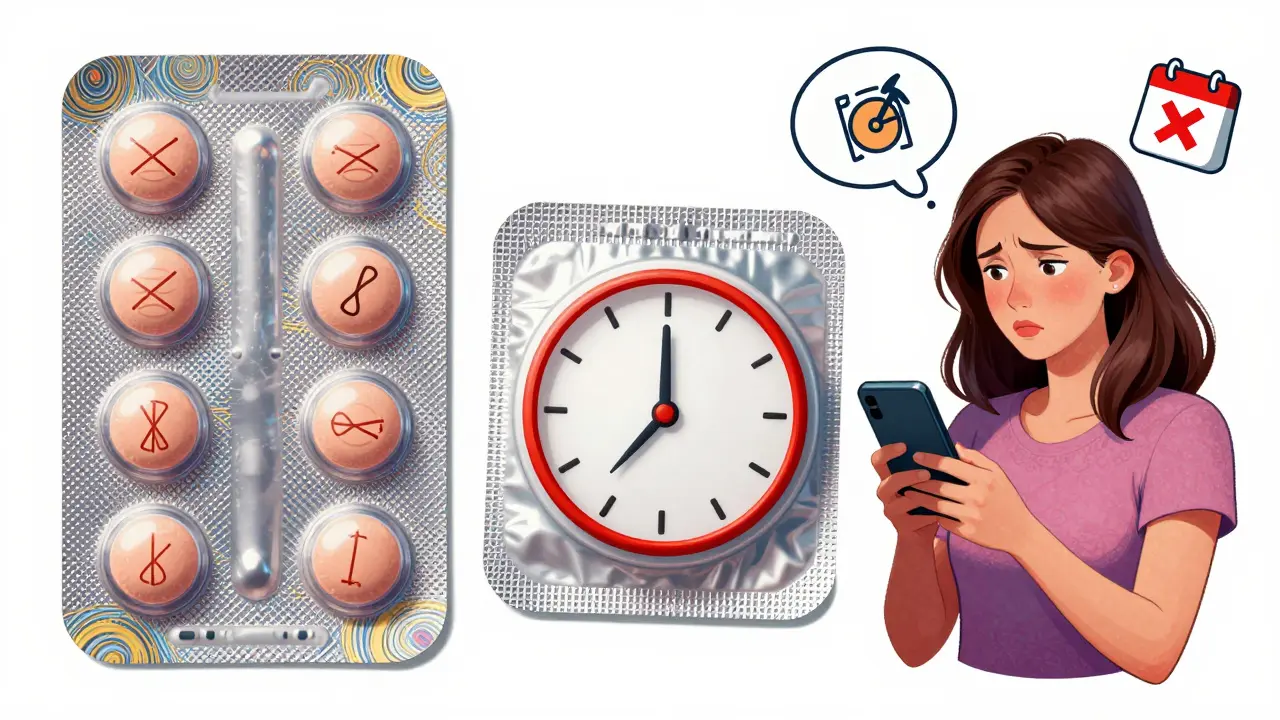
This is where most people get caught off guard. Birth control pills can lose effectiveness if you take certain medications. Here’s what to watch out for:
- Antibiotics: Only one-rifampin-reliably reduces pill effectiveness. But many doctors still recommend backup contraception while on any antibiotic, just in case.
- Anti-seizure drugs: Medications like carbamazepine, phenytoin, and topiramate can speed up how fast your body breaks down the hormones in the pill.
- HIV medications: Some antiretrovirals, especially protease inhibitors and non-nucleoside reverse transcriptase inhibitors, interfere with hormonal contraception.
- St. John’s Wort: This herbal supplement is a big one. It’s used for mild depression, but it can cut hormone levels by up to 50%. Avoid it while on the pill.
- Some antifungals: Griseofulvin can interfere, though newer antifungals like fluconazole usually don’t.
Always tell your doctor or pharmacist you’re on birth control pills before starting any new medication-even over-the-counter ones. If you’re on a drug that interferes, use condoms or another backup method for at least 7 days after stopping the interfering medication.
What If You Miss a Pill?
Missing a pill doesn’t mean disaster-but you need to act fast.
For combined pills:
- If you miss 1 pill: Take it as soon as you remember, even if that means taking two pills in one day. Then continue as normal. No backup needed unless you missed it by more than 24 hours during the first week.
- If you miss 2 pills in a row: Take two pills the day you remember, and two the next day. Use backup contraception (condoms) for the next 7 days.
- If you miss 3 or more: Throw out the rest of the pack. Start a new pack the same day. Use backup for 7 days. Consider emergency contraception if you had unprotected sex in the past 5 days.
For mini-pills:
- If you’re more than 3 hours late: Take the pill as soon as you remember. Use condoms for the next 48 hours. If you had sex in the past 5 days, consider emergency contraception.
Set a daily phone alarm. Link pill-taking to a habit-like brushing your teeth. That’s how most women stay on track.

When Should You Stop Using the Pill?
You can stop at any time. Fertility usually returns within weeks. Studies show 97% of women have a normal period within 90 days after quitting. There’s no waiting period. No “detox.” Your body restarts on its own.
But if you’ve been on the pill for years and want to switch, consider alternatives. If you struggle with consistency, an IUD or implant might be better. They last 3-10 years and are over 99% effective with typical use. No daily pills. No missed doses. Just set it and forget it.
And remember: pills don’t protect against STIs. If you’re not in a monogamous relationship, always use condoms. The pill prevents pregnancy-not infections.
Who Should Avoid Birth Control Pills?
Not everyone is a candidate. Avoid pills if you have:
- History of blood clots, stroke, or heart attack
- Uncontrolled high blood pressure
- Severe liver disease
- Known or suspected breast cancer
- Migraines with aura (especially if over 35)
- Smoking, especially if you’re over 35
If you’re unsure, talk to your provider. They’ll check your history, blood pressure, and risk factors before prescribing.
Can birth control pills cause weight gain?
Most studies show no significant weight gain from modern birth control pills. Some women report bloating or water retention in the first few months, but this usually fades. Long-term weight changes are more likely linked to lifestyle, stress, or aging-not the pill itself.
Do I need to take the pill at the exact same time every day?
For combined pills, you have some flexibility-within 12 hours is usually fine. But for mini-pills, you must take it within 3 hours of the same time daily. Missing that window can drop effectiveness significantly. Consistency is key.
Can I skip my period on the pill?
Yes. Many women skip the placebo week and start a new pack right away. This is safe and commonly done for medical reasons (like endometriosis) or personal preference. Talk to your provider first, but it’s a standard option.
Are generic birth control pills as good as brand names?
Yes. The FDA requires generics to have the same active ingredients, strength, and absorption rate as brand names. Some women notice slight differences in side effects due to inactive ingredients, but this is rare. Generics are safe and cost-effective.
What if I want to get pregnant after stopping the pill?
You don’t need to wait. Fertility returns quickly-often within a month. There’s no buildup or delay. If you haven’t had a period after 3 months, check in with your provider to rule out other causes.
Releted Post



Andy Dargon
Hi, I'm Aiden Lockhart, a pharmaceutical expert with a passion for writing about medications and diseases. With years of experience in the pharmaceutical industry, I enjoy sharing my knowledge with others to help them make informed decisions about their health. I love researching new developments in medication and staying up-to-date with the latest advancements in disease treatment. As a writer, I strive to provide accurate, comprehensive information to my readers and contribute to raising awareness about various health conditions.
Let’s be real - the 93% typical use rate for pills is wild when you compare it to IUDs at under 1%. It’s not that people are dumb, it’s that life happens. You forget, you travel, you get sick, you binge-watch Netflix and miss your window. I’ve seen friends go from ‘I got this’ to ‘why am I pregnant again?’ in six months. The pill is convenient until it’s not. And don’t even get me started on how many people don’t know about the 3-hour window for mini-pills. That’s a trap waiting to happen.
Also, St. John’s Wort? Yeah, that stuff is a silent killer for pill efficacy. People take it for ‘mild depression’ like it’s herbal tea. It’s not. It’s a metabolic grenade. And antibiotics? Most docs overwarn, but honestly? Better safe than sorry. I always say: if you’re on anything new, assume it’s sabotaging your birth control until proven otherwise.
Ugh. I hate how this article makes birth control sound like a chore. Like, just get an IUD already. Why are we still talking about pills like they’re the gold standard? They’re not. They’re a liability. I’ve been on them for 5 years and missed like 100 pills. I’m not a bad person - I’m just human. But society acts like if you can’t remember to take a pill every day, you deserve to get pregnant. That’s not helpful. That’s just judgment.
While the article provides a comprehensive overview of pill types and interactions, it should be noted that adherence metrics are often self-reported and thus subject to significant bias. Studies utilizing electronic monitoring (e.g., pill bottles with sensors) suggest that true adherence rates for combined pills may be closer to 70-75%, not the commonly cited 93% effectiveness rate. This discrepancy warrants further public health attention.
Yesss this is so real!! I switched to the mini pill after my doc said ‘you’re young, try it’ and I didn’t realize how strict it was. Missed by 4 hours once?? Panic. Then I got pregnant. Not fun. Now I use the implant and it’s LIFE CHANGING. No thinking. No alarms. Just… done. If you’re struggling with the pill - just go get an implant. Seriously. It’s like magic.
Bro. I had my girl take the pill while on fluconazole and didn’t even think twice. Then boom - surprise baby. 🤯 St. John’s Wort? Yeah, that stuff is the devil. Also - side note: I’ve seen girls on the pill get acne worse. Like, WTF? I thought this was supposed to help. And don’t even get me started on mood swings. My ex was a full-on zombie for 3 months. Not cute. 🧟♀️
TL;DR - pills are trash unless you’re a robot. Get an IUD. Or at least set 3 alarms. One for morning. One for lunch. One for 11pm. Even then you’ll still forget.
My sister did the pill for 2 years and then switched to the patch. She said the patch was way easier. No daily thing. Just stick it on. And honestly? She never missed once. I’m thinking of trying it too. Why do we still act like the pill is the only option? There are so many better ones now. I think the article should’ve said that more clearly.
It’s irresponsible to present the pill as a viable long-term solution for anyone under 25. The failure rate is too high. The side effects are too unpredictable. And the fact that women are expected to manage this level of precision - while simultaneously being told ‘you’re in control of your body’ - is a cruel joke. The real issue isn’t the pill. It’s that we don’t make long-acting contraception accessible, affordable, and normalized. This article reads like a pamphlet from 2005.
cool info but i think u forgot to mention that some antifungal creams for yeast infection can also affect the pill? i heard from my friend in india she got preggo after using clotrimazole cream and thought it was safe. just saying.
OMG I love this breakdown. I’m a nurse and I’ve seen so many people freak out over missed pills. Here’s the truth: if you miss one, don’t panic. Just take it ASAP. Two? Take two now, two tomorrow. Three? Start a new pack. And for mini-pills? If you’re late, use condoms for 48 hours - no drama. Also - side effects? They’re temporary. Most people think ‘I feel weird’ means ‘this isn’t for me.’ But 80% of the time? It’s just your body adjusting. Give it 3 months. If you’re still miserable? Switch. Not a crime.
And yes - generic pills? Totally fine. I’ve prescribed hundreds. Same active ingredients. Sometimes cheaper. Sometimes the inactive stuff irritates your stomach - but that’s rare. Don’t pay extra for a brand name unless you need to.
The data presented in this post is both accurate and clinically significant. However, it is imperative to emphasize that the cultural framing of hormonal contraception as a personal responsibility - rather than a public health imperative - perpetuates systemic inequities in reproductive access. Access to IUDs and implants remains disproportionately limited for low-income populations, and the burden of adherence disproportionately impacts marginalized communities. Policy reform, not individual optimization, is the necessary next step.
@7655 - I hear you. But here’s the thing: IUDs aren’t magic. They hurt to get in. They bleed for months. Some people can’t tolerate them. The pill isn’t the only option - but it’s still the only one most people can get on short notice without a clinic visit. Not everyone has insurance. Not everyone lives near a provider. Not everyone can afford the upfront cost. So yeah - IUDs are better. But pills? They’re the only thing some people have. We need both.