
Drug Safety Risk Estimator
When a new drug hits the market, it’s not just a win for pharmaceutical companies-it’s a potential turning point for patients who’ve run out of options. In 2024, the U.S. Food and Drug Administration (FDA) approved 50 new molecular entities, the highest number since 2018. That’s not just a statistic. It means real people are getting treatments that didn’t exist a year ago. But with every breakthrough comes a new set of questions: How safe is it? What are the hidden risks? And who should-and shouldn’t-take it?
First-in-Class Drugs Are Changing the Game
Of those 50 approvals, nearly half (24 drugs) were first-in-class, meaning they work in ways no other approved medication does. These aren’t just tweaks of old drugs-they’re entirely new mechanisms targeting diseases that have resisted treatment for decades.
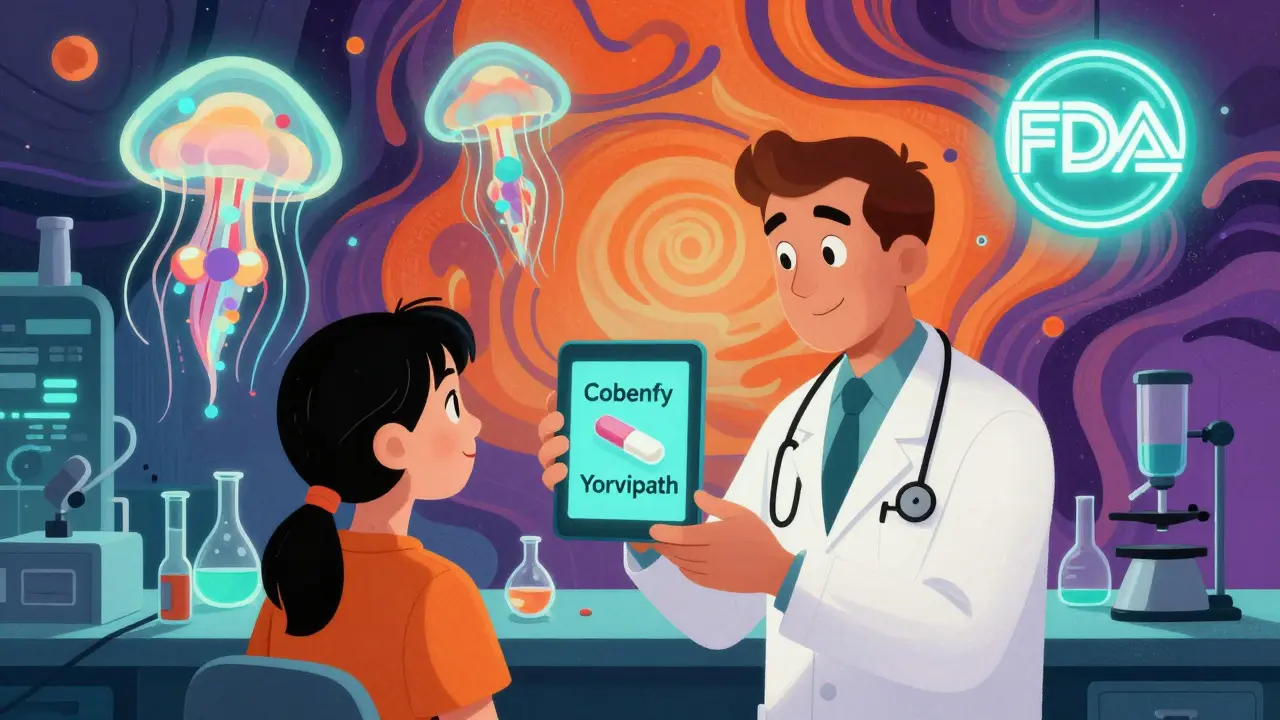
Take Cobenfy (a combination of xanomeline and trospium chloride). It’s the first new schizophrenia treatment in 27 years that doesn’t block dopamine. Instead, it targets muscarinic receptors in the brain. In clinical trials, it cut symptoms by 34% compared to placebo. The side effects? Nausea in 12% and constipation in 8%. That’s a big improvement over older antipsychotics, which often cause weight gain, tremors, and metabolic issues at rates above 25%.
Then there’s Yorvipath (palopegteriparatide), a long-acting version of parathyroid hormone for hypoparathyroidism. Patients on traditional therapy had to take calcium and vitamin D supplements daily, with frequent blood tests. Yorvipath lets 89% of patients maintain normal calcium levels without supplements. The most common side effects-nausea and dizziness-were far less frequent than with older treatments.
These drugs show something important: innovation doesn’t always mean more side effects. Sometimes, it means fewer.
Real-World Safety: What Happens After Approval
Clinical trials are tightly controlled. Real life? Not so much. That’s why the FDA now requires 24% of new drugs to have post-approval safety studies. These aren’t optional-they’re mandatory.
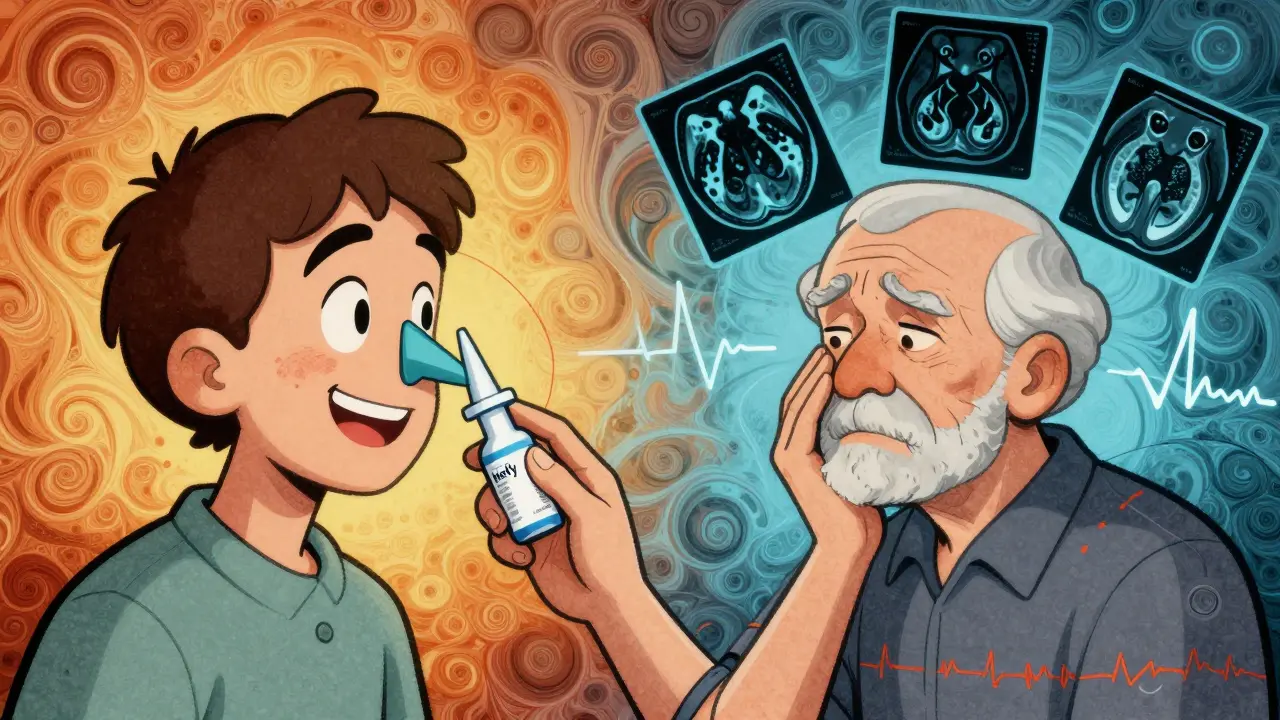
Take Kisunla (donanemab-azbt), the second Alzheimer’s drug targeting amyloid plaques. In trials, it slowed cognitive decline by 35% over 18 months. But 24% of patients developed ARIA-amyloid-related imaging abnormalities, which can cause brain swelling or bleeding. In real-world use, that number jumped to 29-31%. Why? Because trial participants were carefully screened. Real patients have other conditions: high blood pressure, diabetes, older age. The FDA’s safety alert in June 2025 warned that APOE ε4 homozygous patients (about 10% of the population) have a 4x higher risk of severe ARIA. That’s why Kisunla requires a REMS program-doctors must be trained, patients must be monitored with MRIs before and during treatment.
Same story with Neffy (epinephrine nasal spray). Approved in November 2024, it’s needle-free and easier to use than auto-injectors. In simulations, 98% of untrained people got it right. But in early real-world reports, 22% of severe anaphylaxis cases needed a second dose because Neffy absorbed slower than injectors. It’s not a failure-it’s a lesson. Not everyone is a candidate. People with heart disease or high blood pressure may need an injectable instead.
Repurposed Drugs, New Uses
Not every breakthrough comes from a brand-new molecule. Sometimes, an old drug finds a new job.
Zepbound (tirzepatide) was already approved for weight loss and type 2 diabetes. In late 2024, the FDA approved it for obstructive sleep apnea. Why? Because it helps people lose weight-and weight loss reduces airway blockage. In trials, users saw a 46% drop in apnea episodes. But 32% had nausea, vomiting, or diarrhea. That’s the same GI side effect profile as before. No new red flags, just a new use for an old tool.
Dupixent (dupilumab) went from eczema and asthma to COPD. In the BOREAS trial, it cut moderate-to-severe flare-ups by 29%. But 17% had injection site reactions, and 9% developed eosinophilia. These weren’t surprises-they were known risks from prior uses. The FDA didn’t approve it because it was magic. They approved it because the benefit outweighed the known risks.
What’s Coming in 2025
The pipeline doesn’t stop. Dozens of new drugs are waiting for FDA decisions this year.
Cardamyst (etripamil) is a nasal spray for sudden heart rhythm spikes. It works in under 30 minutes, and 74% of patients returned to normal rhythm. No IVs. No ER visits. Just a quick spray. Side effects? Mostly nasal discomfort. No heart rhythm problems. If approved, it could change how people with PSVT manage emergencies.
Elinzanetant (a dual neurokinin receptor blocker) could replace hormone therapy for hot flashes. It cuts them by 52%-better than placebo, and without the blood clot risks of estrogen. Side effects? Headache, dry mouth, constipation. Simple. Manageable. No more fear of strokes or clots.
And then there’s Wegovy (semaglutide). Already famous for weight loss, it’s now being reviewed for heart failure with preserved ejection fraction (HFpEF). In trials, it improved quality of life scores and cut body weight by over 13%. The big worry? GI side effects-44% had nausea. But no extra pancreatitis or gallbladder issues. If approved, it could become the first drug proven to help HFpEF patients feel better, not just survive.
Why Safety Isn’t Just About Side Effects
It’s not just about nausea or dizziness. It’s about who gets left out.
Many clinical trials still don’t include enough older adults, people with kidney or liver disease, or those on multiple medications. That’s why the FDA now requires diversity in trials. But gaps remain. A 78-year-old with three other drugs might react differently than a 50-year-old in a trial. That’s why doctors are being urged to have honest conversations.
As Dr. Rebecca Sarpong put it: "These drugs are powerful, but they’re not one-size-fits-all. A patient with kidney disease might need a lower dose of Yorvipath. Someone on blood thinners might not be a good candidate for Kisunla. We’re not just prescribing a pill-we’re managing a risk profile."
The FDA’s REMS program is expanding. For Cobenfy, patients must get trained on anticholinergic risks. For Kisunla, MRI monitoring is mandatory. These aren’t bureaucracy-they’re safety nets.
What Patients Should Ask
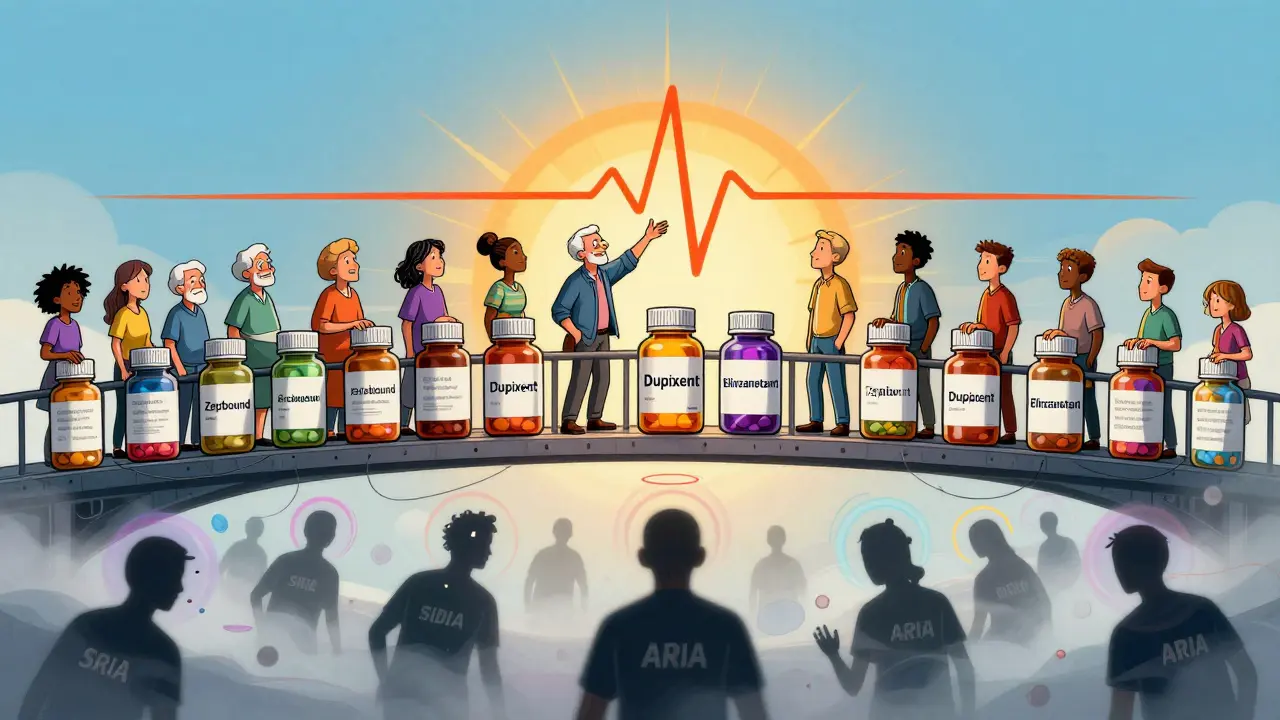
If your doctor offers one of these new drugs, don’t just say yes. Ask:
- Is this drug approved for my exact condition, or is this an off-label use?
- What are the real-world side effects-not just trial numbers?
- Do I need special monitoring? (MRIs, blood tests, etc.)
- Are there cheaper, safer alternatives?
- What happens if I stop it?
Some of these drugs cost over $20,000 a year. Insurance doesn’t always cover them. And some require special handling-like Kisunla’s monthly infusions or Neffy’s training sessions. Make sure you’re ready for the logistics before you start.
Bottom Line
The wave of new drugs in 2024-2025 is real. And it’s promising. But innovation without caution is dangerous. These aren’t magic bullets. They’re tools-with strengths, limits, and risks. The best outcomes come when patients and providers work together, using the latest data to make smart, personalized choices. The science is moving fast. Your safety shouldn’t be an afterthought.
Are new drugs safer than older ones?
New drugs aren’t inherently safer-they’re just different. Many newer drugs have fewer long-term side effects because they’re more targeted. For example, Cobenfy for schizophrenia avoids the weight gain and metabolic issues common with older antipsychotics. But they can introduce new risks, like ARIA with Alzheimer’s drugs. The key is understanding the trade-offs. Older drugs have decades of safety data. New drugs have better design but less real-world history.
Why do some new drugs have black box warnings?
Black box warnings are the FDA’s strongest safety alert. They’re used when a drug carries serious, life-threatening risks-even if those risks are rare. For example, fluoroquinolone antibiotics got black box warnings for tendon rupture and nerve damage. Newer drugs like Orlynvah avoid these risks entirely, which is why they’re being promoted as safer alternatives. But if a new drug does carry a black box warning, it means the benefits still outweigh the risks-for the right patients.
How long does it take for safety issues to show up after approval?
Some problems appear within weeks. Others take years. The FDA’s Adverse Event Reporting System (FAERS) catches early signals-like Neffy’s higher treatment failure rate in severe anaphylaxis. But long-term risks, like cancer or organ damage, may not show up until thousands of people use the drug for months or years. That’s why post-approval studies are required for nearly a quarter of new drugs. Patience and monitoring are part of the process.
Can I trust drugs approved through the accelerated pathway?
Yes-but with context. Accelerated approval means the drug showed strong early results in small studies, and the FDA expects confirmatory data later. Twelve of the 50 2024 approvals used this path. For example, Kisunla was approved based on amyloid reduction, with a requirement to prove cognitive improvement in a follow-up study. These drugs aren’t shortcuts-they’re conditional approvals. Patients get access faster, but ongoing monitoring is critical. Don’t assume accelerated = less safe. It means the benefit is urgent, and the safety plan is ongoing.
Why do some drugs have different safety profiles in different countries?
Because populations differ. The FDA and EMA now share safety data, and 34% of 2024 approvals were approved in both the U.S. and Europe. But genetic differences, diet, coexisting illnesses, and even how drugs are used can change safety outcomes. A drug with 10% liver toxicity in one trial might show 5% in another population. That’s why global collaboration matters-it gives us a fuller picture. If a drug is approved in both regions, it’s a good sign the safety profile holds up across diverse groups.
Releted Post

Andy Dargon
Hi, I'm Aiden Lockhart, a pharmaceutical expert with a passion for writing about medications and diseases. With years of experience in the pharmaceutical industry, I enjoy sharing my knowledge with others to help them make informed decisions about their health. I love researching new developments in medication and staying up-to-date with the latest advancements in disease treatment. As a writer, I strive to provide accurate, comprehensive information to my readers and contribute to raising awareness about various health conditions.
It’s funny how we celebrate these breakthroughs like they’re miracles, but never really talk about who gets left behind.
These drugs are incredible-truly-but they’re also luxury items disguised as medicine. A 78-year-old with three chronic conditions and Medicare isn’t getting Kisunla. They’re getting a pamphlet and a prayer.
I’ve sat in too many clinics where the doctor says, ‘This could help,’ but the real question is: ‘Can you afford to survive the side effects?’
We talk about safety profiles like they’re math problems, but they’re human ones.
Real safety isn’t just about ARIA or nausea-it’s about whether you can get to the MRI center, afford the follow-up, or take time off work when your stomach rebels for three weeks.
And don’t get me started on the fact that most trials still exclude people over 75 or those on more than two meds.
We’re not just approving drugs-we’re approving who gets to be healthy.
It’s not enough to say ‘it works.’ We have to ask: who can actually use it?
That’s the real safety profile.
And until we start measuring that, we’re just rearranging deck chairs on a very expensive ship.
Just want to say thank you for writing this. So many people think new = better, but it’s more like new = different.
Yorvipath changed my mom’s life. No more daily calcium pills, no more blood draws every two weeks.
She still gets a little dizzy sometimes, but she’s sleeping through the night for the first time in years.
And yeah, it’s expensive-but our insurance covered it after we appealed.
Don’t give up on asking. If you’re scared, ask your pharmacist. They’re the real heroes behind the scenes.
And if your doctor says ‘it’s not for you,’ ask why. Not ‘why not?’-but ‘why not for me?’
You deserve to know the whole story.
Ugh. Another ‘pharma is great’ fanboy post. Let’s be real: 50 new drugs? That’s 50 new ways to make people dependent on corporate prescriptions.
And don’t even get me started on ‘first-in-class’-that’s just code for ‘we haven’t tested this on real people yet.’
And don’t forget: 12 were accelerated. That’s not innovation. That’s corporate pressure.
Meanwhile, insulin still costs $300.
So yeah. Congrats. You got your shiny new drug. Now pay for it.
And when your kidneys fail from the ‘safe’ side effects? That’s on you.
From India, I see this differently.
Most of these drugs? Unaffordable here. Even the generics take 3-5 years to arrive.
But the science? Fascinating.
Cobenfy targeting muscarinic receptors? That’s elegant. No dopamine blockade? Smart.
But we don’t have MRIs in rural clinics. We don’t have trained pharmacists for REMS programs.
So yes, innovation is real-but access is a whole other equation.
Maybe the real breakthrough isn’t the drug.
It’s figuring out how to deliver it without a 7-figure bank account.
One thing everyone’s missing: the difference between trial data and real-world outcomes isn’t a bug-it’s a feature of how we test drugs.
Trials are like controlled lab experiments. Real life is a messy kitchen with three kids, a cat, and a half-empty coffee cup.
Kisunla’s 24% ARIA in trials? Real world jumped to 30% because people with uncontrolled hypertension or prior strokes got included.
That’s not failure. That’s data.
And that’s why the FDA’s push for post-market studies matters.
It’s not bureaucracy. It’s science catching up to reality.
Also: Zepbound for sleep apnea? Brilliant. Weight loss helps. But if you can’t stick to the diet? The drug won’t fix that. It’s a tool, not a magic wand.
It is with profound philosophical contemplation that I reflect upon the ontological implications of pharmaceutical innovation within the neoliberal medical-industrial complex.
One is compelled to interrogate whether the ontic emergence of novel molecular entities constitutes genuine progress-or merely the epistemological reconfiguration of commodified suffering.
Are we truly liberating patients from disease, or are we merely replacing one form of biopolitical control with another, dressed in the aesthetic of scientific advancement?
The REMS program, while ostensibly a safeguard, functions as a bureaucratic apparatus of surveillance, wherein the body becomes a site of regulatory compliance.
And yet-could it be that in this very act of monitoring, we are acknowledging the fragility of human physiology? A paradox, perhaps.
One must ask: is safety, in this context, an ethical imperative-or merely a liability mitigation strategy?
And if the latter, then what, precisely, are we optimizing?
Not health.
Not well-being.
But shareholder value.
And therein lies the tragedy.
Look, I get the hype. New drugs, breakthroughs, all that.
But let’s not pretend this isn’t just pharma’s way of selling the same old pills under a new name.
Wegovy for heart failure? Really? You’re telling me a weight-loss drug is the first thing that’s helped HFpEF? That’s not science-that’s desperation.
And don’t even get me started on Neffy. Needle-free? Cool. But 22% of severe reactions need a second dose? That’s not innovation. That’s a design flaw.
And the fact that we’re calling this ‘progress’ while people still can’t afford insulin? That’s not innovation. That’s theft.
They’re not curing disease. They’re creating new markets.
And we’re all just here, nodding along like it’s a TED Talk.
Meanwhile, the ER is still full of people who can’t afford to refill their meds.
So yeah. Congrats. Another drug. Another bill. Another excuse to not fix the system.
I’m a nurse in rural Oregon.
My patients love these new drugs-until they get the bill.
One woman on Cobenfy told me, ‘For the first time, I don’t feel like a zombie.’
Then she showed me her EBT card.
She’s choosing between her meds and groceries.
And yeah, the science is amazing.
But medicine isn’t just science.
It’s dignity.
It’s access.
It’s whether your pharmacist remembers your name.
And right now, we’re building these incredible tools… and leaving half the people behind because they don’t have a credit score.
That’s not innovation.
That’s injustice with a FDA stamp.
So we’ve got a nasal spray for heart attacks now? Neffy? Cool. Next up: a TikTok ad for epinephrine with a dance challenge.
Meanwhile, my cousin’s dad had anaphylaxis last year. Two doses. Both failed. He’s fine now. But the ER bill? $18K.
And the ‘needle-free’ thing? Yeah, it’s easier. But if it doesn’t work? You’re still screwed.
Pharma’s selling hope. I’m selling reality.
And reality? It’s got a co-pay.
Someone above said ‘these aren’t magic bullets.’
True.
But they’re also not just ‘tools.’
They’re lifelines.
My sister had schizophrenia since she was 19. Took 12 meds. All made her gain 60 lbs. Couldn’t work. Couldn’t leave the house.
Cobenfy? She lost 20 lbs in three months. Started painting again.
She still gets nauseous. But she’s alive.
And she’s happy.
So yeah. The system’s broken.
But don’t tell me the drug isn’t helping.
It’s not perfect.
But it’s real.
And for some of us? That’s everything.
Just wanted to say-Kisunla’s MRI thing? Total pain in the butt.
But my mom did it. Got the scans. Got the green light.
And yeah, it’s expensive.
But she’s not dying anymore.
She’s watching her grandkids play soccer.
So I don’t care if it’s a ‘luxury drug.’
It’s a miracle.
And if you’re mad about the cost? Fight the system.
Don’t trash the science.
It’s not the drug’s fault that insurance is a maze.
And yeah, side effects suck.
But so does watching your mom fade away.
Choose wisely.
But don’t choose fear.