
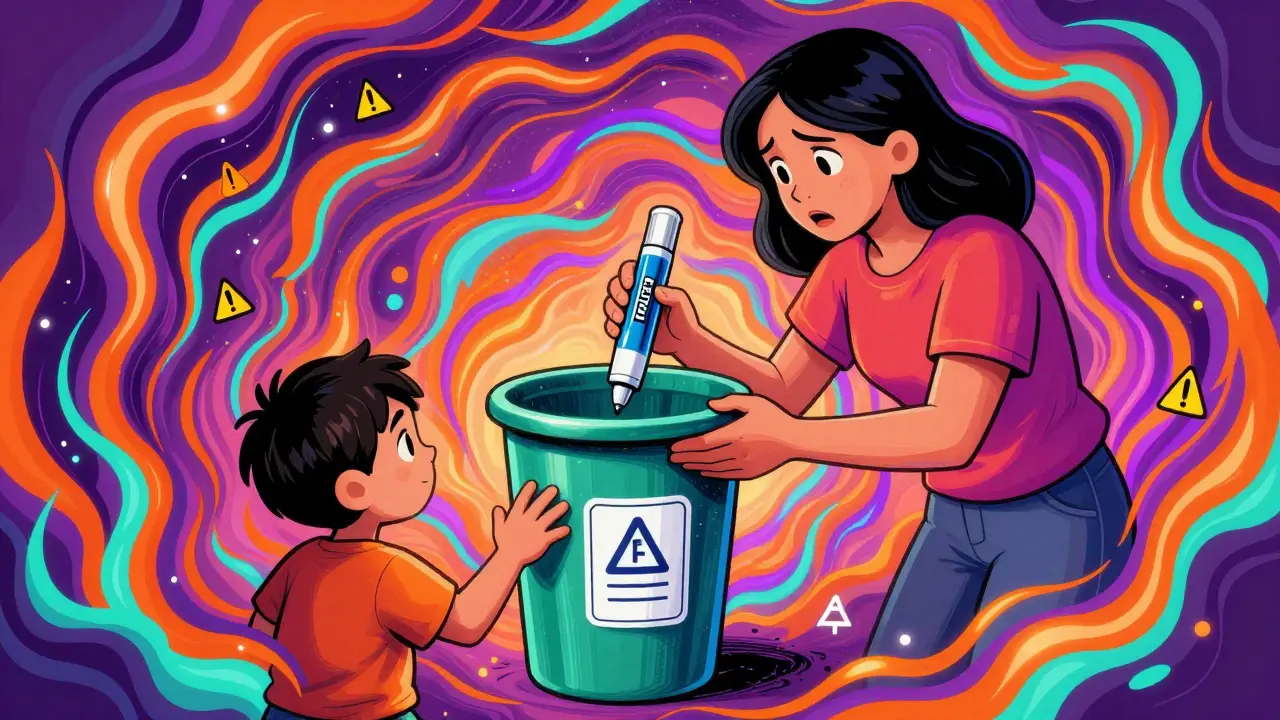
Expired EpiPens, inhalers, and medicated patches aren’t just old medicine-they’re potential hazards. If you toss them in the trash without care, you could be putting kids, pets, sanitation workers, or the environment at risk. The FDA reports that 12% of accidental poisonings in children involve improperly discarded medications. That’s not a small number. It’s a warning. These devices contain powerful drugs that don’t just disappear when they expire. They need proper handling.
Why You Can’t Just Throw Them Away
EpiPens have needles. Inhalers are pressurized cans. Patches stick to your skin and still hold medicine. If you throw them in the regular trash, someone might find them. A child might play with an EpiPen like a toy. A pet might chew on a patch. A sanitation worker might get stuck by a needle. Even worse, these items can leak into soil and water. The USGS found pharmaceuticals in 80% of tested waterways. That’s not science fiction-it’s real contamination from things we throw out without thinking.How to Dispose of Expired EpiPens
An EpiPen is not just a plastic device. It’s a medical sharp with a needle inside. That means it must be treated like a syringe or lancet. The FDA and the American Academy of Allergy, Asthma & Immunology both say: do not dismantle it. Don’t try to remove the needle. Don’t crush it. Don’t flush it. That’s dangerous and illegal in many places. The best way to get rid of an expired or used EpiPen is to return it to your doctor’s office or pharmacy when you pick up your new one. Most allergists and clinics have sharps disposal bins just for this. If your provider doesn’t offer it, ask them to help you find a nearby drop-off site. You can search for DEA-authorized collectors using the DEA National Take Back Initiative website. There are over 14,000 locations across the U.S. If you can’t get to a drop-off right away, store it safely at home. Put the EpiPen in a hard plastic container-like an empty laundry detergent bottle-with a tight lid. Label it clearly: BIOHAZARD, SHARPS, and DO NOT RECYCLE. Keep it out of reach of children and pets. Never put loose EpiPens in a recycling bin. Even empty ones need special handling. State rules vary. In California, you must use a certified sharps collection center or mail-back program. In Texas, you can throw it in the trash if it’s in a sealed, labeled container. Always check your state’s rules before tossing anything.What to Do with Expired Inhalers
Inhalers are tricky. They’re small, but they contain propellants that can explode if crushed or burned. That’s why you should never put them in the recycling bin or trash without checking first. About 300 million inhalers are thrown away every year in the U.S. Most end up in landfills or incinerators, releasing greenhouse gases. The safest option is to take them to a pharmacy that accepts inhalers. Walgreens and CVS have pilot programs in some states, but not all locations participate. A 2022 survey found only 47% of Walgreens stores took them. Call ahead before you go. Some cities, like New York City, have special Household Special Waste Drop-Off Sites for aerosols. Check your local government’s waste management site for details. If no drop-off is available, remove the metal canister from the plastic mouthpiece. The plastic part can go in the recycling if your local program accepts #5 plastic. The metal canister? Do not puncture it. Store it separately in a sealed container and contact your local hazardous waste facility. They may accept it during special collection days.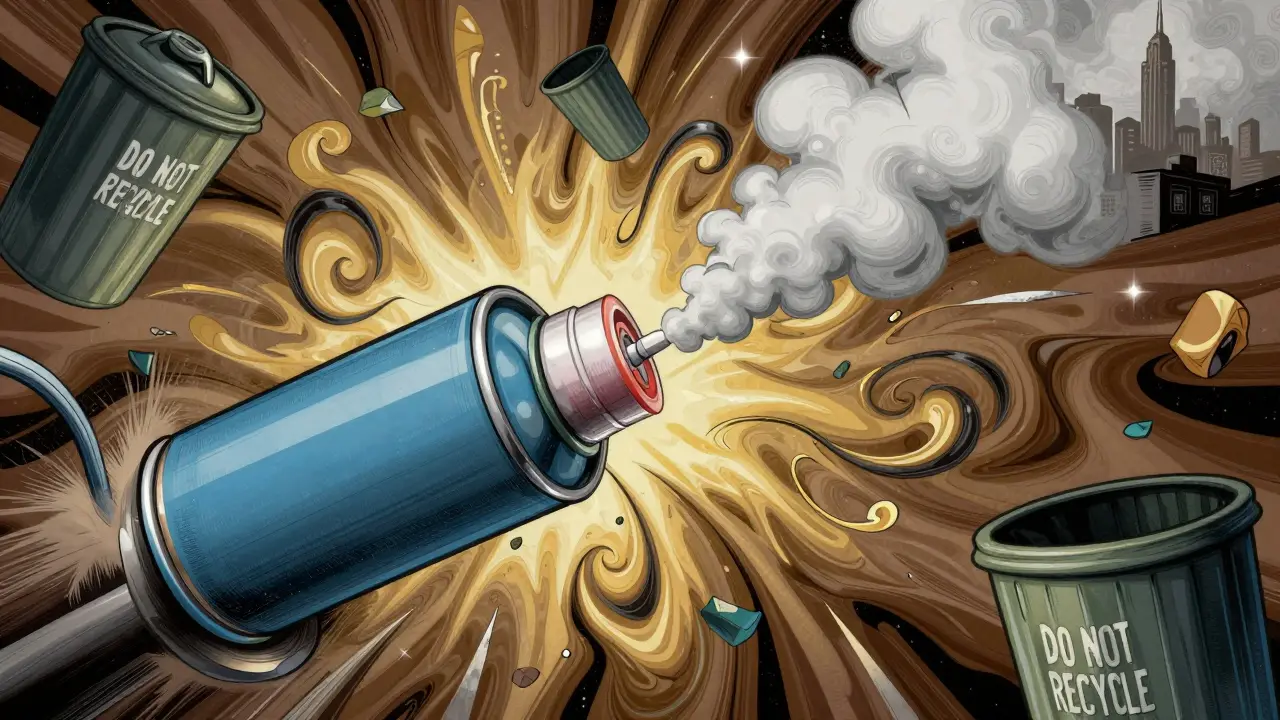
How to Dispose of Medicated Patches
Patches are the most dangerous if thrown away carelessly. Even after you peel them off, they still contain up to 80% of the original drug. Fentanyl patches, for example, can kill a child if they lick or chew one. That’s why the FDA has a flush list-medications you should flush down the toilet immediately. Fentanyl, buprenorphine, and some other strong patches are on that list. If your patch is on it, flush it right away. No waiting. No folding. Just flush. The FDA says this is the only way to prevent accidental exposure. If your patch isn’t on the flush list, fold it in half with the sticky sides together. This traps the medicine inside. Then put it in a sealed container with something unappetizing-like coffee grounds, cat litter, or dirt. Label the container and toss it in the trash. Never leave patches on the counter or in the bathroom where a child might find them. There’s also DisposeRx®-a powder you mix with water to turn pills and liquids into a gel. But it doesn’t work for patches. The adhesive doesn’t dissolve, and the medicine stays exposed. So skip it for patches.Use Take-Back Programs When You Can
The DEA runs two National Prescription Drug Take Back Days every year-in April and October. In October 2022, they collected nearly a million pounds of unused meds. That’s a lot of safety. These events are held at police stations, pharmacies, and hospitals. No questions asked. No ID needed. Just bring your expired meds. If you can’t wait for the next event, look for permanent drop-off boxes. Many pharmacies, hospitals, and fire stations have them. Some states require pharmacies to accept medications. In California, manufacturers must now fund disposal programs under SB 212, which started in January 2024. That means more options are coming.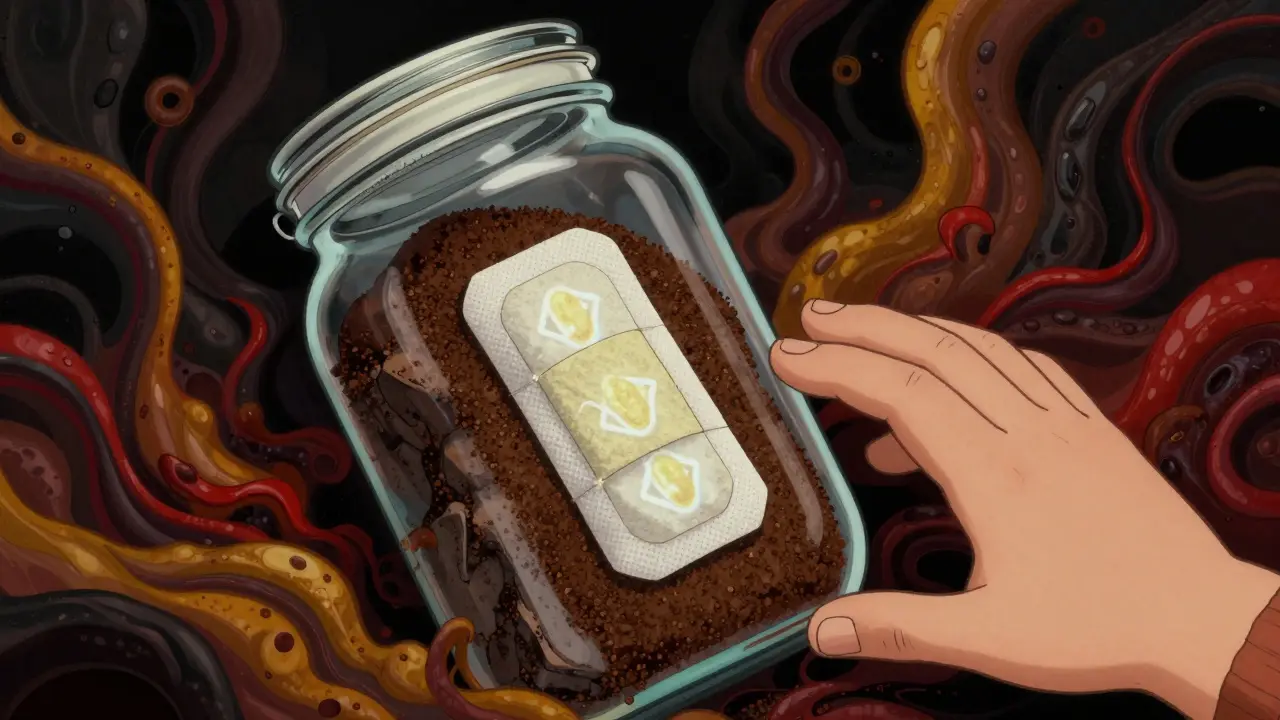
What Not to Do
Don’t flush non-listed medications unless told to. Don’t pour pills down the sink. Don’t burn inhalers. Don’t throw EpiPens loose in the trash. Don’t assume your local recycling center takes them. And don’t wait until you’re out of space to deal with them. Keep a dedicated container for expired meds and check it monthly.Plan Ahead to Avoid Waste
The best way to avoid disposal problems is to prevent excess. Don’t stockpile EpiPens. Only get what you need. Check expiration dates every month. Set a phone reminder. If you’re prescribed a new patch or inhaler, ask your pharmacist: “What do I do with the old one?” Most will tell you where to drop it off. Some pharmacies sell sharps containers for $5-$15. They’re worth it. They’re designed to be safe, leak-proof, and labeled correctly. Use one. It’s cheaper than a hospital visit from a needle stick.What’s Changing in 2025
The EPA is tightening rules on pharmaceutical waste under the Resource Conservation and Recovery Act. More states are following California’s lead, requiring drug makers to pay for disposal programs. Expect to see QR codes on packaging soon-scan one and get disposal instructions right on your phone. Mylan, the maker of EpiPens, started testing this in late 2023. The goal? Make disposal as easy as buying the medicine. Right now, it’s not. A 2023 Consumer Reports survey found 73% of people didn’t know their state’s rules. That’s changing. But until then, you have to take the lead.Can I throw expired EpiPens in the regular trash?
Only if your state allows it and you follow strict rules. First, place the EpiPen in a hard, puncture-proof container like a plastic detergent bottle. Label it clearly with "SHARPS," "BIOHAZARD," and "DO NOT RECYCLE." Even then, many states like California require drop-off at a certified facility. The safest option is always returning it to your doctor or pharmacy.
Are inhalers recyclable?
The plastic mouthpiece might be recyclable if it’s #5 plastic and your local program accepts it. But the metal canister inside is pressurized and dangerous if punctured. Never put it in the recycling bin. Remove the canister, seal it in a bag, and contact your local hazardous waste facility. Some cities have special aerosol collection days.
Should I flush my medicated patch?
Only if it’s on the FDA’s flush list. Fentanyl patches and certain opioids are on it because they’re deadly if misused. If your patch is listed, flush it immediately. If not, fold it sticky-side together, put it in a sealed container with coffee grounds or cat litter, and throw it in the trash. Never flush patches that aren’t on the list-it’s unnecessary and can harm water systems.
Where can I find a drug take-back location near me?
Visit the DEA’s National Take Back Initiative website and use their locator tool. You can also call your local pharmacy, hospital, or police station. Many have permanent drop-off boxes. If you’re in a rural area, options may be limited-check with your county health department. DEA events happen twice a year, but permanent locations are growing.
What if my pharmacy won’t take my EpiPen?
Many pharmacies only take pills, not sharps. That’s common. Call your allergist or primary care provider-they often have sharps bins. If not, search for hospitals or health clinics nearby. Some fire stations and public health departments also accept them. Don’t give up. If you’re told no, ask: "Do you know where I can take it?" Most will point you in the right direction.
Releted Post

Andy Dargon
Hi, I'm Aiden Lockhart, a pharmaceutical expert with a passion for writing about medications and diseases. With years of experience in the pharmaceutical industry, I enjoy sharing my knowledge with others to help them make informed decisions about their health. I love researching new developments in medication and staying up-to-date with the latest advancements in disease treatment. As a writer, I strive to provide accurate, comprehensive information to my readers and contribute to raising awareness about various health conditions.
I used to just toss my old patches in the trash until my niece nearly ate one. Now I keep a locked box in the closet. Life changes fast when you realize how dangerous simple things can be.
Don't wait for a tragedy to change your habits.
People in India just flush everything and call it a day. Why make it complicated? The ocean doesn't care.
The FDA's flush list is based on rigorous toxicological data, not convenience. Disposing of fentanyl patches via municipal waste systems increases environmental bioaccumulation risks by up to 300% compared to flushing, per EPA modeling. This isn't opinion-it's epidemiology.
Americans treat medication disposal like a chore. In the UK, we have pharmacy take-backs as standard. If you can't be bothered to follow basic public health protocols, perhaps you shouldn't be prescribed anything at all.
I started keeping a shoebox labeled 'EXPPIRED MEDS' by my door. Every month I drop it off at the pharmacy. It's not a big deal. Just don't let it pile up. Small habits save lives.
We treat medicine like disposable consumer goods. But it's not. It's concentrated biology. Every patch, every inhaler, every needle carries the weight of someone's survival. Maybe the real problem isn't disposal-it's how we value health in the first place.
My grandma used to save every pill bottle. Now I tell her, 'If it's expired, let it go.' She cried. But she also started using the take-back bin. Progress isn't loud. It's quiet.
Just did my monthly med drop-off! 🌱 Took my old EpiPen to CVS-no questions, no hassle. Seriously, if you're still tossing them in the trash, you're playing Russian roulette with a toddler nearby. Don't be that person.
I live in a small town. The nearest drop-off is 45 minutes away. So I keep mine in a locked Tupperware with cat litter. It’s not ideal but it’s safer than leaving it on the counter. We do what we can.
bro the DEA take back days are fire. i went last year and they gave me a free water bottle. also my grandma’s expired oxy patches got taken. no judgment. just help. we all mess up.
The elegance of responsible disposal lies not in its complexity, but in its humility. We are not merely consumers-we are stewards of biohazardous legacy. Each EpiPen returned is a quiet act of reverence for the vulnerable. The FDA’s guidelines are not bureaucratic noise; they are the whisper of a society choosing compassion over convenience. Let us not mistake efficiency for ethics.
Patches are the silent killers. The adhesive doesn't degrade. The drug leaches. Even after 2 years, a fentanyl patch can deliver a lethal dose if licked. That's not speculation-that's pharmacokinetics. And yeah, flushing is the only safe way for listed meds. Stop overthinking it.
You people overcomplicate everything. Just throw it in the trash. India does it. China does it. Why should we suffer?