
Rifampin Birth Control Safety Calculator
Calculate Your Backup Contraception Period
Your Backup Contraception Period
Critical Safety WindowStart Using Backup Immediately when you begin rifampin treatment. Continue backup contraception for 28 days after your last dose.
When you’re on rifampin for tuberculosis or another infection, your body is working hard to kill bacteria. But what you might not realize is that it’s also quietly breaking down your birth control-fast. This isn’t a rumor. It’s a well-documented, clinically significant interaction that can lead to breakthrough ovulation and unplanned pregnancy-even if you take your pill every day without missing a single dose.
Why Rifampin Breaks Down Birth Control
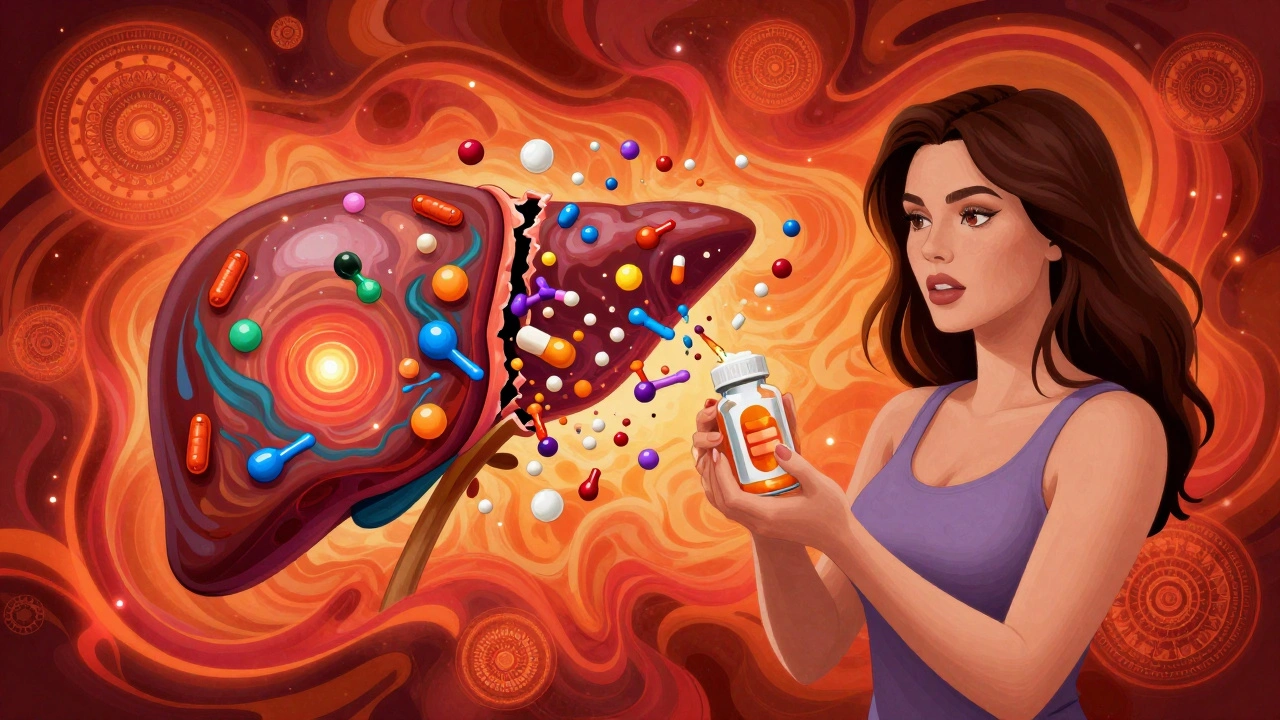
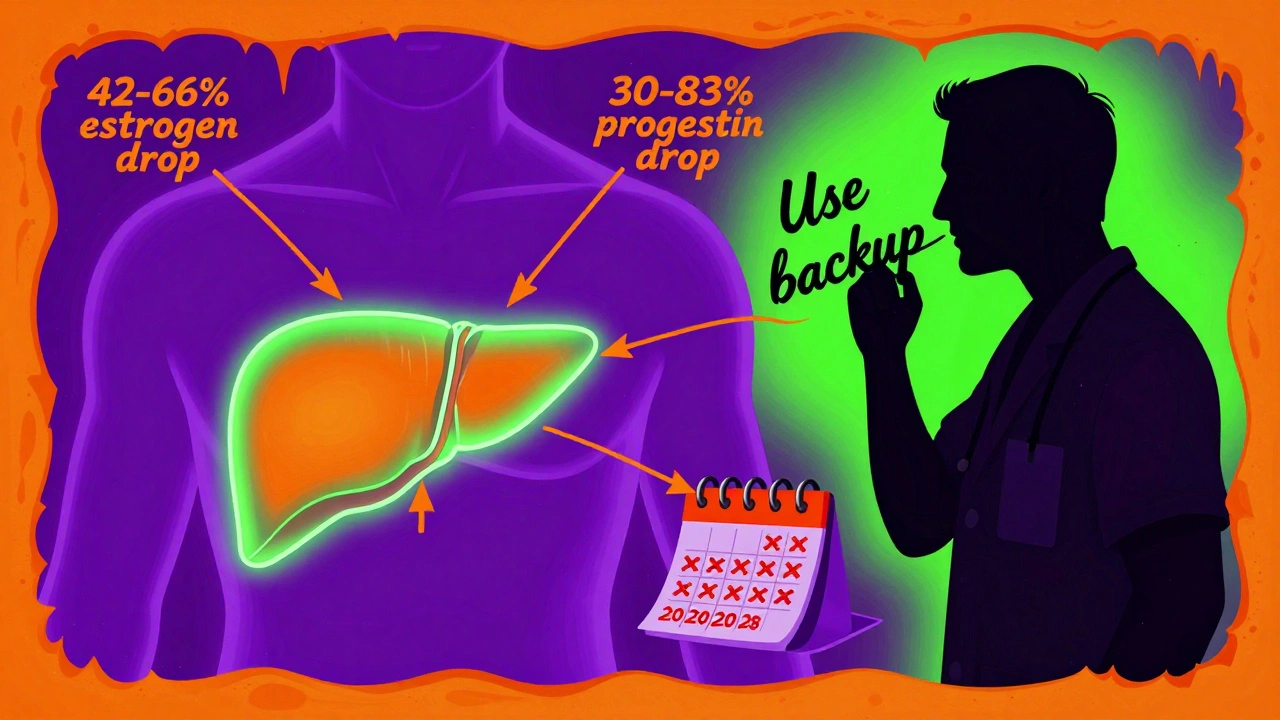
Rifampin doesn’t just kill germs. It turns your liver into a hormone-processing machine. Specifically, it strongly activates enzymes called cytochrome P450, especially CYP3A4. These enzymes are responsible for breaking down many drugs, including the estrogen and progestin in hormonal contraceptives. When rifampin is in your system, your body metabolizes these hormones so quickly that they never reach the levels needed to stop ovulation.Studies show estrogen exposure (ethinyl estradiol) drops by 42% to 66% when taken with rifampin. Progestin levels? They can plummet by 30% to 83%. That’s not a small change. That’s enough to throw off your cycle, trigger breakthrough bleeding, and-worst case-let ovulation happen without you even knowing.
Unlike most antibiotics, rifampin doesn’t just interfere with absorption or gut bacteria. It rewires your liver’s metabolism. And that’s why it’s the only antibiotic with this level of proven impact on birth control.
It’s Not Just the Pill
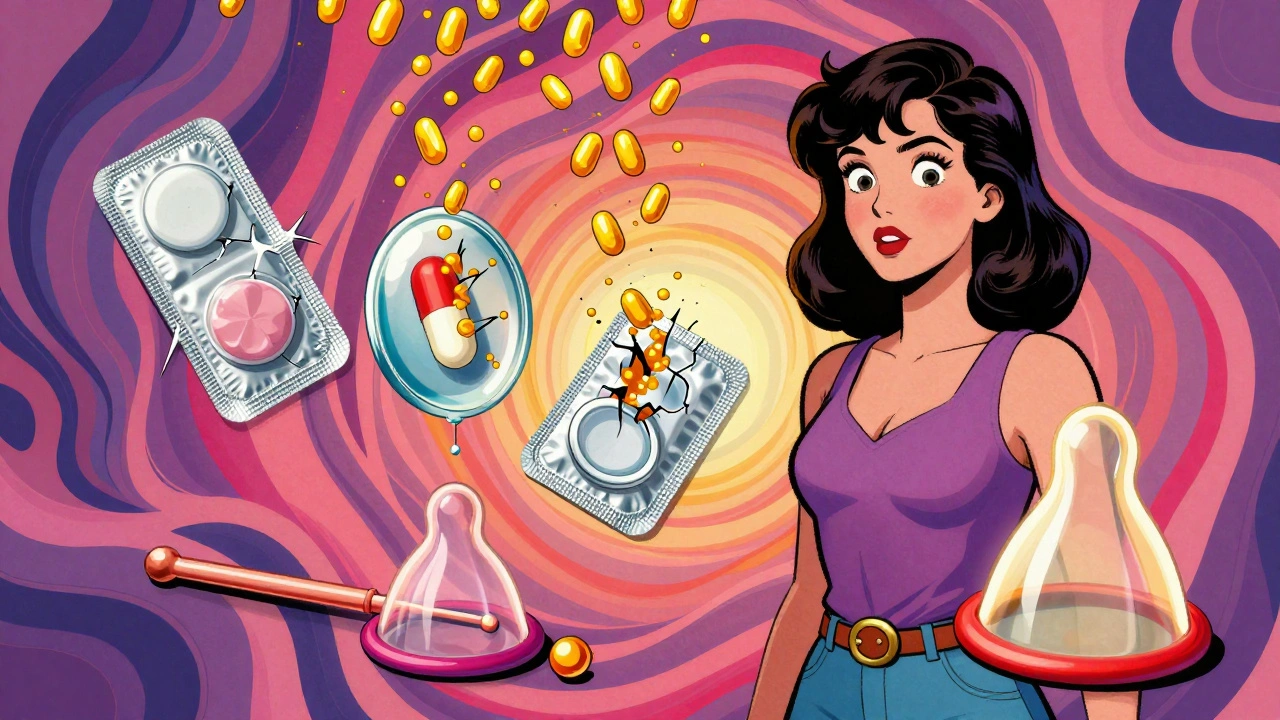
People often think this only affects oral contraceptives. It doesn’t. The same thing happens with the patch, the ring, and any other combined hormonal method that contains estrogen and progestin. Even if you’re using a long-acting method like the implant, rifampin can still reduce hormone levels enough to risk ovulation.Progestin-only pills (mini-pills) are especially vulnerable. They’re already low-dose, and rifampin pushes them even further below the threshold needed to suppress ovulation. The CDC and WHO both warn that relying on any hormonal contraceptive while taking rifampin is risky.
Rifampin vs. Other Antibiotics
You’ve probably heard rumors that antibiotics like amoxicillin or azithromycin can mess with birth control. That’s a myth. For over 20 years, research has shown that only rifampin-and to a lesser extent, its cousin rifabutin-have this effect.A 2018 systematic review analyzed every study on antibiotics and hormonal contraception. It found zero evidence that penicillin, tetracycline, metronidazole, or any other common antibiotic reduced contraceptive effectiveness. Yet, in the same review, rifampin stood out as the only one consistently linked to lower hormone levels and breakthrough ovulation.
Even rifabutin, which is sometimes used as an alternative to rifampin for TB treatment, has a weaker effect. Studies show it doesn’t trigger ovulation in the same way. But rifampin? It’s the gold standard for enzyme induction-and the biggest threat to hormonal birth control.
What the Experts Say
The CDC classifies rifampin as a Category 3 interaction with combined hormonal contraceptives. That means: the risks outweigh the benefits. The American College of Obstetricians and Gynecologists (ACOG), the World Health Organization, and the American Academy of Family Physicians all agree: you cannot rely on birth control pills, patches, or rings while taking rifampin.Dr. David J. Carpenter from the American Academy of Family Physicians put it plainly: "Pharmacokinetic and ovulation outcomes support a clinically relevant drug interaction between OCPs and rifampin."
Real-world cases back this up. One woman on Reddit shared she got pregnant while taking Ortho Tri-Cyclen and rifampin for TB-even though she never missed a pill. Her OB/GYN confirmed the interaction was the likely cause. Another case from the UK’s Committee on Safety of Medicines tracked 150 reports of contraceptive failure linked to antibiotics between 1970 and 1999. Rifampin was the clear common thread.
What You Should Do
If you’re prescribed rifampin and use hormonal birth control, here’s what you need to do right now:- Stop relying on your pill, patch, or ring. Even perfect use won’t protect you.
- Use a backup method. Condoms are the easiest and most accessible option. They’re also the only method proven to prevent pregnancy during rifampin use.
- Keep using backup for 28 days after your last rifampin dose. The enzyme-inducing effect doesn’t disappear the day you stop taking it. It takes about four weeks for your liver to reset.
- Consider switching to a non-hormonal method. If you’re on rifampin for more than a few weeks, talk to your doctor about a copper IUD or a progestin-only implant. These aren’t affected by liver enzymes and offer long-term, reliable protection.
Some clinicians suggest switching to a higher-dose estrogen pill (50 mcg ethinyl estradiol) to compensate. But there’s no solid evidence this works. The FDA hasn’t approved any higher-dose regimen for this purpose, and the risk of blood clots increases with higher estrogen. It’s not worth the gamble.
What’s Not Being Said
Many women don’t realize how long this interaction lasts. If you’re on rifampin for TB treatment, that could be six months or longer. That’s not a short-term hiccup. That’s a major lifestyle adjustment.And it’s not just about pregnancy. Hormonal fluctuations from this interaction can cause mood swings, headaches, and irregular bleeding-symptoms that might be mistaken for side effects of rifampin itself. That’s why women often don’t connect the dots until it’s too late.
There’s also a gap in awareness among healthcare providers. A 2024 NIH review found that while the science is clear, many clinicians still don’t routinely counsel patients about this risk. If your doctor doesn’t mention it, ask. Don’t assume they know you’re on birth control.
Looking Ahead
Researchers are exploring ways to predict who’s most at risk. Early work from Harvard suggests genetic testing for CYP3A4 enzyme activity might one day help identify women who metabolize hormones faster than average. But right now, that’s still experimental.Pharmaceutical companies haven’t developed a "rifampin-proof" contraceptive. No new pills, patches, or rings are being designed to resist enzyme induction. So for now, the only reliable solution is simple: use backup contraception.
This isn’t about being paranoid. It’s about knowing your body’s limits. Rifampin saves lives. But it doesn’t care if you’re trying to avoid pregnancy. Your birth control doesn’t stand a chance against it.
Can I still use my birth control pill if I take rifampin for a short course?
No. Even a short course of rifampin-like 7 to 14 days-can reduce hormone levels enough to cause ovulation. The interaction happens quickly, and the risk isn’t worth taking. Use condoms or another backup method for the entire time you’re on rifampin and for 28 days after your last dose.
Does rifabutin have the same effect as rifampin?
Rifabutin has a weaker effect. Studies show it doesn’t typically cause breakthrough ovulation, and hormone levels stay closer to normal. But it’s still not considered completely safe. Most guidelines recommend using backup contraception with rifabutin too, especially if you’re on long-term treatment or have other risk factors.
What about IUDs? Are they safe with rifampin?
Yes. Copper IUDs are completely unaffected by rifampin because they don’t rely on hormones. Progestin-only IUDs (like Mirena or Kyleena) are also safe. Unlike oral contraceptives, the hormone in these IUDs is released locally into the uterus and doesn’t rely on liver metabolism to stay effective. They’re the best alternative if you need long-term contraception during rifampin treatment.
I got pregnant while on rifampin and birth control. Was it my fault?
No. This interaction is not your fault. It’s a well-documented, pharmacologically proven drug interaction that even the most careful users can’t prevent. The issue isn’t adherence-it’s pharmacokinetics. Your body was breaking down the hormones faster than your birth control could work. That’s why experts say you need backup protection, not just perfect pill-taking.
Can I switch to a different antibiotic to avoid this?
Sometimes, yes. If you have a bacterial infection that’s not tuberculosis, your doctor may be able to prescribe a different antibiotic that doesn’t interfere with birth control. But if you’re being treated for TB, rifampin is often the most effective first-line drug. Switching isn’t always possible. That’s why backup contraception is essential-it’s not optional.
Releted Post



Andy Dargon
Hi, I'm Aiden Lockhart, a pharmaceutical expert with a passion for writing about medications and diseases. With years of experience in the pharmaceutical industry, I enjoy sharing my knowledge with others to help them make informed decisions about their health. I love researching new developments in medication and staying up-to-date with the latest advancements in disease treatment. As a writer, I strive to provide accurate, comprehensive information to my readers and contribute to raising awareness about various health conditions.
Just found out my buddy’s wife got pregnant on rifampin and the pill. She’s been taking it religiously for years. No one warned her. This is wild. I’m telling everyone I know.
omg i had no idea this was a thing 😭 i was on the patch and took rifampin for 2 weeks last year and thought my weird bleeding was just stress. now i’m terrified. why isn’t this on the pill bottle???
So let me get this straight… you’re telling me women are just supposed to magically know this? Like it’s our fault for not reading some obscure medical footnote? Meanwhile my ex got pregnant and he’s still acting like it was my fault. Classic.
Thank you for writing this. I’m a nurse and I’ve seen so many women panic after finding out they got pregnant while on the pill and rifampin. No one ever talks about it until it’s too late. Please share this with your doctor, your friends, your mom, your roommate. This needs to be common knowledge.
bro i’m from india and we use rifampin a lot for tb here. no one ever tells girls about birth control risks. i’ve seen friends get pregnant and blame themselves. this is huge. thanks for putting it out there
It’s funny how medicine has these silent landmines. We trust our prescriptions like they’re holy texts. But your liver? It’s just doing its job-no loyalty to your birth control plan. Rifampin doesn’t hate you. It just doesn’t care. And that’s the scariest part.
STOP USING THE PILL IF YOU’RE ON RIFAMPIN. NO EXCUSES. I’VE SEEN THIS HAPPEN 3 TIMES. YOUR BODY ISN’T BROKEN. THE SYSTEM IS. AND YOU’RE PAYING THE PRICE BECAUSE NO ONE TOLD YOU.
Good post. I’m glad someone laid this out clearly. I had no idea even the ring and patch were affected. I thought it was just pills. Gonna send this to my sister right now.
so like… if i use a condom, do i still need to worry about the 28 days after? 😅 also why is everyone so mad? it’s just a drug interaction lol
lol so women are supposed to be geniuses now? remember every single drug interaction ever? next thing you know we’ll be expected to memorize the pharmacokinetics of every antibiotic we take. chill. just use condoms already
Correction: The copper IUD is completely unaffected by rifampin. Progestin-only IUDs (Mirena, Kyleena, etc.) are also safe because they deliver hormone locally-systemic metabolism doesn’t matter. This is the gold standard alternative. Not just ‘an option.’ The best option.
So we’re supposed to trust a system that doesn’t warn us? That’s not healthcare. That’s Russian roulette with a side of estrogen. And yet, we’re told to ‘be responsible.’ Meanwhile, the pharma companies are quietly laughing all the way to the bank.
This is important information. I appreciate the clarity. Many patients are unaware of this interaction. Healthcare providers must do better in counseling.
Wait so you’re saying rifampin is the ONLY antibiotic that does this? But what about that one time I got pregnant after amoxicillin? That was totally the antibiotics. I’m not crazy.
Just to clarify: The 28-day window after stopping rifampin is based on the half-life of enzyme induction, not the drug itself. CYP3A4 activity returns to baseline gradually. Waiting less than 4 weeks puts you at risk. This isn’t speculation-it’s pharmacokinetic fact. Please don’t skip this part.