
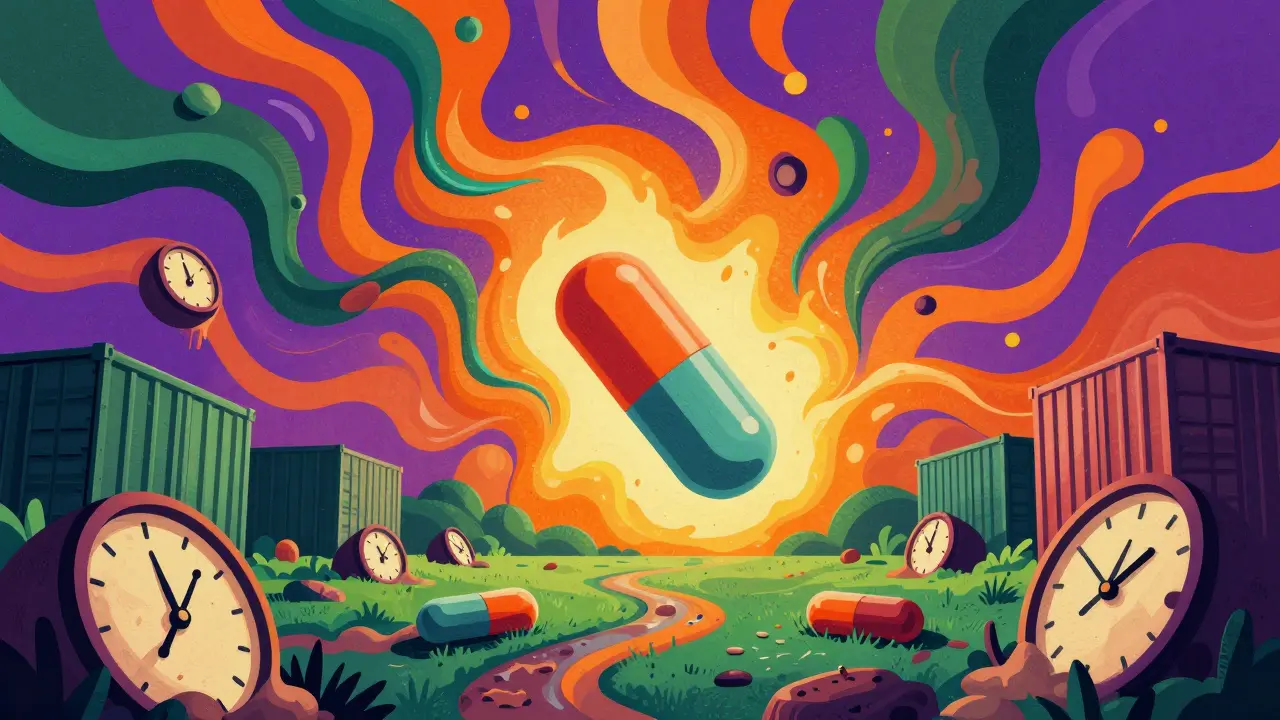
Imagine spending years developing a life-saving drug, only to have it degrade into an ineffective or toxic substance because it sat in a hot shipping container for two days. That is exactly why regulatory bodies don't just take a company's word for how long a drug lasts. They demand rigorous proof through stability testing requirements. This process determines the shelf life and storage conditions of a medicine, ensuring that the pill you take in year two is just as safe and potent as the one produced on day one.
The Core Framework: ICH Q1A(R2)
If you're in the pharmaceutical world, the ICH Q1A(R2) is essentially your bible. Developed by the International Council for Harmonisation, this guideline creates a global language for stability. Instead of every country having different rules, the FDA in the US, the EMA in Europe, and Health Canada all follow these harmonized standards. This prevents companies from having to run five different sets of tests for five different markets, which can save roughly $1.2 million per product in testing costs.
The main goal here is to establish the retest period for active pharmaceutical ingredients (APIs) and the shelf life for finished pharmaceutical products (FPPs). Without this data, a product cannot be legally marketed. In fact, the FDA issued 27 warning letters in 2022 specifically because companies botched these stability requirements, proving that regulators have zero patience for shortcuts in this area.
Breaking Down the Testing Conditions
Stability testing isn't just about putting a bottle in a fridge and waiting. It's divided into three distinct categories: long-term, intermediate, and accelerated testing. Each one serves a specific purpose in predicting how a drug will behave in the real world.
Long-Term Testing
This is the "real-time" study. It's designed to simulate the actual storage conditions the drug will face throughout its life. Depending on where you plan to sell the drug, you'll choose between two primary settings: 25°C ± 2°C / 60% RH ± 5% RH or 30°C ± 2°C / 65% RH ± 5% RH. Usually, you need at least 12 months of this data before you can even submit your application to the FDA.
Accelerated Testing
Since waiting 36 months for a stability study can kill a product's time-to-market, regulators allow "accelerated" testing. This involves pushing the drug to its limits: 40°C ± 2°C and 75% RH for six months. The idea is to trigger degradation faster. If a drug survives six months at 40°C, it often correlates to about 24 months of stability at room temperature for most small molecule drugs.
Intermediate Testing
Think of this as the safety net. You only run intermediate tests (30°C ± 2°C / 65% RH ± 5% RH for six months) if the drug shows "significant change" during accelerated testing. It helps determine if the drug is truly unstable or if the 40°C heat was just too extreme for the formulation.
| Test Type | Temperature | Relative Humidity (RH) | Duration |
|---|---|---|---|
| Long-Term | 25°C or 30°C | 60% or 65% | 12-36+ Months |
| Intermediate | 30°C ± 2°C | 65% ± 5% | 6 Months |
| Accelerated | 40°C ± 2°C | 75% ± 5% | 6 Months |

Navigating Global Climatic Zones
A drug stored in a climate-controlled pharmacy in Oslo faces different risks than one in a humid warehouse in Bangkok. To handle this, the world is divided into five climatic zones. If your product is headed for a global market, you have to tailor your long-term testing to these specific environments:
- Zone I (Temperate): 21°C / 45% RH.
- Zone II (Mediterranean/Subtropical): 25°C / 60% RH.
- Zone III (Hot-Dry): 30°C / 35% RH.
- Zone IVa (Hot-Humid): 30°C / 65% RH.
- Zone IVb (Hot/Higher Humidity): 30°C / 75% RH.
Ignoring these zones is a recipe for disaster. For example, Teva Pharmaceuticals once faced a Form 483 observation because their stability protocols for a generic Copaxone product failed to detect aggregation issues at 40°C, leading to a recall of 150,000 vials. When you're targeting Zone IV markets, expect your development timeline to stretch by another 4-6 months just to accommodate these extra protocols.
Special Requirements for Refrigerated Products
Not every drug can handle room temperature. Biologics and certain vaccines require a colder environment, which changes the rules of the game. For Refrigerated Products, the long-term storage is typically set at 5°C ± 3°C for 12 months.
The accelerated condition for refrigerated items isn't 40°C-that would likely destroy the protein structure of a biologic immediately. Instead, the World Health Organization (WHO) recommends 25°C ± 2°C / 60% RH for six months. This is a critical distinction; if you apply standard ambient accelerated rules to a cold-chain product, you'll get a failure that doesn't actually reflect real-world risk.

Common Pitfalls and Implementation Realities
On paper, stability testing looks like a simple checklist. In a lab, it's a battle against equipment failure and subjective interpretation. Industry professionals often vent on forums like LinkedIn and Reddit about "temperature excursions." It's surprisingly common for a stability chamber to drift more than ±2°C, which can potentially invalidate an entire 12-month study.
Then there is the dreaded "significant change" threshold. The ICH guidelines don't give a hard number for what constitutes a "significant change." This leaves a gray area where a quality control analyst and a regulatory reviewer might disagree. Imagine a case where a drug assay result is 4.8% outside the specification; for some, that's a rounding error, but for a regulator, it's a reason to reject the whole filing.
To avoid these headaches, experienced labs use dual-loop environmental control systems. These systems reduce humidity variability from ±8% down to ±3%, making the data much more robust when it's time to defend the shelf life in front of an auditor.
The Future: Moving Beyond the Chamber
The 20-year-old ICH Q1A(R2) framework is starting to show its age. We are now seeing the rise of Accelerated Predictive Stability (APS) studies. Instead of waiting months, some companies use extreme temperatures (up to 80°C) and advanced mathematical modeling to predict stability in a fraction of the time. About 74% of the top 20 pharma companies are already experimenting with this.
Additionally, the FDA is piloting the use of Process Analytical Technology (PAT). This allows for real-time stability assessment during continuous manufacturing, which could potentially slash testing durations by 30% to 50%. While the EMA has been skeptical-rejecting several model-based submissions recently-the shift toward a risk-based, data-driven approach is inevitable.
What happens if a drug fails accelerated stability testing?
If a "significant change" occurs during accelerated testing (40°C/75% RH), the manufacturer must conduct intermediate testing at 30°C/65% RH. If the drug also fails at the intermediate level, the company may need to change the formulation, improve the packaging (e.g., using a more moisture-resistant blister pack), or shorten the proposed shelf life.
How often are stability samples tested?
The typical testing schedule follows a frequency of 0, 3, 6, 9, 12, 18, 24, and 36 months. However, if the drug is known to degrade quickly in the early stages, the frequency of testing during the first year is usually increased to capture the exact point of decline.
Do all drugs require the same humidity levels?
No. Requirements depend on the climatic zone of the intended market and the drug's sensitivity. For example, Zone III (Hot-Dry) requires much lower humidity (35% RH) compared to Zone IVb (Hot/Higher Humidity) which requires 75% RH. Hygroscopic compounds are particularly sensitive to these variations.
What is a "significant change" in stability terms?
While not strictly quantified in ICH Q1A(R2), a significant change is generally considered a 5% potency loss from the initial time point, any degradation product exceeding its acceptance criterion, or failure to meet specifications for pH or dissolution.
Can stability testing be outsourced to a CRO?
Yes, and it is very common. Approximately 65% of smaller biotech companies outsource their stability programs to Contract Research Organizations (CROs) like WuXi AppTec or Charles River Laboratories to avoid the high cost of qualifying and maintaining their own environmental chambers.
Releted Post

Andy Dargon
Hi, I'm Aiden Lockhart, a pharmaceutical expert with a passion for writing about medications and diseases. With years of experience in the pharmaceutical industry, I enjoy sharing my knowledge with others to help them make informed decisions about their health. I love researching new developments in medication and staying up-to-date with the latest advancements in disease treatment. As a writer, I strive to provide accurate, comprehensive information to my readers and contribute to raising awareness about various health conditions.
Comments
Post Comment