
Dehydration and Lithium: Risks, Signs, and What You Need to Know
When you take lithium, a mood-stabilizing medication used primarily for bipolar disorder. Also known as lithium carbonate, it works by balancing brain chemicals—but it has a very narrow safety window. Even a small drop in your body’s water levels can push lithium into dangerous territory. This isn’t just a footnote in the patient leaflet—it’s a real, life-threatening risk that affects thousands who rely on this drug every day.
Dehydration, a condition where your body loses more fluids than it takes in. Also known as fluid deficit, it can happen fast—from sweating too much in heat, skipping water during illness, or even overdoing caffeine and diuretics. When you’re dehydrated, your kidneys can’t flush lithium out the way they should. That means the drug builds up in your blood. Levels that were safe last week can turn toxic overnight. You might not feel sick at first, but symptoms like trembling hands, fuzzy thinking, nausea, or dizziness aren’t normal side effects—they’re warning signs.
People on lithium often don’t realize how easily dehydration sneaks up on them. You don’t have to be running a marathon. A bad stomach bug, a long flight, or even just forgetting to drink water on a busy day can do it. And here’s the catch: some common meds make it worse. Diuretics, NSAIDs like ibuprofen, and even certain blood pressure pills can reduce how well your kidneys handle lithium. That’s why checking in with your doctor before starting any new drug isn’t optional—it’s critical.
Monitoring isn’t just about blood tests. It’s about listening to your body. If you’re sweating more than usual, feeling dizzy when you stand up, or your urine is dark yellow, drink water—right now. Don’t wait for a headache or confusion. Keep a water bottle handy. Set reminders. Skip the alcohol and limit coffee. These aren’t lifestyle tips—they’re safety rules.
The posts below cover real-world cases and practical advice on how lithium interacts with other drugs, what kidney health looks like when you’re on long-term treatment, and how to spot early signs of trouble before it becomes an emergency. You’ll find clear comparisons, safety checklists, and stories from people who’ve been there. This isn’t theory. It’s what you need to know to stay healthy while taking a medication that can save your life—if you manage it right.
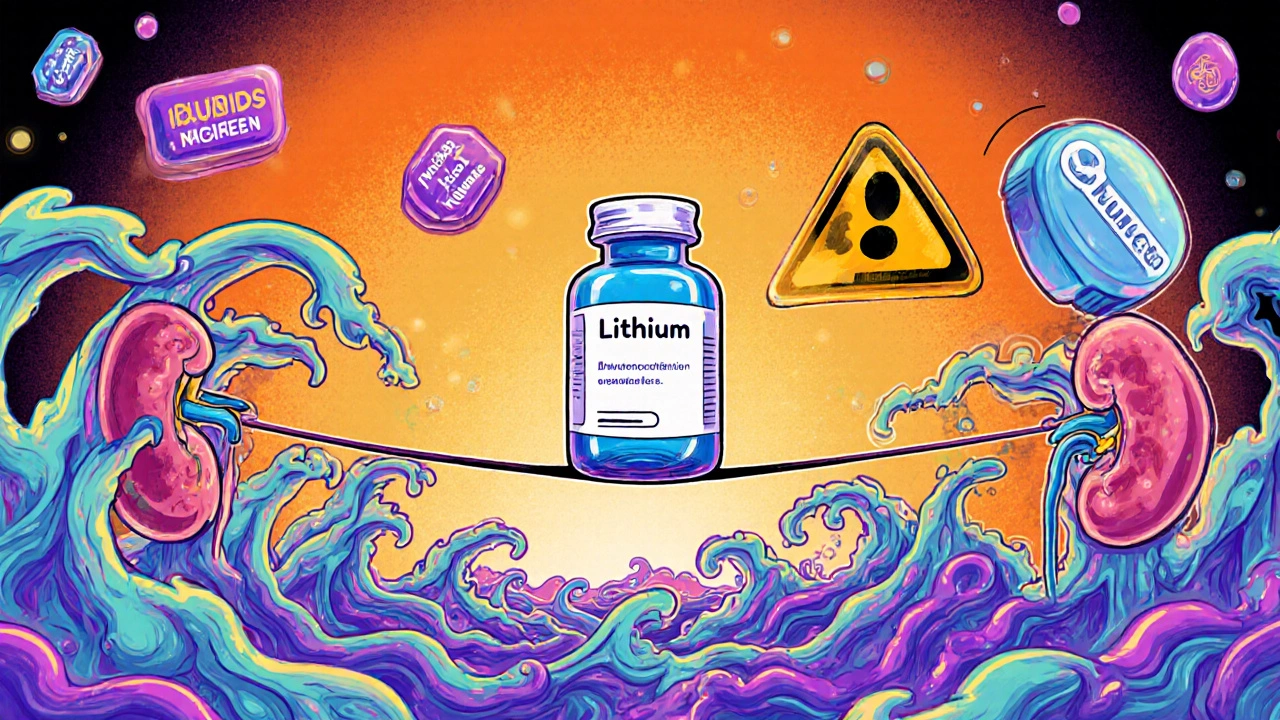
Lithium is effective for bipolar disorder but dangerously sensitive to NSAIDs, diuretics, and dehydration. Learn how common medications and everyday habits can trigger toxic levels - and what to do to stay safe.