
When your life changes-whether it’s a new job, a move, a breakup, or even a sudden illness-you don’t just change your schedule. You change how you take care of yourself. And for people managing chronic conditions, that’s where things fall apart. Medication adherence doesn’t just drop during these times-it often crashes. Studies show that up to 70% of patients stop taking their meds as prescribed during major life shifts. That’s not laziness. It’s not forgetfulness. It’s the result of a system that assumes your life stays the same, even when it doesn’t.
Why Life Changes Break Your Routine
Think about your daily medication routine. Maybe you take your pill with breakfast. Or you set an alarm at 8 p.m. because that’s when you sit down after work. Now imagine your world flips: you’re moving to a new city, your alarm goes off in a strange room, you’re working odd hours, and your partner left. The cues that kept you on track? Gone. Your brain doesn’t have time to rebuild them. That’s why adherence drops by an average of 32% during high-stress transitions. Research from the Journal of Personality and Social Psychology found that the first two weeks of any major change are the most dangerous. Within 30 days, adherence can fall by as much as 40%. And here’s the kicker: most doctors never ask about it. They assume if you were doing fine before, you’ll keep doing fine. But the American College of Physicians says that’s a mistake. They now recommend screening for upcoming transitions during every appointment-because if you’re moving, starting a new job, or going through a divorce, your meds are at risk.The Three Lists That Save Your Routine
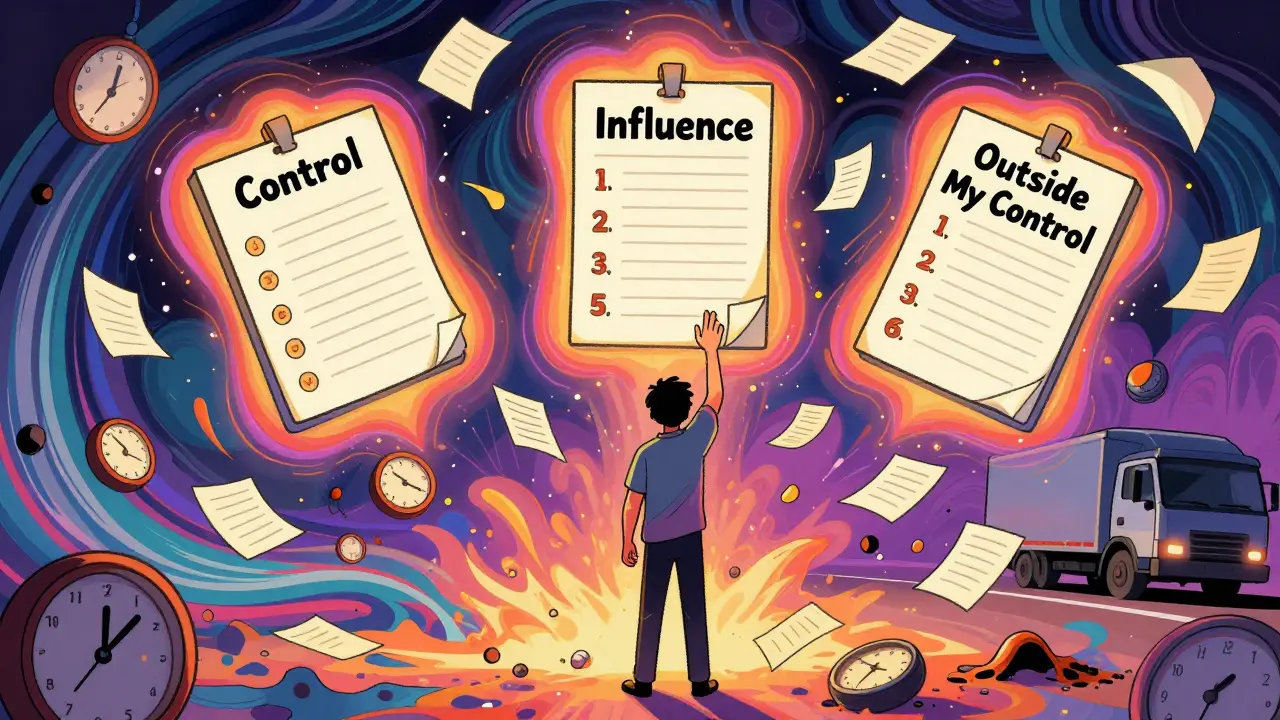
One of the most powerful tools isn’t an app or a pill organizer. It’s a simple exercise: make three lists.- Things you can control directly: Like when you take your pill, where you store it, or which pharmacy you use.
- Things you can influence: Like asking your doctor to simplify your regimen, or telling your employer you need a few minutes during lunch to take meds.
- Things outside your control: Like your boss’s schedule, traffic, or someone else’s behavior.
Anchor Routines: The 3-5 Daily Habits That Keep You on Track
You don’t need a perfect schedule. You need anchors. A 2022 study in the Journal of Personality and Social Psychology showed that keeping just three to five consistent daily activities during a transition reduced psychological distress by 23% and boosted medication adherence by 31.4%. These aren’t big things. They’re small, repeatable moments that give your brain stability.- Take your pill right after brushing your teeth.
- Set a daily 7:30 a.m. coffee ritual-same cup, same spot, same time.
- Do a 5-minute wind-down before bed, even if you’re exhausted.
Forget Reminder Apps-Try Flexible Time-Blocking
Most people think: “I just need a better app.” But here’s the truth: during transitions, digital reminders fail. A 2023 study in the Journal of Medical Internet Research found that while apps help in stable times (improving adherence by 22.8%), their advantage shrinks to just 8.3% during major life changes. Why? Because apps assume you’ll be home at 8 a.m. They don’t account for last-minute meetings, travel delays, or sleeping in a different room. What works better? Time-blocking. Instead of saying, “I’ll take my pill at 8 a.m.,” say: “I’ll take my pill sometime between 7:30 and 9 a.m.” That flexibility reduces stress and increases compliance. A 2022 study from the Greater Boston Behavioral Health Institute found that time-blocking improved adherence by 28.6% during unpredictable transitions. And here’s a pro tip: don’t schedule your meds around your day. Schedule your day around your meds. Make them non-negotiable, not optional.
Support Isn’t Optional-It’s Your Secret Weapon
You don’t have to do this alone. And you shouldn’t. Research from Health Psychology shows that people who felt supported during transitions had 41.7% lower cortisol levels and 34.2% better adherence. That’s not just emotional comfort-it’s biological. Stress weakens your immune system. Social support weakens stress. So who can help?- A partner who checks in: “Did you take your meds today?”
- A friend who walks with you after work-so you don’t skip your evening pill.
- A support group, like Reddit’s r/ChronicIllness, where 78.4% of users say they struggled with adherence during life changes-and found solutions.
Therapy Works Better Than Pills (Sometimes)
If you’re struggling to adapt, therapy isn’t a last resort-it’s a tool. Specifically, Acceptance and Commitment Therapy (ACT) has shown the strongest results. A 2022 JAMA Internal Medicine trial found that ACT improved adherence by 48.6% compared to standard care. ACT doesn’t teach you to “stay positive.” It teaches you to accept discomfort, clarify your values, and act anyway. So if your value is “staying healthy for my kids,” then taking your pill-even when you’re tired, scared, or overwhelmed-isn’t a chore. It’s an act of love. A 2023 meta-analysis by the American Psychological Association found that ACT was 37.2% more effective than simple reminder systems during transitions. That’s not hype. That’s data.Break It Down: The Power of Tiny Steps
Big changes feel impossible. But small steps? They’re doable. One user on Reddit, u/MedAdherenceWarrior, shared how they rebuilt their routine after a job change: “I broke my whole medication plan into tiny tasks. Step 1: Find a new pharmacy. Step 2: Call and transfer records. Step 3: Set up automatic refills. Step 4: Take pill with lunch.” That’s the secret. Instead of thinking, “I need to get back on track,” think: “What’s the next tiny thing I can do?” During a divorce, don’t try to fix everything. Just find your prescription bottle. Then call your doctor. Then set a phone reminder. One step at a time.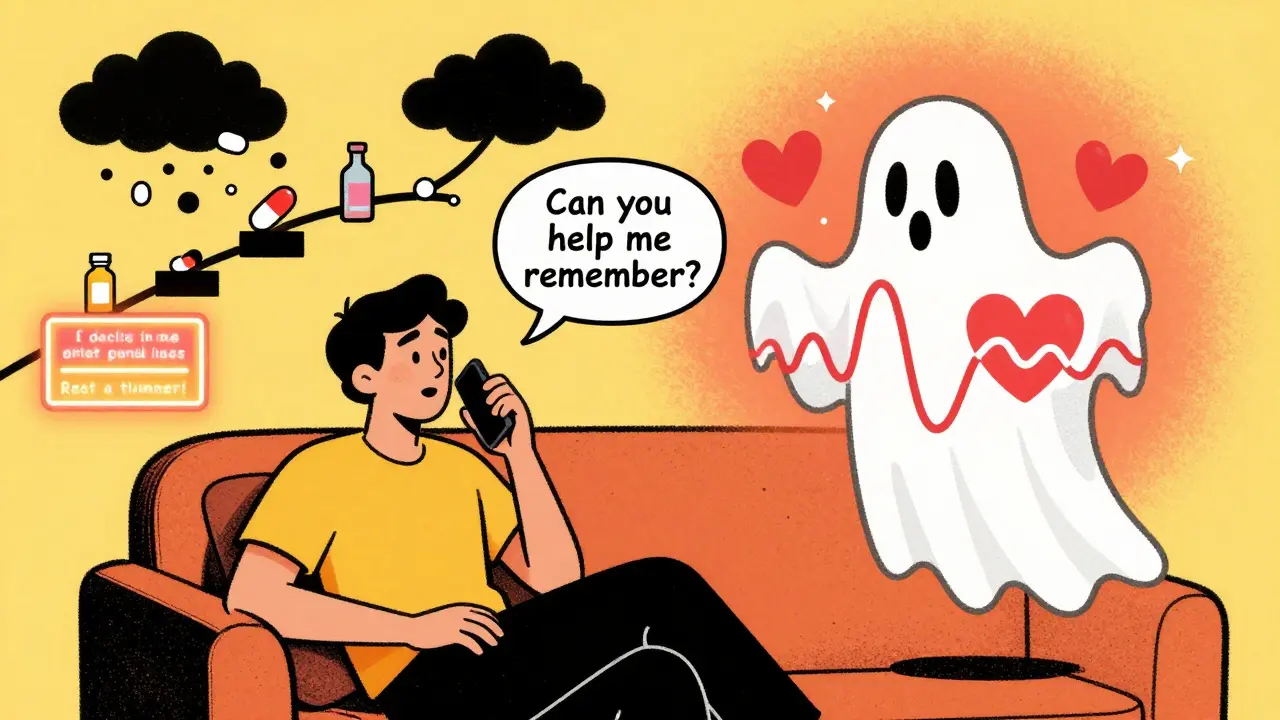
Learn to Say No-Protect Your Health Like a Boundary
People who keep their adherence during transitions aren’t superhuman. They’re boundary-setters. Research shows they’re 3.2 times more likely to say “no” to non-essential commitments. That means:- Declining a late-night hangout because you need sleep to take your meds.
- Telling your boss you can’t work overtime next week because you’re moving.
- Skipping a family dinner if it means you’ll miss your pill window.
What’s New in 2026: AI Predicts Your Risk
The field is changing fast. In January 2024, LifeStance Health released an AI tool called “TransitionRisk” that predicts with 87.4% accuracy when someone is about to stop taking their meds-30 days before it happens. How? It looks at patterns: missed appointments, changes in pharmacy usage, social media posts about relocation, even shifts in sleep tracking data. When it flags a risk, your care team gets a heads-up. They can call you. Send a text. Adjust your plan. This isn’t sci-fi. It’s happening now. And by 2026, most major health systems will be using similar tools.Final Thought: Your Adherence Isn’t Broken-Your System Is
You’re not failing. Your routine was built for a life that no longer exists. The problem isn’t you. It’s a system that treats your health like a fixed program, not a living, changing part of your life. The solution isn’t more reminders. It’s more flexibility. More support. More honesty. More permission to adapt. Start small. Pick one anchor. Make one list. Say one “no.” Reach out to one person. You don’t need to be perfect. You just need to keep going.Why do I keep missing my meds during a move?
Moving disrupts your environment-the cues that remind you to take your meds (like your kitchen counter or morning alarm) disappear. Your brain relies on routines tied to places and times. When those change, your habit breaks. Studies show adherence drops 32% during relocation. The fix? Build new anchors: take your pill right after you brush your teeth in the new bathroom, or set a phone alarm tied to a new daily ritual, like making coffee.
Are medication reminder apps useful during life transitions?
They help in stable times, but their effectiveness drops sharply during transitions. A 2023 study found apps improved adherence by 22.8% under normal conditions, but only by 8.3% during major life changes. Why? Because apps assume your schedule stays the same. During a move or job change, your routine is unpredictable. Instead of relying on apps, use flexible time-blocking-give yourself a window (like 7:30-9 a.m.) to take your pill instead of a fixed time.
Can therapy really help me take my pills?
Yes-specifically Acceptance and Commitment Therapy (ACT). A 2022 JAMA Internal Medicine trial showed ACT improved medication adherence by 48.6% compared to standard care. ACT doesn’t focus on motivation. It helps you accept discomfort, reconnect with your values (like “I want to be here for my kids”), and take action even when you’re stressed. If you’re struggling to stay consistent, ACT is one of the most evidence-backed tools available.
What should I ask my doctor about my meds during a transition?
Ask: “How can we adjust my regimen for this change?” Be specific. If you’re moving, ask about transferring prescriptions. If you’re working nights, ask if timing matters. If you’re stressed, ask if your dose can be simplified. The American College of Physicians now recommends doctors screen for upcoming transitions. If yours doesn’t, bring it up. You’re not being difficult-you’re protecting your health.
Is it normal to stop taking meds during a breakup or divorce?
It’s common-but not inevitable. A 2023 Reddit analysis of 1,247 posts found that 49.3% of users stopped taking their meds during relationship transitions. But many also shared how they got back on track: by breaking the process into tiny steps (e.g., “Find my pill bottle” → “Call pharmacy” → “Set one daily reminder”). You’re not weak for stopping. You’re human. The key is to restart with small, doable actions-not pressure.
Releted Post

Andy Dargon
Hi, I'm Aiden Lockhart, a pharmaceutical expert with a passion for writing about medications and diseases. With years of experience in the pharmaceutical industry, I enjoy sharing my knowledge with others to help them make informed decisions about their health. I love researching new developments in medication and staying up-to-date with the latest advancements in disease treatment. As a writer, I strive to provide accurate, comprehensive information to my readers and contribute to raising awareness about various health conditions.
They say 'system' is broken but let's be real-this whole thing is a corporate scam. Pharma companies don't want you fixed, they want you dependent. That 'AI TransitionRisk' tool? Probably selling your data to insurers so they can hike your premiums. And don't get me started on ACT therapy-sounds like a cult with a whiteboard. I take my meds when I feel like it. If I miss a day, I'm not 'non-adherent,' I'm exercising personal sovereignty. The system wants you to believe you need apps and lists and therapists. Nah. Just stop believing the hype.
Okay, but let’s be honest: 70% of people stop taking meds during transitions? That’s not a system failure-that’s a population failure. People are lazy. They don’t want to adapt. They want magic pills and apps and therapists to do the work for them. And now they’re blaming doctors for not asking? DUH. If you can’t remember to take your own medicine during a move, maybe you shouldn’t be taking it. I’ve moved 5 times in 3 years, never missed a dose. It’s called discipline. It’s called responsibility. Stop outsourcing your health to algorithms and therapists. You’re not a child.
I just cried reading this. 😭 I moved last month, my partner left me, and I missed 11 days of my blood pressure meds. I felt so guilty. But this? This made me feel seen. I started taking my pill right after I brush my teeth-same as before, just in a new bathroom. And I told my neighbor, 'Hey, can you text me every night at 8?' She did. And I didn’t feel alone anymore. Thank you. I’m not broken. I’m healing. 💕
Wow. Just… wow. I’ve been on the same meds for 12 years, and I never thought about how fragile adherence really is. I’m a nurse, and I’ve seen patients crash during transitions-and I never asked. I just assumed they were 'non-compliant.' This article changed my whole approach. I’m starting tomorrow: 'What’s changing in your life?' is now part of every intake. And I’m telling my colleagues. This isn’t just good advice-it’s ethical care. Thank you.
Time-blocking? Anchor routines? Please. This is behavioral engineering disguised as self-help. They’re just repackaging Skinner’s box with a wellness brand. The real solution? Stop giving people pills they don’t need. Most chronic meds are overprescribed. The system isn’t broken. It’s predatory. And these 'studies'-funded by pharma, of course. Wake up.
While the insights presented are indeed compelling, I must respectfully suggest that the cultural context of these interventions may not be universally applicable. In many parts of the world, including my own in India, access to consistent healthcare infrastructure, pharmacy services, or even stable internet for digital reminders remains a significant challenge. The concept of 'time-blocking' or 'anchor routines' assumes a level of environmental stability that is, unfortunately, a privilege. Perhaps future frameworks should prioritize low-resource adaptations-such as community-based pill-sharing networks or voice-based reminders via basic mobile phones-before advocating for AI-driven predictive systems. Sustainability, not sophistication, must be the goal.
Wait, so you’re saying apps don’t work? But I use MyMedSchedule and it’s awesome! I set 3 alarms, a vibration, and a calendar invite. I haven’t missed a dose in 2 years. Maybe you’re just bad at using tech? Also, ACT? Sounds like New Age nonsense. Just take your damn pill. And why are we talking about therapy? I’ve got diabetes and I don’t need a therapist-I need a better insulin. This article is overcomplicating everything.
I’m not gonna lie-I read this whole thing with tears in my eyes. I’ve been through two moves, a breakup, and a panic attack that landed me in the ER. I stopped my meds for 17 days. I felt like a failure. But this? This didn’t shame me. It gave me tools. I made my three lists. I started taking my pill with my morning tea. I told my sister, 'I need you to check in.' She does. And now? I’m still not perfect. But I’m trying. And that’s enough. Thank you for writing this. I’m not alone. And I’m not broken. I’m just human.