
Lithium Toxicity: Signs, Risks, and What to Do If It Happens
When you're taking lithium, a mood-stabilizing medication commonly used to treat bipolar disorder. Also known as lithium carbonate, it helps control extreme mood swings—but only if your blood levels stay in the safe range. Too much lithium, even a small increase, can turn into lithium toxicity, a serious condition caused by excessive lithium in the bloodstream. It doesn’t happen overnight, and it’s not always obvious. But when it does, symptoms like shaking hands, confusion, nausea, or even seizures can show up fast. Many people don’t realize they’re at risk until it’s too late.
Lithium toxicity often links to things you might not think of as dangerous. Skipping a dose and then doubling up, getting dehydrated from heat or illness, or taking NSAIDs like ibuprofen for a headache can all push lithium levels up. Your kidneys handle lithium, so anything that slows them down—like low salt intake, kidney problems, or certain blood pressure meds—increases the chance of buildup. Even a mild cold or flu can throw off your balance if you’re not drinking enough water. The lithium blood levels, the medical test that measures how much lithium is in your blood is your best defense. Most doctors want it between 0.6 and 1.0 mEq/L. Anything above 1.5 is dangerous, and above 2.0 is an emergency.
It’s not just about the pill. Lithium interacts with other drugs you might be taking, including diuretics, ACE inhibitors, and even some antidepressants. If you’ve ever been told to avoid certain painkillers while on lithium, that’s why. And because lithium affects your thyroid and kidneys over time, regular checkups aren’t optional—they’re life-saving. You need blood tests every few months, even if you feel fine. The good news? Most cases of lithium toxicity are preventable with simple habits: drink water, don’t change your salt intake suddenly, tell every doctor you see you’re on lithium, and never skip a lab test.
What you’ll find below are real stories and clear guides from people who’ve dealt with lithium side effects, misunderstood their dosing, or caught warning signs early. Some posts explain how to spot the first signs of trouble. Others break down which meds to avoid and why. There’s even advice on what to do if you think you’ve taken too much. This isn’t theory—it’s what works when your health is on the line.
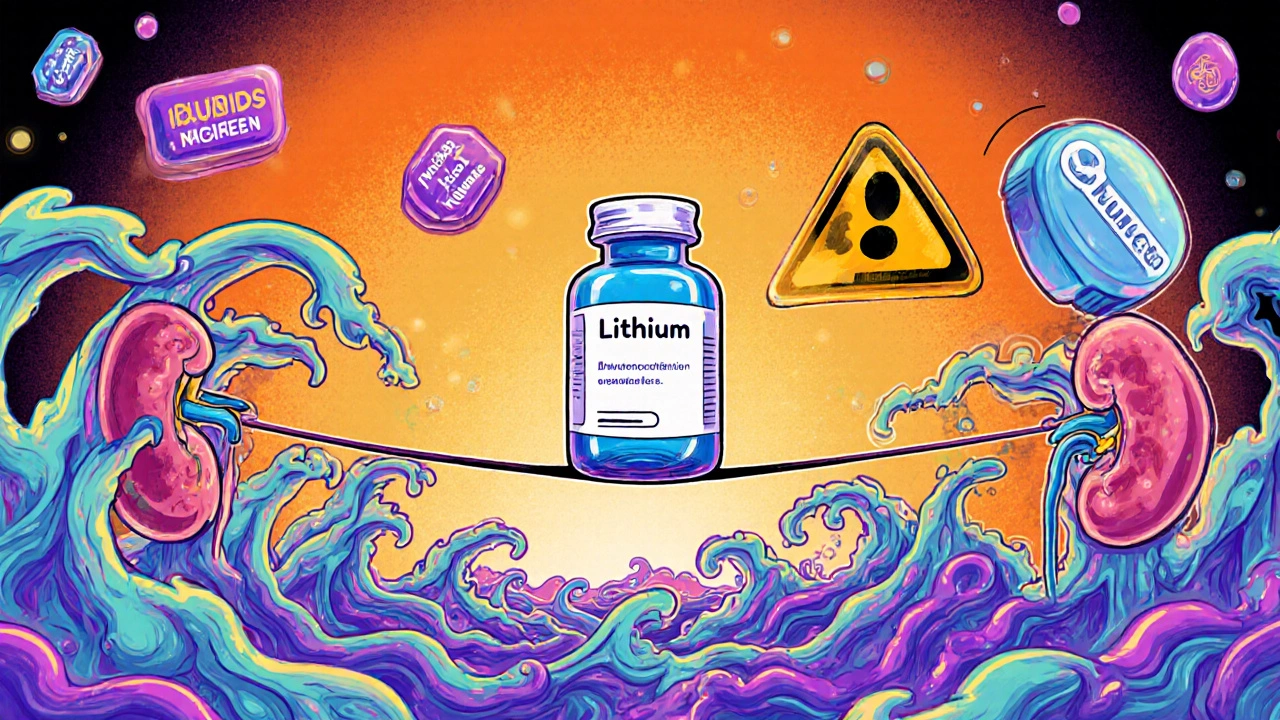
Lithium is effective for bipolar disorder but dangerously sensitive to NSAIDs, diuretics, and dehydration. Learn how common medications and everyday habits can trigger toxic levels - and what to do to stay safe.