
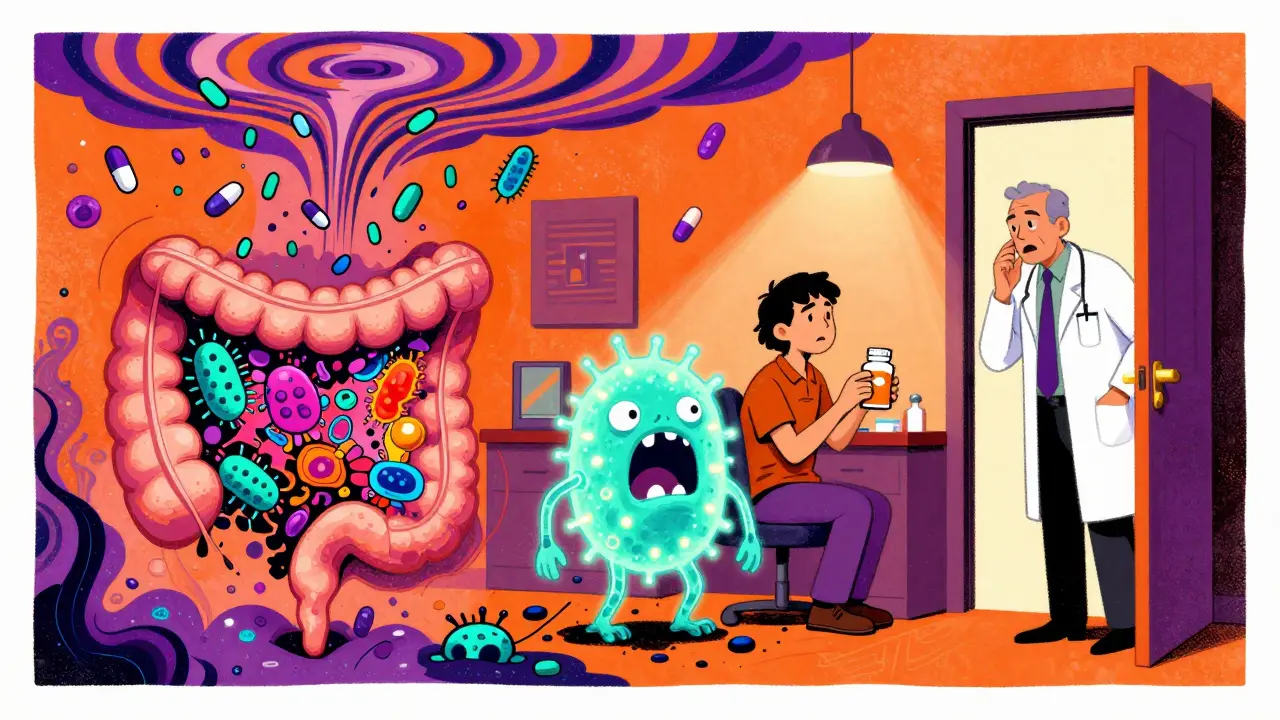
Every year in the U.S., more than 2.8 million people get infections that don’t respond to antibiotics. Over 35,000 die from them. The reason? We’ve been overusing and misusing these drugs for decades - not just in hospitals, but in doctor’s offices, pharmacies, and even on farms. The result isn’t just drug-resistant superbugs. It’s a broken gut microbiome, chronic digestive issues, and a future where common infections could kill again. Antibiotic stewardship isn’t a buzzword. It’s the only way to stop this downward spiral.
What Antibiotic Stewardship Really Means
Antibiotic stewardship means using antibiotics only when they’re truly needed - and when they are, using the right one, at the right dose, for the right amount of time. It’s not about avoiding antibiotics altogether. It’s about using them wisely. The CDC defines it as “the effort to measure and improve how antibiotics are prescribed by clinicians and used by patients.” Simple. Direct. Life-saving. This isn’t new. The Infectious Diseases Society of America and the Society for Healthcare Epidemiology of America laid out the framework back in 2016. But it’s only in the last five years that hospitals, clinics, and even pediatric offices have started taking it seriously. Why now? Because the numbers are terrifying. In the U.S., nearly half of all antibiotic prescriptions for respiratory infections - like colds, flu, and sinus infections - are unnecessary. These infections are often viral. Antibiotics do nothing. But they still wreck your gut.How Antibiotics Destroy Your Gut
Your gut is home to trillions of bacteria - most of them good. They help digest food, train your immune system, and keep harmful bugs in check. Antibiotics don’t care. They’re like a carpet bomb. They wipe out both the bad bacteria causing your infection… and the good ones keeping your gut balanced. The most dangerous consequence? Clostridioides difficile, or C. diff. This nasty bug thrives when the good bacteria are gone. It causes severe diarrhea, colitis, and can be fatal. In the U.S., C. diff leads to over 223,900 infections and 12,800 deaths every year. And guess what? Antibiotic use is the #1 risk factor. About 1 in 5 people who take antibiotics get C. diff. That’s not rare. That’s predictable. Even short courses - like a 5-day prescription for a sore throat - can alter your gut microbiome for months. Some studies show it takes over a year for certain good bacteria to bounce back. And if you’re on antibiotics repeatedly? Your gut may never fully recover.The Core Elements of a Real Antibiotic Stewardship Program
Hospitals and clinics that do this right follow the CDC’s Core Elements. It’s not a checklist. It’s a culture change. Here’s what works:- Leadership commitment: Doctors and administrators must prioritize it. No exceptions.
- Drug expertise: Infectious disease doctors and clinical pharmacists lead the team. Not nurses, not admins - experts.
- Action: They review every antibiotic order. Not just the big ones. Even the “safe” ones.
- Tracking: They measure days of therapy per 1,000 patient days. And they track C. diff rates. If one goes up, they adjust.
- Reporting: Doctors get feedback. “You prescribed 12 antibiotics last week for bronchitis. Only 2 were needed.”
- Education: Patients and providers learn why stopping early or skipping doses is dangerous - and why not taking them at all is sometimes better.
Why Outpatient Settings Are the New Front Line
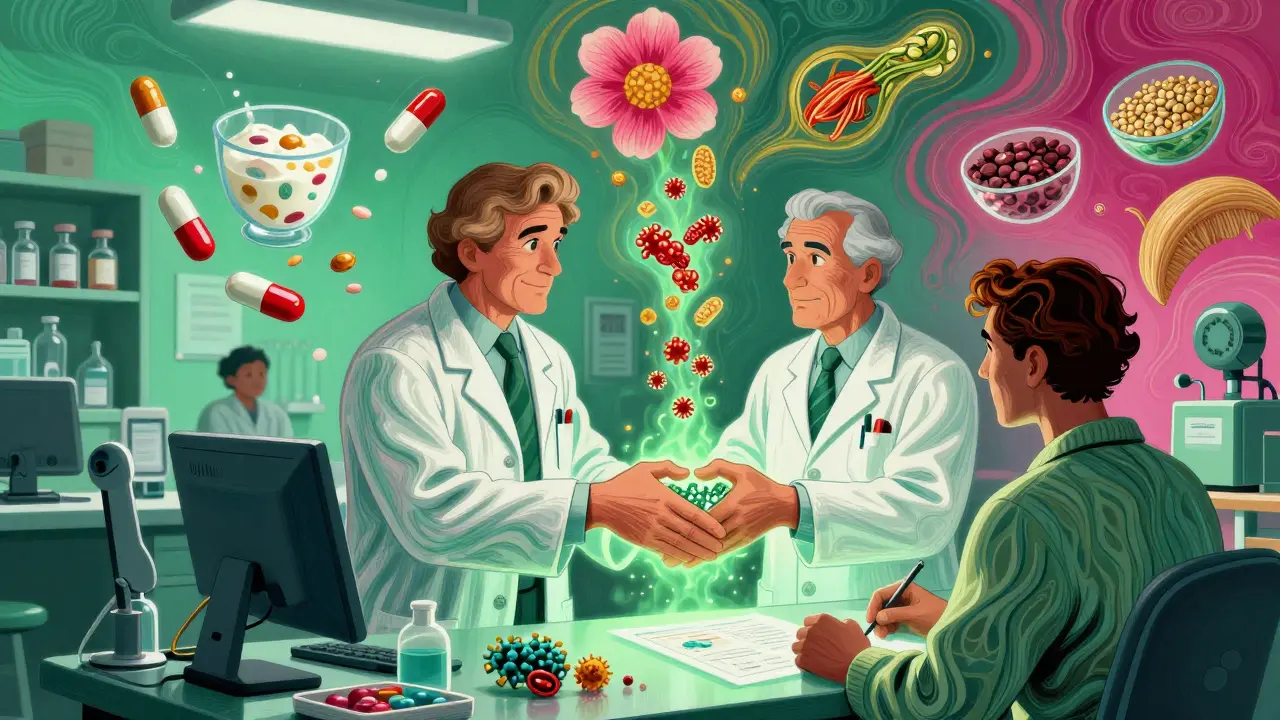
Most antibiotic overuse doesn’t happen in the ICU. It happens in the family doctor’s office. Over 46% of antibiotic prescriptions for acute respiratory infections are inappropriate. That’s millions of pills every year that do zero good - and plenty of harm. The fix? Simple tools. One study put commitment posters in exam rooms. They said: “I pledge to only prescribe antibiotics when truly needed.” Result? A 5.6% drop in unnecessary prescriptions. That’s not magic. That’s psychology. Another tactic? Peer comparison. Doctors get a report: “You prescribed antibiotics for bronchitis 32% of the time. Your peers did it 14%.” Suddenly, you’re not the only one prescribing. You’re the outlier. And you change. Clinical decision support tools in electronic health records are also helping. When a doctor types “sore throat,” the system pops up: “Strep test recommended. Viral causes common. Consider watchful waiting.”What You Can Do - Even If You’re Not in a Hospital
You don’t need to be a doctor to be part of the solution. Here’s how:- Don’t demand antibiotics. If your doctor says “it’s viral,” believe them. Ask: “What else could this be?”
- Ask: Do I really need this? “Is this infection bacterial? What happens if I wait a few days?”
- Never save leftovers. A half-used bottle of amoxicillin from last year won’t help your new infection. It might make it worse.
- Finish the course - unless told otherwise. Old advice said “finish all.” New research shows some courses are too long. But never stop without talking to your provider.
- Protect your gut. Eat fermented foods. Get fiber. Avoid sugar. These help good bacteria come back after antibiotics.

The Bigger Picture: Resistance, Costs, and the Future
Antibiotic resistance isn’t a distant threat. It’s here. The CDC lists it among the top 18 public health dangers. By 2025, if we don’t change, we could lose 10,000 lives a year to C. diff alone. And the economic toll? Over $1 billion in avoidable costs in outpatient care. Hospitals save millions by cutting unnecessary use. The good news? Progress is real. As of 2022, 84% of large U.S. hospitals have active stewardship programs. The Joint Commission now requires it for accreditation. The World Health Organization says 127 countries have national plans. And AI tools are emerging - some hospitals now use algorithms to flag inappropriate prescriptions in real time, improving accuracy by 15-20%. But the real victory? We’re learning that protecting antibiotics means protecting our bodies - especially our guts. The same drugs that save lives can also break them. Stewardship is the bridge between those two outcomes.What’s Next?
Pediatric guidelines are getting sharper. The American Academy of Pediatrics now recommends shorter courses for ear infections and strep throat. Research is testing whether we can treat some infections with targeted narrow-spectrum drugs instead of broad ones. And the CDC’s Antimicrobial Resistance Laboratory Network is mapping resistance patterns across the country - so we know exactly where to focus. The goal isn’t to eliminate antibiotics. It’s to preserve them. So the next time your child gets pneumonia - or your partner gets a UTI - antibiotics will still work. Not because we’re lucky. But because we chose to be smarter.Are antibiotics always necessary for infections?
No. Many infections - like colds, flu, most sore throats, and bronchitis - are caused by viruses. Antibiotics don’t kill viruses. Taking them anyway doesn’t help you recover faster and increases your risk of side effects and antibiotic resistance. Always ask your provider if the infection is bacterial before agreeing to a prescription.
Can antibiotic stewardship really help my gut health?
Yes. Every unnecessary antibiotic you avoid means less damage to your gut microbiome. Fewer disruptions mean fewer chances for harmful bacteria like C. diff to take over. Stewardship reduces overall antibiotic exposure, which directly lowers your risk of digestive problems, bloating, and long-term gut imbalance.
What’s the biggest mistake people make with antibiotics?
Taking them for viral infections - and stopping early when you feel better. Both are dangerous. Taking them when they’re not needed fuels resistance. Stopping early lets the toughest bacteria survive and multiply. Always follow your provider’s instructions - even if you feel fine.
Do probiotics help after antibiotics?
Some studies suggest certain probiotics, like Lactobacillus and Saccharomyces boulardii, may reduce the risk of antibiotic-associated diarrhea and C. diff. But they’re not a magic fix. The best protection is avoiding unnecessary antibiotics in the first place. If you do take them, focus on eating fiber-rich foods, fermented foods like yogurt and kimchi, and staying hydrated.
Is antibiotic resistance getting worse?
It’s still a growing crisis, but stewardship efforts are slowing it down. Hospitals with strong programs have seen 20-40% reductions in inappropriate use within the first year. The CDC projects that if stewardship becomes universal, we could prevent 130,000 C. diff infections and save 10,000 lives annually by 2025. Progress is possible - but only if we keep pushing for smarter use.
Releted Post

Andy Dargon
Hi, I'm Aiden Lockhart, a pharmaceutical expert with a passion for writing about medications and diseases. With years of experience in the pharmaceutical industry, I enjoy sharing my knowledge with others to help them make informed decisions about their health. I love researching new developments in medication and staying up-to-date with the latest advancements in disease treatment. As a writer, I strive to provide accurate, comprehensive information to my readers and contribute to raising awareness about various health conditions.
Really appreciate this breakdown. I never realized how much damage a single course of antibiotics could do to my gut. I used to think if I felt better, I was fine stopping early. Now I know better.
Let me be clear-this isn’t stewardship, it’s pharmaceutical sabotage. The microbiome is a fragile ecosystem, and we’ve been weaponizing antibiotics like they’re cheap ammo. The CDC’s metrics are sanitized. Real damage is measured in chronic IBS, autoimmune flares, and fungal overgrowths that never get diagnosed because no one connects the dots. This is a slow-motion public health collapse, and we’re all complicit.
Most of this is common sense. Why does it need a 2000-word essay? Just don’t take antibiotics unless you have a confirmed bacterial infection. Done.
What’s interesting is how little we understand about microbiome recovery. The studies say it takes months or years, but we don’t have longitudinal data on what ‘full recovery’ even looks like. Are we just measuring diversity? Or functional resilience? If a microbiome has 80% of its original species but operates at 95% efficiency-is that recovery? Or just illusion?
Okay but let’s be real-how many of us have actually had a doctor say ‘you don’t need this’? I’ve been prescribed antibiotics for sinus pressure that lasted three days. My mom got them for a cold in 2019. My cousin got them for a sore throat and ended up in the ER with C. diff. This isn’t about awareness-it’s about systemic failure. Doctors are pressured to ‘do something,’ patients want a pill, and the system rewards speed over science. We’re not just misusing antibiotics-we’re institutionalizing their misuse.
The concept of ‘handshake stewardship’ is quietly revolutionary. It reminds me of how medicine used to be-dialogue over decree. There’s dignity in being asked, ‘Have you ruled out viral causes?’ instead of being handed a script. It restores trust. It invites collaboration. And it treats the patient as a partner, not a problem to be fixed. Maybe the real cure isn’t in the drug, but in the conversation.
As someone who grew up in a household where ‘antibiotics are for everything,’ I didn’t realize how much I was harming myself until I started reading about gut health. Now I eat kimchi daily, take prebiotic fiber, and ask my doctor three questions before accepting any script. It’s not just about avoiding resistance-it’s about reclaiming your body from a system that treats you like a pill dispenser.
If you’ve taken antibiotics recently, don’t beat yourself up. Focus on what you can do now: eat the fiber, drink the water, try fermented foods. Your gut is resilient. It wants to heal. You just have to give it the right conditions. Small steps matter more than guilt.
Why are we letting Western medicine dictate global health? In India we’ve been using antibiotics responsibly for generations because we know money is tight and doctors are overworked. We don’t waste pills. We don’t demand them. We wait. We sweat it out. We trust our bodies. This ‘stewardship’ is just another American trend dressed up as science
America thinks it owns the truth but in Nigeria we dont even have enough antibiotics to go around so we dont waste them. You overprescribe because you have too much money and too little discipline. Your microbiome is broken because your lifestyle is broken. Stop blaming the drugs and fix your diet first
lol i got a script for a sinus infection last year and took it even though i felt fine after 2 days. now i have chronic bloating and my doctor says ‘maybe its the antibiotics’… yeah thanks captain obvious. i feel like my gut is a war zone and no one told me i was the one dropping the bombs