
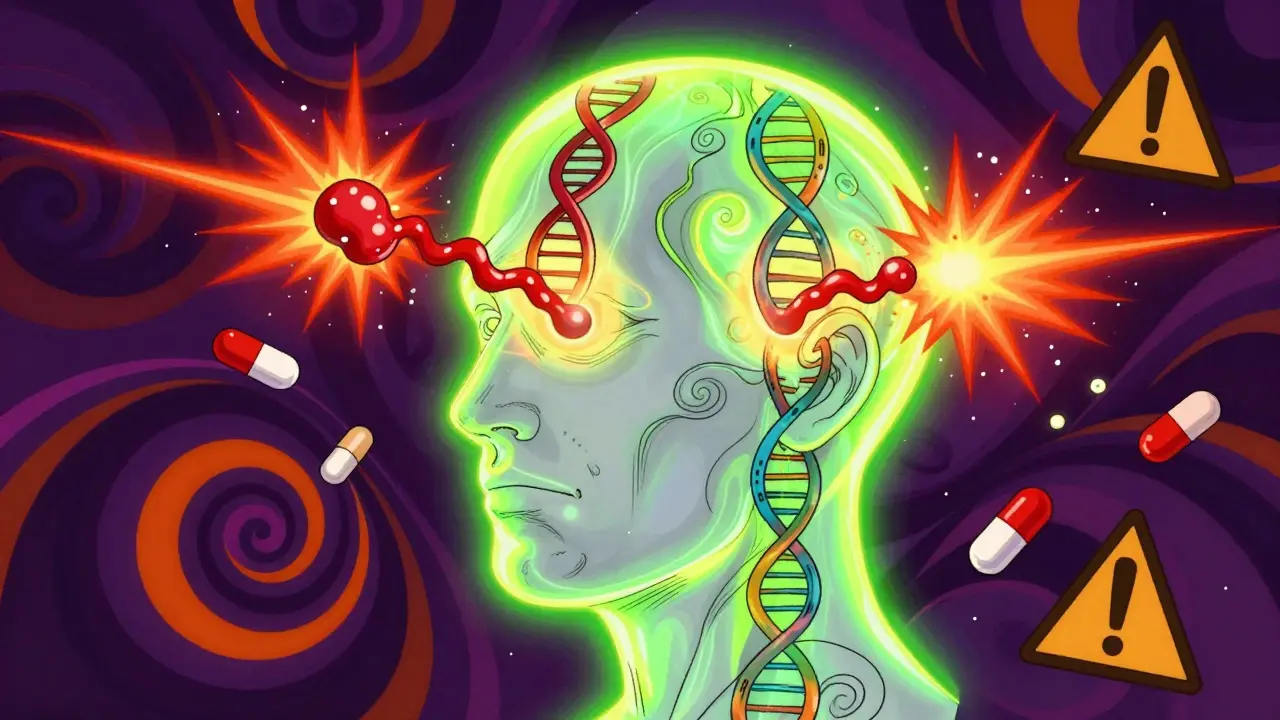
CYP2D6 Ultrarapid Metabolizer Risk Calculator
Your Risk Assessment
This tool estimates your risk of being a CYP2D6 ultrarapid metabolizer based on your ethnicity and past reactions to codeine. Note: This is NOT a substitute for genetic testing. Always consult with a healthcare provider for medical advice.
Your Risk Assessment
Note: This calculation is based on published prevalence data and is not a medical diagnosis. Genetic testing is the only way to confirm CYP2D6 metabolizer status.
Codeine is one of the most common painkillers and cough medicines you’ve probably heard of. But here’s the thing: for some people, even a normal dose can be deadly. It’s not because they took too much. It’s because their body turns codeine into morphine too fast. This isn’t rare. It’s genetic. And if you or someone you care about is a CYP2D6 ultrarapid metabolizer, codeine could be a ticking time bomb.
How Codeine Turns Deadly in Some People
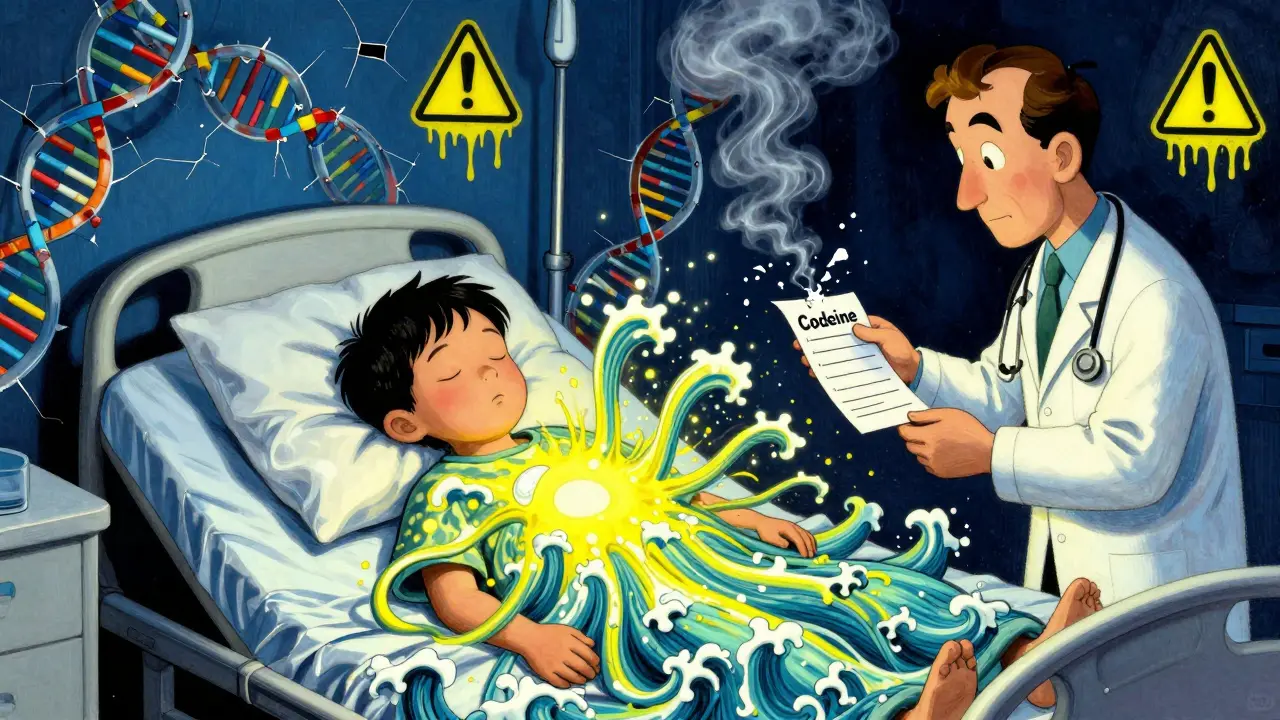
Codeine doesn’t work by itself. It’s what’s called a prodrug - meaning your body has to change it into something else to make it effective. That something else is morphine. And the enzyme that does this job? CYP2D6. Most people have one or two working copies of the CYP2D6 gene. That’s normal. But some people have three, four, or even more. These are called ultrarapid metabolizers. Their bodies convert codeine to morphine so quickly that levels spike dangerously high - sometimes within an hour.That’s not a slow buildup. That’s a surge. And morphine is a powerful opioid. Too much of it shuts down breathing. That’s how people die - quietly, quickly, often while sleeping. The FDA reviewed 64 cases where codeine led to serious harm or death. Of those, 24 were fatal. And in 21 of those deaths, the person was under 12 years old. One was a 15-month-old child who died after surgery. Post-mortem tests showed they were an ultrarapid metabolizer. Their morphine levels were off the charts.
Who’s at Risk? It’s Not Random
This isn’t about age, weight, or how often you take painkillers. It’s about your DNA. About 1 to 2% of East Asians, 3 to 7% of Europeans, and up to 29% of people from North Africa or Ethiopia carry the gene variant that makes them ultrarapid metabolizers. That means in some communities, nearly one in three people could be at high risk from a standard codeine dose.And it’s not just kids. Adults get hit too. A 2013 FDA report showed that among patients with known CYP2D6 status who had bad reactions, 7 out of 10 were ultrarapid metabolizers. Five of them died. The other three were normal metabolizers - and one of them died too. That tells you something: even if you’re not an ultrarapid metabolizer, codeine isn’t risk-free. But if you are? The odds turn deadly.
The FDA Warned. So Why Is Codeine Still Around?
In 2013, the FDA issued a black box warning - the strongest possible alert - for codeine. It said clearly: don’t give codeine to children after tonsil or adenoid surgery. Don’t give it to anyone who might be an ultrarapid metabolizer. The label now says: “Respiratory depression and death have occurred in children who received codeine following tonsillectomy.”Since then, pediatric codeine prescriptions in the U.S. dropped by half. That’s progress. But codeine is still sold. It’s in cough syrups. It’s in combination painkillers like Tylenol with codeine. And doctors still prescribe it - often without knowing the patient’s genetic status.
Why? Because testing isn’t routine. It costs $200 to $500. Insurance often requires pre-approval. Most clinics don’t have the systems to handle it. And many doctors still don’t think about genetics when they write a prescription. But the science is clear. The Clinical Pharmacogenetics Implementation Consortium (CPIC) says it straight: “Codeine or tramadol should not be used” for ultrarapid metabolizers. Period.
What Are the Alternatives?
If you’re an ultrarapid metabolizer - or you don’t know your status - here’s what you need to know: there are safer options. And they’re not hard to find.- Morphine - Already active. No conversion needed. Safe for UMs.
- Hydromorphone - Also direct-acting. No CYP2D6 involved.
- Fentanyl - Works through different pathways. No risk from CYP2D6.
- Non-opioid options - Acetaminophen, ibuprofen, naproxen. Often just as effective for mild to moderate pain.
Hydrocodone and oxycodone? They’re sometimes suggested as alternatives. But they’re tricky. Both are partially metabolized by CYP2D6 into stronger forms - hydromorphone and oxymorphone. So if you’re an ultrarapid metabolizer, you could still overdose on these, too. They’re not safe bets.
For kids, the American Academy of Pediatrics says: skip codeine entirely. Use acetaminophen or ibuprofen first. If you need something stronger, go straight to morphine or hydromorphone. No guessing. No waiting for genetic results. Just pick the right drug from the start.
Can You Get Tested? Should You?
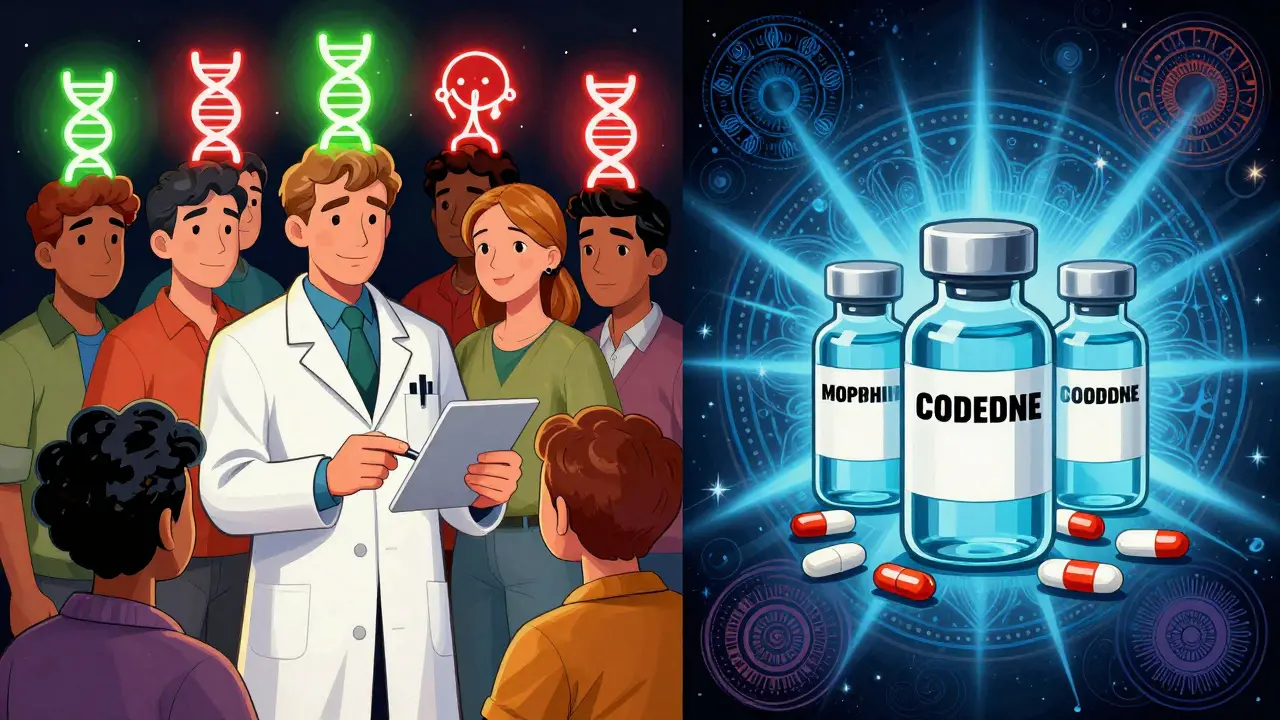
Yes, you can get tested. Many labs offer CYP2D6 genetic tests. Turnaround time? Usually 3 to 14 days. Some hospitals are starting to test before surgery. But most aren’t.Should you get tested? If you’ve had a bad reaction to codeine - dizziness, extreme sleepiness, trouble breathing - yes. If you’re planning surgery, especially for your child, yes. If you’re from a population with higher rates of ultrarapid metabolism - North African, Ethiopian, or Mediterranean descent - yes.
Even if you’ve never taken codeine, knowing your status could save your life down the road. Imagine needing pain relief after an accident. A doctor reaches for codeine. If you’re an ultrarapid metabolizer, that’s a potential death sentence. But if your genetic info is in your record? They’ll choose something safe.
What If You’ve Already Taken Codeine?
If you took a normal dose and felt unusually drowsy, had trouble waking up, or your breathing felt slow or shallow - get help immediately. Call 911. Tell them you took codeine and you’re worried about an overdose. Don’t wait. Don’t assume it’s just “being tired.”Signs of morphine toxicity:
- Extreme drowsiness or inability to stay awake
- Slow, shallow, or irregular breathing
- Blue lips or fingernails
- Cold, clammy skin
- Confusion or unresponsiveness
These aren’t side effects. These are warning signs of respiratory arrest. And they can happen within hours of taking codeine.
The Bigger Picture: Personalized Medicine Is Here
This isn’t science fiction. It’s real medicine. We know now that one size doesn’t fit all - especially with opioids. What works safely for one person can kill another. And the difference? It’s written in your genes.Researchers are working on faster tests - some labs are testing point-of-care kits that could give results in under two hours. Vanderbilt University is leading a $2.5 million NIH-funded project to make this happen. When that becomes standard, prescribing codeine will be unthinkable.
Dr. Mary Relling of St. Jude Children’s Research Hospital says codeine will become a drug of historical interest within the next decade. She’s not exaggerating. The data is too clear. The deaths are too preventable. And the alternatives are too safe.
Codeine isn’t evil. It’s just not for everyone. And knowing who it’s not for? That’s the only way to stop the next tragedy.
Can codeine be safe for children?
No. The FDA, American Academy of Pediatrics, and CPIC all recommend against using codeine in children under 12. Even at standard doses, children who are CYP2D6 ultrarapid metabolizers can develop life-threatening morphine levels. Over 20 child deaths have been linked to codeine after surgery. Safer alternatives like acetaminophen, ibuprofen, or morphine are available and should be used instead.
Is genetic testing for CYP2D6 covered by insurance?
It depends. Many insurance plans cover CYP2D6 testing if it’s ordered by a doctor for a specific reason - like before surgery or after a bad reaction to codeine. But pre-authorization is often required. Out-of-pocket costs range from $200 to $500. Some large hospitals and academic medical centers now offer testing as part of routine pre-op screening, especially for pediatric patients.
Are there other drugs besides codeine that pose this risk?
Yes. Tramadol is another prodrug converted to an active form by CYP2D6. It carries the same risk of overdose in ultrarapid metabolizers. Hydrocodone and oxycodone are partially metabolized by CYP2D6 too, so they can also be risky. The CPIC guidelines specifically warn against using codeine or tramadol in ultrarapid metabolizers. Morphine, hydromorphone, and fentanyl are safer because they don’t rely on CYP2D6.
How do I know if I’m a CYP2D6 ultrarapid metabolizer?
You can’t know without a genetic test. Symptoms like extreme drowsiness or breathing trouble after taking codeine are red flags. But many people have no warning signs until it’s too late. If you’re from a population with higher rates of ultrarapid metabolism (North African, Ethiopian, or Mediterranean ancestry), or if you’ve had a bad reaction to codeine, talk to your doctor about testing. Your results can guide future prescriptions.
Why hasn’t codeine been pulled from the market entirely?
Codeine is still available because it’s cheap, widely used, and effective for many people - especially those who are normal or intermediate metabolizers. Pulling it completely would limit treatment options for the majority. Instead, regulators focused on restrictions: black box warnings, age limits, and guidelines for safer alternatives. The goal is to reduce harm while preserving access for those who can use it safely. But as testing becomes more common, its use is declining rapidly.
Releted Post

Andy Dargon
Hi, I'm Aiden Lockhart, a pharmaceutical expert with a passion for writing about medications and diseases. With years of experience in the pharmaceutical industry, I enjoy sharing my knowledge with others to help them make informed decisions about their health. I love researching new developments in medication and staying up-to-date with the latest advancements in disease treatment. As a writer, I strive to provide accurate, comprehensive information to my readers and contribute to raising awareness about various health conditions.
Wow, I had no idea codeine could be this dangerous for some people. I always thought it was just a mild painkiller. This is wild how genetics can turn something so common into a death sentence.
So basically we’re all just rolling the dice every time we take a pill? 😅
This is terrifying but also so important. My cousin had a bad reaction to codeine after wisdom teeth removal-she was in the hospital for days. No one ever told her about this. Everyone needs to know.
I’ve been on codeine for migraines for years... I never felt anything weird... but now I’m kinda scared to keep taking it... I should get tested... right?... I mean... what if...?
Man, this is why Africa is so misunderstood in Western medicine. We’ve been living with this for generations-people dropping like flies after minor surgeries-and now the FDA is just catching up? 😒 We’ve known for decades that codeine doesn’t play nice with our genes. It’s not science, it’s colonial neglect.
Of course the FDA waited until children started dying to act. Classic. Meanwhile, doctors are still prescribing this like it’s aspirin. If you’re not getting a genetic test before every opioid prescription, you’re not a doctor-you’re a roulette dealer.
Hydrocodone and oxycodone aren’t safe alternatives either? That’s insane. So what’s left? Ibuprofen? But what if you have chronic pain? This feels like being told to avoid all cars because one person got hit by a drunk driver.
My uncle died after a routine surgery in Nigeria. They gave him codeine. No one ever told us why. Now I know. This isn’t just American problem. This is global negligence.
Let me just say, this entire post is a perfect example of why Western medicine is in crisis: over-reliance on reductionist biology while ignoring socioeconomic context. Genetic testing costs $500? That’s a joke. You’re blaming the patient for not being able to afford a test that should be mandatory. Who’s paying for the funeral when the system fails?
It’s not just codeine. It’s the entire paradigm of medicine: one-size-fits-all, profit-driven, and fundamentally disconnected from the human body’s complexity. We treat people like machines with interchangeable parts. But the body? It’s poetry written in DNA. And we’re reading it with a crayon.
I’m not saying this isn’t real… but… what if the real danger is the fear? What if people panic and refuse all opioids, even when they’re the only option? Isn’t that just another kind of harm?
so i took codeine last week and felt super sleepy but i thought it was just the flu?? oh my god i think i almost died??
They’re not testing us because they don’t want us to know. Think about it-big pharma makes billions off codeine. If everyone knew their DNA could kill them from a single pill, they’d stop prescribing it. And then what? No more profits. This isn’t science. It’s a cover-up. The FDA’s warning? A PR stunt. They’ll never pull it off the shelves. Not while the money’s still flowing.