
Why Your Insurance Might Not Be the Best Deal for Your Prescription
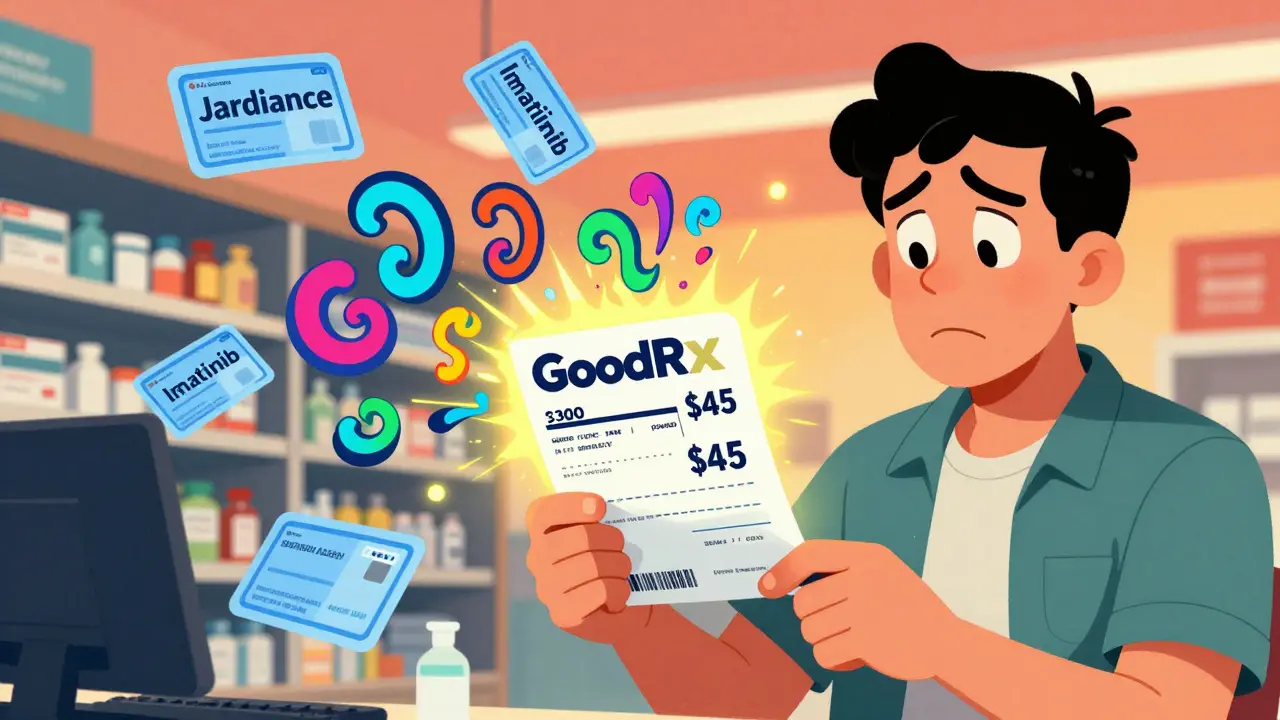
You swipe your insurance card at the pharmacy, wait 10 minutes, and get handed a bill for $300. You could’ve paid $45 with a coupon. This isn’t rare. In fact, it’s happening to millions of Americans every day. The truth is, your insurance doesn’t always save you money on prescriptions-especially if you’re paying high deductibles, your drug isn’t on the formulary, or you’re in the Medicare Part D coverage gap. That’s where services like GoodRx come in.
GoodRx isn’t insurance. It doesn’t cover your copay. It doesn’t count toward your deductible. But it often gives you a lower price than your insurance will. How? It taps into the same discounted rates that Pharmacy Benefit Managers (PBMs) negotiate with pharmacies for insured patients-and then passes those savings directly to you. You don’t need to sign up for anything. No premiums. No enrollment. Just open the app, type in your drug, and see what pharmacies in your area charge.
How GoodRx Actually Works (It’s Not What You Think)
GoodRx doesn’t set prices. It doesn’t own pharmacies. It doesn’t even sell drugs. What it does is act like a price comparison engine for prescription medications. It pulls real-time data from PBMs like Express Scripts and OptumRx, which have negotiated bulk discounts with pharmacies. These discounts are usually hidden from the public-but GoodRx makes them visible.
For example, let’s say you need Jardiance, a diabetes medication. Your insurance copay is $700. You check GoodRx and see that Walmart offers it for $578. You pay cash. That’s $122 saved. And you didn’t touch your insurance at all. This works because GoodRx uses a different pricing channel than your insurer. You’re not using your insurance benefits-you’re bypassing them entirely.
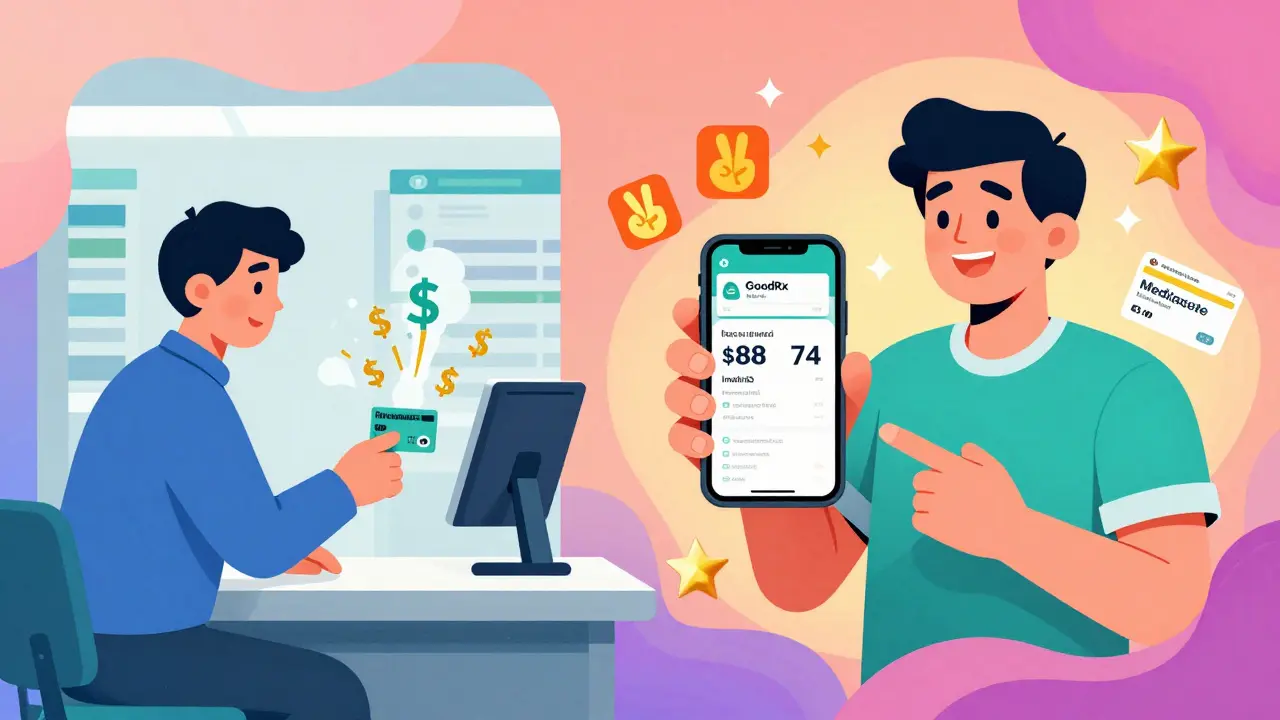
That’s also why you can’t use GoodRx and insurance together. The system won’t let you. You have to choose: pay cash with a GoodRx coupon, or use your insurance. And sometimes, cash wins. Especially for generic drugs. Imatinib, a cancer drug, costs $7,666 retail at some pharmacies. With GoodRx? $88.74. That’s not a typo.
GoodRx vs. Other Discount Services: What’s Different?
GoodRx isn’t the only player. SingleCare, RxSaver, and others offer similar services. But here’s the difference:
- GoodRx shows real-time prices across 70,000+ pharmacies and updates hourly. It covers more locations than anyone else.
- SingleCare has fewer pharmacies but includes telehealth visits and sometimes better prices on certain generics.
- RxSaver is simpler but less reliable-prices don’t update as often, and it doesn’t show as many options.
For most people, GoodRx is the best starting point. It’s free, easy to use, and works at CVS, Walgreens, Walmart, Kroger, and most major chains. You can print a coupon, show it on your phone, or even pay directly through the app with GoodRx Pay (beta as of early 2024).
But here’s the catch: not every pharmacy accepts it. About 35% of independent pharmacies don’t participate. If you get turned away, try another location. Or call ahead. Many users report that pharmacy staff aren’t trained to handle GoodRx coupons-so be prepared to explain it’s a cash discount, not insurance.
When GoodRx Beats Insurance (And When It Doesn’t)
GoodRx shines in three situations:
- You haven’t met your deductible. If your insurance deductible is $2,000 and you’re only halfway there, paying cash with GoodRx might save you hundreds.
- Your drug isn’t on the formulary. If your insurer says it’s not covered-or requires prior authorization-GoodRx gives you an immediate alternative.
- You’re in the Medicare Part D donut hole. Once you hit the coverage gap, your copay jumps. GoodRx often has lower prices than what you’d pay during this phase.
But there are times when insurance still wins:
- Brand-name drugs with manufacturer coupons. Some companies like Eli Lilly or Novo Nordisk offer copay cards that reduce your cost to $0 or $10. These count toward your deductible. GoodRx doesn’t.
- When you’re close to out-of-pocket maximum. If you’re near your yearly limit, using insurance helps you get there faster. Paying cash doesn’t help.
- Specialty drugs. For expensive medications like Humira or Jardiance, Medicare Part D’s negotiated rates can still beat GoodRx Gold’s $1,200 monthly price.
Always compare. Check your insurance Explanation of Benefits (EOB) statement. Then check GoodRx. Pick the lower price. No shame in it.
GoodRx Gold: Is the Subscription Worth It?
GoodRx Gold costs $9.99/month for one person, $19.99 for a family. It gives you deeper discounts-up to 90% off on some drugs-and includes free home delivery on 38,000+ medications.
Is it worth it? If you take 3 or more prescriptions a month, yes. For example, a user in San Diego saves $210/month on Ozempic with GoodRx Gold versus regular GoodRx. That’s $2,520 a year. The subscription pays for itself in one month.
But if you only need one or two meds occasionally? Stick with the free version. You’re not saving enough to justify the monthly fee.
Also, GoodRx Gold includes telehealth visits for $19 each. That’s useful if you need a new prescription or a refill without seeing a doctor in person.
Big Risks You Need to Know
GoodRx isn’t perfect. And there are serious downsides if you’re not careful.
- Don’t use it with Medicare or Medicaid. Federal rules say you can’t combine GoodRx with government insurance. If you do, you could get flagged for fraud. Some users have had their Medicare benefits suspended.
- It doesn’t help your deductible. Every dollar you spend with GoodRx is out-of-pocket. It won’t count toward your insurance deductible or out-of-pocket maximum. That means you might pay more over the year.
- Prices change daily. A drug might be $50 today and $80 tomorrow. Always check before you go.
- Controlled substances like Adderall don’t qualify. DEA rules block discount coupons on controlled drugs.
Also, some PBMs are starting to reduce discounts because they say services like GoodRx are eating into their rebate profits. In early 2024, Express Scripts cut discounts on over 200 drugs after seeing a spike in GoodRx usage. That could mean lower savings in the future.
How to Use GoodRx Like a Pro
Here’s what actually works in real life:
- Check before you fill. Don’t assume insurance is cheaper. Always compare prices.
- Use the app. 98% of users access GoodRx via mobile. It’s faster than typing on a website.
- Call the pharmacy first. Ask: “Do you accept GoodRx coupons?” Some staff have never seen one.
- Don’t show your insurance card. If you’re using GoodRx, don’t swipe your card. Tell the pharmacist you’re paying cash.
- Use GoodRx Gold if you take multiple meds. The savings add up fast.
- Track your spending. Keep a simple log: drug name, price with insurance, price with GoodRx. You’ll spot patterns.
One user on Reddit saved $412 on Ozempic by switching from insurance to GoodRx. Another saved $287 on a compounded thyroid med that insurance refused to cover. These aren’t outliers-they’re common.
What’s Next for Prescription Discounts?
GoodRx is growing fast. Over 1.2 million new users join every month. The market is expected to hit $18 billion by 2027. But change is coming.
Starting in 2025, new CMS rules may ban “gag clauses” that prevent pharmacies from telling customers about cheaper cash prices. That means GoodRx’s model could become standard practice-not a workaround.
Amazon Pharmacy is also stepping up. It’s undercutting GoodRx by 8-12% on generics and offers free delivery with Prime. But it doesn’t cover as many pharmacies yet.
For now, GoodRx remains the most reliable tool for Americans who need to pay out-of-pocket. It’s not a replacement for insurance. But it’s a smart way to avoid overpaying when insurance falls short.
Frequently Asked Questions
Can I use GoodRx with Medicare?
No. Federal law prohibits combining GoodRx with Medicare or Medicaid. If you present a GoodRx coupon along with your Medicare card, the pharmacy may reject it-or worse, your claim could be flagged for fraud. Always choose one or the other. If you’re on Medicare and your drug isn’t covered, ask your pharmacist about manufacturer coupons, which are legal and count toward your deductible.
Why is GoodRx cheaper than my insurance?
GoodRx uses the same discounted rates that Pharmacy Benefit Managers (PBMs) negotiate with pharmacies for insured patients-but it gives you direct access to those prices without the insurance middleman. Insurance plans often add administrative fees, formulary restrictions, and tiered copays that make the final price higher than the negotiated cash rate. GoodRx cuts out the middleman and lets you pay the lowest available price.
Does GoodRx work for all medications?
Most generics and many brand-name drugs are covered, but not all. Controlled substances like Adderall, oxycodone, and other DEA-regulated drugs are excluded. Some specialty drugs, especially newer ones, may not have discounts yet. Always check the app before you go. If it doesn’t show a price, the drug likely doesn’t qualify for a discount.
Can I use GoodRx at any pharmacy?
GoodRx works at over 70,000 U.S. pharmacies, including CVS, Walgreens, Walmart, Kroger, and Rite Aid. But not all independent pharmacies participate. About 35% of smaller, local pharmacies don’t accept GoodRx coupons. If you’re turned away, try another location or call ahead. Some pharmacies require you to show the coupon on your phone-printing it won’t always work.
Is GoodRx Gold worth the monthly fee?
If you take three or more prescriptions a month, yes. GoodRx Gold offers deeper discounts-sometimes up to 90% off-and includes free home delivery. For example, a user on Ozempic saves $210/month with Gold versus $120 with the free version. That’s over $1,000 saved in a year. If you only need one or two meds occasionally, stick with the free version. The $10/month fee won’t pay for itself.
What if the pharmacy says GoodRx isn’t valid?
Ask them to check the GoodRx website or app again. Sometimes the price is outdated. If they still refuse, call GoodRx’s 24/7 support line-they can often resolve the issue in minutes. Also, ask if they can give you the cash price without the coupon. Sometimes the pharmacy’s own cash price is lower than what GoodRx shows. Always ask.
What to Do Next
Download the GoodRx app. Open it right now. Search for your most expensive prescription. Compare the cash price to your insurance copay. If the cash price is lower, you’ve just found a way to save money without changing your insurance.
Don’t wait for your next refill. Do it today. It takes less than 2 minutes. And if you take multiple meds, consider GoodRx Gold. It’s not magic-but it’s one of the few tools that actually works in America’s broken prescription system.
Releted Post


Andy Dargon
Hi, I'm Aiden Lockhart, a pharmaceutical expert with a passion for writing about medications and diseases. With years of experience in the pharmaceutical industry, I enjoy sharing my knowledge with others to help them make informed decisions about their health. I love researching new developments in medication and staying up-to-date with the latest advancements in disease treatment. As a writer, I strive to provide accurate, comprehensive information to my readers and contribute to raising awareness about various health conditions.
I can't believe people still trust insurance companies. They're in bed with PBMs and drug makers to keep prices high. GoodRx is the only real solution, but even that's probably rigged now. They're selling your data to Big Pharma while pretending to help you. You think you're saving money? You're just feeding the machine.
The PBM ecosystem is a black box of rebate arbitrage. GoodRx effectively bypasses the vertical integration of PBMs by accessing the same contracted cash rates via direct-to-consumer channels. This disintermediation is structurally disruptive to the traditional fee-for-service pharmacy reimbursement model, which is predicated on opaque spread pricing and formulary gating.
goodrx is a trap. they get paid by the pharmacies to send customers there. the prices arent real. they change them to make you think you're saving. i saw a drug go from 45 to 80 in 2 hours. then back to 45. its all fake. theyre in cahoots with the big pharma guys. dont trust it. i tried it. got screwed.
Honestly, if you're using GoodRx instead of insurance, you're not being smart-you're being complicit in dismantling the entire healthcare safety net. People like you think they're saving money, but you're just shifting costs onto the system. Eventually, those of us who actually need insurance will pay more because people like you are gaming it. You're not a hero. You're part of the problem.
So let me get this straight... you're telling me I'm supposed to be *grateful* that I can buy my $700 insulin for $88? Like, wow, thanks, capitalism, for letting me choose between poverty and death.
I’ve been using GoodRx for my thyroid med since last year. Saved me $287/month. I track every price in a simple spreadsheet. Insurance said no coverage, so I went cash. No regrets. If you’re not comparing prices, you’re leaving money on the table. It’s not complicated. Just open the app. Do it now.
The structural irony of the American pharmaceutical pricing system is profound: the very entities that negotiate bulk discounts for insured populations-Pharmacy Benefit Managers-create a parallel, invisible market of cash prices that are often lower than the insured copay. GoodRx merely illuminates this dissonance. One must ask: if the cash price is lower, why does insurance exist at all? Is it truly for cost containment-or for administrative extraction?
Just tried GoodRx for my AZT-$120 with insurance, $42 with the coupon. I cried. Not because I was sad-because I was relieved. You’re not broken for using this. The system is. Keep using it. Share it. Tell your friends. This is how we fight back.
It is imperative to note that the utilization of GoodRx does not contribute toward one's deductible or out-of-pocket maximum under a health insurance plan. Consequently, while immediate cost savings are realized, long-term financial exposure may increase. It is therefore recommended that individuals maintain a comprehensive cost-benefit analysis over a twelve-month period before making systemic changes to prescription payment methodology.
man i tried goodrx once and the pharmacist looked at me like i was asking for a unicorn. she said 'we dont take that' and i was like 'but its on the app' and she just shrugged. called another one and they were like 'oh yeah that thing' and did it no problem. just keep trying. dont give up.
This is exactly the kind of practical, life-saving information people need. Thank you for sharing this clearly. It’s not about politics-it’s about survival. Keep doing what you’re doing.
The commodification of healthcare in the United States creates a paradox: the most efficient pricing mechanism-cash transactions-is stigmatized as 'unethical' when it contradicts institutional frameworks. One must consider whether the moral burden lies with the patient seeking affordability, or with a system that renders dignity a privilege.
lol imagine being mad someone found a loophole to not get ripped off. you're the reason we have to do this in the first place. goodrx is just the internet's way of saying 'you're not crazy, the system is broken'.