
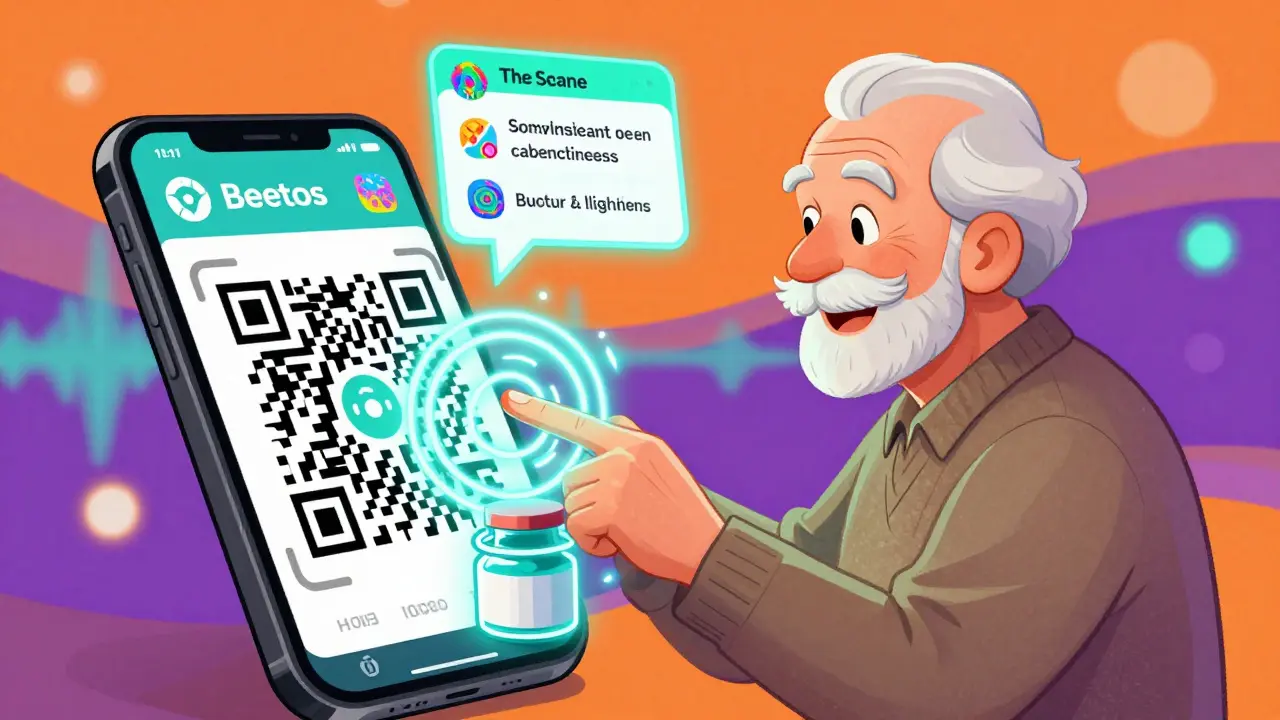
Every year, millions of people miss doses, take the wrong amount, or mix medications that shouldn’t be combined. Often, it’s not because they’re careless-it’s because the information on the pill bottle is too small, outdated, or hard to read. That’s where QR codes and digital prescription label tools come in. They turn a simple paper label into a gateway to clear, up-to-date, and personalized medication information right on your phone.
Why QR Codes on Prescription Labels Matter
QR codes on medication packaging aren’t just a tech gimmick. They’re a safety upgrade. In 2023, a study by Freyr Solutions found that pharmacies using QR codes saw a 43% drop in medication errors. Why? Because instead of squinting at tiny print, patients scan a code and get a full digital label with dosing instructions, warnings, drug interactions, and even video tutorials.
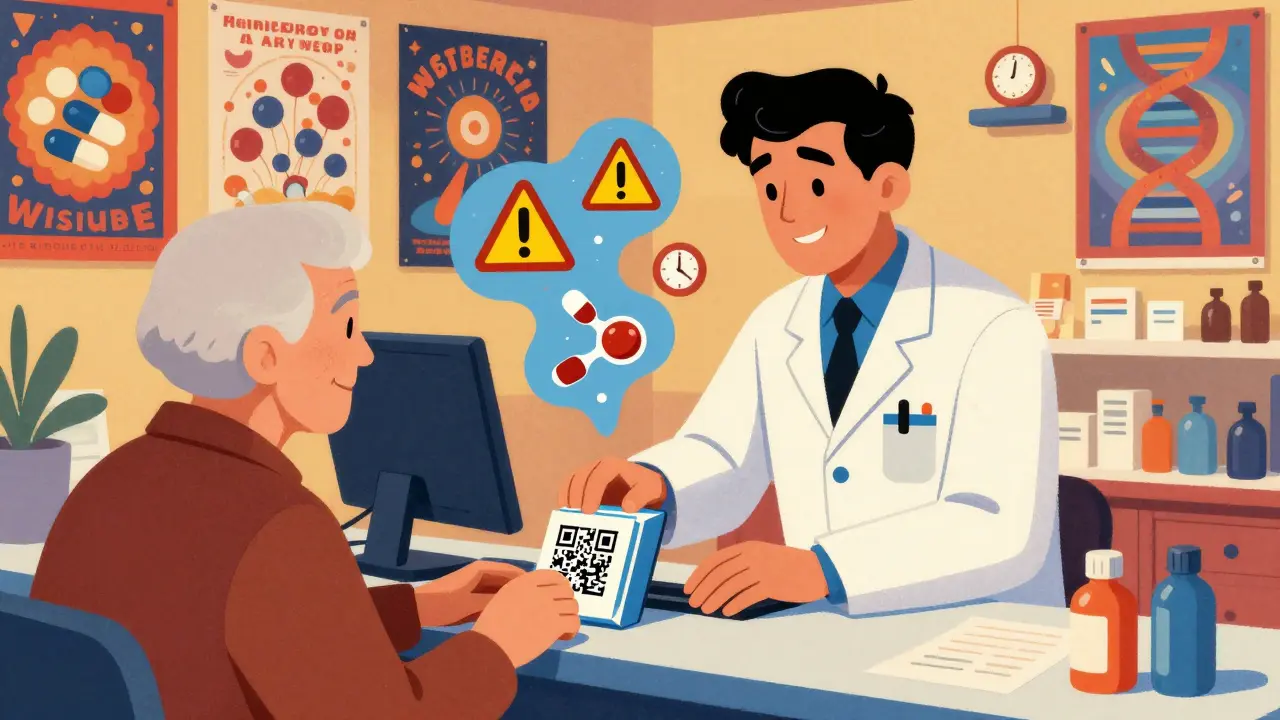
Before QR codes, patients relied on paper inserts that got lost, faded, or were written in medical jargon. Now, a scan gives you the latest version-updated in real time if the FDA issues a new warning, or if your doctor changes your dose. This is especially critical for people taking multiple medications. One scan can show you if your blood pressure pill clashes with your new antibiotic.
Static vs. Dynamic QR Codes: What’s the Difference?
Not all QR codes are created equal. There are two main types: static and dynamic.
Static QR codes point to one fixed URL. Once printed, you can’t change where they lead. If the information updates, you have to reprint the whole label. That’s expensive and slow. Only 12% of pharmaceutical companies use static codes today.
Dynamic QR codes are the standard for healthcare. They link to a web page that can be edited anytime. Need to add a new side effect? Update the landing page, and every existing code still works. You can also track who scans it, where, and when. This helps pharmacies understand if patients are actually using the info. Eighty-eight percent of drug labels now use dynamic codes.
Dynamic codes also support UTM tracking, access controls, and expiration rules. For example, if a medication is recalled, the link can automatically redirect to a safety notice instead of outdated info.
How to Design a QR Code That Actually Works
A QR code that won’t scan is worse than no code at all. It frustrates patients and erodes trust. Here’s what makes a good one:
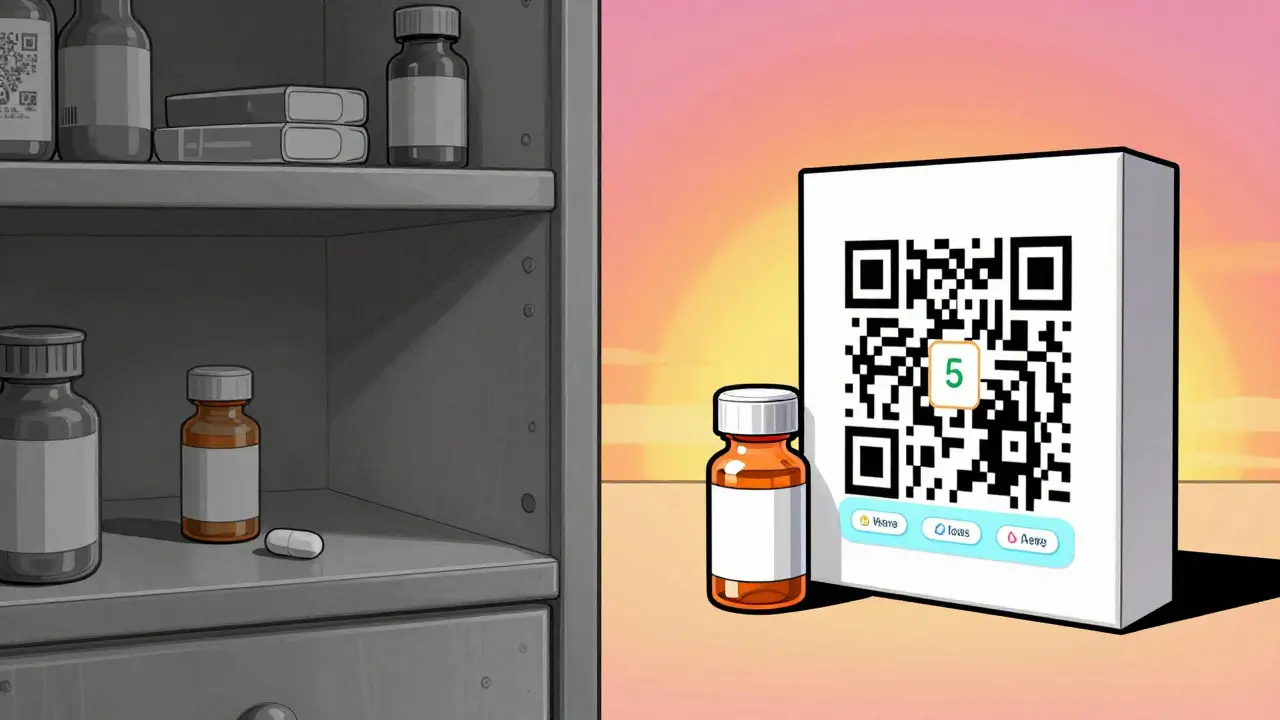
- Minimum size: At least 1.5 inches square. Smaller codes fail on curved surfaces like vials or syringes.
- Quiet zone: Leave a clear border of at least 4 modules (the tiny squares) around the code. No logos, text, or color bleed.
- Contrast: Black on white is best. Dark blue on dark green? Don’t do it. The contrast must be 70% or higher.
- Placement: Avoid seams, folds, or areas that get scratched. The back of the bottle or the side of the box works best.
- Testing: Scan it with 12+ different phones under different lighting-fluorescent, dim, direct sun. Test at 45-degree angles and from 10 feet away.
According to ISO/IEC 18004:2015 standards, if it doesn’t scan reliably in real-world conditions, it’s not fit for use. Pharmacies that skip testing see 15-20% more failed scans.
What Information Should the Digital Label Include?
A digital label isn’t just a copy of the paper label. It’s a richer, interactive experience. Here’s what must be included:
- Drug name (brand and generic)
- Strength and dosage instructions (e.g., “Take 1 tablet by mouth twice daily with food”)
- Indication (why you’re taking it)
- Contraindications (when NOT to take it)
- Warnings and precautions (e.g., “May cause dizziness,” “Avoid alcohol”)
- Drug interactions (with common OTC meds, supplements, and foods)
- Storage instructions
- Expiration date
- Manufacturer contact info
- Link to a video explanation or printable PDF
Singapore’s Health Sciences Authority requires all this info to match the approved patient information leaflet exactly. No shortcuts. If the digital label says “take once daily” but the paper says “twice,” it’s a violation.
How Pharmacies Are Using This Tech Right Now
Real-world examples show how powerful this is:
- A community pharmacy in Ohio used QR codes on medication bags. Patient calls asking “How do I take this?” dropped by 63%.
- An ICU at a Chicago hospital switched to QR-coded IV bags. Medication preparation errors fell by 41%.
- DosePacker, a smart pill dispenser company, added QR codes to their dose cups. Heart failure patients improved adherence from 62% to 89% in just 3 months.
- Saint Francis Hospital mailed QR code postcards to diabetic patients. 83% of them scanned it to get diet tips and blood sugar logs.
These aren’t outliers. They’re becoming standard practice. By 2024, 92% of Fortune 500 pharmaceutical companies use QR codes on at least one product.
Challenges and Pitfalls to Avoid
It’s not all smooth sailing. Here are the biggest problems-and how to fix them:
- Older patients struggle: 38% of people over 65 need help scanning. Solution: Train staff to assist. Offer tablets at the counter. Provide printed backup instructions.
- Weak internet in rural areas: 23% of rural patients can’t load the page. Solution: Use offline-capable landing pages that cache key info. Let users download PDFs ahead of time.
- Small packaging: Vials and inhalers are tiny. Solution: Use larger QR codes (30% bigger than normal) and place them on the box, not the bottle.
- Staff training: One pharmacy reported 17 hours of training per tech to get 95% accuracy. Solution: Use video modules and checklists. Make it part of onboarding.
- Slow loading: If the page takes more than 0.5 seconds to load, people quit. Solution: Optimize images. Use lightweight HTML. Avoid pop-ups.
Integration with Other Systems
QR codes work best when they talk to other systems:
- EHRs (Electronic Health Records): Use HL7 FHIR APIs to pull in your real-time medication list. If your doctor changes your dose, the QR code updates automatically.
- Pharmacy management systems: Integrate with NCPDP SCRIPT standards so the QR code reflects what’s in your pharmacy’s database.
- Patient portals: Link to your account on MyChart or similar platforms so patients can see history, refill status, and refill reminders.
- Medication adherence apps: Connect to apps like Medisafe or MangoHealth so scanning a code logs a dose.
When these systems sync, you get a single source of truth. No more confusion between what the doctor said, what the pharmacist wrote, and what the app says.
Future Trends to Watch
The next few years will bring big changes:
- EU mandate: By 2026, all prescription meds in Europe must have QR codes.
- AI-powered warnings: QR codes will soon link to AI tools that check your meds against your full profile. “You’re on warfarin and just started turmeric-risk of bleeding.”
- Language auto-detection: Scan the code, and it loads in your phone’s language. No more English-only labels.
- UDI integration: QR codes will link to Universal Device Identifiers, so you can track a pill batch from factory to you.
By 2028, the global market for pharmaceutical QR codes is expected to hit $1.2 billion. That’s not hype-it’s demand.
Getting Started: A 6-Step Plan
If you’re a pharmacy, clinic, or manufacturer looking to implement this:
- Assess regulations: Check FDA, EMA, and HSA guidelines. Know what’s required.
- Choose your platform: Pick a dynamic QR code provider with healthcare experience (like Clappia or Freyr Solutions).
- Build the content: Write clear, plain-language text. Include warnings, interactions, and visuals.
- Integrate systems: Connect to your pharmacy software and patient portal.
- Train staff: Spend 4-8 hours per person. Practice scanning on real packaging.
- Educate patients: Put up signs. Send emails. Offer a quick demo at pickup.
Don’t rush it. Pilot it on one drug first. Measure scan rates. Ask patients what they liked. Then scale.
Final Thought: Technology That Saves Lives
QR codes on prescription labels aren’t about being trendy. They’re about fixing a broken system. For too long, patients have been left to decode medical jargon on tiny paper inserts. Now, they can get clear, accurate, and personalized info with a single scan.
The data is clear: fewer errors, better adherence, less stress. But tech alone won’t fix everything. You still need staff who know how to help, systems that talk to each other, and a commitment to accessibility. When all of that comes together, you don’t just update a label-you change lives.
Releted Post

Andy Dargon
Hi, I'm Aiden Lockhart, a pharmaceutical expert with a passion for writing about medications and diseases. With years of experience in the pharmaceutical industry, I enjoy sharing my knowledge with others to help them make informed decisions about their health. I love researching new developments in medication and staying up-to-date with the latest advancements in disease treatment. As a writer, I strive to provide accurate, comprehensive information to my readers and contribute to raising awareness about various health conditions.
Really appreciate this breakdown. I work at a community pharmacy and we started using dynamic QR codes last year. Patient calls about dosing dropped by nearly half. The best part? Seniors who used to need help reading labels now scan it themselves and smile. No more ‘what does this say?’ panic at the counter.
One thing we learned: always test the code on old Android phones. A lot of our users still have 2018 models. If it doesn’t scan on those, it’s useless.
qr codes on pills? cool. next theyll put nfc chips in tylenol so the feds can track when u take a headache pill
this is just gov control. why do i need a phone to know how to take my med? i used to read the paper. now i got to scan? its 2025 and we cant even have a simple label anymore. they want to track us. always tracking.
As a Canadian who’s had to navigate both our public system and the U.S. pharmacy chaos, I’m legit thrilled about this. We’ve got folks in rural Manitoba who drive 90 minutes for meds and then get handed a label printed in Comic Sans on a napkin. QR codes aren’t just tech-they’re dignity.
And the offline caching? Genius. One guy in Fort McMurray told me he downloaded his entire med sheet while at the library, then used it for three months on his satellite internet. That’s not innovation-that’s survival.
i tried scanning my blood pressure med qr code and it took me to a page that said 'error 404' lol. maybe they should test it before printing??
It’s funny, isn’t it? We’ve outsourced our memory to machines. We used to know our pills by sight, by texture, by the way the bottle felt in our hands. Now we trust a code. A digital ghost. A link that could vanish. What happens when the server goes down? When the cloud forgets you?
There’s a quiet horror in this, a surrender. We’ve traded the tangible for the transient. The pill remains. But the meaning? Now it lives in a server farm in Virginia.
Wait. So now the government, Big Pharma, and your phone company are all linked through a QR code on your pill bottle? And you’re saying this is 'safer'? I’ve got my 2017 iPhone, a 12-year-old prescription, and a Wi-Fi dead zone. You’re telling me I’m supposed to scan a code that might lead to a phishing site that harvests my insulin data? I’d rather just guess.
While the intent behind QR code integration is laudable, the implementation is fundamentally flawed due to a confluence of systemic and technological inadequacies. The assumption that all patients possess smartphones, digital literacy, or consistent connectivity is not merely optimistic-it is epistemologically unsound.
Furthermore, the reliance on dynamic QR infrastructure introduces a single point of failure into the pharmacovigilance ecosystem. A compromised server, a misconfigured API endpoint, or a failed HL7 FHIR synchronization could result in catastrophic mislabeling. The FDA’s own 2022 audit of digital health interfaces revealed a 17% error rate in real-time data propagation.
Moreover, the omission of tactile, tactile, and visual redundancy in favor of digital-only access violates the core tenets of universal design. The visually impaired, the cognitively impaired, and the elderly are not merely inconvenienced-they are excluded.
This is not innovation. It is technocratic negligence masquerading as progress.