
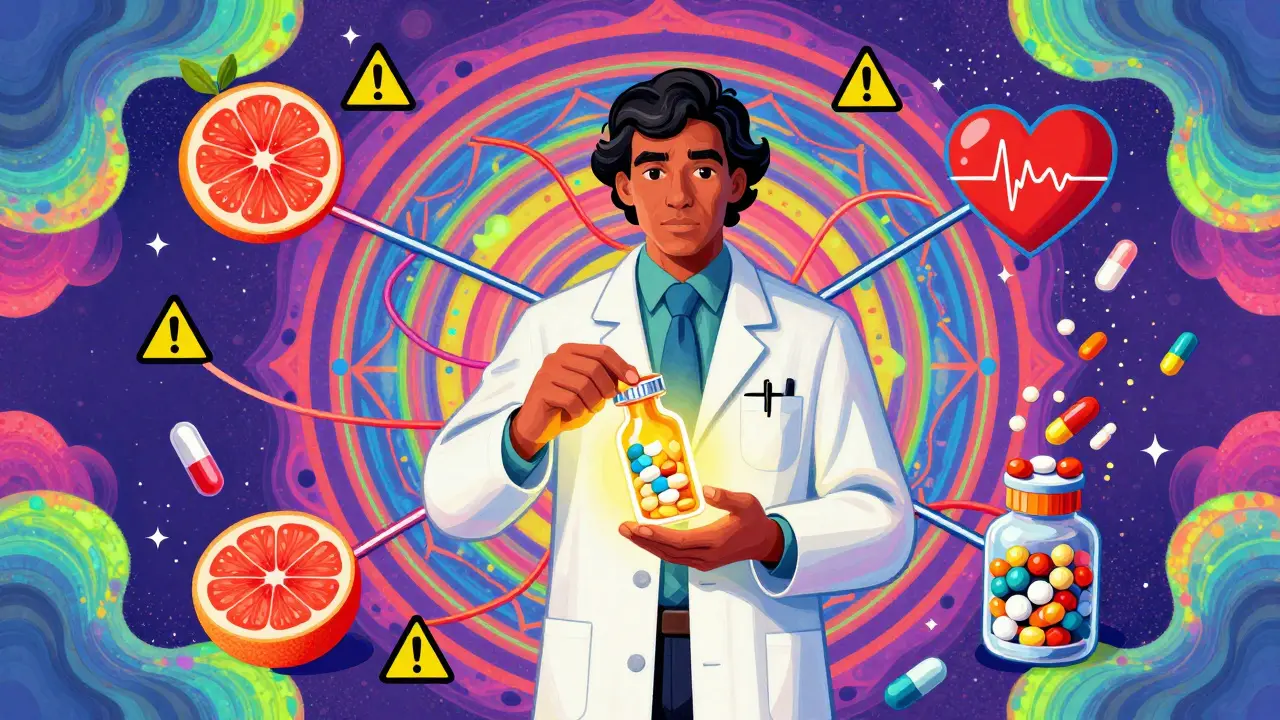
Every year, over 1.3 million people in the U.S. end up in the emergency room because of bad drug interactions. Many of these cases are preventable. The problem isn’t always that the medicine is dangerous-it’s that people don’t know how it might react with something else they’re taking. That’s where your pharmacist comes in. They’re not just the person who hands you your pills. They’re trained to catch hidden risks you might never think to ask about.
What Exactly Is a Drug Interaction?
A drug interaction happens when one substance changes how another substance works in your body. This can mean the medicine stops working, causes worse side effects, or even creates a new health danger. There are three main types:- Drug-drug interactions - when two or more medications react. For example, taking blood thinners like warfarin with certain antibiotics can increase your risk of bleeding.
- Drug-food/beverage interactions - some foods or drinks change how your body absorbs or breaks down medicine. Grapefruit juice, for instance, can make cholesterol drugs like simvastatin dangerously strong.
- Drug-condition interactions - if you have a health condition, some drugs can make it worse. Taking decongestants if you have high blood pressure? That can spike your pressure to dangerous levels.
The FDA requires all prescription labels to list known interactions, but you won’t catch everything just by reading the small print. That’s why you need to talk to your pharmacist - and ask the right questions.
What Should You Ask Your Pharmacist?
Don’t wait until you feel sick. Bring up these questions every time you get a new prescription, refill a medicine, or start a supplement.- “Can I take this with my other medications?” - Don’t assume your doctor told your pharmacist everything. Many people take supplements, OTC painkillers, or sleep aids that aren’t in the system. List every pill, capsule, or patch you use - even if you think it’s harmless.
- “Should I avoid certain foods, drinks, or products?” - Grapefruit juice, alcohol, and even dairy can interfere with common drugs. If you’re on statins, some antibiotics, or blood pressure meds, a glass of juice might be riskier than you think.
- “Will this interact with my existing health conditions?” - If you have kidney disease, liver problems, diabetes, or heart issues, some drugs can make them worse. A simple OTC cold medicine might not be safe if you’re on beta-blockers.
- “What are the warning signs I should watch for?” - You need to know what’s normal and what’s dangerous. For example, if you’re on warfarin and notice unusual bruising or dark stools, that’s a red flag. Your pharmacist can tell you exactly what symptoms mean trouble.
- “How should I take this - with food, on an empty stomach, or at a specific time?” - Timing matters. Some drugs need to be taken 2 hours before or after meals. Others can’t be taken with calcium or iron supplements. The wrong timing can reduce effectiveness or cause side effects.
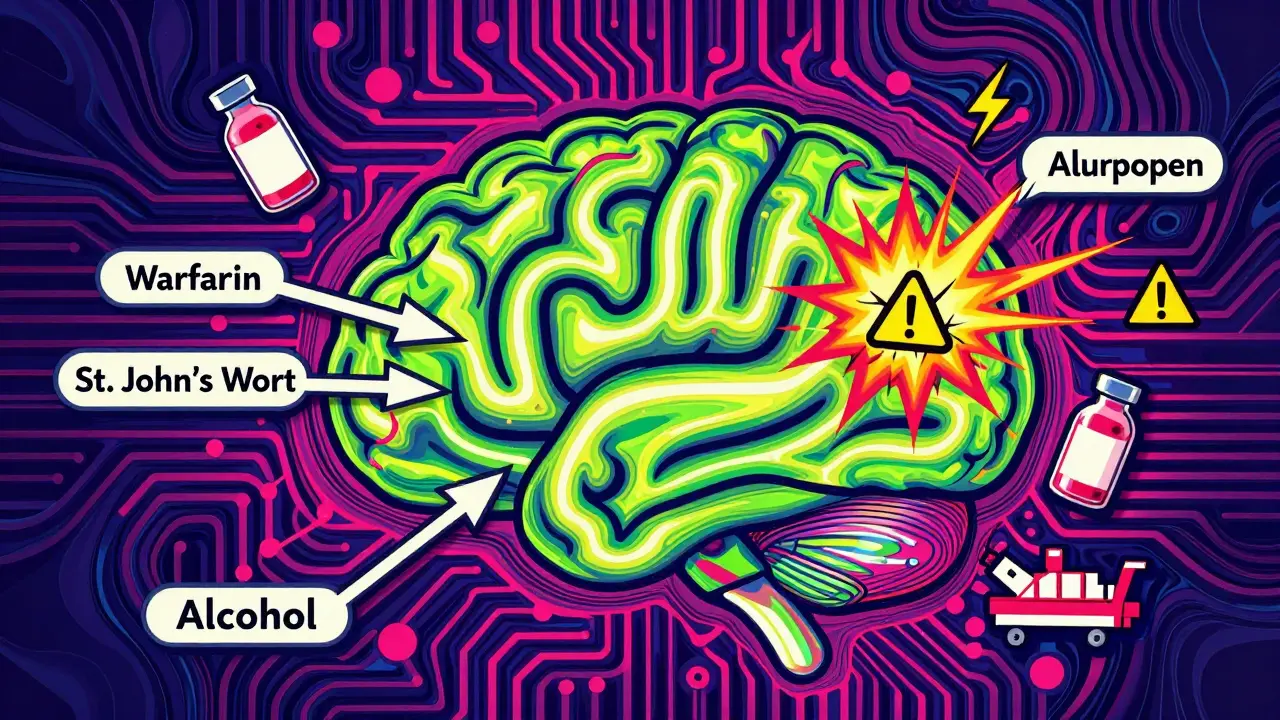
- “Do any of my supplements interfere with this?” - Nearly 8 in 10 U.S. adults take some kind of supplement. St. John’s wort, vitamin K, fish oil, and even magnesium can mess with medications. One study found that 18% of drug interactions missed by electronic systems involved supplements.
- “Is there a safer alternative if this has too many risks?” - Sometimes there’s another drug in the same class that doesn’t interact as badly. Pharmacists know these alternatives and can suggest them to your doctor.
What Information Should You Bring to Your Appointment?
To make the most of your conversation, come prepared. Don’t rely on memory. Write it down.- A complete list of all medications - including prescription, over-the-counter, and topical creams.
- Names and dosages of supplements and vitamins - even the ones you take “just once in a while.”
- Any herbal remedies or botanicals - like turmeric, ginseng, or echinacea.
- Your daily habits - do you drink alcohol? Eat grapefruit? Smoke? Drink coffee with your pills?
- Your medical history - especially conditions like high blood pressure, diabetes, kidney disease, or liver problems.
- The schedule you follow - when you take each pill, and if you ever miss doses.
Pharmacists are trained to look at all of this together. A 2023 study showed that when patients brought a full list, pharmacists caught 37% more potential interactions than when they only had the new prescription.
Why This Matters More Than Ever
More people are taking multiple drugs. In fact, 57% of women and 44% of men over 65 take five or more medications daily. Even younger adults aren’t safe - between 2010 and 2022, the number of adults under 65 taking four or more drugs jumped by 28%. The more pills you take, the higher the chance something will clash.And it’s not just prescription drugs. Over-the-counter pain relievers like ibuprofen or naproxen can cause stomach bleeding if taken with blood thinners. Antacids can block absorption of antibiotics. Even common vitamins like vitamin K can make warfarin less effective, leading to blood clots.
Pharmacists now use electronic systems that flag potential interactions - but they’re not perfect. A 2022 study found that even the best systems miss about 18% of serious interactions because they don’t have your full history. Only you can fill in those gaps.
What Happens When You Don’t Ask?
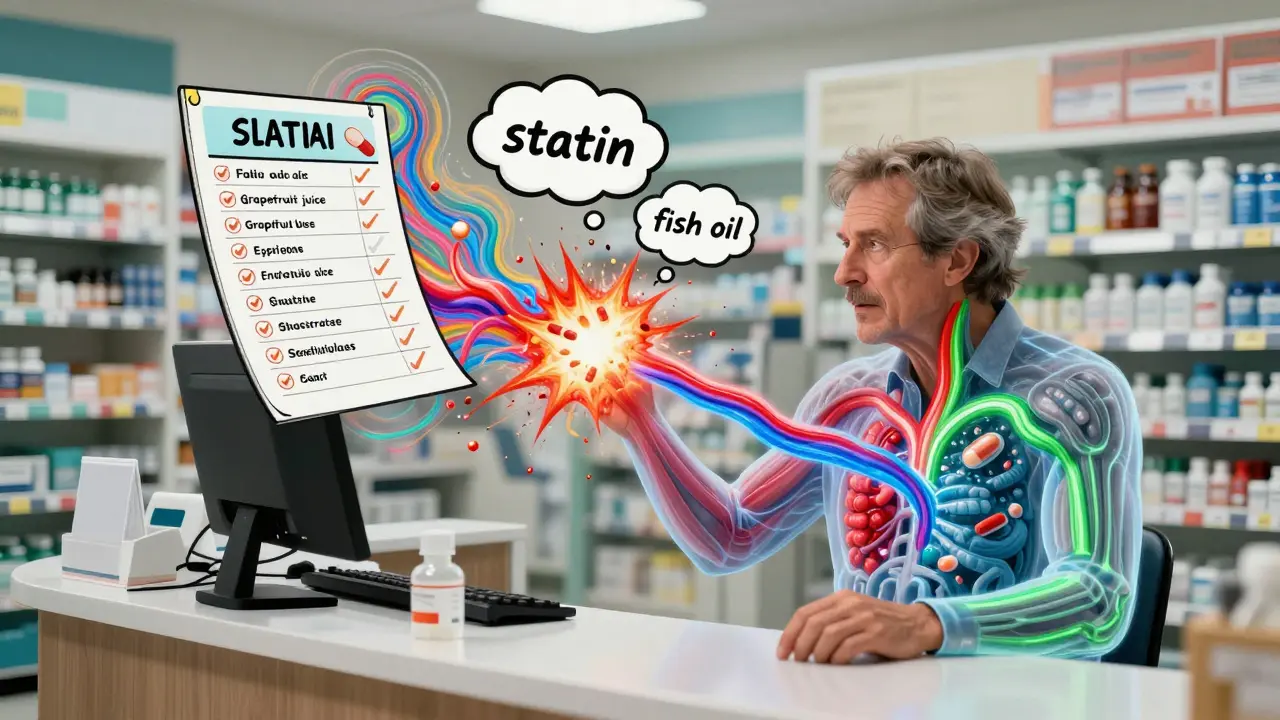
A man in his late 60s in San Diego started taking a new cholesterol drug. He also took a daily fish oil supplement and ate grapefruit every morning. He didn’t mention either to his doctor. Within weeks, he had muscle pain so severe he couldn’t walk. He ended up in the hospital with rhabdomyolysis - a dangerous breakdown of muscle tissue caused by the interaction between the statin, grapefruit, and fish oil. He survived, but he was hospitalized for 10 days. He didn’t know any of those things could interact.That’s not rare. In 2022, the FDA logged over 112,000 reported cases of drug interactions. The most common involved blood thinners, diabetes meds, and heart drugs. Many of those cases could’ve been avoided with a simple conversation.
When Should You Talk to Your Pharmacist?
Don’t wait for a crisis. Make it a habit.- Every time you get a new prescription - even if it’s from a different doctor.
- When you start or stop any supplement, vitamin, or OTC medicine.
- At least every 3 months - your body changes, your habits change, and so can your risks.
- After a hospital stay - new meds are often added, and old ones are changed.
- If you notice new side effects - like dizziness, nausea, unusual fatigue, or skin rashes.
Pharmacists don’t just work in stores. Many hospitals and clinics have pharmacists on staff who review every patient’s full medication list. If you’re in the system, ask if you can schedule a medication review. It’s often free, especially if you’re on Medicare.
Final Thought: Your Safety Is Your Responsibility
Doctors don’t have time to go over every possible interaction. Pharmacies are busy. But you’re the one who takes the pills. You’re the one who knows what you eat, drink, and take. Don’t assume someone else is watching out for you. Be the one who asks the questions.Bring your list. Speak up. Ask the hard questions. It could save your life - or at least save you a trip to the ER.
Can I just check for drug interactions online instead of talking to a pharmacist?
Online tools can help, but they’re incomplete. Most only check prescription drugs and miss supplements, herbs, or even OTC medicines. They also don’t know your full health history - like kidney function or allergies. A pharmacist looks at your entire picture. A 2022 study found that online checkers missed over 60% of interactions involving dietary supplements.
Do I need to tell my pharmacist about vitamins and supplements?
Yes - absolutely. Supplements aren’t regulated like drugs, so their ingredients can vary. St. John’s wort can cut the effectiveness of birth control, blood thinners, and antidepressants. Vitamin K can make warfarin less effective. Even calcium and iron can block absorption of antibiotics. If you take it, tell them.
What if I forget to mention something at the pharmacy?
Don’t panic. Call or visit again. Pharmacists expect patients to forget things. Bring your updated list next time. You can also ask for a printed summary of your medications - many pharmacies offer this for free. Keeping a personal list on your phone or in your wallet is a good habit.
Can grapefruit juice really be dangerous with my meds?
Yes. Grapefruit juice blocks an enzyme in your gut that breaks down certain drugs. This causes too much of the drug to enter your bloodstream. It’s especially risky with statins (like simvastatin), some blood pressure meds, and certain anti-anxiety drugs. Even one glass can cause problems. If you’re unsure, ask your pharmacist - they’ll tell you if it’s safe.
Do pharmacists check for interactions with alcohol?
They should - but only if you tell them you drink. Alcohol can increase drowsiness with painkillers, raise the risk of liver damage with acetaminophen, and spike blood pressure with decongestants. If you drink regularly, mention it. If you only have a drink on weekends, say that too. Every detail matters.
Releted Post

Andy Dargon
Hi, I'm Aiden Lockhart, a pharmaceutical expert with a passion for writing about medications and diseases. With years of experience in the pharmaceutical industry, I enjoy sharing my knowledge with others to help them make informed decisions about their health. I love researching new developments in medication and staying up-to-date with the latest advancements in disease treatment. As a writer, I strive to provide accurate, comprehensive information to my readers and contribute to raising awareness about various health conditions.
Just got back from the pharmacy today and asked about my new blood pressure med. They caught that my fish oil and turmeric were thinning my blood too much. Didn’t even know those could do that. Honestly? I thought pharmacists just handed out pills. Turns out they’re the unsung heroes of healthcare. Thanks for the reminder.
Also, I now keep a little note in my wallet with everything I take. Game changer.
OMG I CAN’T BELIEVE PEOPLE DON’T DO THIS. I had a friend who took statins + grapefruit + St. John’s wort and ended up in the ICU for three weeks. THREE WEEKS. Her doctor didn’t even ask about supplements. Her pharmacist did - but she didn’t tell them until she was already in pain. This isn’t a ‘maybe’ thing. It’s a ‘you’re gonna die if you don’t’ thing. I’m still mad about it.
Also, why do people think ‘natural’ means ‘safe’? That’s how you end up with liver failure from ‘herbal detox tea.’
Okay, let’s be real - pharmacists are the only people in this whole system who actually care about your health. Doctors? They’re in and out in 7 minutes. Nurses? Busy. Online tools? Useless if you take anything beyond a multivitamin.
And yet, we treat them like order-takers. I’ve seen people hand over a list of 12 meds and say, ‘I think that’s it.’ Then they walk out. No wonder people end up in the ER. You wouldn’t drive a car without checking the oil - why do it with your body?
Also, the fact that 18% of interactions are missed by electronic systems? That’s not a bug. That’s a feature of a broken system. We need pharmacists to have 15-minute consults. Not 3.
And yes, grapefruit juice is a villain. It’s like the Voldemort of beverages. Don’t let it near your meds.
I’m 32 and on 7 different medications - antidepressants, thyroid, blood pressure, acid reflux, allergy, migraine, and a nightly magnesium. I thought I had it all under control until my pharmacist sat me down for 20 minutes and said, ‘You’re basically playing Jenga with your liver.’
Turns out, my magnesium was blocking my thyroid med. My coffee in the morning was making my acid reflux med useless. My ‘natural’ sleep aid had a compound that made my antidepressant stop working. I cried. Not because I was scared - but because I realized I’d been trusting my own assumptions instead of asking for help.
Now I have a spreadsheet. Color-coded. With pictures. I even labeled my meds ‘DANGER: GRAPES’ and ‘DANGER: CAFFEINE.’ My pharmacist laughed. I cried again. Then she hugged me. And gave me a free lanyard with my meds on it. I wear it everywhere. I’m not embarrassed. I’m empowered.
If you take more than one thing - please, please, please talk to your pharmacist. Don’t wait until you’re in the hospital. I’ve been there. It’s not glamorous. It’s just… terrifying.
Interesting. But isn’t this just shifting responsibility onto the patient? Shouldn’t the system be designed so that this isn’t necessary? Why are we relying on people to remember 12 pills and 3 supplements when tech could automate this?
Also, I’ve never met a pharmacist who didn’t seem annoyed when I asked questions. Maybe it’s not the patient’s fault - maybe it’s the system.
While I appreciate the sentiment, I must respectfully note that the burden of medication reconciliation should not fall disproportionately upon the layperson. In a properly resourced healthcare infrastructure, interoperable electronic health records, coupled with mandatory pharmacist consultation protocols, would render this ad hoc vigilance unnecessary.
That said, I commend the author for highlighting an acute gap in patient education - one that, in the absence of systemic reform, remains tragically vital.
YAS. I’ve been doing this for years. I keep a little card in my purse with everything I take - even the ‘I only take it once a month’ ones. My pharmacist calls me ‘The Medication Queen.’ 😎
Also, I told her about my CBD oil. She said, ‘Oh honey, that’s gonna mess with your blood thinner.’ I almost didn’t say anything because I thought it was ‘just CBD.’ WRONG. Now I bring my bottle to every visit. She even gave me a sticker that says ‘I asked.’
PS: Grapefruit juice is a LIE. Don’t fall for it. 🍊🚫
Why are we even talking about this? Just don’t take pills if you’re dumb. If you can’t remember what you’re taking, maybe you shouldn’t be taking anything. America is too soft. We need to stop coddling people. If you’re gonna take 12 meds and drink grapefruit juice, you deserve what you get.
Also, I don’t trust pharmacists. They’re just trying to sell you more stuff.
🇺🇸 #MakeMedicineGreatAgain
My dad’s on 8 meds. He forgets half of them. I started doing his pharmacy runs for him. We sit down every month and go through everything. He doesn’t even realize how much we’ve avoided. Last time, they caught that his blood pressure med was making his gout worse. Switched it out. No more pain. Simple. Just talk.
Also, I keep a list on my phone. I’m not proud of it. I’m proud of the fact that I didn’t wait until he was in the ER.
Let’s deconstruct this. The 1.3M ER visits are a symptom, not the root cause. The real issue is polypharmacy in an aging population with fragmented care delivery. The pharmacist is a band-aid on a hemorrhage. We need AI-driven clinical decision support integrated into EHRs with real-time pharmacogenomic profiling - not a checklist. Also, the supplement industry is a regulatory loophole. The FDA doesn’t regulate it because it’s classified as food. That’s not a mistake - it’s a corporate design choice. You’re not protecting yourself by asking questions. You’re participating in a flawed system that outsources risk to the consumer. The solution isn’t education. It’s systemic overhaul.
One of the best things I ever did was ask my pharmacist about my vitamins. She said, ‘You’re taking vitamin D and calcium? That’s fine - but you’re also on a thyroid med. Take them 4 hours apart.’ I had no idea.
Now I ask about every new thing. Even the ‘I’m just trying this for a week’ stuff. I’ve saved myself from two near-misses. It’s not scary. It’s empowering.
And honestly? My pharmacist remembers me. She asks how my mom is doing. She remembers I hate bitter pills. She gives me chewables. That’s care. That’s human.
You don’t need a PhD. You just need to open your mouth. Seriously. Try it. You’ll be surprised how much they care.
bro i just took my meds and went to bed lmao why r u all overthinking this 😴💊
my pharmacist just gives me the pills and i say thanks
if i feel weird ill just go to er
its fine
its fine
its fine
Have you ever wondered who controls the drug interaction databases? Big Pharma. The FDA doesn’t require full disclosure of all interactions - only ‘significant’ ones. And guess what? ‘Significant’ is defined by profit margins. If a drug interaction affects 1 in 10,000 people, and the drug makes $2 billion a year? They’ll bury it. Your pharmacist’s system is fed by this same data. So when you ask them, you’re trusting a system that’s designed to hide the truth. And supplements? They’re not regulated - because the supplement industry funds political campaigns. The real danger isn’t grapefruit juice. It’s the fact that the system is rigged. You think you’re safe because you asked? You’re just being fed a sanitized version of the truth. Wake up. They’re watching. They’re always watching.
Just saw someone say they don’t trust pharmacists because they’re ‘just trying to sell you stuff.’
Look - I’ve been to 3 different pharmacies. The one that didn’t push me to buy $50 supplements? The one who said, ‘I’m not gonna sell you anything - here’s what actually works’? That’s the one I go to now.
They’re not all the same. Find the good ones. They’re out there.