
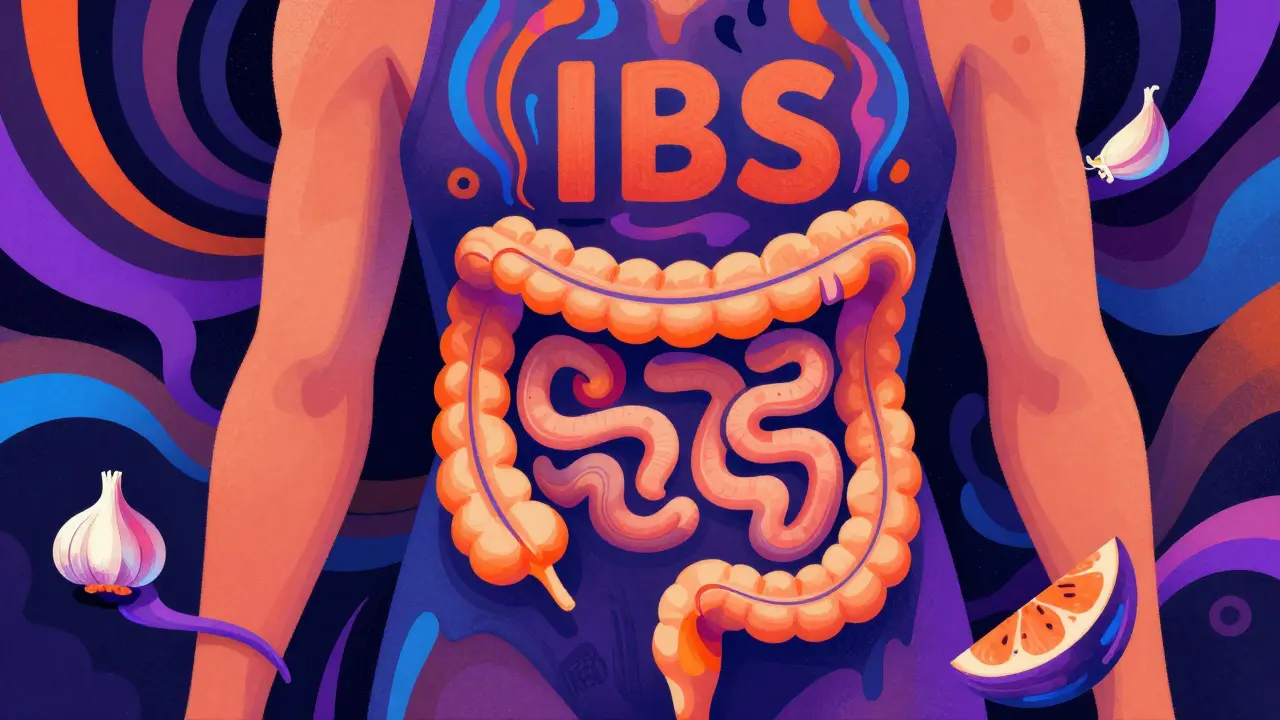
Dealing with irritable bowel syndrome (IBS) often feels like a guessing game. One day a piece of fruit is fine, and the next, it triggers an hour of intense bloating or a sudden dash to the bathroom. If you've been told to "just eat healthier," you know that's useless advice when your gut is in revolt. The real challenge isn't just avoiding "bad" foods, but figuring out which specific triggers are causing your misery. Whether you're facing daily diarrhea, chronic constipation, or a chaotic mix of both, the right dietary strategy can move you from constant discomfort to actually enjoying a meal again.
Quick Summary: Finding Your Gut Strategy
- Low-FODMAP: The gold standard for bloating and pain; a three-phase process to identify specific carbohydrate triggers.
- Low-Residue: Best for severe diarrhea or bowel prep; focuses on limiting fiber to reduce stool volume.
- Elimination: A broader approach to remove common triggers like dairy and gluten to find general sensitivities.
- Success Rate: Roughly 75-80% of IBS patients see improvement with a structured FODMAP plan.
- Goal: These aren't forever diets-they are tools to identify triggers and personalize your long-term eating habits.
The Low-FODMAP Approach: Precision Trigger Hunting
If you've spent any time researching IBS, you've seen the word Low FODMAP is a dietary protocol developed by Monash University that restricts fermentable carbohydrates-specifically fructans, galacto-oligosaccharides (GOS), lactose, excess fructose, and polyols. These aren't just random foods; they are short-chain carbohydrates that the small intestine absorbs poorly. Instead, they travel to the colon where bacteria feast on them, creating gas and drawing water into the bowel. This is why you feel like a balloon after eating certain vegetables or drinking milk.
The IBS Diet isn't a simple "do and don't" list. It's a structured medical process divided into three distinct phases. If you just cut out high-FODMAP foods and stay there, you're missing the point-and potentially hurting your gut microbiome. Here is how the process actually works:
- Elimination (2-6 Weeks): You strip away all high-FODMAP foods. The goal is to reach a "baseline" where your symptoms settle. This phase is tough because hidden FODMAPs are everywhere-think garlic powder in your favorite seasoning or honey in your tea.
- Reintroduction (8-12 Weeks): This is the detective work. You systematically test one FODMAP group at a time. For example, you might try a specific dose of lactose (around 12g) to see if it triggers you, while keeping everything else low. This prevents the "everything is bad" mentality.
- Personalization: You build your own custom map. You might find that you can handle fructose just fine, but fructans (found in wheat and onions) are a total no-go. Most people end up reintroducing 50-80% of the foods they initially cut out.
A pro tip for this phase: use a digital scale. The difference between a "safe" serving and a "trigger" serving can be as small as a teaspoon of garlic. Precision is what makes this diet work where general "healthy eating" fails.
Low-Residue Diet: Managing the Volume
While FODMAPs focus on how food ferments, a Low-Residue Diet is all about what remains. "Residue" is just a medical term for the undigested food and fiber that stays in your gut. By limiting fiber to roughly 10-15g per day, you reduce the amount of stool your bowel has to process.
This is a very different beast than the FODMAP plan. In a low-residue setup, you ditch all raw fruits, vegetables, nuts, and seeds. You're looking for white breads, well-cooked vegetables without skins, and lean proteins. It's incredibly effective for people with diarrhea-predominant IBS (IBS-D) because it slows things down and reduces stool volume quickly.
However, there's a catch. This is not a long-term lifestyle. Because you're cutting out so much fiber and variety, your folate and calcium levels can plummet. If you try to live on a low-residue diet for a year, you're likely to experience nutrient deficiencies and potentially worsen constipation. It's a short-term tool, not a permanent solution.

General Elimination Plans: The Wide Net
General elimination diets are the "old school" approach. Instead of focusing on chemical structures like FODMAPs, these plans cast a wide net, removing common culprits like dairy, gluten, soy, and caffeine. You stay on the restricted list for a few weeks and then add things back one by one.
These are great if you suspect you have multiple sensitivities or if you don't have access to a certified dietitian. But they lack the precision of the Monash-style approach. Without standardized dosing (like the exact grams used in FODMAP challenges), many people struggle to identify their true triggers, often guessing wrong or eliminating foods they actually tolerate well.
| Feature | Low-FODMAP | Low-Residue | General Elimination |
|---|---|---|---|
| Primary Goal | Reduce fermentation/gas | Reduce stool volume | Identify general triggers |
| Best For | Bloating & Abdominal Pain | Severe Diarrhea | Unknown sensitivities |
| Duration | 3-6 Months (Phased) | Short-term/Acute | 2-4 Weeks (Elimination) |
| Complexity | High (Requires tracking) | Medium (Fiber focus) | Low to Medium |
| Typical Response | 75-80% improvement | ~45% improvement | ~40-50% improvement |
Common Pitfalls and How to Avoid Them
Most people fail these diets not because the diet doesn't work, but because the implementation is messy. The biggest mistake? Skipping the reintroduction phase. It's tempting to find a "safe" list of foods and just stay there forever. But doing this can actually reduce the diversity of your gut bacteria-specifically Bifidobacterium, which can drop significantly if you avoid prebiotic fibers for too long.
Another huge hurdle is the "healthy food trap." Many processed foods marketed as "healthy" or "organic" are loaded with inulin, honey, or agave-all of which are high-FODMAP. You might be eating a gluten-free granola bar thinking it's safe, while the honey in it is triggering a massive flare-up. Learning to read labels for these specific ingredients is a skill you'll need to master.
Social anxiety is also a real factor. Trying to navigate a restaurant menu while in the strict elimination phase is stressful. To handle this, look for simple proteins (grilled chicken, steamed fish) and ask for substitutions like spinach instead of mixed greens or white rice instead of quinoa. Carrying a small list of "safe' substitutions can take the pressure off.

Which Plan Should You Choose?
The choice depends entirely on your primary symptom. If your main struggle is that you feel like you've swallowed a basketball after every meal, the Low-FODMAP approach is your best bet. It's the most evidence-backed method for reducing the visceral hypersensitivity that causes that "stretched" feeling in the gut.
If your bowel movements are frequent, watery, and urgent, a short stint on a low-residue diet can give your system a much-needed break. It calms the inflammation and reduces the workload on your colon. However, if you struggle mostly with constipation (IBS-C), avoid the low-residue diet at all costs-cutting out fiber will only make the blockage worse.
For those who are overwhelmed or don't have the resources for a full 6-month protocol, a general elimination diet can provide some quick wins. Just be aware that you might end up restricting more than you actually need to. When in doubt, working with a registered dietitian who specializes in gastrointestinal health is the most reliable way to ensure you don't end up with a nutrient deficiency.
Is the Low-FODMAP diet a permanent lifestyle change?
No. It is designed as a temporary diagnostic tool. The goal is to move through the elimination and reintroduction phases to find your specific tolerance thresholds. Staying in the elimination phase long-term can negatively impact your gut microbiome and lead to nutritional gaps.
Can I do the Low-FODMAP diet without a dietitian?
Yes, but it's harder. Research shows compliance drops from 85% with professional support to about 45% without it. Using tools like the Monash FODMAP app can help, but the reintroduction phase is where most people get confused and give up.
What is the difference between low-residue and low-fiber?
While they are similar, low-residue is a more medical term often used for bowel preparation. It specifically excludes not just high-fiber foods, but also things like seeds and skins that can leave "residue" in the colon, whereas a general low-fiber diet might just focus on reducing whole grains.
Why do I feel worse during the reintroduction phase?
This is common. After a few weeks of strict elimination, your gut is "quiet." When you introduce a trigger food, the reaction can feel more intense because the contrast is so sharp. This is actually helpful, as it makes it much easier to identify exactly which food group is causing the problem.
Do these diets cure IBS?
No, IBS is a chronic condition and cannot be "cured" in the traditional sense. These diets manage the symptoms and improve your quality of life by removing the triggers that cause flare-ups, allowing you to regain control over your daily routine.
Next Steps for Your Gut Health
If you're ready to start, don't try to do everything at once. Pick one strategy based on your dominant symptom. If you're choosing the FODMAP route, start by downloading a verified app and spending a weekend clearing your pantry of high-FODMAP staples like garlic, onions, and wheat.
For those with severe symptoms, your first step should be a consultation with a gastroenterologist to rule out other conditions like Celiac disease or IBD, as some of these diets can mask those symptoms. Once cleared, start a symptom journal. Tracking exactly what you eat and how you feel for just seven days will give you and your doctor a much clearer picture than trying to remember what happened three Tuesdays ago.
Releted Post

Andy Dargon
Hi, I'm Aiden Lockhart, a pharmaceutical expert with a passion for writing about medications and diseases. With years of experience in the pharmaceutical industry, I enjoy sharing my knowledge with others to help them make informed decisions about their health. I love researching new developments in medication and staying up-to-date with the latest advancements in disease treatment. As a writer, I strive to provide accurate, comprehensive information to my readers and contribute to raising awareness about various health conditions.
Comments
Post Comment