
Diarrhea Severity Calculator
Medication-Induced Diarrhea Assessment
This tool helps you determine the severity of your diarrhea based on medical guidelines. If you're experiencing symptoms, use this to guide your next steps.
What Is Medication-Induced Diarrhea?
Medication-induced diarrhea isn’t just an inconvenience-it’s a common, sometimes dangerous side effect of drugs you’re taking for other conditions. It happens when a medication disrupts the normal balance of your gut, leading to frequent, loose, or watery stools. This isn’t just from eating something bad or a stomach bug. It’s directly tied to the drugs themselves.
The most common culprits? Chemotherapy drugs like irinotecan and 5-fluorouracil, antibiotics, and newer immunotherapies. About half to eight in ten cancer patients on chemo will get it. For those on antibiotics, it’s one in three. And when it gets bad-grade 3 or 4-it can land you in the hospital. Severe cases can cause dehydration, electrolyte crashes, or even life-threatening infections like Clostridioides difficile.
How Doctors Grade the Severity
Not all diarrhea is the same. Doctors use a clear system to measure how bad it is:
- Grade 1: Just 1 to 3 more bowel movements a day than normal. You might feel a little off, but you can still go about your day.
- Grade 2: 4 to 6 stools a day. This is when you start needing to plan your day around the bathroom. It’s disruptive, but usually manageable at home.
- Grade 3: 7 or more stools a day, or you can’t control them. You might need to go to the hospital. This is serious.
- Grade 4: Life-threatening. This means you’re losing fluids fast, your body is shutting down, and you need emergency care.
If you’re on chemo or strong antibiotics, knowing these grades helps you act fast. Waiting too long can turn a grade 2 into a grade 4.
First-Line Treatment: Loperamide (Imodium)
When diarrhea starts, the go-to drug is loperamide. It slows down your gut, letting fluids get reabsorbed. The standard advice? Take 4 mg right away when you notice your first loose stool. Then take 2 mg every 4 hours, or after every new loose stool, while you’re awake.
But here’s the catch: don’t go over the limit. For most cases, don’t exceed 16 mg a day. For those on irinotecan, the max can go up to 24 mg a day-only if your doctor says so. Taking too much can cause serious side effects like ileus, where your intestines stop moving entirely. That’s rare, but it happens more often when people take loperamide for more than 48 hours without medical supervision.
Studies show loperamide works in 60 to 75% of grade 2 cases. It’s better than older drugs like diphenoxylate. But it doesn’t work for everyone. If your diarrhea doesn’t improve after 24 hours, you’re not alone-and you need to move to the next step.
When Loperamide Fails: Octreotide
If you’re still having 7 or more stools a day after 24 hours of high-dose loperamide, your doctor will likely turn to octreotide. This isn’t a pill. It’s a shot you give under your skin.
Octreotide works differently than loperamide. It reduces the amount of fluid your intestines pump out. It’s not a quick fix-it takes a few hours to kick in. But when it works, it works well. In severe cases (grade 3 or 4), it helps 60 to 95% of patients. That’s why experts say: start it within 4 hours of severe diarrhea to cut hospital stays by 35%.
Dosing is usually 100 to 150 micrograms every 8 hours. If that doesn’t help, your team might switch to a continuous drip over 24 hours. Some patients report pain at the injection site, but most say the relief is worth it. The key? Don’t wait. Delaying octreotide increases your risk of complications by more than three times.

What You Should Avoid
Some things that seem helpful can actually make things worse.
- Don’t use loperamide if you have a fever or bloody stools. That could mean you have a dangerous infection like C. diff. Antidiarrheals can trap toxins in your gut and cause toxic megacolon-a medical emergency.
- Don’t rely on bismuth subsalicylate (Pepto-Bismol) if you’re on blood thinners or have kidney problems. It contains salicylates, which can interact badly.
- Don’t take probiotics blindly. Not all of them help. Only two strains have strong proof: Lactobacillus rhamnosus GG and Saccharomyces boulardii. Others might not do anything, or even make things worse.
- Don’t ignore hydration. Water alone won’t cut it. You need electrolytes. Look for oral rehydration solutions with 75 mmol/L sodium, 75 mmol/L glucose, and 20 mmol/L potassium. Mix one packet in 200 mL of water. Sip it slowly throughout the day.
Diet Changes That Actually Help
What you eat matters more than you think. When your gut is irritated, some foods make diarrhea worse.
- Avoid dairy. Lactose intolerance kicks in fast when your gut lining is damaged. Milk, cheese, ice cream-they’ll make you sicker.
- Stay away from fatty, fried, or spicy foods. These speed up gut movement and irritate the lining.
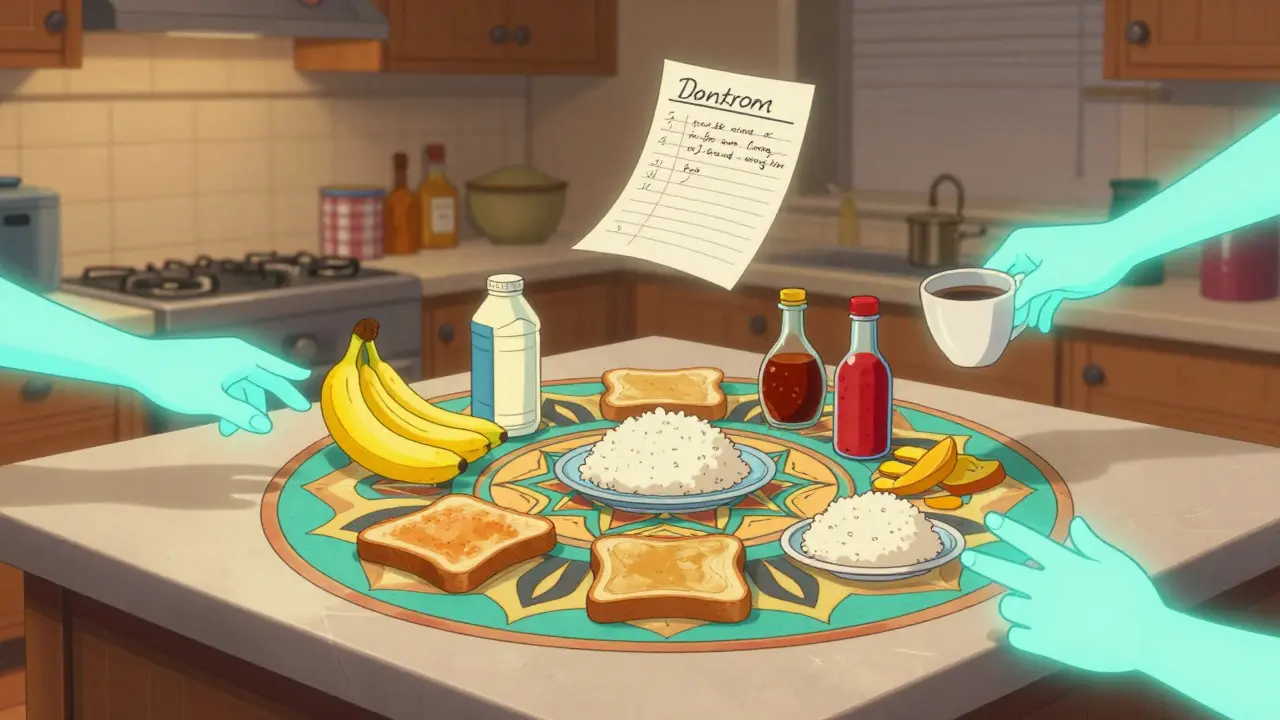
- Stick to bland, low-fiber foods. White rice, bananas, applesauce, toast, boiled chicken. These are easy to digest and help firm up stools.
- Drink fluids between meals, not with them. Drinking while eating can push food through too fast.
Many patients find keeping a food diary helps. Note what you eat and when diarrhea hits. You’ll start seeing patterns. One patient on Reddit said cutting out coffee and chocolate cut her daily episodes from 8 to 3.
Special Cases: Antibiotic-Associated Diarrhea and C. diff
If you started antibiotics and got diarrhea after 48 hours, Clostridioides difficile is a real possibility. This isn’t just bad diarrhea-it’s a superbug infection that can be deadly.
Here’s what you need to know:
- Don’t take loperamide. It’s dangerous here. The CDC says you must test for C. diff before using any antidiarrheal.
- Vancomycin is the gold standard. It’s expensive-around $1,200 for a 10-day course-but it cures 97% of cases. Metronidazole is cheaper ($40), but it’s less effective now.
- Probiotics can help prevent it. If you’re starting a long antibiotic course, ask your doctor about Saccharomyces boulardii. It’s been shown to cut the risk of diarrhea by half.
- New options are coming. SER-109, a microbiome therapy made from purified gut bacteria, just got FDA approval in 2023. It cuts recurrence of C. diff from 40% down to 12%.
Real-World Tips from Patients Who’ve Been There
Patients who’ve managed this for months or years have learned what works-and what doesn’t.
- Pre-mix your octreotide doses. If you’re on a schedule, prepare your injections the night before. Stress and nausea make it hard to measure doses accurately during a flare-up.
- Keep electrolyte drinks by your bed. Nighttime diarrhea is common. Having a pre-mixed bottle ready means you don’t have to get up and fumble in the dark.
- Log your stools. Use a simple app or notebook. Write down time, frequency, and consistency. This helps your doctor adjust your plan faster.
- Don’t wait to call your oncologist. If you’re on chemo and have 4 loose stools in 24 hours, call your team. Waiting 24 hours to start loperamide triples your risk of severe diarrhea.
- Use visual guides. The Oncology Nursing Society has free step-by-step PDFs on how to take loperamide, mix rehydration solutions, and give octreotide shots. Print them out. Keep them on your fridge.
What’s New in 2025
The field is changing fast. In 2023, the FDA approved a new drug called onercept, which helps reduce severe diarrhea by 63% in chemo patients. It’s still being rolled out, but it’s already in use at major cancer centers.
Another big shift: prevention. Instead of waiting for diarrhea to happen, doctors now give high-risk patients a preventive antibiotic-neomycin-starting two days before irinotecan. In trials, this cut diarrhea rates from 65% down to 32%.
And there’s growing interest in personalized medicine. Some hospitals now test your DNA for a gene called UGT1A1. If you have a certain variant, you’re more likely to get severe diarrhea from irinotecan. That means your dose can be lowered upfront, avoiding the problem before it starts.
When to Seek Emergency Help
Not every case needs a hospital. But some do. Go to the ER if you have:
- More than 10 watery stools in 24 hours
- Fever over 38.5°C (101.3°F)
- Bloody or black stools
- Severe belly pain or swelling
- Dizziness, rapid heartbeat, or not peeing for 12 hours
These aren’t signs to wait out. They mean your body is in danger. Delaying care can lead to kidney failure, sepsis, or worse.
Bottom Line: Act Fast, Stay Informed
Medication-induced diarrhea is common-but it’s not something you have to suffer through. With the right steps, most cases can be controlled at home. The key is knowing when to start treatment, what to avoid, and when to call for help.
Start loperamide at the first sign. Hydrate with electrolytes. Avoid dairy and fat. If it doesn’t improve in 24 hours, contact your provider immediately. Don’t guess. Don’t wait. And if you’re on chemo or antibiotics, keep a copy of your diarrhea action plan on your phone. You’ll be glad you did.
Can I take Imodium for diarrhea caused by antibiotics?
Only if your doctor confirms it’s not caused by C. difficile. If you have a fever, bloody stools, or diarrhea started after antibiotics and lasted more than 48 hours, don’t take loperamide. It can trap harmful bacteria and lead to toxic megacolon. Always get tested for C. diff first.
How long can I safely take loperamide?
For medication-induced diarrhea, don’t take loperamide for more than 48 hours without medical supervision. Long-term use increases the risk of ileus-a condition where your intestines stop moving. This is rare but serious. If diarrhea lasts longer than two days, contact your provider. You may need octreotide or further testing.
Is octreotide painful to inject?
Many patients report mild to moderate pain at the injection site, especially when starting. The discomfort usually lessens with repeated use. To reduce pain, let the vial warm to room temperature before injecting, and rotate injection sites (abdomen, thigh, upper arm). Most patients say the relief from severe diarrhea outweighs the temporary discomfort.
Do probiotics help prevent medication-induced diarrhea?
Only two strains have strong evidence: Lactobacillus rhamnosus GG and Saccharomyces boulardii. These can reduce the risk of antibiotic-associated diarrhea by about 50%. Other probiotics haven’t shown consistent benefits. Always check the label for these specific strains. Don’t assume all probiotics are equal.
What should I do if I can’t afford octreotide?
Octreotide can be expensive, but many cancer centers have patient assistance programs. Ask your oncology nurse or social worker-they can help you apply for financial aid or find generic alternatives. In some cases, continuous infusion via a pump may be covered under home health services. Never skip treatment due to cost-delaying can lead to hospitalization, which costs far more.
Can I prevent medication-induced diarrhea before it starts?
Yes, for some people. If you’re scheduled for irinotecan, your doctor may prescribe neomycin 2 days before treatment to reduce diarrhea risk by over 50%. For antibiotics, taking Saccharomyces boulardii during treatment can lower your chance of diarrhea. Also, avoid high-fat meals and dairy during treatment. Prevention is always better than treatment.
Releted Post

Andy Dargon
Hi, I'm Aiden Lockhart, a pharmaceutical expert with a passion for writing about medications and diseases. With years of experience in the pharmaceutical industry, I enjoy sharing my knowledge with others to help them make informed decisions about their health. I love researching new developments in medication and staying up-to-date with the latest advancements in disease treatment. As a writer, I strive to provide accurate, comprehensive information to my readers and contribute to raising awareness about various health conditions.
Loperamide for chemo diarrhea? Sure, why not just slap a bandaid on a gunshot wound and call it a day.
I swear to god if I see one more person say 'just take Imodium' I'm gonna scream. I had to go to the ER because I listened to some random Reddit guy and now my intestines are basically a deflated balloon. 😭😭😭
The distinction between Grade 2 and Grade 3 diarrhea is critical. Many patients underestimate the progression risk. Early intervention with loperamide is appropriate for Grade 1-2, but once you hit 7+ stools daily, octreotide isn't optional-it's lifesaving. Delaying it increases hospitalization risk by over 300%. This isn't just medical advice; it's survival protocol.
Probiotics are overhyped. Only two strains matter. L. rhamnosus GG and S. boulardii. Everything else is placebo with a price tag.
I appreciate the thoroughness of this guide. As someone who has cared for patients undergoing chemotherapy, I can attest that the difference between timely intervention and delayed action is often the difference between discharge and ICU admission. The advice to pre-mix octreotide doses and keep rehydration solutions by the bed is not just practical-it’s compassionate care in action.
You missed the real villain: Big Pharma. They don't want you to know that neomycin pre-treatment cuts diarrhea by 50% because it's dirt cheap and they can't patent it. Meanwhile, octreotide costs a fortune and they're pushing it like it's the second coming. Coincidence? I think not.
The FDA approved SER-109? That's a lie. It's just a cover for the government to secretly test microbiome weapons on cancer patients. You think they'd let a natural cure like this pass without surveillance? Wake up. The real cure is fasting and sunlight. All this pharmaceutical nonsense is distraction.
Loperamide? Please. If you're still having diarrhea after antibiotics, you're doing chemo wrong. Just stop the drugs. Simple. No magic pills needed. You're just weak.
I've been on octreotide for 8 months now... I cry every time I inject it... My husband says I'm too emotional... But no one understands the pain... The needles... The fear... The nights... The 3am bathroom runs... The cost... The insurance denials... I just want to feel normal again... Please... someone... help me...
Funny how we treat diarrhea like an emergency but ignore the real issue: why are we poisoning ourselves with chemicals in the first place? Maybe if we ate real food instead of pills, we wouldn't need pills to fix pills. Just saying.
Loperamide max 24mg for irinotecan? That’s amateur hour. Real oncologists use 30mg with co-administered probiotics and hydration protocols. If you’re not doing that, you’re not treating-you’re babysitting. Also, why are you still using white rice? Try mashed cauliflower. Higher fiber, lower glycemic. Basic.
Just wanted to say thanks for the food diary tip. I started logging everything and realized coffee was my trigger. Cut it out. My episodes dropped from 7 to 2 a day. Life changed. You're not alone. Keep going.