
mRNA Side Effect Risk Calculator
This tool estimates your risk for common side effects and rare serious events based on data from clinical trials and real-world monitoring. It is for informational purposes only and does not replace medical advice.
Common Side Effects
Injection site pain
Fatigue
Fever
Rare Serious Events
Myocarditis Risk
High Risk (Estimated: 40 cases per million second doses in males 12-29)
Recommendations
- Monitor for chest pain within 7 days
- Consult healthcare provider if fever exceeds 102°F
- Stay hydrated and rest for 24-48 hours
When mRNA therapeutics first hit the mainstream during the COVID-19 pandemic, they weren’t just a medical breakthrough - they were a revelation. For decades, scientists had dreamed of using the body’s own cells to make proteins that could fight disease. Then, in just 27 days, a sequence of genetic code was turned into a vaccine that protected millions. But with rapid innovation comes urgent questions: What are the real side effects? And how do we know they’re safe over time?
What Happens When mRNA Enters Your Body?
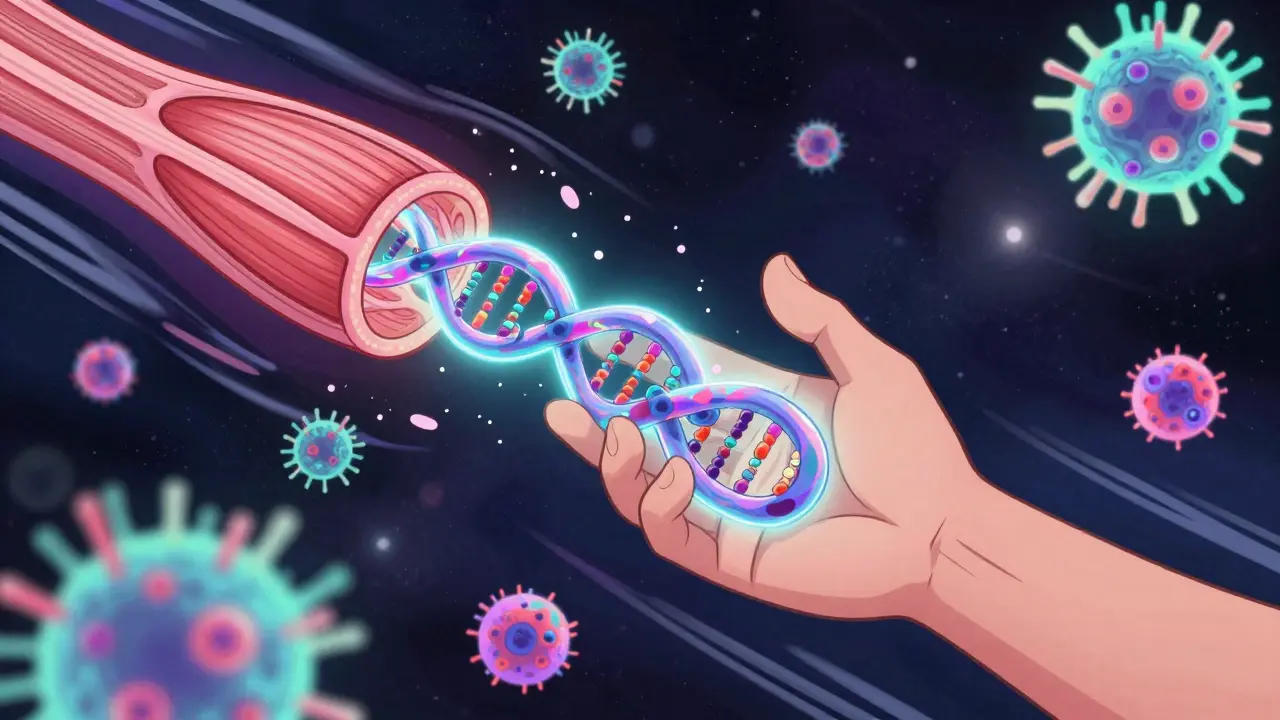
mRNA therapeutics don’t alter your DNA. Instead, they deliver a temporary instruction - a molecular blueprint - to your cells to make a specific protein. For vaccines, that’s usually a harmless piece of the virus, like the spike protein of SARS-CoV-2. For cancer treatments, it might be a protein unique to tumor cells. Once your cells read the mRNA, they build the protein, your immune system notices it, and learns how to respond.The delivery system is just as important as the message. These mRNA strands are wrapped in tiny fat bubbles called lipid nanoparticles (LNPs). These LNPs protect the mRNA from breaking down before it reaches your cells. They’re about 70-100 nanometers wide - small enough to slip into muscle or blood vessels, but large enough to avoid being filtered out too quickly.
The most common mRNA vaccines, like Pfizer’s Comirnaty and Moderna’s Spikevax, are injected into the muscle. The dose? 30 micrograms for Pfizer, 100 for Moderna. That might sound like a lot, but it’s less than a grain of salt. Still, even tiny amounts can trigger strong reactions because mRNA is designed to wake up your immune system - and that’s the whole point.
Common Side Effects: Short, Sharp, and Usually Safe
If you’ve gotten an mRNA vaccine, you’ve probably felt some of these:- Pain, redness, or swelling at the injection site (reported in over 75% of people after the first dose)
- Fatigue (affects about 1 in 4 recipients)
- Headache
- Muscle aches
- Chills or fever
These aren’t signs of illness - they’re signs your immune system is doing its job. In clinical trials, these symptoms peaked within 24 hours and mostly faded by day three. That’s consistent across both vaccine types. For example, in Moderna’s trials, 78.9% of people had a severe systemic reaction after the second dose - but almost all resolved without treatment.
Compare that to traditional vaccines. Flu shots made from inactivated viruses rarely cause more than sore arms. mRNA vaccines are more reactogenic - meaning they stir up more inflammation - because they’re engineered to be highly visible to the immune system. That’s why they work so well. But it also means more people feel under the weather for a day or two.
Rare but Serious Risks: Myocarditis and Beyond
The most talked-about rare side effect is myocarditis - inflammation of the heart muscle. It’s been documented mostly in adolescent and young adult males, typically within a week after the second dose. The CDC estimates about 40 cases per million second doses in males aged 12-29. That sounds alarming, but here’s the context: the risk of myocarditis from a COVID-19 infection is 10 times higher than from the vaccine.Most cases are mild. People usually recover fully with rest and anti-inflammatory meds. Over 98% of those diagnosed saw symptoms resolve within 30 days. Still, the fact that it happens at all led to updated guidelines: some countries now recommend longer gaps between doses for young men, or even a single dose for those at lower risk of severe disease.
Other rare events - like Guillain-Barré syndrome or facial paralysis - have been reported, but no clear causal link has been established. The numbers are so low that they’re hard to distinguish from background rates in the general population. That’s why monitoring doesn’t stop after approval.
How Do We Track Side Effects After Approval?
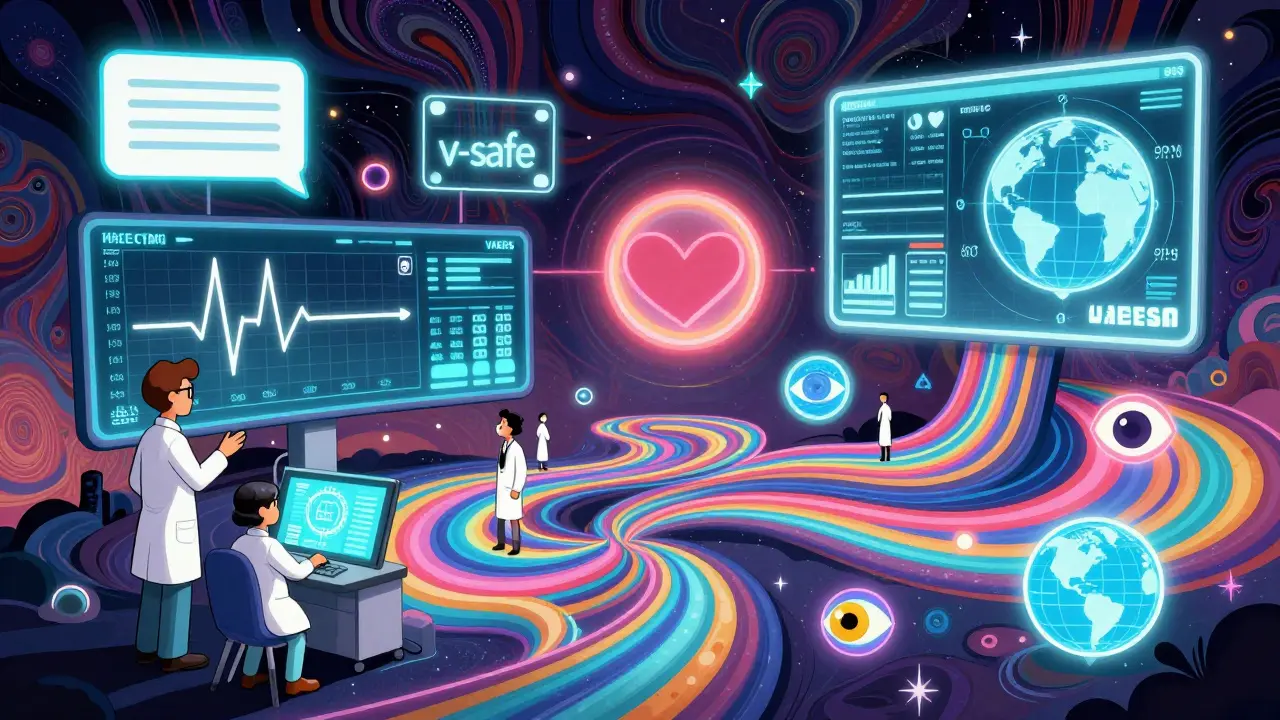
Approval isn’t the end - it’s just the beginning of real-world monitoring. Clinical trials involve tens of thousands of people. But once millions are vaccinated, rare events show up - like finding a needle in a haystack.The U.S. uses two major systems:
- VAERS - the Vaccine Adverse Event Reporting System. Anyone can report here - doctors, patients, parents. It’s open, but not proof of cause. In 2025, over 1.2 million reports were filed for mRNA vaccines. The top three? Injection site pain (58%), headache (27%), fatigue (24%). Only 6.2% were classified as serious.
- VSD - the Vaccine Safety Datalink. This links vaccine records with electronic health data from 11 major health systems covering 300 million people. It’s far more reliable because it can compare vaccinated and unvaccinated groups to spot true signals.
Moderna and Pfizer are required to submit monthly safety updates to the FDA. The CDC’s v-safe program sent text messages to 6.3 million people asking how they felt after vaccination. Over 87% responded for at least seven days. That kind of real-time feedback is unprecedented.
What About Long-Term Effects?
One of the biggest concerns people have is: “What if something shows up years later?”Here’s the science: mRNA doesn’t stick around. It breaks down in hours. The proteins it makes are gone in days. Your immune system remembers the target - but the mRNA itself? Gone. That’s why experts say long-term side effects from the mRNA molecule are biologically unlikely.
But there’s another angle: repeated dosing. Cancer patients may get multiple mRNA shots over months or years. People may need boosters for years to come. A 2025 review found that each additional dose increases the risk of severe reactions by nearly fivefold. That’s why new trials are testing lower doses - even as low as 1-10 micrograms - using next-generation LNPs that target specific tissues and avoid systemic inflammation.
Some experts worry about immune tolerance - the idea that too much mRNA exposure might dull the immune response. But so far, no peer-reviewed study has proven this. The data we have shows immune responses remain strong even after multiple boosters.
What’s Happening Beyond Vaccines?
mRNA isn’t just for infectious diseases anymore. By 2025, four mRNA products had full FDA approval - two for COVID-19, and two for cancer. One, called mRNA-4157/V940 (developed by Moderna and Merck), cut melanoma recurrence by nearly half when combined with immunotherapy. That’s huge.In oncology, side effects are different. Instead of fatigue and fever, patients report mild flu-like symptoms. In one trial, only 8.3% had Grade 3+ reactions - lower than the 15.2% seen with immunotherapy alone. That suggests mRNA can be safely combined with other powerful treatments.
Other trials are testing mRNA for autoimmune diseases, heart failure, and even rare genetic disorders. Imagine a therapy that tells your liver to make a missing enzyme, or your pancreas to produce insulin. The potential is enormous - but so is the need for careful monitoring.
The Monitoring Revolution: AI and Global Collaboration
In 2025, the FDA approved Vigi4mRNA - the first AI system that scans over a million social media posts daily, plus VAERS, hospital records, and pharmacy data to flag unusual patterns. It doesn’t replace human experts - it helps them find needles faster.Meanwhile, the European Medicines Agency launched mRNA-SAFE, a network of 27 national agencies sharing safety data in real time. They’re standardizing how to measure everything - from injection site reactions to menstrual changes.
Yes, menstrual changes. A study of 6.2 million women found 3.7% had temporary shifts in cycle length or flow after mRNA vaccination. No long-term effects. No need for treatment. But because so many women reported it, regulators now track it as a routine safety metric.
What’s Next?
The next wave of mRNA tech is already here. Self-amplifying mRNA (saRNA) needs 10 times less material to trigger the same response. That means lower doses, fewer side effects. New lipid nanoparticles are being designed to target the liver, lungs, or tumors - not just muscle. One 2024 study showed a 80% drop in systemic inflammation with these targeted versions.By 2030, the mRNA market could hit $128 billion. But growth depends on trust. And trust depends on transparency. The best science doesn’t hide risks - it studies them, explains them, and improves.
Right now, we know mRNA works. We know the common side effects. We know the rare ones. And we know how to watch for them. The system isn’t perfect - but it’s the most detailed, real-time safety net ever built for any medical technology.
Are mRNA side effects worse than other vaccines?
mRNA vaccines tend to cause more temporary side effects like fever, fatigue, and muscle aches than traditional inactivated vaccines, but they’re similar to viral vector shots like AstraZeneca. The difference is that mRNA triggers a stronger immune response on purpose - which is why it’s so effective. Most reactions are mild and go away in 1-3 days.
Can mRNA vaccines cause long-term damage?
There’s no biological mechanism for mRNA to cause long-term harm. The mRNA breaks down within hours, and the proteins it makes disappear in days. The immune memory lasts - but not the molecule. Studies tracking people for over four years show no increased risk of chronic illness. The concern about long-term effects is understandable, but current evidence strongly supports safety.
Why do some people get myocarditis after mRNA vaccines?
Myocarditis appears to occur in a small subset of young males, likely due to a strong immune reaction to the spike protein. It’s not caused by the mRNA itself, but by how the immune system responds. The risk is highest after the second dose, and it’s much rarer than myocarditis from a COVID-19 infection. Most cases are mild and resolve quickly with rest.
How are new mRNA therapies monitored differently than vaccines?
Cancer and chronic disease therapies often involve repeated doses over months or years, so monitoring is more intense. Trials now require 24-month follow-ups, pregnancy registries, and real-time data from electronic health records. Systems like v-safe and VSD are being expanded to track not just immediate reactions, but long-term organ function and immune changes.
Do mRNA therapies affect fertility or menstrual cycles?
Some women report temporary changes in their cycle after vaccination - like heavier flow or earlier/later periods. A large study of 6.2 million women found this happened in about 3.7% of cases, and all resolved within two cycles. No link to fertility has been found in over 10 million tracked pregnancies. These changes appear to be a normal immune response, not a lasting effect.
What’s being done to reduce side effects in future mRNA treatments?
Researchers are developing next-generation lipid nanoparticles that target specific organs - like the liver or tumors - instead of spreading through the whole body. New versions also use lower doses, self-amplifying mRNA, and modified lipids that reduce inflammation. Early trials show up to an 80% drop in fever and fatigue. These changes could make mRNA therapies tolerable for chronic conditions like heart disease or diabetes.
Final Thoughts: Trust Built on Data, Not Guesswork
mRNA therapeutics are not magic. They’re science - complex, powerful, and still evolving. Side effects exist, but they’re understood, tracked, and managed better than any previous treatment. The systems in place now - from AI-driven surveillance to global data-sharing networks - are designed to catch anything unusual before it becomes a problem.The future of mRNA isn’t just about more vaccines. It’s about curing cancer, reversing genetic diseases, and treating chronic illness. But that future depends on one thing: honest, transparent, and relentless monitoring. And right now, that’s exactly what’s happening.
Releted Post


Andy Dargon
Hi, I'm Aiden Lockhart, a pharmaceutical expert with a passion for writing about medications and diseases. With years of experience in the pharmaceutical industry, I enjoy sharing my knowledge with others to help them make informed decisions about their health. I love researching new developments in medication and staying up-to-date with the latest advancements in disease treatment. As a writer, I strive to provide accurate, comprehensive information to my readers and contribute to raising awareness about various health conditions.
Okay but like... I got my second Moderna shot and was out for 36 hours. Like, full-on chills, leg-weights, and my brain was just... buffering. But? Worth it. My grandma’s still here, and she’s 89. So yeah. I’d do it again. 🤷♀️
So let me get this straight - you’re telling me the same tech that gave me a fever for two days is now being used to *cure cancer*? Wow. The universe really does have a sense of dark humor.
As someone from India, I’ve seen moms in my village whisper about 'lab-made shots' - but then they show up with their kids, sleeves rolled, smiling like they just got free ice cream. The science? Wild. The trust? Even wilder. We’re not just vaccinating bodies - we’re stitching hope into everyday life.
They say mRNA breaks down in hours. Right. So why are we still seeing reports of 'long-haul vaccine syndrome'? Why are people getting heart palpitations 18 months later? You think they’re just *imagining* it? Wake up. They’re not lying. They’re scared. And you’re ignoring them.
I work in ER. Saw 3 myocarditis cases post-vax. All young guys. All recovered. One cried because he thought he’d never lift again. We gave him ibuprofen and a pep talk. He’s back at the gym. The system worked. It’s not perfect - but it’s watching. 🙏
My cycle changed after the shot. It was weird. But it normalized. So did my sister’s. And my mom’s. This isn’t a crisis. It’s biology.
People act like side effects are a bug - but they’re the feature. The immune system screaming? That’s the system working. I’d rather feel crummy for a day than die from a virus I didn’t take seriously. Simple math.
I used to think mRNA was sci-fi. Then my brother got stage 4 melanoma. He got the combo therapy - mRNA + immunotherapy. Tumor shrank. By 60%. He’s hiking again. That’s not magic. That’s molecules whispering to cells. And we’re just starting to listen.
I’m a data guy. I track everything. VAERS? Yeah, it’s messy. But VSD? That’s gold. When you can compare 300 million health records and find *zero* spike in Parkinson’s or diabetes? That’s not luck. That’s science. And it’s beautiful.
Western medicine is so arrogant - they say 'it breaks down in hours' like that solves everything. In India, we’ve seen generations suffer from synthetic drugs. Why should we trust this? You don’t know what you don’t know. And that’s dangerous.
I’m not a scientist. I’m a mother. And I sat in a hospital room while my 14-year-old son screamed from myocarditis. He was fine. He’s fine. But I will never, ever forget that night. And I will never stop asking: why did this happen? Who’s really protecting us?
The real miracle isn’t the mRNA. It’s the global network of nurses, coders, doctors, and moms who reported symptoms, answered texts, and kept watching. We didn’t just invent a vaccine - we built a living, breathing safety net. And it’s still growing.
They’re pushing this on kids like it’s candy. Next they’ll be injecting us with AI. Wake up. This is the new normal - and it’s not normal. It’s control. And I’m not playing along.
I read the whole thing. Twice. I still have questions. But I don’t think anyone has all the answers. And that’s okay. We’re learning. Slowly. Together.
I’m a cancer researcher. The next-gen LNPs? They’re like GPS-guided delivery drones. Target the tumor. Skip the rest. No fever. No fatigue. Just precision. We’re not just improving safety - we’re redesigning hope.