
Serotonin Syndrome Symptom Checker
How to Use This Tool
This tool uses the Hunter Criteria to assess serotonin syndrome severity based on your symptoms. Select all symptoms you're experiencing. If you have severe symptoms or fever over 106°F, seek emergency care immediately.
Cognitive Changes
Neuromuscular Symptoms
Autonomic Symptoms
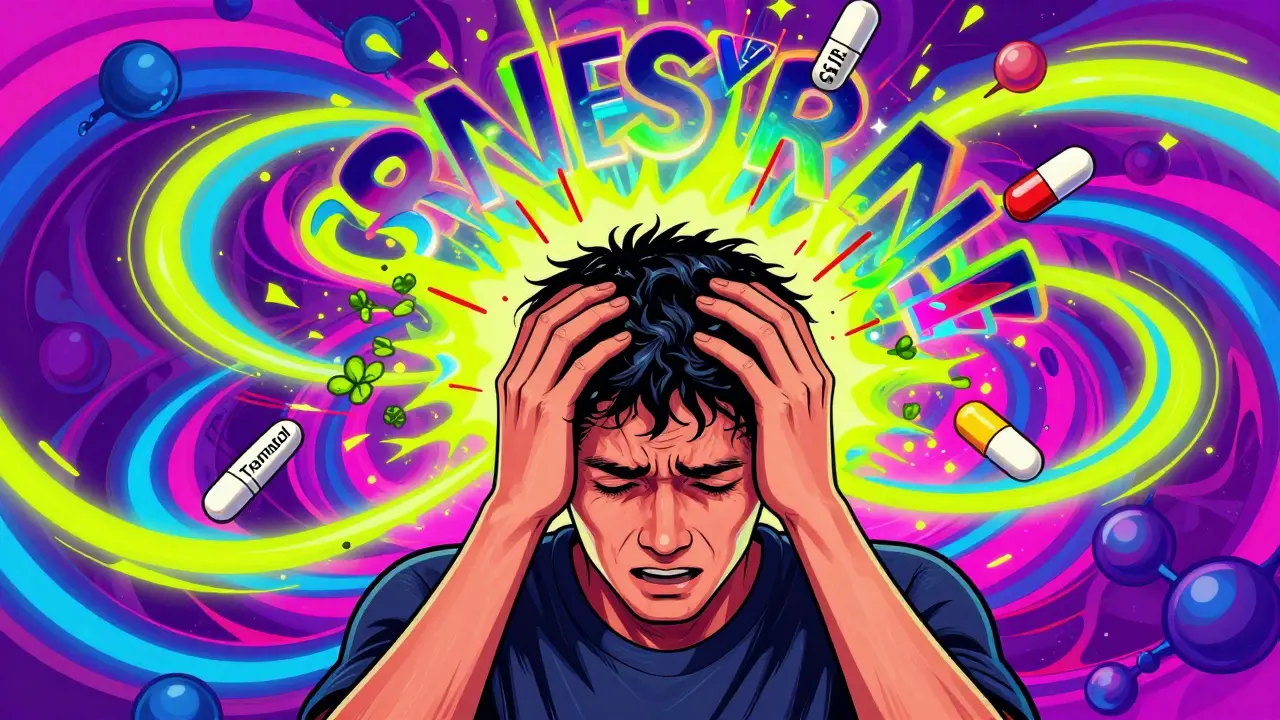
SSRI-induced serotonin syndrome isn’t rare - it’s dangerously common. Every year, thousands of people taking antidepressants like sertraline, fluoxetine, or escitalopram develop this condition after adding another medication, increasing their dose, or even just taking an over-the-counter supplement. It doesn’t always look like a drug reaction. Sometimes it starts as a sudden headache, a bit of shivering, or feeling unusually anxious. But within hours, it can spiral into a medical emergency. And if you don’t recognize it, you could die.
What Exactly Is Serotonin Syndrome?
Serotonin syndrome happens when your brain gets flooded with too much serotonin. SSRIs - selective serotonin reuptake inhibitors - work by blocking the reabsorption of serotonin, so more of it stays in your brain. That’s how they help with depression and anxiety. But when you add another drug that also boosts serotonin - like tramadol, certain painkillers, migraine meds, St. John’s wort, or even some cough syrups - your system can’t handle the overload. The result? Your nerves and muscles go into overdrive. This isn’t just a side effect. It’s a toxic reaction. And it doesn’t take much to trigger it. A single extra pill, a higher dose, or even a drug interaction you didn’t know about can set it off. Most cases show up within 6 hours of the change. Three out of four people feel symptoms within a day.The Three Signs You Can’t Ignore
Serotonin syndrome has a clear pattern. Doctors use the Hunter Criteria to diagnose it - and they look for three things together:- Cognitive changes: Agitation, confusion, panic attacks, hallucinations, or even delirium. You might feel like you’re losing your mind - and that’s because your brain is literally overstimulated.
- Neuromuscular abnormalities: This is where it gets physical. Clonus (involuntary muscle spasms), especially in the ankle or eyes, is the most telling sign. You might also have tremors, stiff muscles, or exaggerated reflexes. If you can’t stop your leg from bouncing or your eye jerks uncontrollably, this isn’t just nerves.
- Autonomic hyperactivity: Your body’s automatic systems go haywire. You’ll sweat heavily, your heart will race (over 100 bpm), your blood pressure will spike or crash, your temperature will rise above 38.5°C (101.3°F), and you might have diarrhea.
Severity Levels: Mild, Moderate, Severe
Not all cases are the same. Knowing the difference could save your life.- Mild: Only one or two of the three categories are affected. Temperature under 38.5°C. You might feel jittery, sweaty, and anxious. Your reflexes are a little too strong. You’re not in immediate danger - but you’re not out of the woods either. Symptoms can worsen quickly.
- Moderate: All three categories are present. Temperature between 38.5°C and 41.1°C. You’re shaking, confused, and your heart is pounding. You might be nauseous or vomiting. This is where people often get misdiagnosed with anxiety or the flu. Don’t wait. Call 911.
- Severe: Temperature above 41.1°C (106°F), severe muscle rigidity, seizures, or organ failure. Your body is overheating from muscle activity, not infection. This is a cardiac arrest waiting to happen. Without fast treatment, death can occur within hours.
What You Should Never Do
A lot of people make mistakes in the first critical minutes. Here’s what you must avoid:- Don’t give acetaminophen or ibuprofen. They won’t lower your temperature. Fever here isn’t from infection - it’s from your muscles shaking nonstop. Cooling your skin won’t help if your core is overheating from inside.
- Don’t use physical restraints. If someone is thrashing or rigid, holding them down increases muscle activity. That makes the fever worse. It can turn a moderate case into a fatal one.
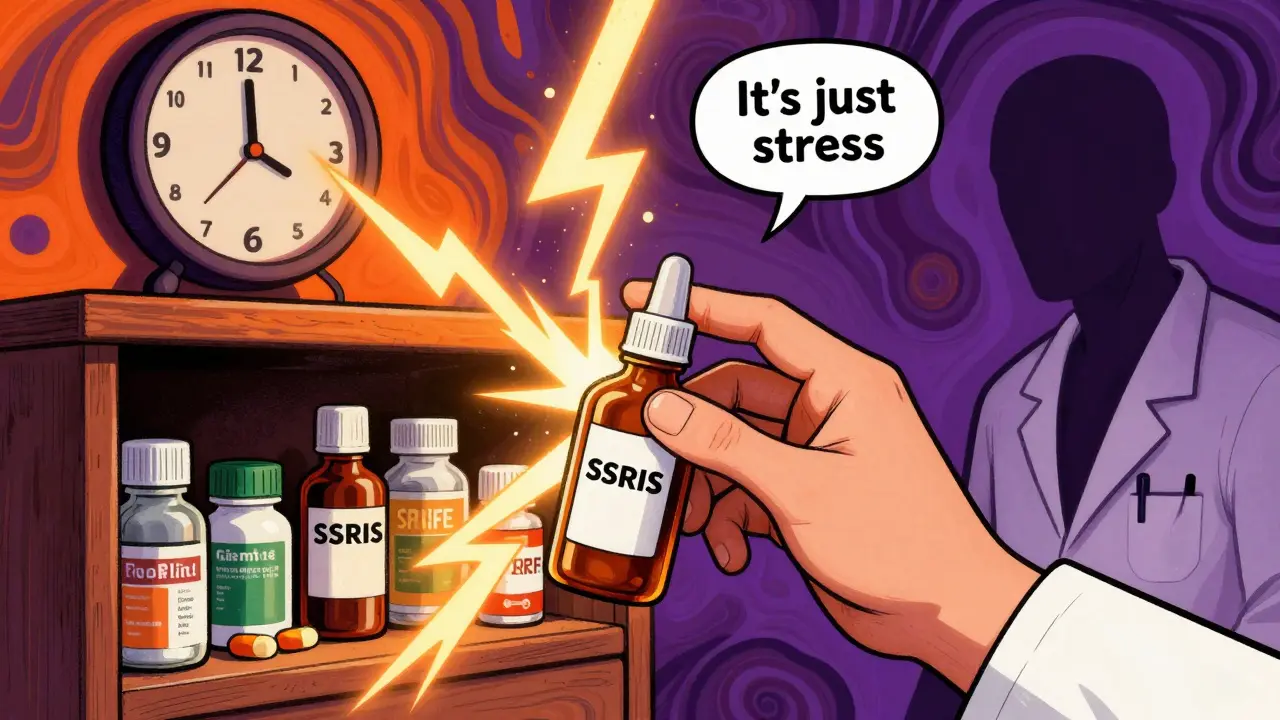
- Don’t wait. If you’re on an SSRI and you suddenly feel weird - tremors, sweating, confusion - don’t think it’s just stress. Don’t check Reddit. Don’t wait to see if it gets better. Call emergency services now.

Emergency Response: What Happens in the ER
If you make it to the hospital, here’s what they’ll do - and why. First, they’ll stop every single serotonergic drug. That includes antidepressants, painkillers, migraine meds, herbal supplements - everything. Even if you think it’s harmless, they’ll pull it. Then they’ll give benzodiazepines. Diazepam or lorazepam. These aren’t just sedatives. They calm your nerves, stop seizures, and reduce muscle rigidity. They’re the first-line treatment because they work fast and don’t make serotonin syndrome worse. For moderate cases, they’ll start cooling you down. Fans, cool mist, ice packs on your neck and groin. They’ll give IV fluids to keep your kidneys working. They’ll monitor your heart and temperature every 15 minutes. For severe cases - the ones with fever over 106°F and rigid muscles - they’ll intubate you. They’ll paralyze you with rocuronium so your muscles stop shaking. They’ll cool you with ice blankets and a special IV drip. They might give cyproheptadine - an old antihistamine that blocks serotonin receptors. It’s not a magic cure, but it’s the best tool they have. A 2024 study in the New England Journal of Medicine showed that giving dantrolene - a muscle relaxant - to patients with temperatures above 41.1°C cut death rates in half. That’s new. That’s life-saving.Why People Die From This
Most deaths happen because of delay. A 2021 study found that if you get treatment within 2 hours, your chance of dying is 2.1%. If you wait more than 6 hours, it jumps to 11.3%. That’s more than five times higher. And misdiagnosis is the biggest reason for delay. People get sent home with anxiety meds. Others are told they have a viral infection. One Reddit user described being told he was having a panic attack - even though his eyes were jerking uncontrollably and his temperature was 39.4°C. He waited 8 hours before being admitted. He survived. Others don’t.What Medications Are Most Dangerous?
Some combinations are like lighting a match near gasoline:- SSRIs + Tramadol (risk up to 8.7x higher)
- SSRIs + MAOIs (risk 12.4x higher - this combo is almost always fatal)
- SSRIs + Triptans (migraine meds - risk 3.2x higher)
- SSRIs + Dextromethorphan (cough syrup)
- SSRIs + St. John’s Wort or 5-HTP supplements
Recovery and Long-Term Risks
Most mild to moderate cases clear up in 24 to 72 hours after stopping the offending drug. You’ll feel tired, shaky, and off for a few days. That’s normal. But if you’re on fluoxetine (Prozac), recovery can take weeks. That’s because its metabolite, norfluoxetine, sticks around for up to 15 days. You might feel fine for a few days, then symptoms come back. That’s not a relapse - it’s the drug still working. And yes, you can get it again. Once you’ve had serotonin syndrome, you’re at higher risk. Never restart the same SSRI without careful supervision. And never combine antidepressants with other serotonergic drugs again.What You Can Do Now
If you’re on an SSRI:- Know your meds. Write down every pill you take - even vitamins and herbs.
- Ask your doctor or pharmacist: “Could this interact with my antidepressant?”
- Download a drug interaction checker app. One called ‘Serotonin Alert’ is 92% accurate.
- Teach someone close to you the symptoms. If you can’t speak, they need to know what to look for.
- If you feel sudden shaking, sweating, confusion, or a racing heart - go to the ER. Don’t call your therapist. Don’t wait.
Final Warning
Serotonin syndrome doesn’t care if you’re “just taking a little extra.” It doesn’t care if you’ve been on your SSRI for years. It doesn’t care if you feel fine. One change - one new pill, one higher dose - and your body can flip from calm to crisis in hours. You don’t need to be scared of your antidepressant. But you do need to be informed. This isn’t a rare side effect. It’s a silent killer. And the only thing that saves you is knowing the signs - and acting fast.Releted Post

Andy Dargon
Hi, I'm Aiden Lockhart, a pharmaceutical expert with a passion for writing about medications and diseases. With years of experience in the pharmaceutical industry, I enjoy sharing my knowledge with others to help them make informed decisions about their health. I love researching new developments in medication and staying up-to-date with the latest advancements in disease treatment. As a writer, I strive to provide accurate, comprehensive information to my readers and contribute to raising awareness about various health conditions.
Just took my fluoxetine and grabbed a cold medicine for my cough. Now I’m sweating like I ran a marathon in a sauna. Guess I’m learning the hard way.
St John’s wort is a trap. Don’t be that guy.
It’s not rocket science. If you’re on an SSRI and you add another serotonergic agent, you’re playing Russian roulette with your CNS. The literature is clear. You’re either informed or you’re a liability.
Bro I got diagnosed with 'anxiety' last year after my eyes started jittering and my temp hit 39.2. They gave me Xanax. I almost died. Now I keep a printed list of every med I take taped to my fridge. No cap.
Okay so I’ve been on sertraline for five years and I just started taking dextromethorphan for my cold and now I’m kinda nervous because I’ve had this weird tingling in my fingers and my heart feels like it’s doing the cha-cha and I looked up serotonin syndrome and now I’m scared to sleep because what if I stop breathing and I didn’t even know that cough syrup could do this and I thought SSRIs were safe and I’m just trying to get through winter without getting sick and now I feel like I’m going to die in my sleep and I don’t even know who to call and I’m not even sure if this is real or if I’m just panicking and I’m sitting here Googling symptoms and my hands are shaking and I think I’m having clonus but I can’t tell if it’s just nerves or if I’m literally about to have a seizure and I need someone to tell me what to do right now please help me I’m not kidding I’m really scared
Thank you for writing this. I’ve seen too many people dismissed as 'just anxious' when their bodies were screaming for help. Knowledge saves lives.
Man, this hits different. I had a mate in Manchester who took tramadol with his citalopram. Thought he was just 'overstimulated'. Three hours later he was in ICU with a temp of 41.8. They had to paralyze him. He’s fine now, but he won’t touch anything without checking with his pharmacist. We all carry a list now. No more guessing.
For anyone reading this - if you’re on an SSRI, make sure someone you trust knows the signs. I taught my sister what clonus looks like. She once caught me having a mild episode before I even realized it. That’s how you survive.
This is all part of the pharmaceutical agenda to keep people dependent on meds. They don’t want you to know that natural healing exists. Why do you think they don’t tell you about magnesium and sunlight? This whole serotonin thing is a myth created by Big Pharma to sell more drugs. I stopped my SSRI and now I’m fine. You’re being manipulated.
bro i just took some cough syrup and now i think my legs are moving on their own?? is this it?? am i gonna die??
Oh my god YES I’m not alone! I thought I was losing my mind. I called 911. They came, took one look at my reflexes, and said 'serotonin syndrome, we’ve seen this before.' They gave me lorazepam and cooled me down. I’m okay now. But I’m never touching dextromethorphan again. EVER. And I’m telling everyone I know.
Yo I work in pharmacy and this is wild how many people don’t know about interactions. Last week a guy tried to buy dextromethorphan with sertraline. I stopped him. He got mad. Two days later he came back sweating like a pig. We got him to the ER. Saved his life. Always ask. Always check. Your life > your pride.
Also FYI - dantrolene isn’t magic. It’s a muscle relaxant that works on ryanodine receptors. It’s not FDA-approved for serotonin syndrome, but it’s in the guidelines now because of that 2024 NEJM paper. Don’t expect your ER to have it on hand unless it’s a trauma center. Know your hospital’s protocol.
Interesting. But I wonder how many of these cases are actually just panic attacks mislabeled. The symptoms are so vague. Maybe we’re overdiagnosing.