
When a brand-name drug loses its patent, everything changes. The price doesn’t just drop-it collapses. Within months, a medication that cost $500 a month can be bought for $10. This isn’t magic. It’s the result of generic drugs entering the market. And for brand manufacturers, it’s not just a challenge-it’s a financial earthquake.
The Patent Cliff: When Revenue Vanishes Overnight
Brand pharmaceutical companies build their business around patents. These legal protections give them exclusive rights to sell a drug for 20 years, often with additional extensions through legal maneuvers. During that time, they charge high prices to recoup the cost of research, clinical trials, and marketing. But when the patent expires, generic manufacturers can legally copy the drug. And they do-fast.The drop in revenue is brutal. For many drugs, sales fall by 80% to 90% in the first year after generics launch. Take Humira, the top-selling drug in the U.S. for years. When its patent expired in 2023, its annual sales, which peaked at over $20 billion, plummeted almost immediately. Companies like AbbVie, which made most of its profit from Humira, had to scramble to adjust.
This isn’t rare. It happens with nearly every blockbuster drug. The moment a patent expires, the market shifts from monopoly to mass competition. That’s called the patent cliff. And for brand manufacturers, it’s the moment when their most reliable income stream disappears.
How Generics Work: Cheap, But Not Simple
Generic drugs aren’t knockoffs. They’re identical in active ingredients, dosage, safety, and effectiveness to the brand version. The FDA requires them to meet the same standards. The only difference? Price.Generics cost 80% to 85% less than brand drugs. In 2023, generics made up 90% of all prescriptions filled in the U.S.-but only 20% of total drug spending. That means most people are taking generics, but most of the money is still going to brand drugs still under patent.
Why? Because brand drugs still dominate in high-cost areas like cancer treatments, autoimmune diseases, and new diabetes drugs. But as more patents expire, that balance is shifting. The Congressional Budget Office estimated that generics saved the U.S. $253 billion in 2014 alone. By 2023, annual savings were over $330 billion.
But here’s the twist: even with generics, patients don’t always save as much as they should. Why? Because of middlemen.
The Hidden Cost: PBMs and Opaque Pricing
Pharmacy Benefit Managers (PBMs) are supposed to negotiate lower drug prices for insurers and patients. But in practice, they often make the system more expensive.PBMs collect rebates from drug makers, including generics. But those rebates don’t always go to the patient. Instead, they’re used to inflate profits for the PBM’s parent company. A 2022 study from the Schaeffer Center at USC found that patients pay 13% to 20% more for generics than they should because of these opaque pricing practices.
Pharmacists on Reddit and industry forums complain about this daily. Some say they lose money on generic prescriptions because the reimbursement rate from PBMs is lower than what the pharmacy paid for the drug. That’s not a typo-they’re selling a $5 pill and getting paid $4.50. And they’re forced to do it because patients have no other option.
This isn’t how the system was designed. It was meant to lower costs. Instead, it’s created a hidden tax on patients.
Brand Manufacturers Fight Back
Brand companies don’t sit still when their patents expire. They’ve built entire strategies to delay or dodge generic competition.One common tactic is pay for delay. A brand manufacturer pays a generic company to hold off on launching its version. These deals are legal-so far. But they’re controversial. A 2023 study by the Blue Cross Blue Shield Association found that these settlements cost patients $3 billion a year in higher out-of-pocket costs. The Congressional Budget Office estimates they inflate total drug spending by $12 billion annually.
Another tactic is product hopping. A company slightly changes a drug-maybe switches from a pill to a liquid, or adds a new coating-and then gets a new patent. This resets the clock. Patients are pushed to the new version, even if it offers no real benefit. The CBO says ending this practice could save $1.1 billion over 10 years.
Then there’s patent thickets. Companies file dozens of patents on minor changes-packaging, dosing schedules, manufacturing methods-to create a legal wall around their drug. It’s not innovation. It’s legal obstruction.
How Some Brands Are Adapting
Not all brand companies are fighting the tide. Some are learning to swim with it.One strategy is the authorized generic. The brand company itself launches a generic version of its drug as soon as the patent expires. It’s still the same product, but sold under a different label at a lower price. This lets them keep some market share and revenue instead of losing it all to competitors.
Novartis did this in 2022 by spinning off its generics division, Sandoz, into a separate company. Now, Novartis focuses on new drugs, while Sandoz handles the low-margin generics. It’s a clean break. Two different businesses. Two different economic models.
Others are shifting focus to complex drugs-injectables, inhalers, biologics-that are harder and more expensive to copy. These take years to develop and require specialized manufacturing. That means fewer competitors and slower generic entry.
The Supply Chain Problem
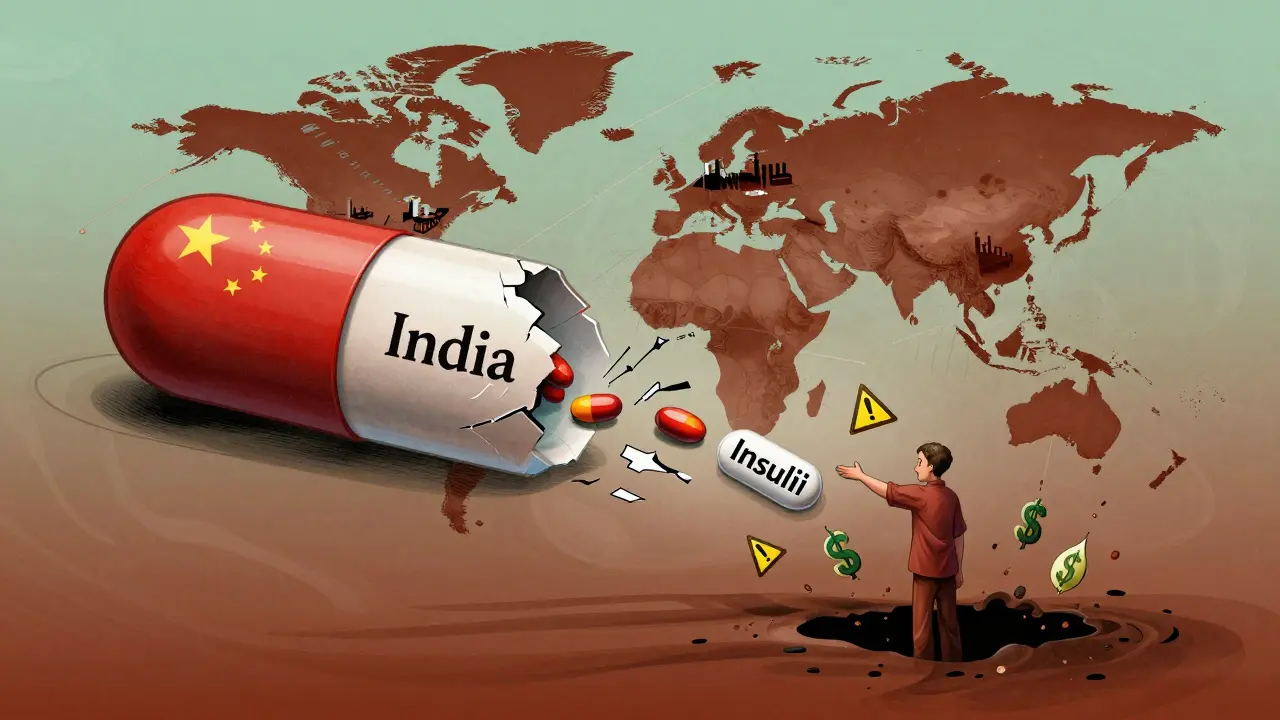
Low prices mean thin margins. And thin margins mean manufacturers cut corners.Generic drug makers operate on razor-thin profits. To stay profitable, they often produce drugs in countries with lower labor and regulatory costs. India and China supply most of the world’s generic ingredients. But that creates risk.
When a factory in India shuts down for inspection-or when a natural disaster disrupts shipping-supplies vanish. In 2023, shortages hit 200 generic drugs, including antibiotics, blood pressure meds, and insulin. The FDA says this is getting worse as competition drives prices down and manufacturers exit the market.
It’s a cruel irony: the very system that saves billions in drug costs is now threatening access to essential medicines.
The Bigger Picture: Innovation vs. Access
The tension between brand manufacturers and generics isn’t just about money. It’s about values.Brand companies argue they need high prices to fund the next breakthrough drug. Without profits, they say, there will be no new cancer treatments, no new Alzheimer’s drugs, no new tools to fight future pandemics.
Patients and policymakers counter that the current system rewards monopoly pricing more than innovation. The median price increase for 250 brand drugs in early 2025 was 4.5%-nearly double inflation. Meanwhile, generics, which cost pennies to make, are still too expensive for many because of how the system is structured.
Legislators are starting to act. Bipartisan bills are moving in Congress to ban pay-for-delay deals. The FDA’s Generic Drug User Fee Amendments (GDUFA), renewed in 2022, are speeding up approvals. But the system is still broken.
What’s Next?
By 2028, an estimated $400 billion in brand drug revenue will be at risk from patent expirations. That’s more than the entire annual budget of the U.S. Department of Education.Brand manufacturers will keep trying to extend patents, launch authorized generics, and pivot to complex therapies. Generic makers will keep fighting for market share, even as margins shrink and supply chains fray.
Patients will keep paying more than they should-because the system isn’t designed to serve them. It’s designed to serve profits.
The real question isn’t whether generics are good. They are. The question is: why do we let middlemen and monopolies keep so much of the savings?
Why do generic drugs cost so much less than brand-name drugs?
Generic drugs cost less because they don’t need to repeat expensive clinical trials. The FDA already approved the original drug’s safety and effectiveness. Generic makers only prove their version is bioequivalent-meaning it works the same way in the body. They also avoid the high marketing and advertising costs that brand companies spend to build name recognition. That’s why generics can be 80-85% cheaper.
Do generic drugs work as well as brand-name drugs?
Yes. The FDA requires generics to have the same active ingredient, strength, dosage form, and route of administration as the brand drug. They must also be absorbed into the body at the same rate and to the same extent. Studies show they are equally effective and safe. The only differences are in inactive ingredients like color or filler, which don’t affect how the drug works.
Why are some generic drugs hard to find in pharmacies?
Many generic drugs are made overseas, and production can be disrupted by factory shutdowns, supply chain issues, or raw material shortages. When profit margins are razor-thin, manufacturers may stop making a drug if it’s not profitable enough. This leads to shortages, especially for older, low-cost generics like antibiotics or blood pressure meds. The FDA tracks these shortages, but there’s no quick fix.
What is a "pay for delay" deal in the drug industry?
A "pay for delay" deal happens when a brand-name drug company pays a generic manufacturer to delay launching its cheaper version. This keeps prices high and protects the brand’s profits. These deals are legal but controversial. The FTC and Congressional Budget Office estimate they cost patients and taxpayers billions each year. Several states have banned them, and federal legislation is being considered to make them illegal nationwide.
How do pharmacy benefit managers (PBMs) affect generic drug prices?
PBMs negotiate drug prices with manufacturers and set reimbursement rates for pharmacies. But they often keep a portion of rebates instead of passing them to patients. This means even though a generic drug costs $5 to make, a patient might pay $15 because the PBM’s pricing system is opaque. Some pharmacies even lose money selling generics because the reimbursement is lower than their cost. PBMs profit from complexity-not savings.
Can brand companies legally extend their monopoly after a patent expires?
They can try. Some use "product hopping"-making a minor change to the drug (like switching from a pill to a liquid) and getting a new patent. Others file dozens of secondary patents on packaging or dosing schedules to create a "patent thicket." These tactics delay generics without offering real benefits. The FTC and CBO have called these practices anti-competitive, and lawmakers are pushing to ban them.
Are generic drugs made in the U.S.?
Very few. Over 80% of generic drug ingredients are made in India and China. Final packaging may happen in the U.S., but the active ingredients come from abroad. This makes supply chains vulnerable to geopolitical issues, natural disasters, or regulatory actions. The U.S. government has tried to bring production back, but it’s expensive and hard to compete with low-cost overseas manufacturers.
Why do insurance companies push for generics?
Because generics save them money. If a drug costs $300 a month as a brand and $20 as a generic, the insurer pays less in claims. That means lower premiums for employers and members. PBMs also earn more from rebates on generics, so they have a financial incentive to steer patients toward them-even if the savings don’t always reach the patient.
What happens to a drug company when its biggest drug goes generic?
Revenue crashes. Stock prices often drop. Employees get laid off. Companies must either develop new drugs, buy other companies, or spin off their generics division. Pfizer lost billions when Lipitor went generic. AbbVie’s Humira loss forced a major restructuring. Survival depends on having a pipeline of new drugs ready to replace the ones losing patent protection.
Is the U.S. system the worst for drug pricing?
By most international standards, yes. Other countries cap drug prices or negotiate bulk deals. The U.S. allows manufacturers to set prices with little oversight. Even with generics, patients pay more here than in Canada, the UK, or Germany. The system favors profits over affordability, and patients pay the price.
Releted Post

Andy Dargon
Hi, I'm Aiden Lockhart, a pharmaceutical expert with a passion for writing about medications and diseases. With years of experience in the pharmaceutical industry, I enjoy sharing my knowledge with others to help them make informed decisions about their health. I love researching new developments in medication and staying up-to-date with the latest advancements in disease treatment. As a writer, I strive to provide accurate, comprehensive information to my readers and contribute to raising awareness about various health conditions.
generics arent even that cheap anymore lol my last rx was 20 bucks and my insurance still charged me 15
pbms are the real villains here not the drug companies. theyre the ones hoarding rebates like dragons in a fantasy novel. the fda? useless. congress? bought and paid for. this whole system is a scam designed to make billionaires richer while you pay for insulin with your rent money
i just want to say thank you to everyone who works hard to make these meds affordable. i know it seems like a broken system but people are trying. pharmacists are working for pennies. researchers are grinding. dont give up on the system just because it feels unfair. change takes time and you are not alone
india and china make all the pills now? thats why our kids are getting sick. we need american made medicine. no more outsourcing. build factories here or we will
you think this is bad? wait till the chinese government controls the entire supply chain. then youll see what real tyranny looks like. theyre already laughing at us while we pay 15 for a pill they made for 0.10
i think the real issue is that brand companies are just lazy. why not just make the generic version yourself? why let someone else steal your money? i mean like why not just be the cheap option?
this is capitalism at its finest. innovation is rewarded with monopoly. when that monopoly ends? the market cleans itself. if you cant adapt? you deserve to fail. stop crying about profits. patients dont owe you a living
It is profoundly troubling that the moral imperative of public health has been subordinated to the profit motive of corporate entities. The systemic exploitation of vulnerable populations through opaque pricing mechanisms and anti-competitive legal stratagems constitutes a failure of both governance and ethics. We must demand structural reform, not mere tinkering.
the system is rigged and we all know it. brand companies pay off lawmakers like it's a damn poker game. pbms are just middlemen who exist to suck the life out of every dollar meant for patients. and yet we still act surprised when someone dies because they couldn't afford their blood pressure med? wake up people
The structural integrity of pharmaceutical pricing requires a paradigm shift toward transparency, equitable reimbursement, and the elimination of perverse financial incentives embedded within pharmacy benefit management structures. Evidence-based policy must supersede corporate lobbying.
you know what's wild? we spend billions on new drugs but we still can't get a simple antibiotic for under 10 bucks. maybe we're focusing on the wrong things. what if we stopped chasing miracle cures and just made sure everyone could afford the basics? like, what if we treated health like a right not a luxury?
indians made this possible. we built the factories. we trained the workers. now america wants to blame us for their broken system? you want cheap medicine? thank a indian pharmacist not your congressmen
oh look another woke post about how capitalism is evil. let me guess you also think oxygen should be free? maybe if you spent less time crying about generics and more time learning how to budget you wouldn't need to blame everyone else for your financial incompetence
the real tragedy isn't the patent cliff. it's that we've normalized the idea that human life should be priced by shareholders. we don't need more legislation. we need a moral reckoning. the fact that anyone thinks this system is acceptable says more about us than the drug companies
i think the system is just too complicated for regular people. nobody understands pbms or rebates or patent thickets. maybe we need a simple rule: if you make a drug you have to sell it at cost plus 10 percent. no more games. just make it fair