
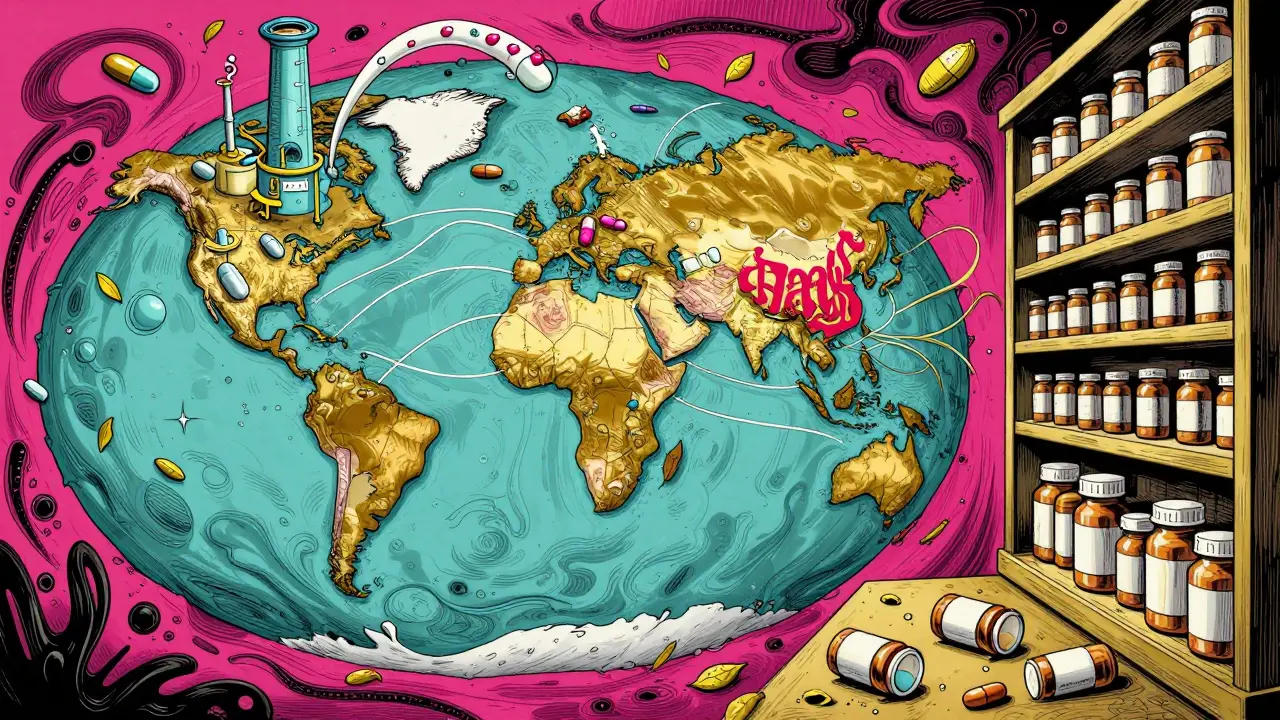
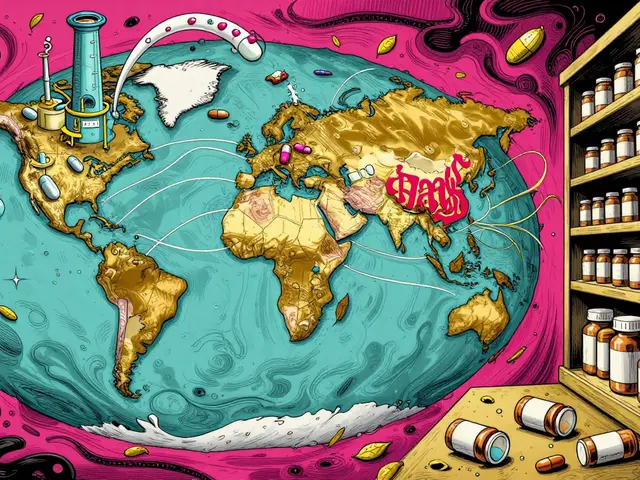
Every time you fill a prescription for antibiotics, insulin, or blood pressure meds, there’s a good chance the active ingredient was made halfway across the world. In 2026, foreign manufacturing still controls over 80% of the active pharmaceutical ingredients (APIs) used in U.S. medications. That’s not just a statistic-it’s a ticking time bomb. When a port in Shanghai shuts down, or a factory in India gets hit by flooding, or a new tariff hits raw materials from China, American patients pay the price. Drug shortages aren’t accidents. They’re the direct result of a supply chain built for cheapness, not resilience.
How We Got Here: The Race to the Bottom
In the 1990s and early 2000s, U.S. drug companies started outsourcing API production to cut costs. India and China became the go-to suppliers because labor was cheaper, regulations looser, and production scales massive. By 2025, 97% of the generic drugs Americans take daily relied on foreign-made APIs. It made sense financially-until it didn’t. The cost savings looked great on quarterly reports, but no one accounted for what happens when a single country controls 70% of your supply. When the pandemic hit, global supply chains snapped. Hospitals ran out of generic antibiotics. Cancer patients waited weeks for chemotherapy drugs. Emergency rooms rationed epinephrine. The system wasn’t broken-it was designed this way.The Numbers Behind the Shortages
The FDA tracks drug shortages, and the data is grim. In 2025 alone, the U.S. saw 312 active drug shortages, up from 287 in 2024. Nearly 70% of those were tied to foreign manufacturing disruptions. The average duration of a shortage? 189 days. That’s more than six months without a critical medication. The biggest culprits? China and India. Together, they produce 84% of the world’s APIs. China alone supplies 40% of all antibiotics used in the U.S., 80% of the raw materials for blood thinners like heparin, and 95% of the acetaminophen in painkillers. Why does this matter? Because when a single factory in China shuts down for regulatory noncompliance-something that happened to three major API plants in 2024-the entire U.S. market feels it. One plant can supply 30% of the nation’s supply of a drug. No backup. No redundancy. Just silence.What’s Changing? The Slow Shift Away From Single Sources
Companies are starting to wake up. In 2025, 68% of major pharmaceutical firms began diversifying their supplier base. That means not just sourcing from China, but also from Mexico, Eastern Europe, and even building new facilities in the U.S. The goal? Multi-shoring. It’s not about bringing everything home-it’s about having options. Take the example of a San Diego-based generic drugmaker. In 2023, they sourced 90% of their metformin from a single Indian supplier. After a 120-day delay due to FDA inspection issues, they partnered with a facility in Monterrey, Mexico. The result? A 35% increase in lead time reliability. Yes, the cost per unit went up 12%. But they didn’t have to stop production. Patients didn’t go without. Nearshoring to Mexico is now the fastest-growing trend. Transportation costs drop 30-40% compared to shipping from Asia. Delivery times shrink from 45 days to 12. Regulatory alignment with the U.S. is easier. And with the updated USMCA trade deal taking effect in early 2025, tariffs on pharmaceutical inputs from Mexico are now locked in at 0% for the next decade.
The Hidden Costs of Cheap Drugs
It’s easy to think that keeping drug prices low means saving money. But the real cost isn’t on the pharmacy shelf-it’s in the hospital. When a drug is in short supply, doctors turn to more expensive alternatives. A patient who normally pays $5 for a generic antibiotic might end up on a brand-name version that costs $80. Emergency room visits spike when patients can’t refill prescriptions. Hospitals pay $12 million a year just managing drug shortages, according to the American Society of Health-System Pharmacists. And then there’s the human cost. A 2025 study in the Journal of the American Medical Informatics Association found that patients who experienced a 30-day or longer drug shortage had a 22% higher chance of hospitalization. For elderly patients on blood pressure meds or diabetics on insulin, even a week without medication can trigger life-threatening complications.Technology Is Helping-But Not Fast Enough
Some companies are using AI to predict shortages before they happen. By tracking weather patterns in India, port congestion in Shanghai, and even social media chatter from factory workers, algorithms can flag risks 6-8 weeks in advance. One major U.S. pharmacy chain reduced its forecast errors by 58% using this method in 2025. Digital twins-virtual replicas of supply chains-are also being tested. These models simulate what happens if a supplier fails, allowing companies to test alternative routes before making real changes. But adoption is slow. Only 31% of pharmaceutical firms have invested in these tools. The rest are still using spreadsheets and gut instinct. Blockchain is another tool gaining traction. It lets companies verify the origin of every batch of API. If a supplier claims their raw material came from a certified lab, blockchain can prove it. That cuts down on counterfeit ingredients and improves trust. But setting up a blockchain system costs $1.5 million upfront. Most small manufacturers can’t afford it.
Why Reshoring Isn’t the Answer
You’ve probably heard the slogan: “Bring drug manufacturing back to America.” Sounds patriotic. But it’s not that simple. Manufacturing APIs in the U.S. costs 4.8 times more than in China, according to IMD Business School. Labor, energy, and environmental compliance are far more expensive. A single API plant in the U.S. needs at least $200 million in capital investment-and takes three years to build. The real solution isn’t full reshoring. It’s strategic reshoring. Focus on critical drugs: insulin, epinephrine, heparin, chemotherapy agents. Build small, automated facilities in the U.S. and Canada that can produce these in emergencies. The U.S. government is already funding pilot projects under the Defense Production Act. One facility in North Carolina is now producing 10 million doses of epinephrine per year-enough to cover 20% of national demand in a crisis.What You Can Do
As a patient, you’re not powerless. If your medication is on shortage, ask your pharmacist: Where is this made? If it’s from a single foreign source, ask your doctor if there’s an alternative with a more reliable supply chain. Don’t accept “that’s the only one we have” as an answer. Support policies that fund domestic API production for critical drugs. Contact your representative and ask: Is the U.S. investing in backup manufacturing for life-saving medicines? The $2.5 billion in funding approved in 2024 for pharmaceutical supply chain resilience is a start-but it’s not enough. And if you’re in the industry: diversify. Build relationships with multiple suppliers. Don’t rely on one country, one factory, one shipment. The old model of “just-in-time” inventory is dead. Welcome to the new era: just-in-case.What’s Next?
By 2027, the U.S. could cut its dependence on foreign APIs for critical drugs by half-if we act now. The tools exist: nearshoring, AI forecasting, digital twins, blockchain verification. The political will? That’s still lagging. But the data is clear: every day we wait, another drug shortage looms. And every shortage is someone’s health, or life, on the line.Why are so many drugs made in China and India?
China and India became the top suppliers because they could produce active pharmaceutical ingredients (APIs) at a fraction of the cost of U.S. factories. Lower labor costs, fewer environmental regulations, and massive scale made them the most economical choice. By 2025, 84% of all APIs used in U.S. medications came from these two countries, with China alone supplying 40% of antibiotics and 95% of acetaminophen.
How do drug shortages affect patients?
When a drug is unavailable, patients may go without critical treatment. For those on insulin, blood pressure meds, or chemotherapy, even a few days without medication can lead to hospitalization or worse. Studies show a 22% higher hospitalization rate among patients who face 30+ day drug shortages. Doctors are forced to use more expensive or less effective alternatives, increasing costs and risks.
Is bringing drug manufacturing back to the U.S. the solution?
Full reshoring isn’t practical or affordable-manufacturing APIs in the U.S. costs nearly five times more than in China. But strategic reshoring of critical drugs like insulin, epinephrine, and heparin is happening. New U.S.-based facilities are being funded to produce emergency stockpiles. The goal isn’t to make everything here-it’s to ensure we never run out of the drugs that save lives.
What is multi-shoring, and why is it important?
Multi-shoring means sourcing critical components from multiple countries instead of relying on just one. For pharmaceuticals, this means getting APIs from Mexico, Eastern Europe, and the U.S., not just China and India. Companies using multi-shoring see 65% fewer disruption days per year. It’s not about cost-it’s about resilience. If one source fails, others can pick up the slack.
Can technology fix supply chain problems in pharma?
Yes, but adoption is slow. AI can predict shortages by analyzing weather, port delays, and supplier data. Digital twins simulate supply chain failures before they happen. Blockchain verifies the origin of ingredients and cuts down on fraud. But only 31% of pharma companies use these tools. The cost and complexity are barriers, but the payoff is fewer shortages and faster responses.
What’s being done to reduce drug shortages in 2026?
The U.S. government is funding domestic API production for critical drugs under the Defense Production Act. New trade deals like the updated USMCA are making Mexico a more reliable partner. The FDA is fast-tracking inspections for approved foreign suppliers. And companies are diversifying suppliers, investing in inventory buffers, and using AI to monitor risks. Progress is happening-but it’s still not fast enough.
Releted Post

Andy Dargon
Hi, I'm Aiden Lockhart, a pharmaceutical expert with a passion for writing about medications and diseases. With years of experience in the pharmaceutical industry, I enjoy sharing my knowledge with others to help them make informed decisions about their health. I love researching new developments in medication and staying up-to-date with the latest advancements in disease treatment. As a writer, I strive to provide accurate, comprehensive information to my readers and contribute to raising awareness about various health conditions.
Yo, I just got my insulin prescription held up for 3 weeks because the batch from Hyderabad got stuck in customs. My glucose levels went nuts. This isn’t a ‘policy issue’-it’s my life on hold. Who the hell thought outsourcing our meds was a good idea? We’re literally gambling with people’s lives for cheaper pills.
People who complain about drug shortages are the same ones who won’t pay $20 more for a generic. You want safety? Pay for it. Stop being a free-rider on global exploitation.
lol another doomsday post. we’ve had shortages since like 2010. chill. also why is everyone acting like india and china are villains? they’re just doing business. you made the choice to outsource.
I’m a nurse in rural Ohio. Last month, we ran out of metformin for 47 patients. One 72-year-old woman had to walk 3 miles to the clinic because her local pharmacy couldn’t get it. She’s diabetic. She doesn’t have a car. This isn’t about politics-it’s about dignity. We need backups. Not just for profits.
Let me break this down for folks who think this is just a ‘China problem’-it’s not. It’s a ‘capitalism problem.’ We optimized for quarterly earnings, not human survival. The fact that we have AI predicting shortages but still rely on spreadsheets? That’s not incompetence. It’s negligence. We have the tools. We just don’t care enough to use them. Until patients die in droves, nothing changes. And that’s on all of us.
I’ve spent years working in global health logistics. What people don’t realize is that the real bottleneck isn’t the factory-it’s the regulatory maze. A single FDA inspection delay in India can freeze an entire U.S. supply chain for months. We need harmonized standards-not just new factories. We need trust, not just tariffs. And we need to stop treating medicine like widgets.
As someone from India, I’m tired of being blamed. Our factories follow WHO-GMP standards. The problem? U.S. regulators don’t inspect enough. They show up once every 3 years and shut down a plant over a missing logbook. Meanwhile, U.S.-based plants have decades-old equipment and still get passed. Double standards. It’s not about where it’s made-it’s about how it’s monitored.
Oh wow, another ‘woke pharma’ lecture. Let me guess-next you’ll tell us to boycott Amazon because their warehouses are ‘exploitative’? Get a grip. We live in a global economy. If you want your meds made in the USA, move to North Dakota and grow your own aspirin. Until then, stop pretending you’re saving lives while you scroll TikTok.
You all are naive. China doesn’t ‘control’ 80% of APIs-they’re the only ones who can produce them at scale, at price, and with quality. You want to ‘diversify’? Try building a $200M plant in Ohio and see how fast your investors flee. This isn’t a moral crisis-it’s a mathematical one. And math says: stay dependent. Or watch people die faster.