
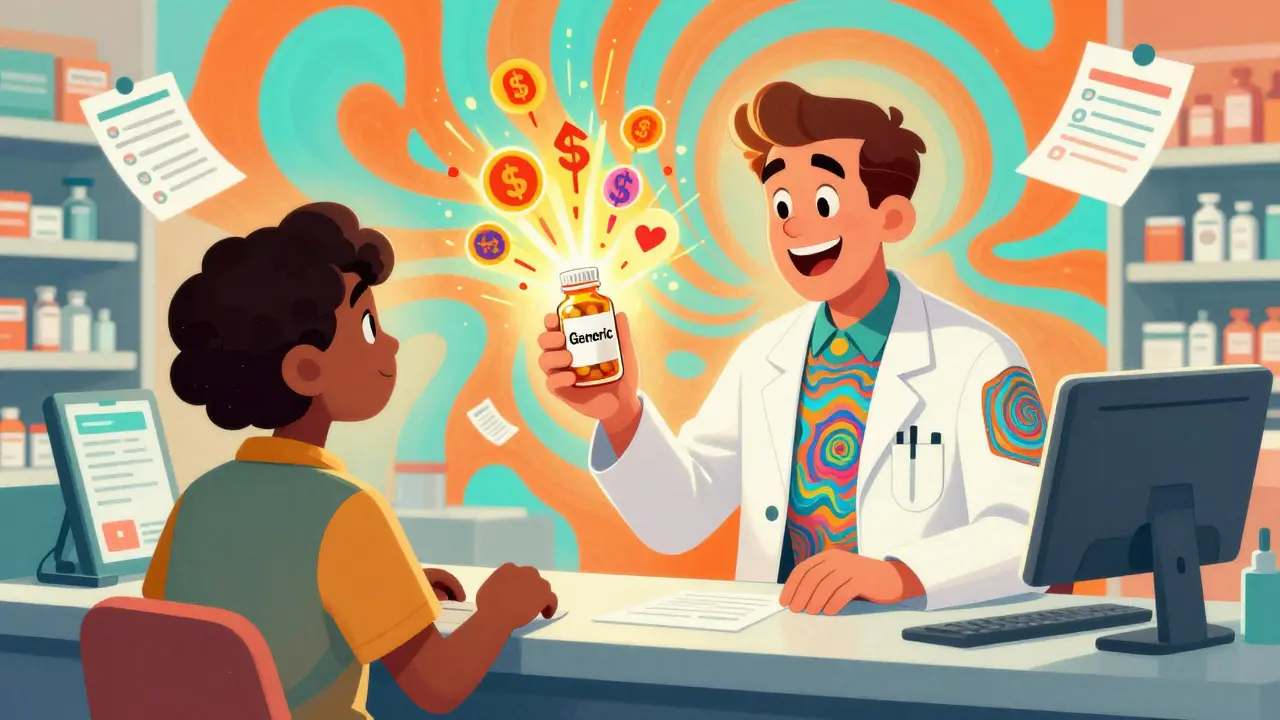
Every year, millions of Americans skip doses, stop taking meds early, or pay too much for prescriptions-not because they don’t care, but because they don’t understand what they’re taking or can’t afford it. That’s where medication therapy management (MTM) comes in. And at the heart of it? The pharmacist.
MTM isn’t just filling prescriptions. It’s a full review of every pill, patch, and inhaler a patient takes. Pharmacists dig into drug interactions, check for duplicates, spot side effects, and yes-find cheaper, equally effective generic alternatives. For many, this isn’t a luxury. It’s the difference between taking their heart medication or skipping it to afford groceries.
What Exactly Is Medication Therapy Management?
Medication Therapy Management (MTM) is a structured, patient-focused service designed to make sure every medication a person takes is necessary, safe, and working as it should. It’s not a one-time check-in. It’s an ongoing partnership between the pharmacist and the patient.
The American Pharmacists Association defines MTM as a set of services that optimize therapeutic outcomes. That means: no more confusion about why you’re taking five pills, no more dangerous overlaps, and no more overpaying for brand names when generics do the same job.
Since 2006, Medicare Part D plans have been required to offer MTM to eligible beneficiaries-mostly those taking multiple chronic disease meds, seeing multiple doctors, or spending over $5,000 a year on prescriptions. But MTM isn’t just for seniors. Employers, health systems, and private insurers now offer it too, with 85 million Americans covered under commercial plans in 2023.
How Pharmacists Use Generic Drugs in MTM
Generic drugs aren’t second-rate. They’re the exact same active ingredient as brand-name drugs, made to the same FDA standards. The only differences? The color, shape, and price. Generics cost 80-85% less on average.
But here’s the catch: many patients believe generics are weaker, less safe, or don’t work as well. That’s where pharmacists step in.
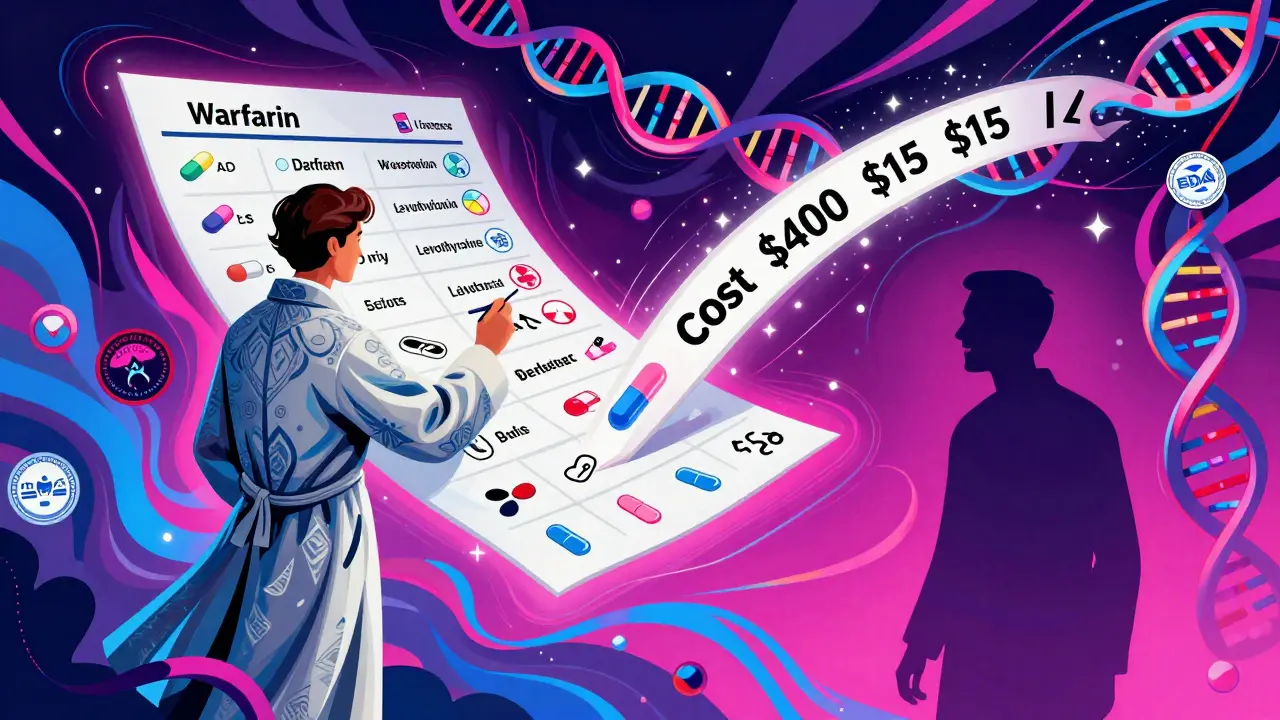
In MTM sessions, pharmacists use the FDA’s Orange Book to confirm therapeutic equivalence. Drugs rated “A” are fully interchangeable with brand names. For drugs with a narrow therapeutic index-like warfarin or levothyroxine-pharmacists go deeper. They check bioequivalence data, monitor lab results, and sometimes recommend sticking with a brand if switching causes instability.
But most of the time? Switching to generic saves money without losing effectiveness. One HealthPartners study found that when pharmacists actively recommended generic substitutions during MTM visits, patients saved 32% on their total drug costs. Another analysis showed that 37% of the total cost savings from MTM came directly from switching to generics.
Real stories back this up. One patient on Reddit shared how her $400/month brand-name inhaler was switched to a $15 generic. She cried-not from sadness, but relief. She could finally afford her meds without choosing between them and rent.
MTM vs. Traditional Pharmacy Service
Traditional pharmacy work is transactional. You hand over a script. The pharmacist fills it. You pay. The whole interaction takes about 1.7 minutes.
MTM is different. It’s consultative. Pharmacists sit down with patients-often for 20 to 40 minutes-and ask: “What are you taking? Why? How’s it working? Are you having side effects? Can you afford it?”
During a typical Comprehensive Medication Review (CMR), pharmacists identify an average of 4.2 medication-related problems per patient. These include: duplicate therapies, unnecessary drugs, incorrect dosing, and-most often-cost-related non-adherence.
And the results? Studies show MTM reduces hospital readmissions by 23% within 30 days. It cuts medication errors by 61%. And adherence improves by nearly 19 percentage points on average.
That’s not just good for patients. It’s good for the whole system. For every $1 spent on MTM, employers see $3.17 in healthcare cost savings. That’s why more health systems are hiring pharmacists-not just to count pills, but to manage care.
Why Generic Substitution Isn’t Always Simple
Switching to a generic sounds easy. But it’s not always straightforward.
Some patients have had bad experiences-maybe a generic made them feel dizzy, or their blood pressure spiked after a switch. Sometimes, it’s not the drug. It’s the filler. Different generics use different inactive ingredients, and a small number of people react to those.
Pharmacists don’t just swap pills. They evaluate. They look at the patient’s history. They check if the patient had issues with previous generics. They talk to the prescriber if needed. And they document everything-using SOAP notes: Subjective (what the patient says), Objective (lab results, vital signs), Assessment (what’s going wrong), and Plan (what we’ll do).
For high-risk drugs like seizure meds or thyroid hormones, pharmacists might recommend staying on the same brand or generic manufacturer to avoid variability. For others? They push for the lowest-cost option that still works.
The key? Communication. Pharmacists explain why a generic is safe. They show the FDA equivalence rating. They offer to monitor symptoms after the switch. That trust turns fear into confidence.
Barriers to Widespread MTM Use
MTM works. But it’s still not available to everyone.
One big problem? Reimbursement. Medicare pays $50 to $150 per CMR. Commercial insurers? Often only $25 to $75. For a 30-minute appointment, that’s barely above minimum wage after overhead. Many pharmacies simply can’t afford to offer it unless they’re part of a large health system.
Another issue? Patient awareness. Only 15-25% of eligible Medicare beneficiaries actually enroll in MTM. Most don’t know it’s free, or that they qualify. Pharmacies often don’t promote it well.
Then there’s paperwork. MTM requires detailed documentation. Only 38% of community pharmacies have electronic health record systems that integrate smoothly with MTM tools. Without that, pharmacists spend hours typing notes instead of talking to patients.
And state laws vary. Only 42 states give pharmacists explicit authority to adjust or switch medications under collaborative practice agreements. In the rest, they can recommend-but not act-without a doctor’s approval.
What’s Changing in MTM (2025)
Things are moving. Fast.
Telehealth MTM is now standard. Thanks to pandemic-era rules extended through 2024, pharmacists can now do full reviews over video calls. That’s huge for rural patients or those without transportation.
Pharmacogenomics is entering MTM too. Some pharmacists now test for genetic markers that affect how a person metabolizes drugs. This helps decide whether a generic is truly the best choice-or if a specific brand might be safer based on the patient’s DNA.
The American Pharmacists Association is launching a 2024 initiative to standardize how MTM programs track and report generic substitution outcomes. That means future reports will show exactly how much money patients saved, how many switches were made, and how many side effects were avoided.
And if the Pharmacist Medicare Benefits Act passes (it’s stalled in the Senate as of late 2023), over 38 million more Americans could get direct access to pharmacist-led MTM services-beyond just Medicare Part D.
How Patients Can Access MTM
Want MTM? Here’s how to get it:
- If you’re on Medicare Part D, check your plan’s website. Look for “Comprehensive Medication Review” or “MTM Program.” You may be automatically enrolled if you meet criteria.
- Call your pharmacy. Ask: “Do you offer Medication Therapy Management?” Don’t assume they do.
- Ask your doctor. Many primary care clinics now have pharmacists on staff.
- Check if your employer offers MTM through a wellness or pharmacy benefit manager (like CVS Health, Express Scripts, or Optum).
There’s no cost to you. It’s covered by your insurance. All you need to do is show up.

What to Expect in Your First MTM Session
Your first MTM visit will feel different than a normal pharmacy stop.
You’ll sit down with a pharmacist-alone, no rush. Bring a list of everything you take: prescriptions, over-the-counter meds, vitamins, supplements, even herbal teas. Don’t leave anything out.
The pharmacist will:
- Review all your meds for duplicates, interactions, and unnecessary drugs
- Check if any can be switched to generics
- Ask about side effects, costs, and how well you’re sticking to your plan
- Give you a written Medication Action Plan-a simple list of what to do, why, and when
- Send a summary to your doctor with recommendations
It’s not a sales pitch. It’s a health plan. And it’s free.
Real Impact: The Numbers Don’t Lie
A 2022 review of 47 studies found MTM improved medication adherence by an average of 18.7 percentage points. That’s huge. For someone with diabetes or heart disease, better adherence means fewer ER visits, fewer hospital stays, and longer life.
Patients saved an average of $214 per month just from generic substitutions recommended during MTM sessions.
And 89% of participants said they understood their meds better after MTM. Seventy-six percent took their pills more consistently. Sixty-eight percent paid less out of pocket.
These aren’t statistics. These are lives changed.
Final Thought: The Pharmacist Is Your Medication Coach
Doctors diagnose. Nurses care. Pharmacists understand the whole system of pills-and how they fit into your life, your budget, your fears, your routines.
MTM turns the pharmacist from a pill counter into a medication coach. And with generic drugs, they’re not just saving money. They’re saving dignity. They’re letting people choose health over hunger.
If you’re taking multiple meds, if you’re struggling to afford them, if you’re confused about why you’re taking them-ask your pharmacist about MTM. It’s there. You just have to ask.
Releted Post


Andy Dargon
Hi, I'm Aiden Lockhart, a pharmaceutical expert with a passion for writing about medications and diseases. With years of experience in the pharmaceutical industry, I enjoy sharing my knowledge with others to help them make informed decisions about their health. I love researching new developments in medication and staying up-to-date with the latest advancements in disease treatment. As a writer, I strive to provide accurate, comprehensive information to my readers and contribute to raising awareness about various health conditions.
My grandma started MTM last year after her cardiologist recommended it. She was taking 12 different meds, didn’t know why half of them were for, and was skipping doses because the co-pays were killing her. After the pharmacist sat down with her for 30 minutes, they found two duplicates, switched her to generics that saved her $180/month, and even got her a free pill organizer. She cried. Not because she was sad-because for the first time in years, she felt like someone actually cared enough to help her understand her own body.
pharmacists are the real MVPs of healthcare 😭 i used to think they just handed out pills like vending machines… until my mom got her MTM session and came out with a color-coded chart, a handwritten note from the pharmacist saying ‘you got this,’ and a $90 savings on her blood pressure med. we need more of this, not less. 🙏💊
Let me tell you something-this whole MTM thing isn’t just about saving money. It’s about dignity. I watched my uncle go from hiding his pills because he couldn’t afford them, to actually taking them because his pharmacist sat with him for an hour, showed him the FDA equivalence codes, and even called his doctor to switch him to a generic that didn’t make him feel like he’d been hit by a truck. That’s not healthcare. That’s humanity.
And yeah, some people still think generics are ‘fake drugs.’ Bro. They’re the same damn molecule. The only difference is the logo on the pill and the price tag that doesn’t make you choose between insulin and groceries.
MTM sounds great on paper, but let’s be real-this is just another way for pharmacies to pad their profits under the guise of ‘patient care.’ The $50 Medicare reimbursement doesn’t cover the time it takes to do a proper review, so they’re just ticking boxes to get paid. And don’t get me started on how often they push generics without checking for patient history. I’ve seen people have seizures after being switched to a generic levothyroxine because no one bothered to look at their labs.
Stop pretending generics are always safe. They’re not. I’ve seen patients crash after switching. Pharmacists aren’t doctors. They shouldn’t be making substitution decisions without oversight.
While the data on MTM’s cost-effectiveness is compelling, the systemic barriers remain deeply concerning. Reimbursement models are archaic, EHR integration is fragmented, and state scope-of-practice laws are inconsistent across jurisdictions. Until pharmacists are granted full collaborative practice authority nationwide, MTM will remain an underutilized intervention, accessible primarily to those in urban centers with institutional backing. This is not merely a clinical issue-it is a policy failure.
Oh, here we go again-the pharmacist-as-hero narrative. Let me break this down for you: if your medication regimen is so complex that you need a 40-minute consultation just to figure out what you’re taking, maybe your doctor isn’t doing their job. And let’s not pretend generics are magically better-they’re not. Sometimes they’re just cheaper, and that’s all. You think your body doesn’t notice the difference in fillers? Please. I’ve been on the same brand of levothyroxine for 12 years because the generic made me feel like I was slowly dissolving. This whole MTM push is just corporate cost-cutting dressed up as compassion.
And don’t get me started on the ‘free’ service. It’s not free. It’s funded by your premiums, your taxes, and your silence. The system is rigged, and pharmacists are just the new face of the machine. They’re not your ‘coach’-they’re a cog. A very well-marketed cog.
Meanwhile, the real issue? Drug pricing. Why does the same pill cost $500 in the US and $12 in Canada? Why are patents extended for decades? Why do companies charge $10,000 for a drug that costs $200 to make? Fix that. Not the pharmacy visit.
And for the love of God, stop romanticizing the pharmacist. They’re not saints. They’re employees. They’re doing their job. And if you’re still confused after reading the label, maybe you should’ve asked your prescriber before they wrote the script in the first place.
Stop putting Band-Aids on a broken system. We don’t need more ‘coaches.’ We need price controls. We need transparency. We need accountability. Not another 30-minute chat where someone tells you your pills are fine while the pharmaceutical CEOs buy private islands.
And yes-I’ve had MTM. It was nice. But it didn’t fix the fact that my insulin still costs more than my rent.
MTM is a joke. You think switching to generics saves money? Try telling that to the 30% of patients who end up in the ER because their blood levels spiked after a generic switch. Pharmacists don’t have the training to monitor therapeutic drug levels. That’s what labs and doctors are for. This is dangerous overreach disguised as ‘patient care.’ And don’t even get me started on the data-most studies are funded by pharmacy chains or Medicare contractors. Confirmation bias on a national scale.
My sister has lupus and takes 7 meds. She was terrified of switching to generics-thought they’d make her flare up. Her pharmacist didn’t just hand her a new bottle. She sat with her for 45 minutes, pulled up the FDA Orange Book on her tablet, showed her the bioequivalence data for each one, and even called her rheumatologist to confirm it was safe. Then she gave her a printed sheet with each med, why it’s needed, what side effects to watch for, and a reminder to call if anything changed. My sister cried. Not because she was scared anymore-but because someone finally treated her like a person, not a prescription number.
This isn’t just about cost. It’s about trust. And if we’re going to fix healthcare, we need more of this-more listening, more patience, more human connection.
As someone who works in rural healthcare, I’ve seen firsthand how MTM saves lives. Our pharmacy doesn’t have an EHR system, so the pharmacist writes everything by hand. She spends her lunch break calling doctors, tracking down prior authorizations, and explaining to patients why their $400 inhaler can be $15. She doesn’t get paid enough. She doesn’t get thanked enough. But she shows up anyway. And every time she does, someone gets to keep breathing. That’s not policy. That’s grace.
Thank you for this. I’ve been trying to explain this to my friends for years. I’m from India, and here, pharmacists are often the only healthcare provider people see. They know your family, your income, your fears. In the U.S., we treat pharmacy like a transaction. But it shouldn’t be. MTM is the closest thing we have to true patient-centered care. And yes, generics work. I’ve been on the same generic statin for 8 years. My cholesterol is stable. My wallet is happy. The fear? It’s manufactured by pharma ads, not science.
Please, if you’re reading this: ask your pharmacist. Don’t wait for them to come to you. They’re waiting to help.
bro this is the most important thing i’ve read all year 😭 i used to think pharmacists were just the people who yelled ‘you have a new script!’ at me through the window… now i realize they’re the unsung heroes keeping people alive while the system burns. if you’re on meds and can’t afford them-ask. just ask. it’s free. they’re waiting.
Why do we even need this? If you can’t afford your meds, don’t take them. Simple. People need to stop expecting healthcare to be free. Maybe if you didn’t spend $200 a month on coffee and Uber Eats, you could afford your pills. This whole MTM thing is just entitlement dressed up as compassion.
While the emotional narratives are compelling, we must not overlook structural inequities. The fact that MTM is accessible only to those enrolled in specific insurance plans-often tied to employment or age-reinforces a two-tiered system. A low-wage worker without employer-sponsored coverage, or a young adult under 65 with multiple chronic conditions, is systematically excluded. This is not patient-centered care. This is privilege stratified by insurance status.