
Family Medication Help: Safe Use, Storage, and Emergency Planning for Households
When it comes to family medication help, the collective effort to manage prescription and over-the-counter drugs safely across all ages in a household. Also known as household pharmaceutical management, it’s not just about remembering to take pills—it’s about preventing mix-ups, avoiding dangerous interactions, and being ready when something goes wrong. Every family has at least one person on medication—whether it’s a child with allergies, a parent with high blood pressure, or an elder managing diabetes. Without clear systems, pills get lost, doses get doubled, and emergencies turn chaotic.
Medication safety, the practice of using drugs correctly to avoid harm starts with simple habits: keeping all meds out of reach of kids, using one pharmacy to catch interactions, and never guessing a dose. The emergency medication list, a clear, up-to-date record of every drug a family member takes, including dosages and reasons can be the difference between life and death during a hospital visit—especially if language barriers or confusion are involved. Real data shows that over 40% of ER visits for seniors involve medication errors, and many of those could’ve been avoided with a printed list in their wallet.
Storing meds properly matters too. Heat, humidity, and light can turn pills useless—or even dangerous. The bathroom medicine cabinet? It’s one of the worst places. A cool, dry drawer away from kids and pets works better. And when meds expire, don’t just toss them. The FDA medication take-back, official programs that let you drop off old or unused drugs at pharmacies or police stations keeps them out of water supplies and off the streets.
Children need special care. Giving a teen Benadryl because it worked for the toddler? That’s risky. Dosing by age, not weight, can be deadly. And don’t assume natural means safe—St. John’s Wort can wreck birth control or antidepressants. Even something as simple as ibuprofen can spike lithium levels to toxic ranges if you’re not watching.
What you’ll find below isn’t theory—it’s what real families use. From how to build a multilingual emergency card for travel, to knowing when to flush a pill versus when to drop it off, to why genetic tests like TPMT can prevent life-threatening reactions before they start. These aren’t niche topics. They’re the quiet, everyday actions that keep households safe. You won’t find fluff here—just clear, actionable steps that work when you need them most.
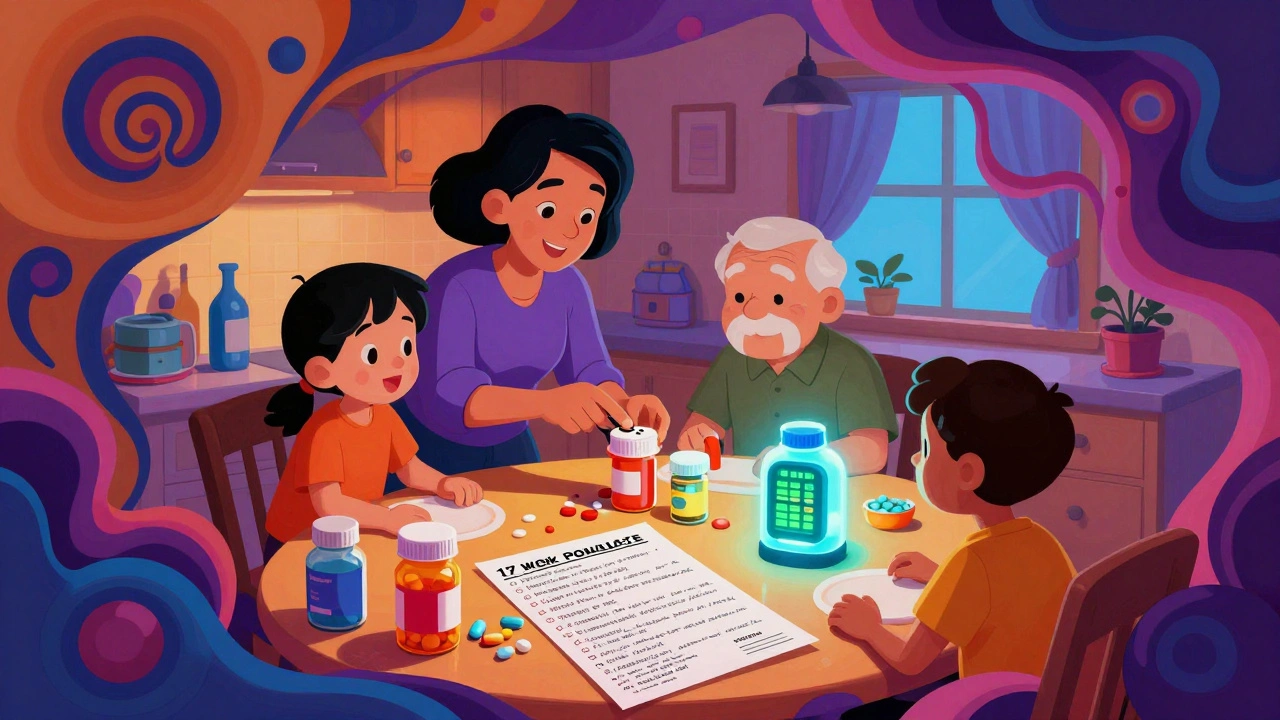
Learn how to safely involve family or caregivers in managing medications for older adults or those with chronic conditions. Discover proven tools, routines, and strategies to improve adherence and prevent dangerous errors.