
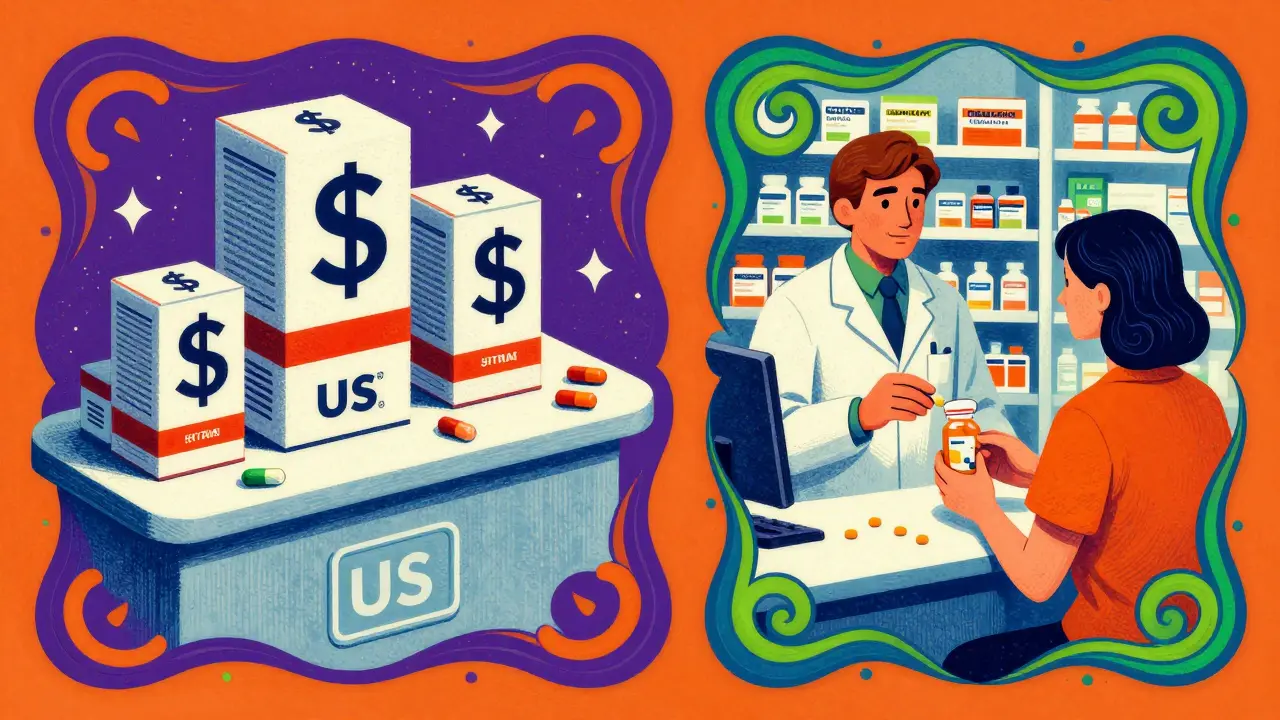
In the United States, nine out of every ten prescriptions filled are for generic medications. But that doesn't mean Americans pay less for them. In fact, generics account for just 15% of total drug spending. Why? Because brand-name drugs still dominate the high-cost end of the market. Meanwhile, in Germany, generics make up nearly half of all prescriptions and are treated as routine replacements. This difference isn't accidental-it reflects how each country's healthcare system and economic realities shape provider attitudes toward affordable medications.
| Region | Market Share | Growth Rate (CAGR) | Key Drivers |
|---|---|---|---|
| Europe | 28.58% | 2-5% | Government policies, cost containment |
| Asia-Pacific | 35.21% | 5.04-6.55% | Aging population, chronic diseases, affordability |
| North America | 25.43% | 3.8% | High brand drug prices, supply chain reliance |
| Emerging Markets | 10.78% | 7.2% | Healthcare infrastructure development, government subsidies |
Europe's Systematic Approach to Generics
European healthcare providersProfessionals who prioritize generic drug substitution to manage costs and improve patient access in European healthcare systems. generally view generics as a crucial tool for cost containment. Countries like Germany, France, the UK, and Russia have implemented policies that actively encourage pharmacists to substitute brand-name drugs with generics whenever possible. According to Cognitive Market Research, Europe holds 28.58% of the global generic drugs market share, valued at $122.837 billion in 2025. GermanyA country with 15.58% market share in Europe, implementing policies that promote generic substitution. alone accounts for 15.58% of this market, making it the largest European contributor. These policies have led to high adoption rates, but growth is slowing. IQVIA reports that the European generics market is growing at just 2-5% CAGR through 2025, adding about $35 billion over five years. Despite this modest growth, providers continue to rely on generics as a standard part of cost-saving strategies across the continent.
Asia-Pacific's Rapid Growth and Generics as Infrastructure
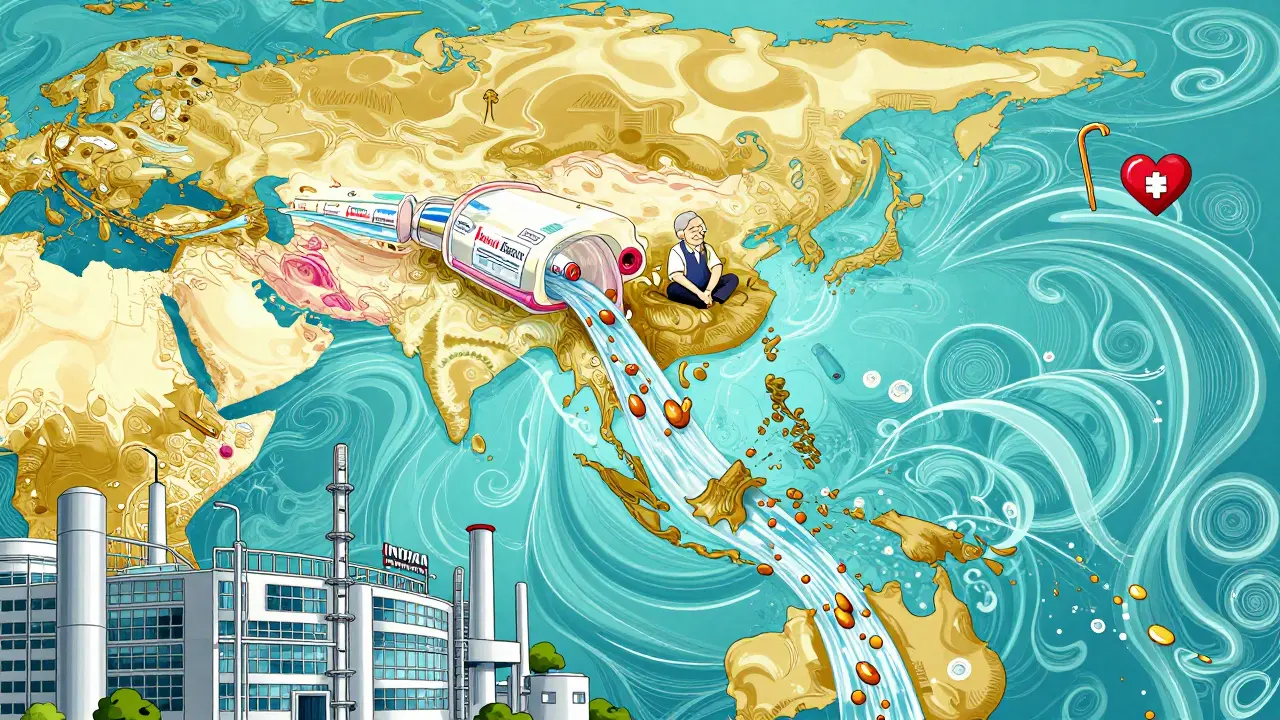
The Asia-Pacific region is the largest market for generic drugs globally, driven by factors like affordable medicine needs, government policies, and aging populations with chronic diseases. India's pharmaceutical sectorA major global supplier of generic drugs, accounting for 20% of global volume and 40% of U.S. generic demand. plays a major role here, supplying about 40% of the U.S. generic drug demand. Indian manufacturers leverage lower production costs and government support to become key players. Countries like China and India see generics not just as cost-saving alternatives but as essential healthcare infrastructure. This perspective fuels the region's impressive growth rate-Precedence Research forecasts a 5.04% CAGR from 2025 to 2034, while Custom Market Insights projects even higher growth at 6.55% CAGR. With lower incomes and increasing populations, providers in Asia-Pacific view generics as the default treatment option for conditions like diabetes, heart disease, and cancer.
North America's Complex Relationship with Generics
In the United States, generics make up about 90% of prescription volume but only 15% of total drug spending. This gap exists because brand-name drugs still command high prices, even after generics enter the market. American providers increasingly see generics as essential for healthcare affordability, especially as drug costs rise. However, challenges like drug shortages and quality concerns occasionally erode trust in generic products. The U.S. relies heavily on Indian manufacturers for generics-about 40% of U.S. generic drug demand comes from India. This dependency creates vulnerabilities in the drug supply chainsGlobal networks that deliver medications from manufacturers to patients, vulnerable to disruptions in international trade., as seen during recent shortages of critical medications. Providers in the U.S. are caught between recognizing the value of generics and worrying about their reliability.
Emerging Markets: Generics as the Default Treatment
In countries like Brazil, Turkey, and parts of Africa, healthcare providers view generics not as a secondary option but as the primary treatment choice. IQVIA estimates these "pharmerging" markets will contribute around $140 billion in increased spending by 2025. In these regions, healthcare infrastructure development prioritizes cost-effective treatments. For example, Brazil's government has implemented policies that require generic substitution for certain medications. Providers there don't see generics as a compromise-they're the standard. This shift is especially evident in treating chronic conditions like hypertension and diabetes, where affordable generics are the only viable option for many patients. Emerging markets healthcareSystems in developing countries where generics form the backbone of affordable treatment for widespread chronic diseases. faces challenges like regulatory gaps and infrastructure limitations, but the focus remains on accessibility.

The Rise of Specialty Generics
While traditional oral generics dominate, complex formulations like injectables, inhalers, and topical drugs are growing fast. The Global Specialty Generics Market is valued at $76.5 billion in 2025 and is projected to reach $185.9 billion by 2033, growing at an 11.74% CAGR. Precedence Research notes that hospital pharmacies will see significant growth because admitted patients often need these complex generics. Providers are increasingly recognizing that generics can handle advanced therapies beyond simple pills. This shift is driven by technological advances in manufacturing that lower production costs and make complex generics more accessible. specialty genericsComplex drug formulations like injectables and inhalers that treat serious conditions at lower costs than brand-name versions. are changing how providers view affordability in advanced treatments.
What's Next for Global Generics?
Experts predict a massive wave of patent expiries between 2025 and 2030, with branded drugs worth $217 billion to $236 billion in annual sales losing exclusivity. This creates a $25 billion opportunity for oncology and immunology biosimilars by 2029. DrugPatentWatch calls this "the largest wave of patent expiries in pharmaceutical history." With aging populations and rising chronic diseases, demand for affordable treatments will keep pushing generics forward. Market research firms vary on exact numbers-Cognitive projects $728.64 billion by 2034, while Custom Market Insights forecasts $926.54 billion-but all agree: generics will become an even more central part of healthcare systems worldwide. patent expirationsThe end of exclusive manufacturing rights for branded drugs, allowing generic competition to enter the market. will reshape how providers and patients access life-saving medications.
Why do some countries have higher generic adoption rates than others?
Adoption rates depend on government policies, healthcare funding, and economic conditions. Europe has strict substitution policies, while Asia-Pacific countries prioritize affordability due to lower incomes. In the U.S., high brand-name drug prices drive demand for generics, but supply chain issues sometimes limit access. Emerging markets often treat generics as the default option because they're the only affordable choice for most patients.
How does India influence the global generics market?
India is the world's largest supplier of generic drugs, providing about 40% of U.S. generic medication demand. It accounts for 20% of global generic drug volume. Indian manufacturers leverage lower production costs and government support to become key players. However, reliance on Indian exports creates vulnerabilities, as seen during recent drug shortages when supply chains were disrupted.
Are generic drugs as safe and effective as brand-name drugs?
Yes. Regulatory agencies like the FDA require generics to have the same active ingredients, strength, and dosage form as brand-name drugs. They must also meet the same quality and safety standards. While some patients report differences in side effects or effectiveness, these cases are rare and often due to inactive ingredients. Generics are rigorously tested for bioequivalence before approval.
What's driving the growth of specialty generics?
Specialty generics like injectables and inhalers are growing because they treat complex conditions that previously required expensive brand-name drugs. Advances in manufacturing technology have made these complex formulations more affordable. Hospitals and clinics increasingly use them for admitted patients, leading to an 11.74% CAGR growth in the specialty generics market. Providers see them as essential for expanding access to advanced treatments without high costs.
How will patent expirations affect the generics market?
Between 2025 and 2030, branded drugs worth $217 billion to $236 billion in annual sales will lose patent protection. This includes high-revenue biologics like ustekinumab and vedolizumab. The result will be a surge in generic competition, especially in oncology and immunology. Biosimilars (generic versions of biologics) are expected to capture $25 billion in the market by 2029. This wave of expirations will drive down drug costs and expand access to treatments globally.
Releted Post

Andy Dargon
Hi, I'm Aiden Lockhart, a pharmaceutical expert with a passion for writing about medications and diseases. With years of experience in the pharmaceutical industry, I enjoy sharing my knowledge with others to help them make informed decisions about their health. I love researching new developments in medication and staying up-to-date with the latest advancements in disease treatment. As a writer, I strive to provide accurate, comprehensive information to my readers and contribute to raising awareness about various health conditions.
Hey folks, the US situation is kinda crasy. 90% of prescriptions are generics but only 15% of spendin'. Brand names jack up prices like crazy. Reliance on Indian manufacturers is risk-remember shortages? We need to build domestic capacity. Fact is, we're too dependent on foreign supply chains.
While the US situation is concerning, Europe's systematic approach to generics is far more effective. Germany mandates substitution, leading to a 28.58% market share. The US must adopt similar structured policies immediately.
Europe's approach? Meh. India supplies 40% of US generics. Without us, you'd be screwed. Stop blaming India for supply chain issues-your own policies are the problem.
US policies are the problem India's doing fine stop whining
Generics are a global healthcare necessity. In India, we treat them as essential infrastructure. The Asia-Pacific region's growth rate of 5-6% shows how vital they are for aging populations and chronic diseases. Universal access must be prioritized.
Yeah! India's role is crucial. We need to support more manufacturing here too. Let's get behind generics for everyone!
Agree. India's supply chain is solid. US needs to invest in domestic production. Simple.
Generics are the future. Affordible meds for everyone. We need to keep pushin for better access. Its possible!
Actually, it's not that simple. Quality control is a big issue with some generics. Not all are equal. You need to know what you're talking about before saying it's the future.
Quality control issues? Maybe. But generics are still better than nothing. Some people just don't want to face reality. It's not that complicated.
Actually, the quality control issues are systemic. The FDA's approval process is flawed. And let's not forget the supply chain vulnerabilities. It's all connected. But hey, maybe u're right? Just sayin'.
Both sides have valid points. We need to work together on improving quality and supply chains. It's possible if we collaborate. No more blaming, just action.
It's really important to remember that healthcare is a human issue, not just a business one.
Every person who needs medication deserves access, regardless of where they live.
Generics are a key part of that solution, but we have to make sure they're safe and available.
It's a complex problem that needs thoughtful solutions from everyone involved.
We can't afford to be divided on this.
The global nature of the supply chain means that collaboration is essential.
Countries like India play a crucial role, but so do others.
We need to invest in infrastructure and regulations.
It's not just about cost; it's about health outcomes.
We need to look at the bigger picture.
Patients shouldn't have to choose between affordability and quality.
This is a shared responsibility.
We all have a role to play.
Let's work towards a future where everyone has access to safe, affordable medications.
That's the goal we should all be working towards.