
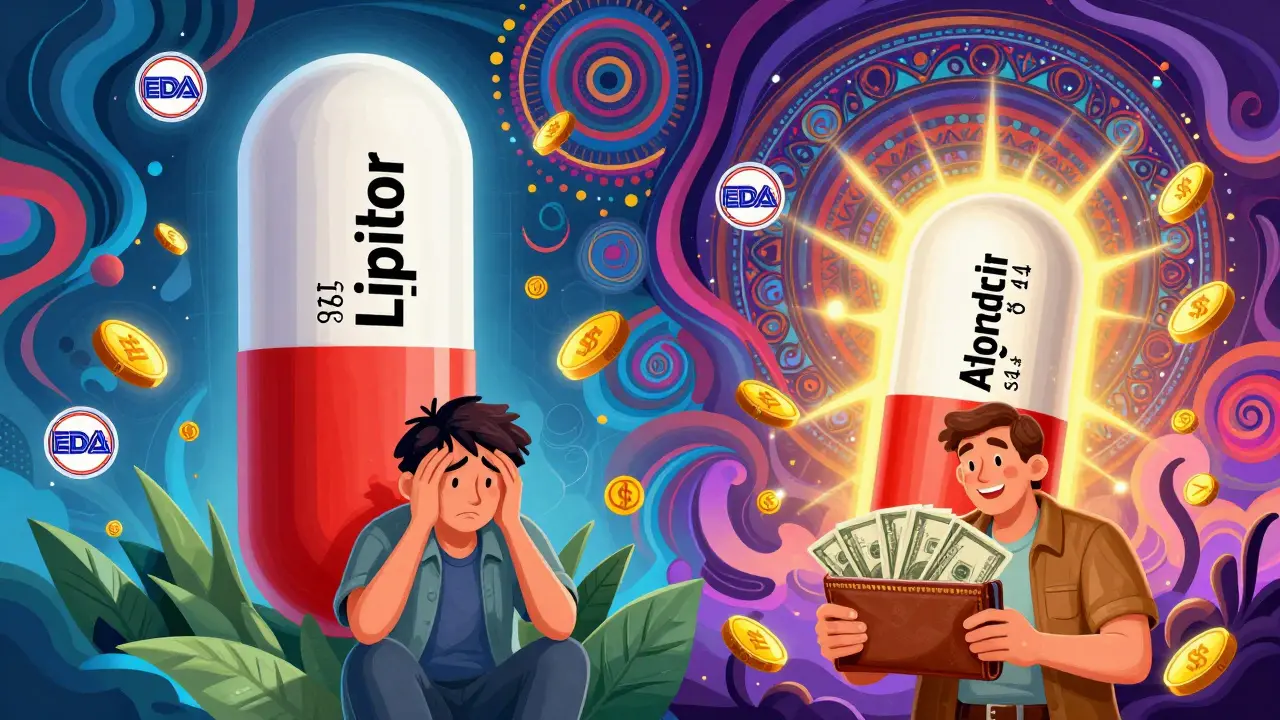
Every year, millions of Americans face a tough choice: pay hundreds of dollars for a prescription or skip doses because it’s too expensive. The solution isn’t complicated - generic medications offer the same effectiveness as brand-name drugs at a fraction of the cost. Yet many people still hesitate, worried that generics are somehow inferior. The truth? They’re not. Generics are not second-rate alternatives. They’re the exact same medicine, approved by the FDA, and backed by decades of real-world use.
What Exactly Is a Generic Drug?
A generic drug isn’t a copy. It’s not a knockoff. It’s the identical medicine, made with the same active ingredient, in the same strength, and delivered the same way - whether it’s a pill, injection, or inhaler. The FDA requires that generics match the brand-name drug in every way that matters: how fast it enters your bloodstream, how much of it gets there, and how long it stays active. This is called bioequivalence. To get approval, a generic must show that its absorption rate falls within 80% to 125% of the brand-name version. That’s not a guess - it’s a strict scientific standard.
Here’s what changes: the color, shape, or packaging. Those differences come from inactive ingredients - things like dyes or fillers. They don’t affect how the drug works. You might get a white pill one month and a blue one the next, but the medicine inside? Exactly the same.
How Much Money Do You Actually Save?
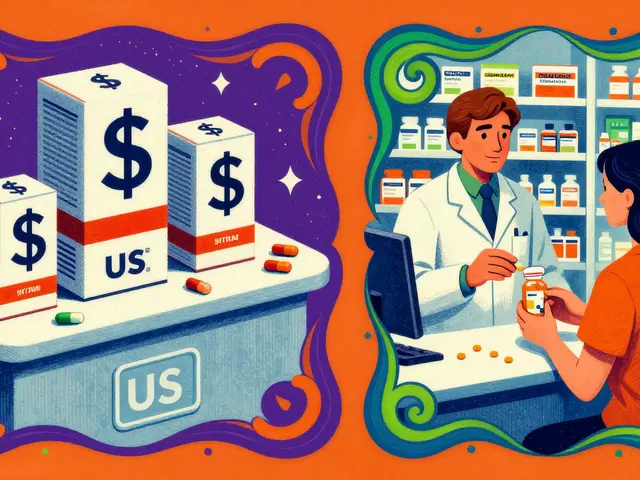
The savings aren’t small. They’re massive. According to the FDA, generic drugs cost, on average, 85% less than their brand-name equivalents. That’s not a rumor. That’s data from real prescriptions.
Take Lipitor, the cholesterol drug. When the brand-name version was still on the market, a 30-day supply cost around $130. Once the generic - atorvastatin - hit shelves, the price dropped to as low as $4 at major pharmacies. Warfarin, a blood thinner, costs about $4 for a month’s supply as a generic. The brand-name version, Coumadin? Over $300. Fexofenadine (generic Allegra) runs about $10. The brand? $30.
These aren’t outliers. They’re the norm. A 2023 Humana report found that the average copay for a generic drug is $1 to $10. For brand-name drugs? $25 to $75. That’s a difference of $20 to $65 per prescription - every single month. Multiply that by six or seven medications, and you’re talking about $1,000 to $2,000 saved per year just on copays.
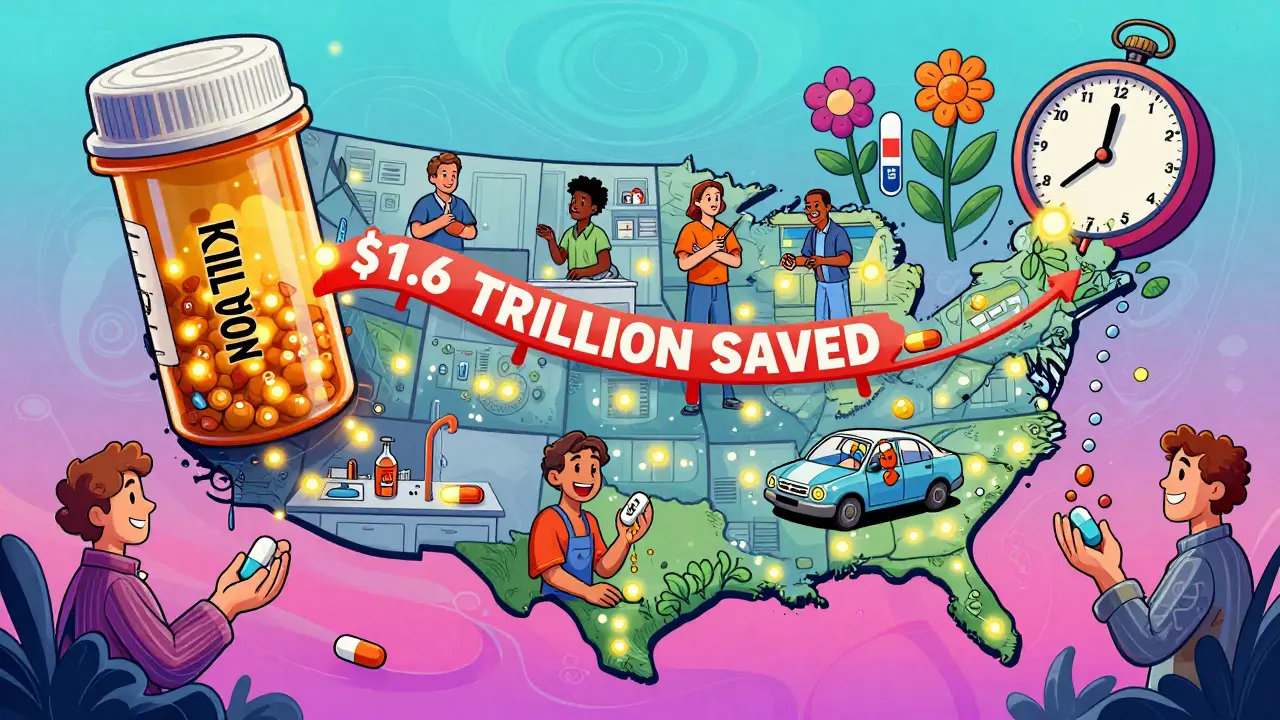
Over the last decade, generic drugs saved the U.S. healthcare system more than $1.6 trillion. That’s not just a number. That’s millions of people who could afford their prescriptions because generics made them accessible.
Are Generic Drugs Really as Safe and Effective?
This is the biggest fear: “What if the generic doesn’t work as well?” The answer is simple: yes, it does.
The FDA doesn’t cut corners. Every generic must go through the same rigorous testing as the brand-name drug. No shortcuts. No exceptions. The agency inspects manufacturing facilities worldwide - over 1,200 inspections per year - to ensure quality. Generics aren’t made in back-alley labs. They’re made in the same high-tech plants, often by the same companies that make brand-name drugs.
Multiple studies confirm this. A 2022 study in the Journal of Managed Care & Specialty Pharmacy looked at over 186,000 patients using generic and brand-name heart medications. No difference in outcomes. No increase in hospitalizations. No drop in effectiveness. Another study in the Journal of the American Heart Association found the same results for blood pressure and cholesterol drugs.
Even for drugs with narrow therapeutic windows - where small changes in dosage could matter - the FDA requires generics to meet the same tight standards. Doctors at the Mayo Clinic may occasionally monitor patients switching antiepileptic drugs, but that’s not because generics are unsafe. It’s because individual responses vary, and that happens with brand-name drugs too.
Why Do Some People Still Doubt Generics?
It’s not about science. It’s about perception. Many patients get anxious when their pill changes color or shape. One Reddit user wrote: “My pharmacy switched manufacturers and the pill turned from white to yellow. I panicked. I thought I was getting a different drug.” That’s understandable. But it’s also unnecessary.
The FDA’s Orange Book - the official list of approved generic drugs - shows which generics are considered therapeutically equivalent. Pharmacists are trained to explain this. A 2023 American Pharmacists Association guideline says pharmacists should proactively counsel patients during the switch. If your pharmacist doesn’t, ask. Say: “Is this the same as my old pill?” They’ll show you the data.
Insurance companies push generics for a reason: they save money. And that savings gets passed on. Most plans have tiered copays. Tier 1? Generics. Tier 3 or 4? Brand-name drugs. If your doctor prescribes a brand-name drug without checking if a generic exists, you’re paying more than you need to.
What About Complex Drugs? Like Injectables or Inhalers?
Some drugs are harder to copy - biologics, inhalers, topical creams. That’s why biosimilars (the generic version of biologics) are a newer category. As of 2023, the FDA has approved 37 biosimilars. These aren’t exact copies like traditional generics, but they’re proven to work the same way. The Congressional Budget Office estimates biosimilars could save Medicare $50 billion a year by 2030.
For inhalers and topical medications, the FDA has been working to remove barriers that delay generic entry. The 2019 CREATES Act helped, and the 2023 Drug Competition Action Plan is pushing even harder. You’ll see more of these generics in the next few years.
What Happens If You Don’t Switch?
Not switching isn’t just expensive - it’s risky. A 2023 study in Research in Social and Administrative Pharmacy found that patients using generics were 68% less likely to skip doses because of cost. That’s huge. Skipping doses because you can’t afford your meds leads to worse health outcomes. It leads to more ER visits. More hospitalizations. More long-term damage.
One diabetes patient on PatientsLikeMe wrote: “Metformin generics cost me $4 a month. The brand was $300. I couldn’t afford it. Now I take it every day. My A1C is stable.” That’s not a lucky story. It’s a common one.
When people can’t afford their meds, they don’t just suffer. The whole system suffers. Hospitals pay more. Insurance premiums rise. Everyone pays the price.
How to Make the Switch
Switching is easy. Here’s how:
- Ask your doctor: “Is there a generic version of this drug?”
- Check your insurance formulary. Most plans list generics as preferred.
- When you pick up your prescription, ask the pharmacist: “Is this the generic? Is it the same as the brand?”
- If you’re nervous, ask for a 30-day supply first. See how you feel.
- Keep taking it. Don’t stop because the pill looks different.
Most switches happen automatically at refill time. But if your doctor writes “Dispense as Written” or “Brand Necessary,” ask why. In most cases, it’s not medically necessary.
Final Thought: Generics Are the Norm
Ninety percent of all prescriptions filled in the U.S. are generics. That’s not a trend. That’s the standard. Hospitals, pharmacies, insurers, and the FDA all rely on them. If generics were unsafe or ineffective, they wouldn’t be used so widely.
Switching to a generic isn’t a compromise. It’s a smart, evidence-based decision. It’s how you take control of your health without sacrificing your budget. The science is clear. The savings are real. And the results? Just as good - if not better - because you’re actually taking your medicine.
Are generic medications as effective as brand-name drugs?
Yes. The FDA requires generics to have the same active ingredient, strength, dosage form, and route of administration as the brand-name drug. They must also prove bioequivalence - meaning they deliver the same amount of medicine into your bloodstream at the same rate. Studies involving hundreds of thousands of patients have found no meaningful difference in effectiveness for conditions like high blood pressure, cholesterol, diabetes, and depression.
Why are generic drugs so much cheaper?
Brand-name drugs require years of expensive research, clinical trials, and marketing before they can be sold. Generics skip all that. They don’t need to repeat animal or human studies because the original drug’s safety and effectiveness are already proven. Once the patent expires, multiple companies can make the same drug. Competition drives prices down - often by 85% or more.
Can I trust generics made outside the U.S.?
Yes. The FDA inspects all manufacturing facilities - whether they’re in the U.S., India, China, or elsewhere - before approving a generic drug. The agency conducts over 1,200 inspections annually. The same quality standards apply regardless of location. Many U.S. pharmacies source generics from overseas because that’s where production is most efficient - not because the quality is lower.
What if I notice side effects after switching to a generic?
Side effects from switching are extremely rare and usually tied to inactive ingredients - like dyes or fillers - not the active drug. If you experience something unusual, talk to your doctor or pharmacist. In most cases, switching to a different generic manufacturer (which may use different inactive ingredients) resolves the issue. The FDA’s adverse event database shows that reports for generics are proportional to how often they’re used - meaning they’re not more dangerous.
Do insurance plans encourage generics?
Absolutely. Most insurance plans have tiered copay systems where generics cost $1-$10, while brand-name drugs cost $25-$75 or more. Some plans won’t cover brand-name drugs at all unless your doctor proves a medical necessity. Insurers push generics because they save money - and those savings help keep premiums lower for everyone.
Can I ask my doctor to prescribe a generic?
Yes, and you should. When your doctor writes a prescription, they can specify “generic allowed” or just write the drug name. If they write “dispense as written” or “brand necessary,” ask why. In most cases, it’s not required. If cost is a concern, say so. Most doctors will switch you to a generic without hesitation.
Next Steps: Take Action Today
Look at your last prescription. Was it a brand-name drug? Check if a generic exists. Call your pharmacy. Ask your doctor. Compare prices. You might be paying $100 a month for something that costs $5. That’s not just money saved - that’s peace of mind. You’re not giving up quality. You’re gaining control.
Releted Post

Andy Dargon
Hi, I'm Aiden Lockhart, a pharmaceutical expert with a passion for writing about medications and diseases. With years of experience in the pharmaceutical industry, I enjoy sharing my knowledge with others to help them make informed decisions about their health. I love researching new developments in medication and staying up-to-date with the latest advancements in disease treatment. As a writer, I strive to provide accurate, comprehensive information to my readers and contribute to raising awareness about various health conditions.
so i switched my blood pressure med to generic last year and honestly? no diff. same effect, no weird side effects. my wallet thanks me more than my doctor does.
generics are the unsung heroes of healthcare 🙌 stop overpaying for branding when the science is identical. i used to stress about pill color changes until i learned the FDA’s bioequivalence standards - now i just grab the cheapest one and move on. your body doesn’t care if it’s blue or white.
you people are naive. generics are made in india and china with substandard facilities. the FDA inspections? theater. they’re just checking paperwork. real medicine comes from american labs. if you’re taking generics, you’re playing russian roulette with your health.
oh wow, a whole article about how we’re all idiots for not switching to generics? thanks for the condescending lecture. i’ve been on generics for a decade. they work. now go write a book about how to fix drug pricing instead of blaming patients for saving money.
let’s not pretend this is just about cost. the pharmaceutical industry has engineered an entire ecosystem of dependency - brand loyalty, marketing, patent evergreening, and regulatory capture. generics aren’t just cheaper; they’re a systemic rebellion against capital-driven medicine. the fact that 90% of prescriptions are generics isn’t an accident - it’s a quiet revolution. the FDA’s bioequivalence standards are mathematically rigorous, yes, but they’re also politically convenient. the real question is: why do we still tolerate a system where a single pill can cost $300 when its active ingredient costs 12 cents to produce?
i had a panic attack when my atorvastatin switched from white to green. turned out it was the same stuff. now i check the orange book before i even leave the pharmacy. so helpful to know the fda has this database. also, pharmacists are usually awesome if you ask them. just say ‘is this the same?’ and they’ll show you the match code.
bloody brilliant post mate 🤘 generics are the real MVPs. i used to get the brand-name statins until i saw the price tag - then i switched. same results, 1/10th the cost. the only thing that changed? my bank account stopped crying. also, my pharmacist gave me a lollipop. bonus points.
you americans think generics are safe because you trust fda? lol. india makes 40% of the world's generics. we have factories that produce for the usa and europe. but you dont know the truth - many factories here have no proper quality control. the fda inspects once every 5 years. meanwhile, your pills are made by workers earning $2 a day. i know because i work in one. so dont tell me its safe. its just cheap.
Thank you for this meticulously researched and profoundly informative exposition. The empirical evidence presented - particularly the 2022 Journal of Managed Care & Specialty Pharmacy study - offers a compelling, statistically robust validation of therapeutic equivalence. I am now compelled to revisit my own formulary and advocate for generic substitution with my primary care provider. A truly commendable contribution to public health discourse.
YOU’RE ALL BEING MANIPULATED. THE FDA ISN’T INDEPENDENT - IT’S OWNED BY PHARMA. THEY LET GENERICS THROUGH SO YOU’LL THINK YOU’RE SAVING MONEY BUT THE COMPANIES STILL OWN THE PATENTS ON THE ACTIVE INGREDIENTS THROUGH OTHER LAWSUITS. THEY’RE SELLING YOU THE SAME DRUG UNDER A DIFFERENT NAME AND CHARGING YOU MORE FOR THE BRAND SO THEY CAN FUND THEIR LOBBYISTS. I’VE SEEN THE DOCUMENTS. THEY’RE LAUGHING AT US. DON’T TRUST THE SYSTEM. STICK WITH THE BRAND - AT LEAST YOU KNOW WHO’S PROFITING.
my dad’s on 7 meds - 6 are generics. he’s 78 and feels better than ever. the pharmacy even sends him a text when the pill changes color. he thinks it’s funny now. we all do. generics = less stress + more cash for groceries. win win 🌟
let’s be real - if generics were truly identical, why do we still have this whole ‘brand necessary’ loophole? because pharma knows people panic when the pill changes shape. they bank on fear. and pharmacists? they’re trained to shut you up with jargon like ‘therapeutic equivalence’ and ‘bioequivalence.’ but here’s the truth: your body reacts to fillers. dyes. binders. the FDA says it’s fine - but they’re not measuring your anxiety, your insomnia, your weird taste in your mouth. i switched back to brand after a generic gave me three weeks of nightmares. guess what? it stopped. so don’t tell me ‘it’s all the same.’ it’s not. it’s just cheaper. and sometimes, cheaper isn’t worth it.