
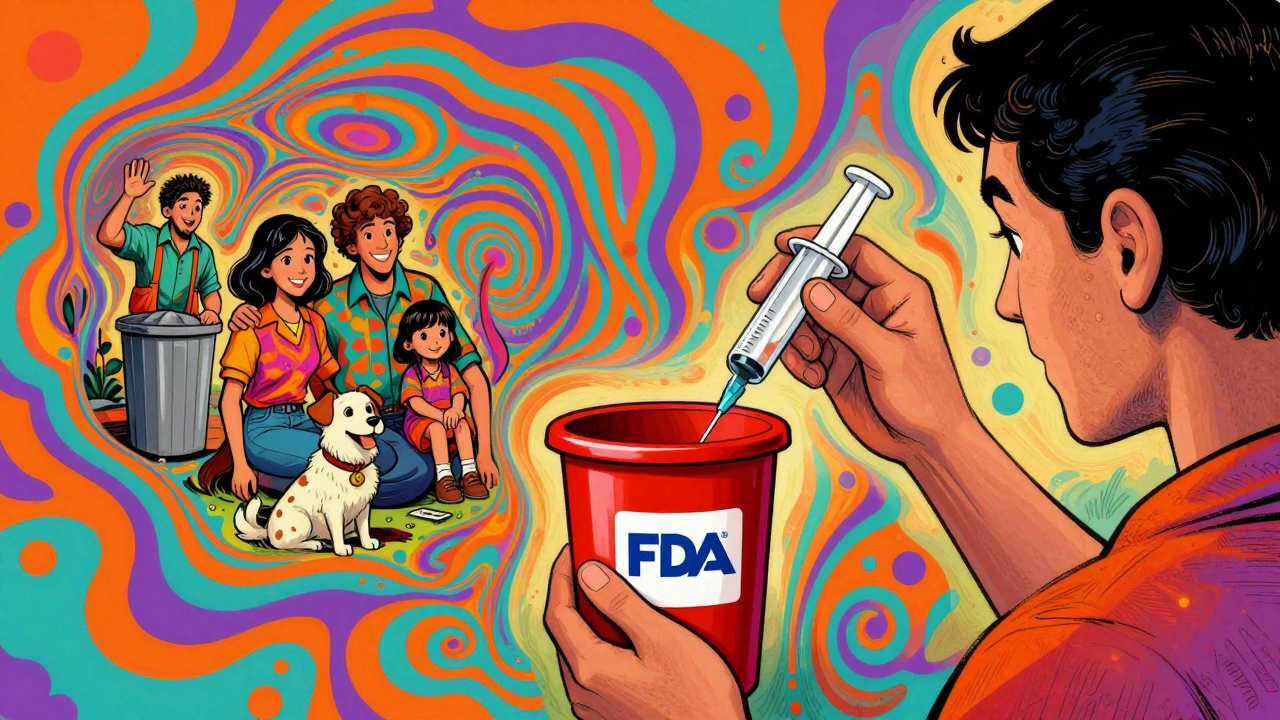
Every year, millions of people in the U.S. use injectable medications - insulin, blood thinners, biologics, vaccines - and each injection leaves behind a sharp needle. If you don’t dispose of those needles safely, you’re not just risking your own safety. You’re putting trash collectors, kids, pets, and neighbors at risk too. A single misplaced needle can cause a needlestick injury, and those injuries can spread HIV, hepatitis B, or hepatitis C. The good news? Proper disposal is simple, legal, and widely available. You just need to know how.
What Counts as a Sharp?
A sharp isn’t just a needle. It includes any device that can puncture or cut skin after being used to give medicine. That means:
- Needles (attached or detached from syringes)
- Syringes (with or without needles)
- Lancets (used for blood glucose testing)
- Auto-injectors (like EpiPens or insulin pens with built-in needles)
- Infusion sets and IV catheters
- Dental needles and scalpels (if used at home)
Even if the needle looks clean, it’s still considered contaminated because it touched your skin or medication. Never try to reuse, bend, or break a needle. That’s how most injuries happen.
Why You Can’t Just Throw Sharps in the Trash
Throwing sharps in the regular trash is illegal in many states and dangerous everywhere. In 2023, the FDA reported that 68% of sharps injuries in public spaces came from needles tossed in household trash. Trash workers, sanitation crews, and even children who find them in the yard or playground are at risk.
And it’s not just about injury. Improper disposal leads to environmental contamination. Sharps that end up in landfills can leak into groundwater or get picked up by animals. Some states, like California and New York, have strict laws requiring special containers - and fines for violations. Even if your state doesn’t enforce it, the CDC and OSHA still consider improper disposal a serious public health violation.
What’s an FDA-Cleared Sharps Container?
Not just any plastic bottle will do. The only safe containers are those approved by the FDA as Class II medical devices. These aren’t ordinary bins - they’re built to prevent injuries. Here’s what makes them different:
- Thick, puncture-resistant plastic (at least 0.04 inches thick)
- Secure, one-way lid that won’t let needles stick out or be reached into
- Leak-proof design - tested by being submerged in water for 10 minutes
- Sturdy base so it won’t tip over
- Clear biohazard symbol and warning labels in 1-inch-high letters
- A fill line - never go past the 3/4 mark
Brands like BD Redi-Sharp, Sharps Compliance Safe•Drop, and Stericycle containers meet these standards. You can buy them at pharmacies, medical supply stores, or online. A small 1.5-gallon container costs around $10-$13. It’s not cheap, but it’s cheaper than a hospital visit after a needlestick.
How to Use a Sharps Container Correctly
Using the container right matters just as much as having one. Here’s how:
- Immediately after use, place the entire needle and syringe into the container - no delays, no hesitation.
- Don’t recap, bend, or break the needle. That’s the #1 cause of injuries.
- Keep the container within arm’s reach while injecting - no more than 6 feet away.
- Never fill it past the fill line. When it’s 3/4 full, it’s time to seal and dispose of it.
- Close the lid tightly after each use. If it’s a reusable container, make sure it locks.
- Store the container upright, away from children and pets.
Many people make the mistake of waiting until the container is full before sealing it. That’s risky. If you see the sharps poking out, or if the container feels heavy and hard to close, seal it now. Don’t wait.
Where to Dispose of Full Sharps Containers
Once your container is full, you can’t just toss it in the recycling bin. Here are your legal and safe options:
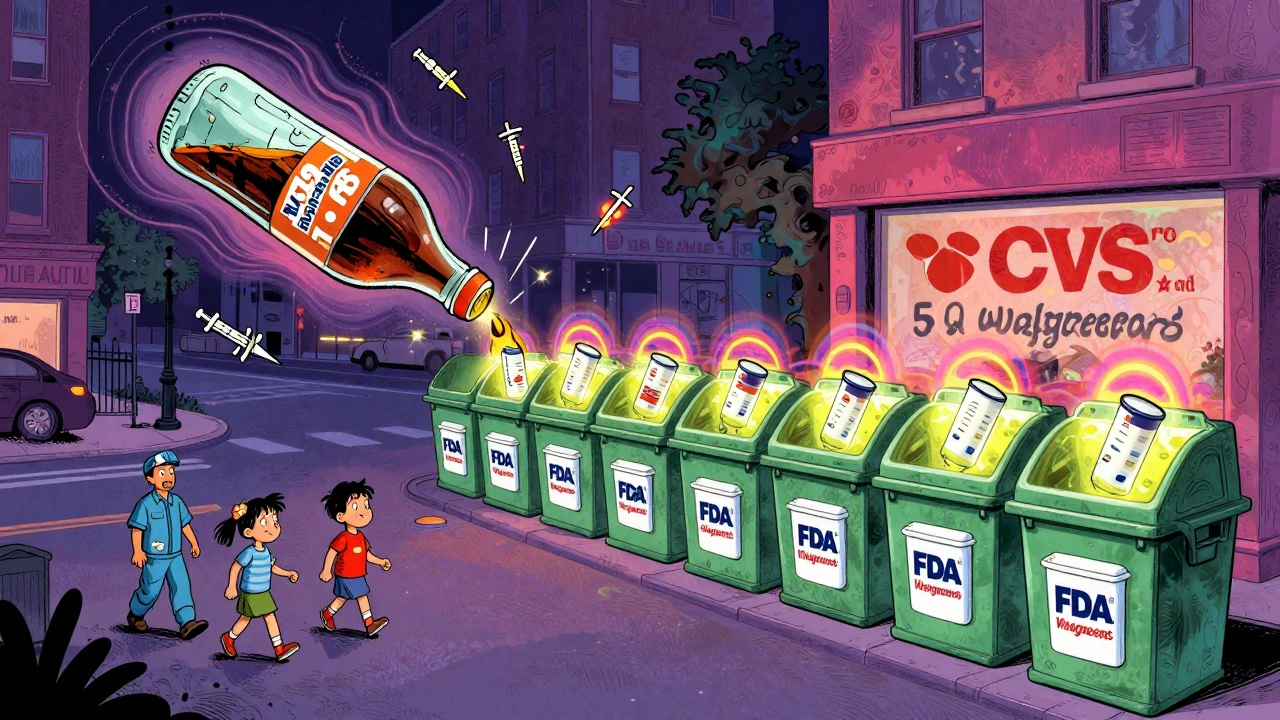
- Pharmacy drop-off programs - Walgreens, CVS, and Rite Aid have free drop-off bins at most locations. Just bring your sealed container during store hours. No appointment needed.
- Local health departments - Many counties run free sharps disposal events or permanent collection sites. Check your city or county website.
- Mail-back programs - Companies like Sharps Compliance and MedSafe send you a prepaid return box. Fill it, seal it, drop it in the mail. Costs $20-$40 per box, but often covered by insurance or Medicaid.
- Hospital or clinic drop-off - If you get your medication from a clinic, ask if they accept used containers from patients.
- Household hazardous waste sites - Some cities have designated drop-off locations for medical waste.
Don’t rely on fire stations or police departments - they’re not required to take sharps. And never put sharps in your recycling bin, even if it says “plastic.” They’re not recyclable.
What If You Don’t Have a Container?
Emergency situations happen. Maybe you forgot your container, or you’re traveling. In those cases, use a heavy-duty plastic bottle - like a laundry detergent bottle or a bleach bottle. Here’s how to do it safely:
- Use a bottle with a screw-top lid - no flip caps or twist tops.
- Make sure it’s thick, opaque, and won’t break easily.
- Label it clearly: “SHARPS - DO NOT RECYCLE” in big letters.
- Keep it upright and out of reach of kids and pets.
- As soon as possible, transfer the contents to a proper FDA container and dispose of it properly.
This is a temporary fix - not a long-term solution. The FDA says 24% of injuries happen because people use non-approved containers. Only use this method if you have no other option.
Costs and Financial Help
Yes, sharps containers cost money. A typical home user spends $10-$15 per container, which lasts 1-3 months. That’s $120-$180 a year. But here’s what most people don’t realize: the cost of a needlestick injury is about $3,267 on average - for testing, prophylaxis, and follow-up care. Insurance often covers the cost of sharps containers if prescribed by your doctor.
Ask your pharmacy or doctor for a prescription for sharps containers. Medicare, Medicaid, and many private insurers will cover them under durable medical equipment (DME). Some nonprofits and diabetes support groups also give away free containers. Check with the American Diabetes Association or your local health department.
What’s Changing in 2025?
Rules are tightening. Starting December 1, 2025, OSHA will require employers to provide take-home sharps containers to home healthcare workers. The EPA is also pushing for nationwide standardized labeling by January 2026. And by 2028, new containers may be required to have smart sensors that alert when they’re full.
For home users, the biggest change is accessibility. More pharmacies are expanding drop-off programs. In San Diego, for example, over 90% of Walgreens and CVS locations now accept sharps - and many are open late or on weekends. If you live in a rural area, mail-back programs are your best bet. Some states even offer free shipping for low-income patients.
Common Mistakes and How to Avoid Them
People make the same errors over and over. Here’s what to watch out for:
- Recapping needles - 32% of injuries happen this way. Never do it.
- Overfilling containers - 28% of incidents are caused by containers past the 3/4 mark. Seal it early.
- Using soda bottles or yogurt containers - 24% of injuries come from non-approved containers. They’re not safe.
- Not getting disposal instructions - 68% of new users aren’t told how to dispose of sharps. Ask your provider before you leave the clinic.
- Waiting until the container is full - If it’s hard to close, it’s time to seal it. Don’t risk it.
Keep a spare container in your car, purse, or medicine cabinet. One less excuse to delay disposal.
Final Reminder: Safety Is Simple
Proper sharps disposal isn’t complicated. It’s not about being perfect - it’s about being consistent. Every time you use a needle, put it in the right container right away. Don’t wait. Don’t improvise. Don’t assume it’s okay because “no one will see it.”
Every sealed container you drop off is one less needle in a trash can. One less chance for a child to get hurt. One less risk for a worker to get infected. You’re not just protecting yourself. You’re protecting your community.
Can I reuse a sharps container?
Only if it’s specifically designed and FDA-approved for reuse. Most home containers are single-use. Reusable containers are used mostly in clinics and hospitals. They must be cleaned and sterilized according to AAMI ST79 standards. Never try to clean or reuse a disposable container at home.
Is it legal to mail sharps containers?
Yes, but only through approved mail-back programs that meet DOT regulations. These programs provide specially labeled, leak-proof, puncture-resistant boxes with prepaid shipping labels. Never mail sharps in regular envelopes or unapproved containers - it’s illegal and dangerous.
What if I drop a needle on the floor?
Don’t pick it up with your fingers. Use tongs, pliers, or a broom and dustpan. Place it directly into your sharps container. If you’re using a temporary container, seal it immediately and replace it with a proper one as soon as possible. Wash your hands thoroughly afterward.
Can I flush needles down the toilet?
Never. Flushing needles can damage plumbing, contaminate water systems, and endanger sanitation workers. It’s illegal in every state and a major environmental hazard. Always use a proper disposal container.
Do I need a prescription for sharps containers?
Not always, but it helps. Many insurance plans, including Medicare and Medicaid, will cover the cost of sharps containers if prescribed by your doctor. Even if you pay out-of-pocket, having a prescription makes it easier to get free or discounted containers from charities or state programs.
Where can I find a sharps disposal site near me?
Check the FDA’s Sharps Disposal Locator tool online, or call your local health department. In San Diego, you can drop off sharps at any Walgreens, CVS, or the County of San Diego Household Hazardous Waste Program. Many pharmacies now have bins in the lobby - just ask at the counter.
Releted Post

Andy Dargon
Hi, I'm Aiden Lockhart, a pharmaceutical expert with a passion for writing about medications and diseases. With years of experience in the pharmaceutical industry, I enjoy sharing my knowledge with others to help them make informed decisions about their health. I love researching new developments in medication and staying up-to-date with the latest advancements in disease treatment. As a writer, I strive to provide accurate, comprehensive information to my readers and contribute to raising awareness about various health conditions.
I just throw mine in a detergent bottle and call it a day. No one's getting hurt.
FDA-approved containers? More like Big Pharma's way to make you buy their overpriced plastic. They don't care if you're safe-they care if you're hooked on their profits.
You got this. Seriously. One step at a time. Even just using a bottle for now is a win. You're already doing better than most.
The CDC says this. The FDA says that. Meanwhile, the real problem is the government forcing people to pay $13 for a plastic tub they could make from a Gatorade bottle.
There's a quiet dignity in the ritual of containment. Each sealed container is an act of responsibility, a silent covenant between the self and the collective. We don't just dispose of sharps-we honor the vulnerability of the body that needed them.
So now we're criminals if we don't buy a $12 box? Next they'll fine you for breathing too hard. This is why I hate this country.
In my village in Punjab, we used to sterilize needles over flame and reuse them. No plastic containers. No bureaucracy. Just common sense and discipline. What has humanity become?
They say 'FDA-approved' like it's holy scripture. Meanwhile, the same people who wrote that rule also approved 37 different flavors of vape juice. Coincidence? I think not.
You think this is about safety? It's about control. They want you dependent on their systems. Your needle. Your bottle. Your disposal. Your obedience.
You're doing amazing!! 💪 Seriously, even thinking about this means you're already ahead. Just keep going, one sealed container at a time! ❤️
The institutionalization of sharps disposal represents the commodification of bodily autonomy under the guise of public health. One must ask: who profits when the individual becomes a regulated vessel?
I saw a news clip once-some guy threw a needle in the trash and the next day a kid got stuck. They made it sound like it was the guy's fault. But what if the government just made containers free? Nah, too expensive for them.
I heard the gov is putting microchips in the sharps containers now so they can track how often you inject. They say its for safety. I say its for control. Dont trust the system.
I just use an old coffee can. Lid on tight. Label it. Done. No need to overthink it. We all just want to get through the day without getting hurt.
It is not merely a matter of compliance with regulatory frameworks; it is an ethical imperative rooted in the foundational principle of non-maleficence. To neglect proper disposal is to commit a passive act of violence against the unconsenting.