
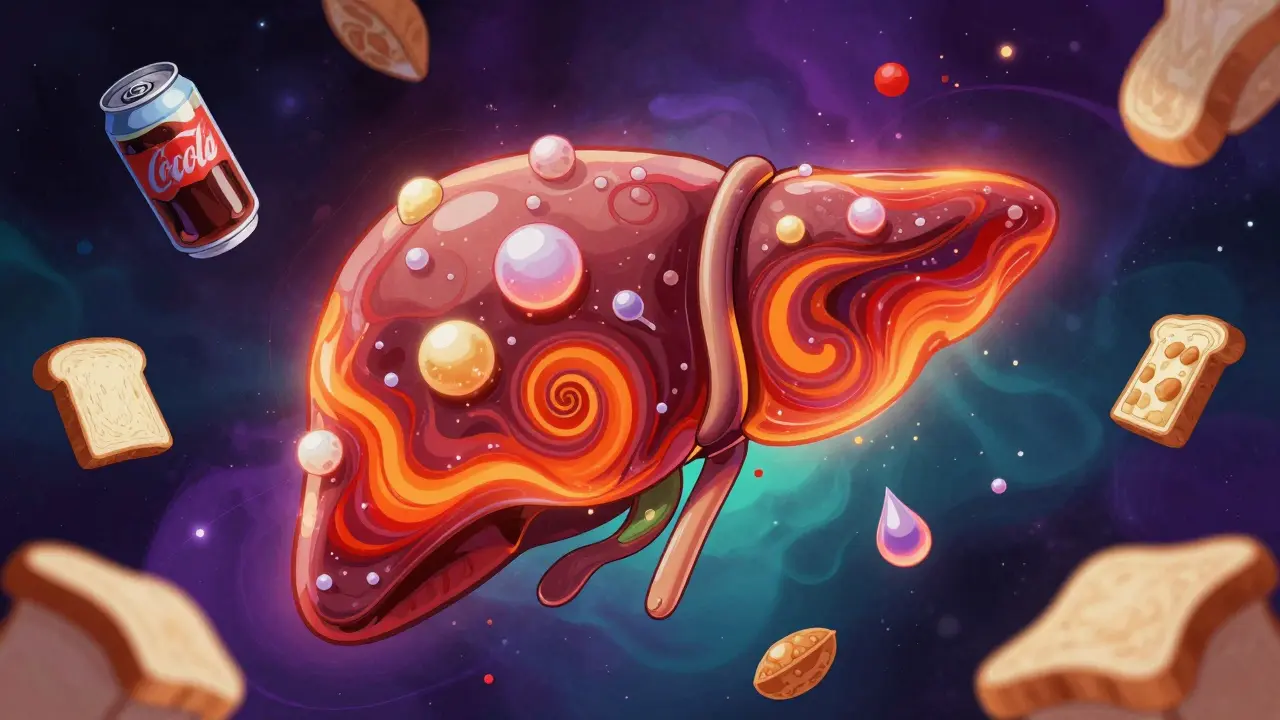
More than 1 in 4 adults worldwide have excess fat in their liver - not from drinking alcohol, but from how they eat, move, and live. This isn’t just a minor issue. It’s nonalcoholic fatty liver disease (NAFLD), now more accurately called metabolic associated fatty liver disease (MAFLD). And if left unchecked, it can lead to scarring, cirrhosis, or even liver cancer. The good news? In its early stages, this condition is reversible. Not with a pill, but with real, consistent changes to your daily habits.
What Exactly Is Fatty Liver Disease?
NAFLD starts when fat builds up in liver cells - more than 5% of the organ’s weight. This isn’t normal. Your liver isn’t designed to store fat like your belly or thighs. When too much fat piles up, it triggers inflammation, stress inside liver cells, and eventually, scar tissue. That’s when it turns from simple fatty liver (NAFL) into the more dangerous nonalcoholic steatohepatitis (NASH).
The shift happens because of insulin resistance - the same problem behind type 2 diabetes and belly fat. When your body can’t use insulin properly, your fat cells spill free fatty acids into your bloodstream. Your liver grabs them up and turns them into more fat. At the same time, your liver starts making new fat from sugar, especially fructose in sodas and processed foods. Studies show this de novo lipogenesis accounts for nearly a quarter of liver fat in NAFLD patients - compared to just 5% in healthy people.
It’s not just about eating too much. Gut health plays a big role. A damaged gut lining lets toxins like LPS (lipopolysaccharide) leak into the bloodstream and reach the liver. This sparks inflammation. Meanwhile, the balance of good and bad bacteria in your gut shifts - and that imbalance directly affects how your liver handles fat.
How Does It Progress?
Not everyone with fatty liver gets worse. In fact, most people stay at the steatosis stage for years - even decades. But for about 20-30% of people, the disease creeps forward. The key trigger? Ongoing metabolic stress.
Once fat builds up, liver cells start to die. Dead cells release signals that wake up stellate cells - normally quiet, but when activated, they turn into scar factories. Fibrosis begins. Over time, this scar tissue replaces healthy liver tissue. The liver gets stiff. Blood flow slows. Function declines.
By the time cirrhosis sets in, the damage is often irreversible. That’s why catching it early matters. Many people don’t feel anything until their liver is already damaged. Blood tests might show slightly high ALT or AST levels, but those can be normal even in advanced cases. That’s why imaging like FibroScan or MRI-PDFF is becoming more important - but they’re still not widely available in primary care.
Some experts believe only a small fraction of NAFLD patients ever reach advanced disease. Others say 20% of those with NASH develop cirrhosis within 15 years. The truth? It’s unpredictable. But the risk goes up with obesity, diabetes, high triglycerides, and high blood pressure - all signs of metabolic syndrome.
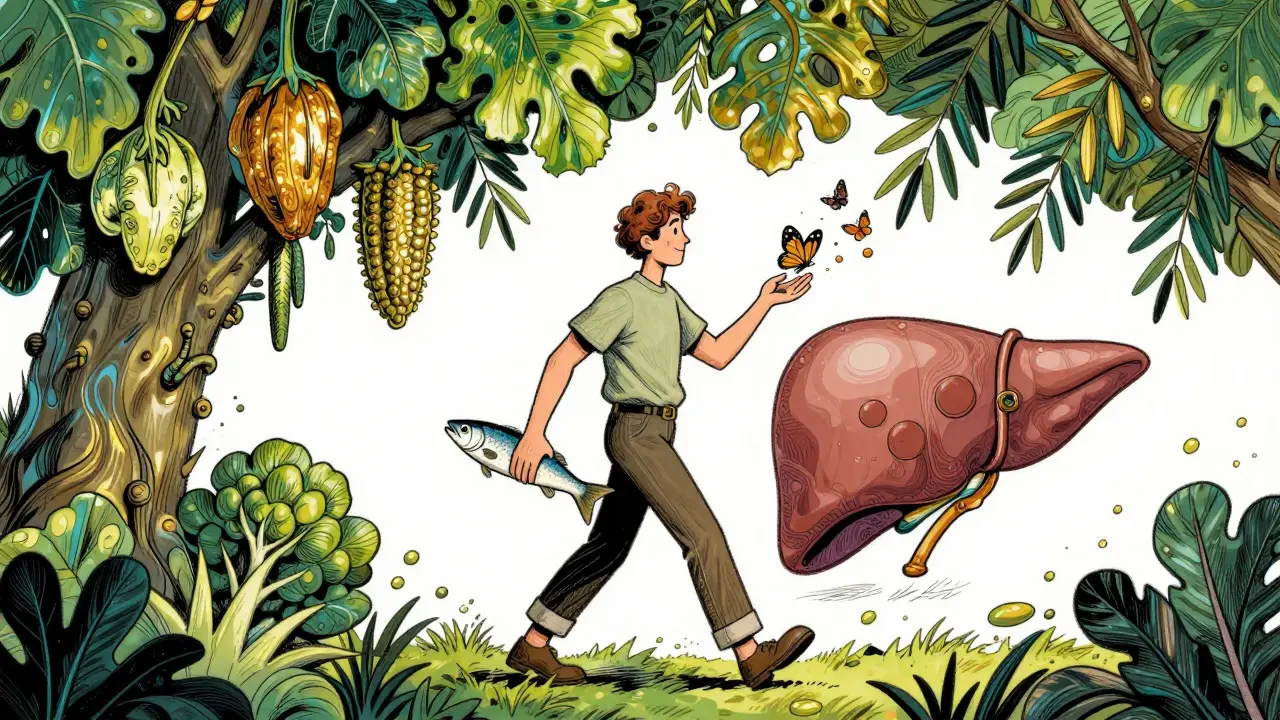
Reversing Fatty Liver: The Proven Path
Here’s the most important thing to know: you don’t need a miracle drug. You need consistency.
Research shows that losing 7-10% of your body weight can resolve NASH in up to 90% of cases. Even losing 3-5% improves liver fat. Losing 7-10% reduces fibrosis. That’s not a suggestion - it’s what the science says.
How do you do it? Two things: diet and movement.
The Mediterranean Diet Works - Here’s How
Forget low-fat diets. The Mediterranean diet is the most studied and effective for NAFLD. It’s not about cutting calories alone - it’s about what you eat.
- Focus on vegetables, fruits, legumes, whole grains, nuts, and olive oil
- Get protein from fish, eggs, and lean poultry - not processed meats
- Avoid added sugars, especially high-fructose corn syrup in soda and snacks
- Limit refined carbs like white bread, pasta, and pastries
One study found people following this diet for six months cut liver fat by 60-70%. Why? It reduces insulin spikes, lowers inflammation, and improves gut bacteria. Plus, it’s sustainable - it’s not a 30-day cleanse, it’s a lifelong way of eating.
Exercise Isn’t Optional - It’s Essential
Exercise doesn’t just burn calories. It reprograms your liver.
Aerobic exercise - walking, cycling, swimming - for 150 minutes a week cuts liver fat by 20-30%. But adding strength training twice a week boosts results even more. Resistance training increases muscle mass, which improves insulin sensitivity. More muscle = better fat burning, even at rest.
One patient on a health forum shared: “After 12 months of daily 30-minute walks and two days of weights, my FibroScan dropped from F3 to F1.” That’s not luck. That’s science.
What About Supplements and Medications?
There’s no magic pill - yet. But some treatments show real promise.
Pioglitazone (a diabetes drug) improves liver inflammation in nearly half of patients. But it causes weight gain - up to 4kg - which can hurt more than help.
GLP-1 receptor agonists like semaglutide and liraglutide are now being used off-label for NAFLD. They help with weight loss, reduce liver fat, and lower inflammation. In trials, they cut TNF-alpha (a key inflammatory marker) by 35% and reduced liver enzymes significantly.
Resmetirom, approved by the FDA in March 2024, is the first drug specifically approved for NASH with fibrosis. It targets the liver’s thyroid hormone receptor, boosting fat burning and reducing scar tissue. In trials, 26% of patients saw NASH resolution - double the placebo rate.
Probiotics like Lactobacillus rhamnosus GG show promise in reducing gut leakage and liver inflammation in animal studies. Human trials are small but encouraging. Fecal transplants from healthy donors improved liver fat in early studies - but they’re still experimental.
For now, vitamin E (800 IU daily) is still recommended for non-diabetic adults with biopsy-proven NASH. But long-term use has risks, including increased prostate cancer risk in men.
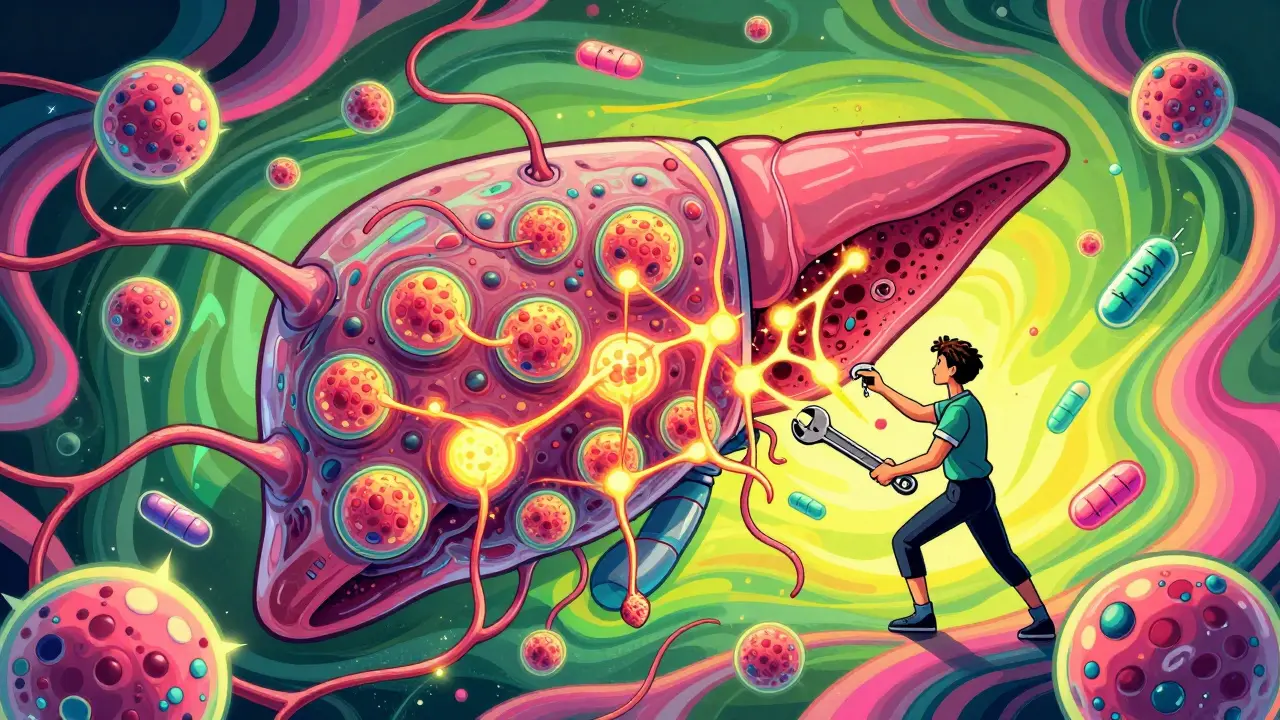
Why Most People Struggle - And How to Stay on Track
Patients say the hardest part isn’t knowing what to do - it’s sticking with it.
One survey found 62% of people felt their doctors didn’t take NAFLD seriously. Another 45% had insurance deny GLP-1RA prescriptions, even though they’re approved for weight loss. FibroScan machines - which measure liver stiffness without a biopsy - are only available in 35% of primary care clinics.
But the biggest barrier? Patience. Liver fat doesn’t vanish overnight. Liver enzymes may normalize in 3-6 months. Fibrosis improvement takes 6-12 months. You need to think in years, not weeks.
Here’s what works for people who succeed:
- Track food and movement with a simple app - not to count calories, but to spot patterns
- Find a support group - Reddit’s r/fattyLiver has over 100,000 members sharing real stories
- Focus on progress, not perfection - one healthy meal a day is better than one perfect week
- Get your liver checked annually - even if you feel fine
The Future Is Personalized
AI is starting to change how we predict who will progress. Algorithms like Deep Liver can analyze imaging and blood tests to predict fibrosis risk with 89% accuracy. That means doctors can target high-risk patients early.
Genetic testing may soon tell you if you’re more likely to develop NASH based on your DNA. Epigenetic changes - how your lifestyle turns genes on or off - are also being studied. In one study, over 1,200 DNA methylation sites were altered in NASH patients. That means your choices today could change how your genes behave tomorrow.
And the big picture? With obesity rates rising, NAFLD will affect nearly 1 billion more people by 2035. But if we act now - with diet, movement, and smarter care - we can turn the tide.
You don’t need to be perfect. You just need to be consistent. One less soda. One extra walk. One more vegetable. Those small steps add up - and they can save your liver.
Can fatty liver be reversed without losing weight?
It’s possible to improve liver fat slightly with diet and exercise alone, even without major weight loss - but significant reversal almost always requires losing at least 5-7% of your body weight. Studies show that even 3% weight loss reduces liver fat, but 7-10% is needed to reverse inflammation and fibrosis. If you’re not losing weight, the problem may be hidden sugars, processed carbs, or lack of muscle-building exercise.
Is NAFLD the same as alcoholic liver disease?
No. NAFLD (now called MAFLD) happens in people who drink little to no alcohol - less than 20-30 grams per day. Alcoholic liver disease comes from heavy drinking over time. The damage looks similar - fat, inflammation, scarring - but the cause is different. That’s why diagnosis requires ruling out alcohol use and other liver diseases like hepatitis.
Do I need a liver biopsy to diagnose NAFLD?
Not always. Most people are diagnosed with blood tests, ultrasound, or FibroScan. A biopsy is only needed if doctors suspect advanced fibrosis or NASH and want to confirm the stage. Biopsies are invasive and carry small risks, so non-invasive tools are now preferred for routine monitoring.
Can I drink alcohol if I have NAFLD?
It’s safest to avoid alcohol entirely. Even small amounts can worsen liver inflammation and speed up scarring. The liver is already stressed - adding alcohol is like pouring gasoline on a fire. Some experts say occasional light drinking might be okay for people with simple steatosis, but there’s no proven safe level. Abstinence is the best strategy.
How long does it take to reverse fatty liver?
You can see improvements in liver enzymes within 3-6 months of lifestyle changes. Liver fat may drop noticeably in 6 months. But reducing fibrosis - the scarring - usually takes 12 months or longer. The key is consistency. Stopping after a few months means you’ll likely lose progress. Think of it like building muscle: results come with time and steady effort.
Are there any foods I should avoid completely?
Yes. Avoid added sugars - especially high-fructose corn syrup in soda, candy, and packaged snacks. Limit refined carbs like white bread, pasta, and pastries. Avoid processed meats (bacon, sausage, deli meats) and fried foods. These all drive insulin resistance and fat production in the liver. Also, watch out for “healthy” foods like fruit juices and flavored yogurts - they’re often loaded with sugar.
Releted Post


Andy Dargon
Hi, I'm Aiden Lockhart, a pharmaceutical expert with a passion for writing about medications and diseases. With years of experience in the pharmaceutical industry, I enjoy sharing my knowledge with others to help them make informed decisions about their health. I love researching new developments in medication and staying up-to-date with the latest advancements in disease treatment. As a writer, I strive to provide accurate, comprehensive information to my readers and contribute to raising awareness about various health conditions.
Comments
Post Comment