
Sharps Disposal: Safe Ways to Get Rid of Needles and Medical Waste
When you use a needle, syringe, or lancet, the job isn’t done when the injection is over. Sharps disposal, the safe handling and discard of used medical needles and devices. Also known as needle disposal, it’s not just a good habit—it’s a public safety rule. Improperly thrown away sharps can injure trash workers, kids, or pets. They can also spread infections like hepatitis or HIV if someone gets stuck by a used needle. That’s why every home that uses sharps needs a clear, simple plan.
Sharps containers, sturdy, leak-proof bins designed specifically for used needles. Also known as sharps disposal containers, they’re the only safe way to store sharps before disposal. You don’t need a fancy box—FDA-approved plastic containers with tight lids work. Some pharmacies sell them. Others let you return full containers for free. Never use soda bottles, coffee cans, or old medicine bottles. They crack, leak, or get punctured. And never toss sharps in the regular trash, recycling, or compost. Even if you cap the needle, it can still slip out.
Where do you take them once the container is full? Medical waste, the category that includes used sharps, test strips, and other biohazardous materials. Also known as hazardous medical waste, it’s regulated for a reason. Most cities have drop-off locations at pharmacies, hospitals, or police stations. Some offer mail-back programs—you seal the container, stick on a prepaid label, and drop it in the mailbox. Check with your local health department or pharmacy. If you’re on insulin, ask your provider: many offer free return kits. In rural areas, you might need to drive farther, but there’s always a legal way. Don’t improvise.
What about the needle cap? Should you recap it? No. The CDC says never to recap needles unless there’s no other choice—and even then, use a one-handed technique or a device. Most injuries happen during recapping. If you’re giving yourself shots, keep the cap off and drop the needle straight into the container. No bending. No breaking. No tossing. Just drop. Then seal. Then drop off.
People think sharps disposal is only for diabetics. It’s not. It’s for anyone using insulin pens, epinephrine auto-injectors, blood glucose monitors, or even tattoo needles. It’s for caregivers helping elderly parents or kids with chronic conditions. It’s for home health workers. If you handle a sharp object that’s been in skin or blood, you’re part of the chain. And you owe it to everyone else to handle it right.
You’ll find real-world guides below on how to set up a safe system at home, what containers to buy for under $10, where to find free drop-off spots near you, and what to do if you accidentally get stuck. These aren’t theoretical tips—they’re from people who’ve been there. No fluff. No fear-mongering. Just what works.
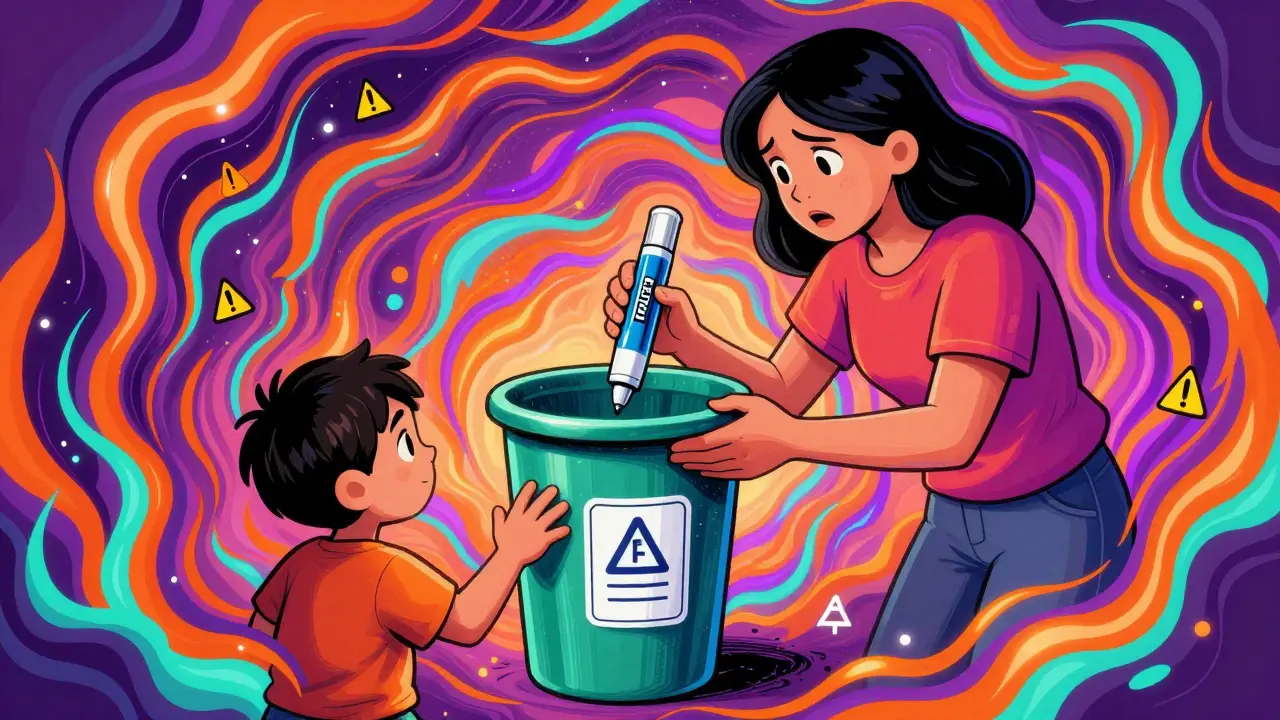
Learn how to safely dispose of expired EpiPens, inhalers, and medicated patches to protect your family, community, and environment. Follow FDA and DEA guidelines for sharps, aerosols, and patches.
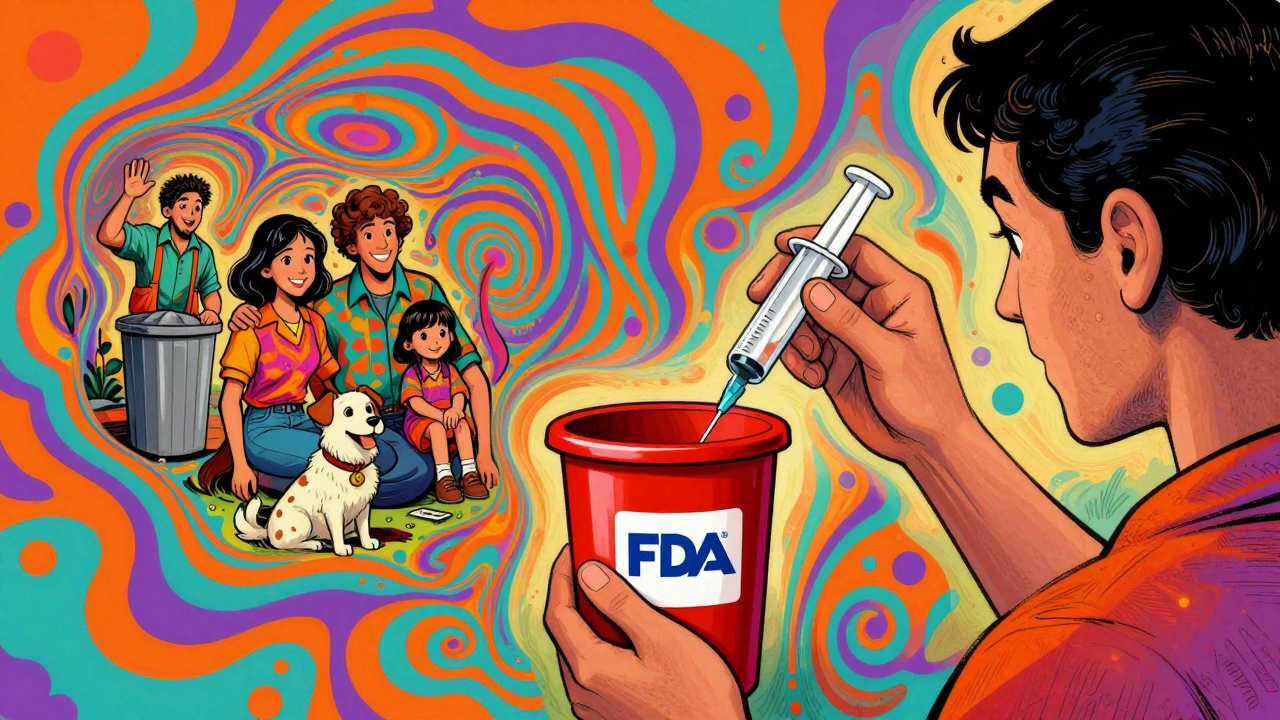
Learn how to safely dispose of needles and sharps from injected medications to prevent injuries and protect public health. Follow FDA guidelines, use approved containers, and find free drop-off locations near you.