
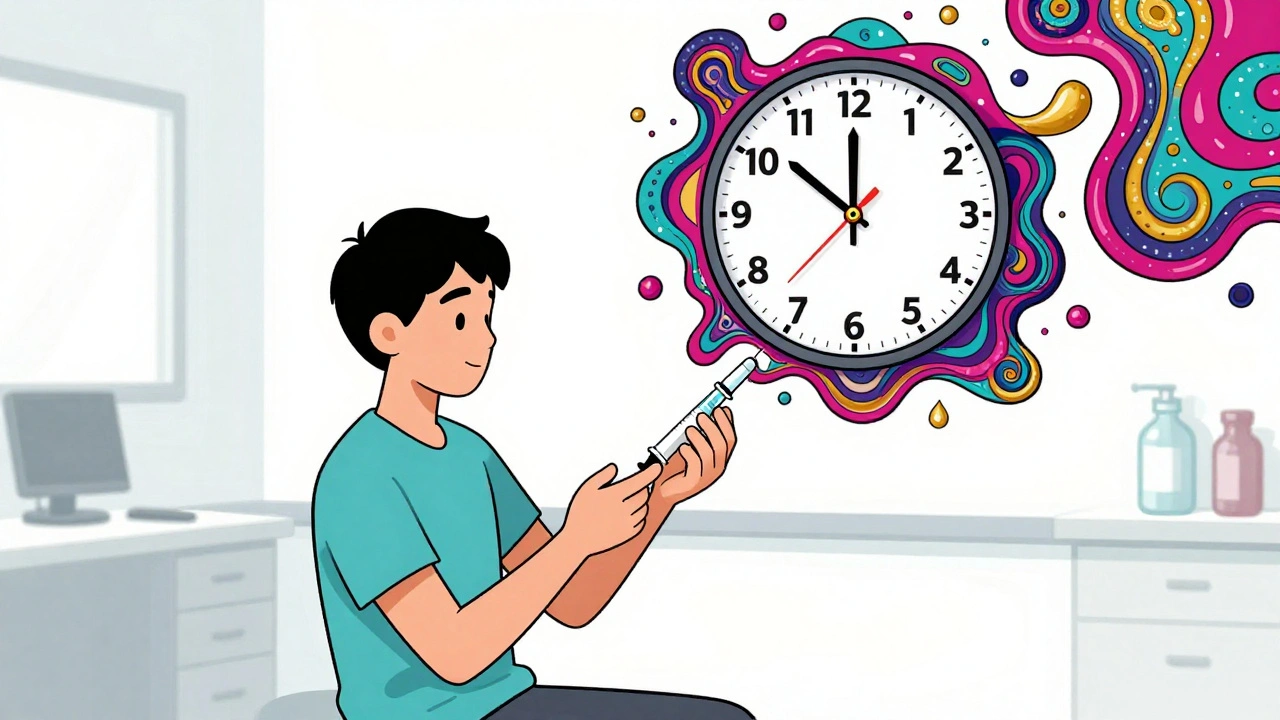
When HIV was first identified in the 1980s, a diagnosis often meant a death sentence. People didn’t just fear the virus-they feared the stigma, the uncertainty, and the daily burden of pills with harsh side effects. Today, that story has changed. HIV is no longer a death sentence. It’s a manageable condition. And for many, it’s no longer a daily routine. Thanks to breakthroughs in medication, people living with HIV now have options that don’t just keep them alive-they let them live.
From Daily Pills to Twice-Yearly Injections
For over two decades, the standard for HIV treatment was simple: take a handful of pills every single day. Miss one, and the virus could bounce back. Take them inconsistently, and resistance could develop. It wasn’t just about health-it was about discipline, memory, and mental stamina.
That changed in 2022, when lenacapavir (brand name Sunlenca) became the first capsid inhibitor approved for HIV treatment. Unlike older drugs that target viral enzymes, lenacapavir attacks the virus’s protective shell-the capsid-stopping it from replicating at the very start of its life cycle. The real game-changer? One injection lasts six months.
By early 2025, the FDA granted Breakthrough Therapy Designation to a new combo: lenacapavir plus two broadly neutralizing antibodies, teropavimab and zinlirvimab. This three-drug cocktail, called LTZ, is now being tested in Phase 3 trials. Early results? 98.7% of patients had undetectable viral loads after 48 weeks. That’s better than daily pills. And it’s done with just two shots a year.
Compare that to the old way: 365 pills. Now? Two visits to the clinic. No more hiding pills in your purse. No more panic when you’re traveling. No more guilt when you forget.
How Modern HIV Meds Work
HIV treatment today isn’t just one drug. It’s a combination, usually three or more, from different classes. Each one hits the virus in a different way, making it harder for it to escape.
- NRTIs and NNRTIs block the enzyme HIV needs to copy its DNA.
- Protease inhibitors stop the virus from assembling new copies.
- INSTIs like bictegravir (in Biktarvy) prevent HIV from inserting its genes into your cells.
- CCR5 antagonists lock the door HIV uses to enter immune cells.
- Capsid inhibitors like lenacapavir break apart the virus’s protective shell.
The most popular single-tablet regimen today is Biktarvy, a tiny pill (just 459 mg) that combines an INSTI with two NRTIs. It’s taken once a day, has fewer side effects than older drugs, and works for most people-even those with kidney issues.
But even Biktarvy is being outpaced. Lenacapavir-based regimens don’t just match daily pills-they beat them in real-world outcomes. A 2025 study showed 89% of people on LTZ felt confident about their adherence. Only 63% of daily pill users said the same.
Quality of Life: More Than Just Viral Load
Doctors don’t just measure success by how low the viral load is. They ask: Are you sleeping better? Are you anxious about your meds? Do you feel like you can plan a trip without packing a week’s worth of pills?
On Reddit’s r/HIV community, users are sharing stories like this one from u/HIVWarrior2020: “After 12 years of daily pills, the twice-yearly injection has eliminated my treatment-related anxiety completely.” That’s not just a medical win-it’s a mental health win.
The Positive Peers app, used by over 150,000 people with HIV, surveyed users in 2025. Results? 92% of those on long-acting treatments rated their satisfaction at 8/10 or higher. For daily pill users? Only 76%.
Why? Because the burden isn’t just physical. It’s psychological. The stigma of HIV is still real. But carrying around a pill bottle? That’s a daily reminder you don’t need. With injections every six months, you can forget you have HIV-for months at a time. That freedom? It’s priceless.
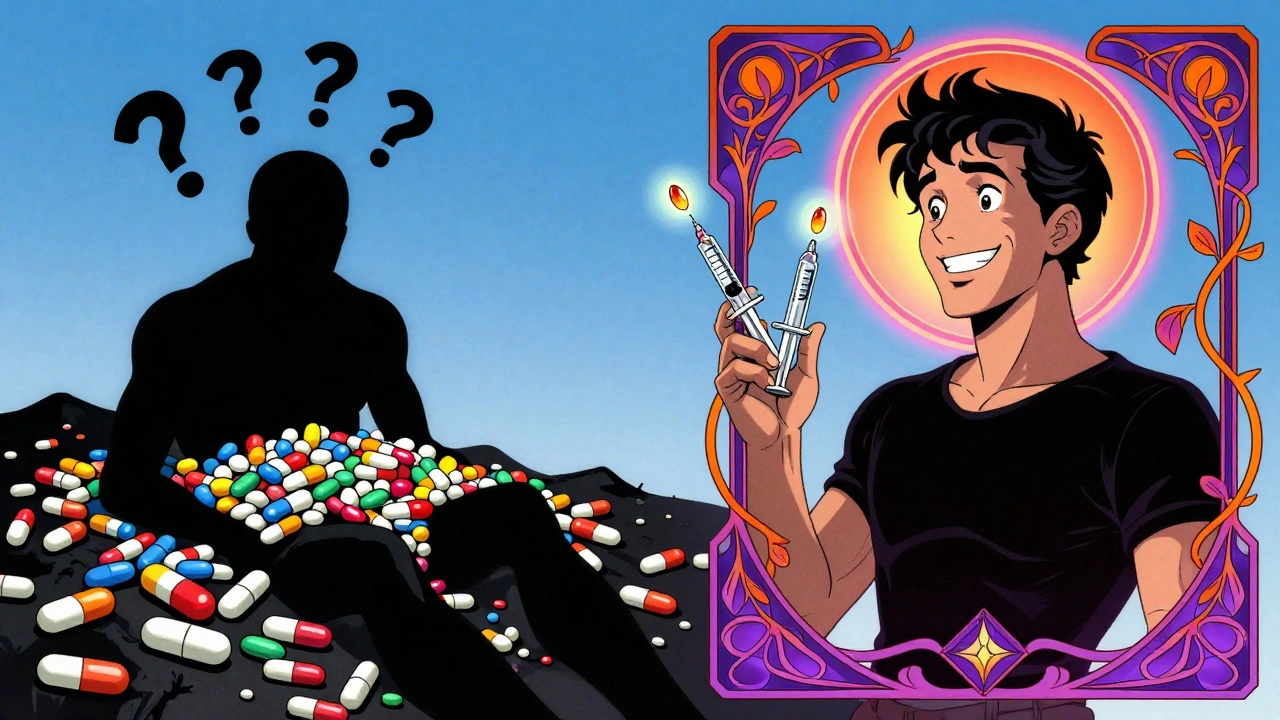
Cost, Access, and the Global Divide
There’s a catch. These breakthroughs come with a price tag.
Biktarvy costs about $69,000 a year in the U.S. Yeztugo, the same drug approved for prevention in June 2025, is listed at $45,000. That’s more than most people make in a year.
But here’s the twist: the actual cost to produce these drugs is under $25 per person per year. That’s not a typo. A report from the European AIDS Treatment Group in October 2025 confirmed that generic manufacturing could bring prices down to 1/1000th of the current list price.
The problem? Access. In the U.S., only 38% of people with HIV have switched to long-acting options as of mid-2025. In Europe, it’s 12%. In sub-Saharan Africa, where 70% of global HIV cases live, it’s less than 2%.
Why? Storage. Lenacapavir’s original formulation needed to be kept at -20°C. Few clinics outside big cities could handle that. After Yeztugo’s approval, a more stable version hit the market-and access jumped from 17% to 43% of U.S. clinics in just six months.
The WHO’s July 2025 guidelines pushed for community health workers to administer these injections in rural areas. That’s the key. If you can train a nurse in a village to give two shots a year, you can change the course of the epidemic.
What’s Next? The Future of HIV Care
By 2030, experts predict 75% of people with HIV in high-income countries will be on long-acting regimens. That’s not science fiction-it’s based on current adoption curves.
Meanwhile, Gilead Sciences, the maker of lenacapavir, reported $13.2 billion in HIV sales in 2024. That’s 14.3% growth in one year. ViiV Healthcare and Merck are racing to catch up with their own long-acting candidates, but none match the twice-yearly dosing of lenacapavir.
There’s even hope for a cure. In early 2025, a trial called IMPAACT 2009 gave a combination of antibodies and latency-reversing drugs to 25 people. Three of them stayed virus-free after stopping all treatment. It’s not a cure yet-but it’s a sign we’re getting closer.
And prevention? Yeztugo isn’t just for people who already have HIV. It’s now approved for those at risk. One shot every six months cuts infection risk by nearly 100%. The WHO called it “the next best thing to an HIV vaccine.”

Challenges and Real-World Hurdles
It’s not perfect. Injection-site reactions still happen. About 28% of users report mild pain or swelling for a few days after the shot. But 94% say it’s worth it.
Doctors need training too. Gilead found that 87% of providers became confident after just three supervised injections. But in rural clinics, staff still struggle with paperwork and scheduling.
And reminders matter. Programs that used text alerts or automated calls saw 96.4% of patients show up on time. Without them? Only 82.7%.
The biggest threat? Inequality. If these drugs stay at $45,000 a year, they’ll only help the wealthy. But if generic versions get approved and distributed globally, we could see HIV transmission drop by 65% by 2035.
As UNAIDS Executive Director Winnie Byanyima said in September 2025: “Without urgent action on pricing, these breakthroughs will remain out of reach for the majority of people who need them.”
What This Means for You
If you’re living with HIV today, you have more power than ever. You can choose a treatment that fits your life-not the other way around. You can talk to your doctor about switching to a long-acting option. You can ask about cost assistance programs. You can demand access.
If you’re at risk, you now have a prevention tool that’s easier than condoms, more reliable than daily pills, and just as private. Two shots a year. That’s it.
HIV is no longer a life sentence. It’s not even a daily chore. It’s a condition you manage on your terms. And for the first time in history, the tools to do that are here.
Can HIV be cured with current treatments?
No, current treatments don’t cure HIV. They suppress the virus to undetectable levels, which means it can’t be transmitted and won’t damage the immune system. People on effective treatment can live full, healthy lives. A few participants in early cure trials have remained virus-free after stopping meds, but these are rare cases and not yet reproducible at scale.
How often do you get injections for long-acting HIV treatment?
The new lenacapavir-based regimen (LTZ) requires two injections per year-once every six months. This is a major improvement over monthly injections like cabotegravir (Apretude) or daily pills. The original Sunlenca injection is given every six months after an initial loading dose, and the new LTZ combo follows the same schedule.
Is long-acting HIV treatment better than daily pills?
For most people, yes. Studies show long-acting treatments match or exceed daily pills in viral suppression. They also improve mental health, reduce anxiety about adherence, and eliminate the daily pill burden. The main trade-off is needing to visit a clinic for injections, but for many, that’s a small price to pay for freedom from daily medication.
Can I switch from daily pills to long-acting injections?
Yes, but it requires a transition plan. Your doctor will typically overlap your current pills with the first injection for about four weeks to ensure the virus stays suppressed. This prevents any risk of resistance. Not everyone qualifies-your viral load must be undetectable, and you need to be in good overall health.
Are long-acting HIV treatments available worldwide?
Not yet. In the U.S., access is growing but still limited to about 38% of patients. In Europe, it’s under 12%. In low-income countries, especially in sub-Saharan Africa, less than 2% of people have access due to cost, cold storage needs, and lack of trained staff. The WHO is pushing for community-based delivery to close this gap, but widespread global access depends on lowering prices and building local healthcare capacity.
What’s the difference between HIV and AIDS?
HIV is the virus that attacks the immune system. AIDS is the final stage of HIV infection, when the immune system is so damaged that it can’t fight off serious infections or cancers. With modern treatment, most people with HIV never develop AIDS. The term is rarely used today because effective treatment prevents progression.
Releted Post


Andy Dargon
Hi, I'm Aiden Lockhart, a pharmaceutical expert with a passion for writing about medications and diseases. With years of experience in the pharmaceutical industry, I enjoy sharing my knowledge with others to help them make informed decisions about their health. I love researching new developments in medication and staying up-to-date with the latest advancements in disease treatment. As a writer, I strive to provide accurate, comprehensive information to my readers and contribute to raising awareness about various health conditions.
This is wild 🤯 Two shots a year and you're good? I used to have to hide my pill bottle in my sock drawer like it was contraband. Now I just forget I'm HIV+ for months at a time. Life changing.
this is sooo amazing!! i live in india and we still get old pills with side effects that make you vomit for days. why cant this reach us too? 🙏
The real revolution isn't the science it's the silence. No more explaining why you're carrying a pill case. No more guilt when you miss a dose. No more internal monologue about whether you're 'worthy' of a normal life. The medicine didn't just suppress the virus it suppressed the shame. And that's the cure we never talked about.
The pharmacoeconomic implications are profound. The marginal cost of production is negligible compared to the current pricing model, which suggests that the barrier is not technological or scientific but institutional and ideological. The persistence of profit-driven pricing in the face of global health equity imperatives raises serious ethical questions about the commodification of human health outcomes.
People act like this is some miracle but they forget the people who still can't afford it. You think everyone can just walk into a clinic and get this? Most of us are still on the same old pills because the system is rigged. Stop acting like this is progress when it's just luxury medicine for the rich.
I don't get why everyone's so hyped. I mean it's just injections. Still gotta go to the doctor. Still gotta deal with side effects. Still gotta deal with stigma. Just because you don't have to swallow a pill every day doesn't mean your life changed.
I switched last year and I swear I feel like a different person. No more panic when I'm on a road trip. No more wondering if I packed enough pills. I went hiking in Colorado for a week and didn't think about HIV once. That's not just medical progress. That's freedom.
It is indeed a remarkable advancement in the field of antiretroviral therapy. However, one must consider the structural inequities that persist in global healthcare delivery systems. The disparity in access between high-income nations and low-resource settings underscores the necessity for equitable distribution mechanisms, rather than merely technological innovation without social implementation.
I had no idea the cold chain was the bottleneck. I thought it was just cost. Turns out they just made a new version that doesn't need freezing and suddenly access jumped. That's the kind of dumb-simple fix we need more of. Why didn't they think of this sooner?
This is a great step forward for medical science. However, we must remember that true healing comes not only from pharmaceuticals but from compassion, community, and dignity. Let us not forget those who are still struggling in silence, especially in remote areas where healthcare infrastructure remains weak.
America still leads the world in innovation. Europe? Barely keeping up. Africa? Still stuck in the 90s. This is why we need to stop outsourcing everything and start making these drugs here. We built this tech. We should own it.
The pharmacokinetic profile of lenacapavir enables sustained plasma concentrations above the IC90 for over 26 weeks post-injection, which is unprecedented in HIV therapeutics. Coupled with the dual monoclonal antibody component, the LTZ regimen demonstrates a synergistic suppression mechanism that mitigates resistance development. The real clinical advantage lies in the elimination of adherence-related pharmacodynamic variability, which has historically been the Achilles' heel of oral regimens.
I used to be terrified to even say the word HIV out loud. Now I tell my coworkers I get a shot twice a year and they think I'm getting Botox. I don't correct them. I just smile. That's the real win. Not the science. Not the stats. The fact that I don't have to carry around a reminder of what I was told I'd be forever. I'm just me now. And that's enough.