
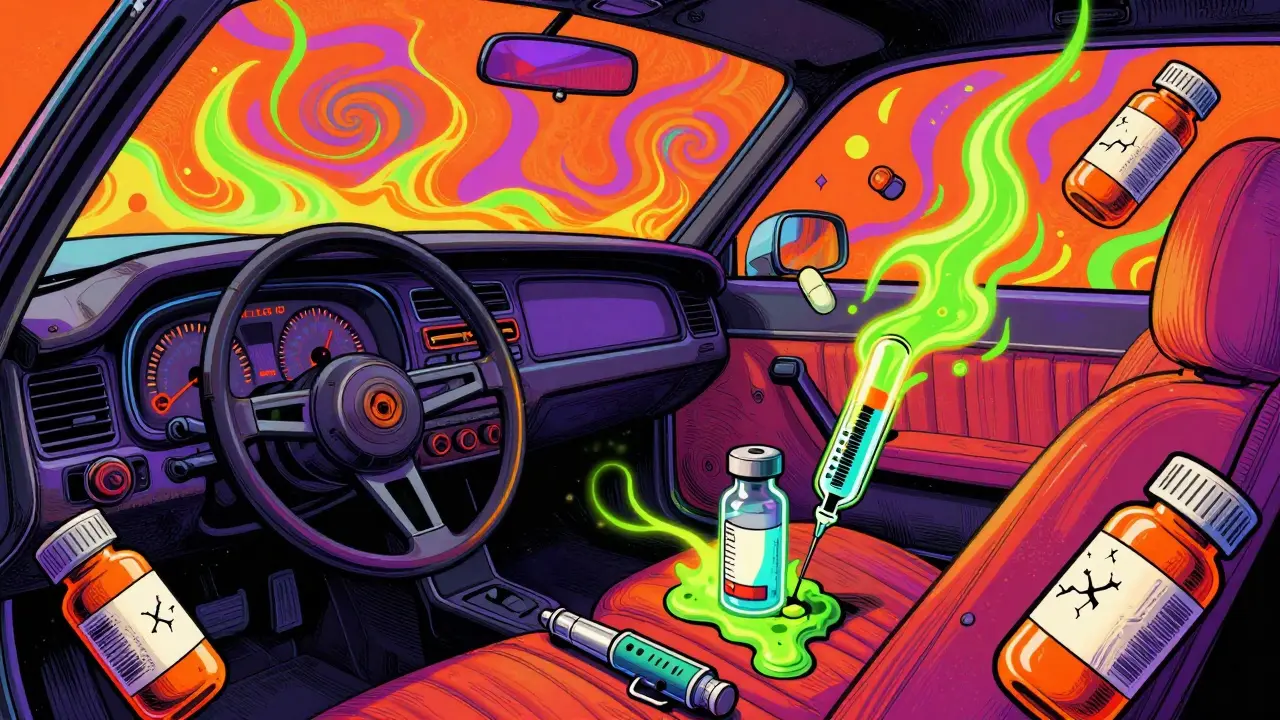
When you're traveling in a hot climate, your medications aren't just sitting in your bag-they're sitting in a sauna. A car dashboard can hit 140°F in under 30 minutes. Your insulin? Your EpiPen? Your birth control? They don't care if you're on vacation. If they get too hot, they stop working. And that’s not a hypothetical risk-it’s a documented medical emergency.
Why Heat Destroys Medications
Most pills and liquids are designed to stay stable between 68°F and 77°F (20°C to 25°C). That’s not "room temperature" as most people think of it. In a house without AC, summer temps often climb past 85°F. In a car? It’s worse. The American Pharmacists Association found that vehicle interiors can exceed 120°F within 20 minutes on an 85°F day. That’s not just uncomfortable-it’s dangerous for your meds.Temperature-sensitive drugs like insulin, EpiPens, thyroid meds, and hormonal contraceptives begin breaking down above 86°F. Research from Cedars-Sinai shows that after just 24 hours at 104°F, some medications lose up to 32% of their potency. That means your asthma inhaler might not open your airways. Your insulin might not lower your blood sugar. Your birth control might not prevent pregnancy. And you won’t know until it’s too late.
The U.S. Pharmacopeia says any temperature excursion more than 15°F above the recommended range counts as a critical failure. That’s not a suggestion-it’s a regulatory threshold. If your meds hit 100°F for more than a few hours, they’re no longer reliable. The FDA warns that exposure longer than 24 hours requires consulting your pharmacist before using them again.
Which Medications Are Most at Risk?
Not all meds are created equal when it comes to heat. Here’s what you need to watch out for:- Insulin: Loses effectiveness rapidly above 86°F. Liquid insulin can clump or turn cloudy. One Reddit user reported her insulin stopped working after 30 minutes in a car on a 90°F day-resulting in a diabetic emergency.
- EpiPens: The epinephrine inside degrades quickly under heat. A pharmacist at Cedars-Sinai called glove compartments and trunks "common mistakes that can disable emergency treatments."
- Hormonal contraceptives: Birth control pills, patches, and rings can lose potency. A nurse on Reddit shared a case where a patient got pregnant after leaving her pills in a hot car for two days.
- Thyroid meds (like levothyroxine): Heat causes chemical changes that reduce absorption. Patients report fatigue, weight gain, and brain fog after exposure.
- Inhalers (albuterol, corticosteroids): The propellant can break down, making the spray inconsistent. One Drugs.com user had an asthma attack because his inhaler failed after being left on a beach towel.
- Antibiotics and anti-seizure drugs: These can degrade unpredictably, leading to treatment failure or dangerous side effects.
If your medication is refrigerated at home, it’s likely heat-sensitive. If it came with a warning like "keep refrigerated" or "protect from heat," treat it like a live wire.
What Works: Real Solutions for Hot Climates
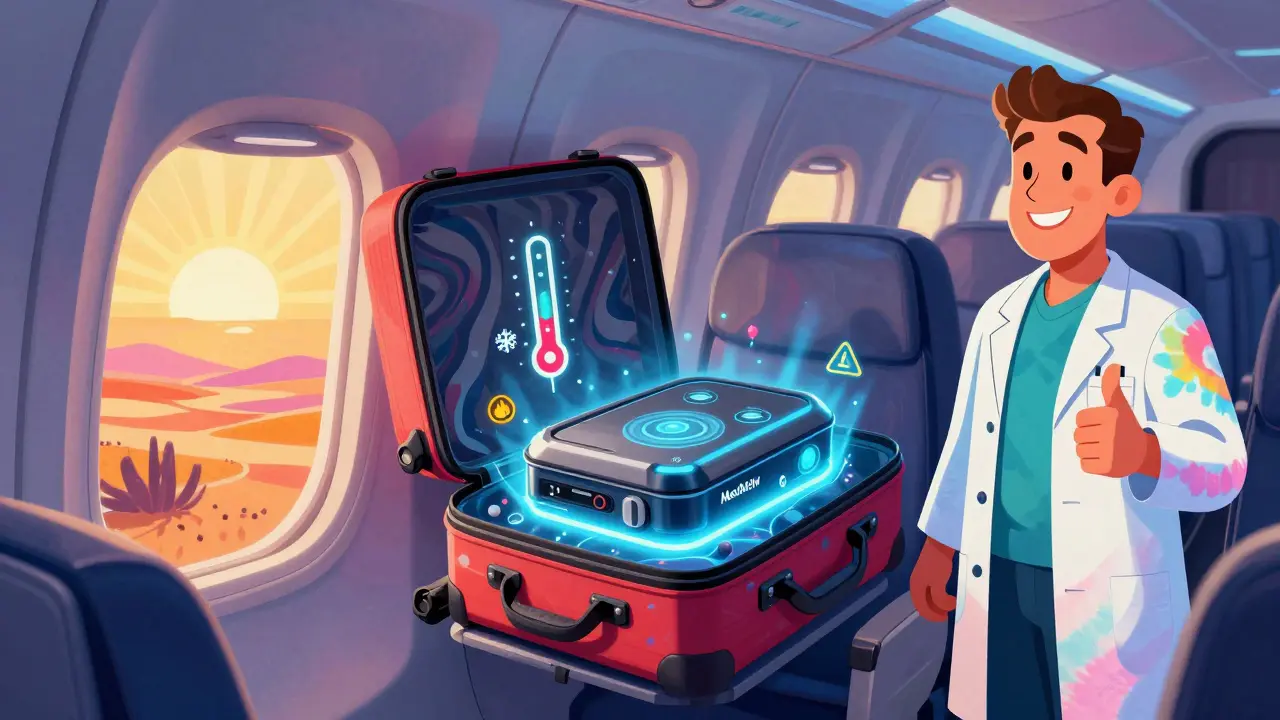
You don’t need to guess. There are proven, affordable tools that work-even in 100°F heat.- Insulated medication bags with phase-change material: These aren’t just regular coolers. Products like the MedActiv Travel Case (a temperature-stable insulated bag with gel packs that maintain 59°F-77°F for up to 72 hours) cost around $35 and are used by nurses and travelers worldwide. They don’t freeze your meds-they keep them cool without ice.
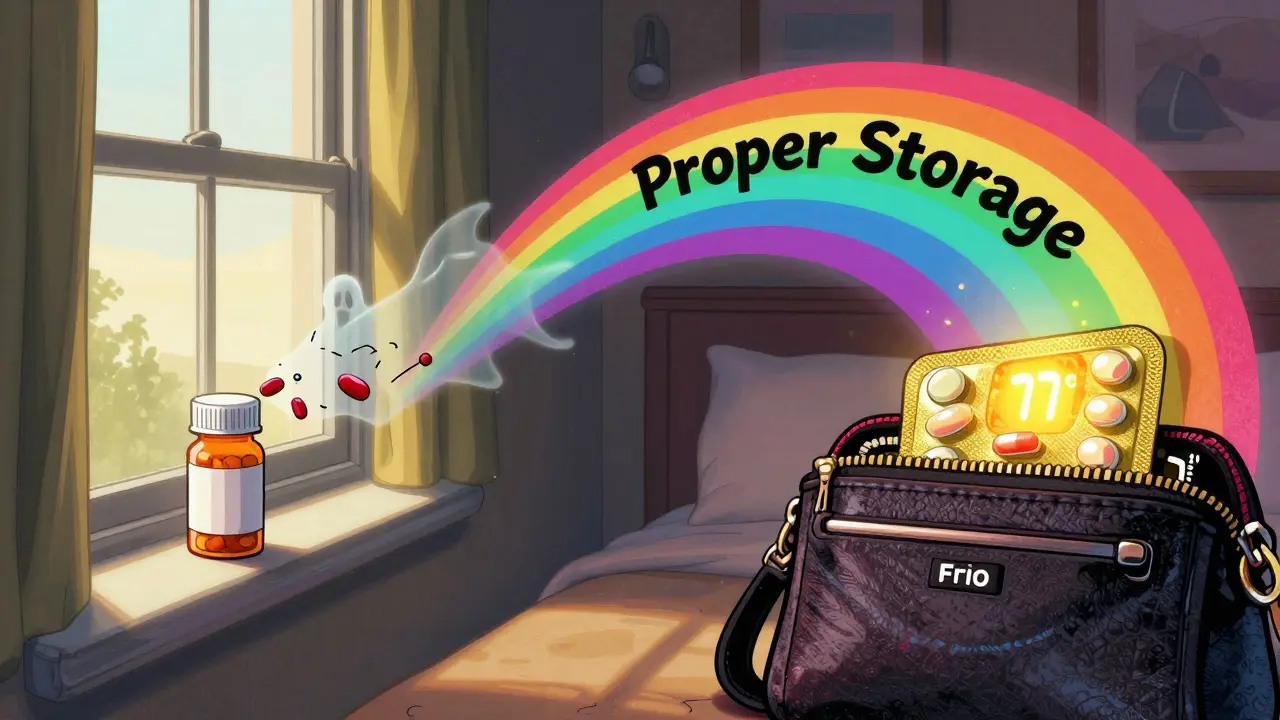
- Frio Insulated Wallet: Popular among diabetics, this reusable gel pack pouch keeps insulin below 77°F for up to 48 hours in 100°F heat. It’s lightweight, fits in a purse, and doesn’t need refrigeration before use.
- Pharmaceutical-grade coolers: The MyMediCarrier (a smart cooler that uses ice bricks to maintain 36°F-46°F for 72 hours) is ideal for insulin, chemotherapy drugs, or vaccines. One user in Arizona confirmed it kept insulin at exactly 42°F during a 102°F road trip.
- Smart temperature monitors: The TempSure Medication Cooler (a Bluetooth-enabled cooler with real-time temp tracking) costs $130 but gives you peace of mind. It sends alerts to your phone if your meds go out of range. The TempTraq Medication Monitor (a small sensor that sticks to your pill bottle and logs temperature via app) is $50 and works with any container.
Don’t rely on regular coolers. Standard coolers without insulation or monitoring can swing 22°F above or below target. That’s a recipe for degradation. Also, never put ice directly on pills or liquids-it can cause freezing damage or condensation that ruins labels.
How to Pack Like a Pro
Follow this simple routine before every trip:- Check your meds. Look for storage instructions on the label. If it says "refrigerate," assume it’s heat-sensitive.
- Use original containers. TSA requires this for air travel. Pharmacy labels prove what you’re carrying.
- Wrap cold packs in a towel. Never let ice or gel packs touch your medication directly. Use a barrier to avoid freezing or moisture.
- Place meds in your insulated bag. Add the cold pack. Seal it.
- Carry it with you. Never check it in luggage. Airplane cargo holds can drop below 20°F-freezing can destroy some meds too.
- Bring a thermometer. The American Society of Health-System Pharmacists now recommends all travelers carry a small digital thermometer. Check your bag’s internal temp every few hours.
Pro tip: If you’re on a long road trip, park in the shade. Open the car door and use a portable fan pointed at your bag. Tests by Senior Helpers show this can lower internal temps by 12-15°F.
Air Travel: What Airlines Won’t Tell You
Your carry-on is your best friend. Checked baggage goes into a cargo hold that can drop to 20°F or rise to 120°F. That’s a death sentence for insulin and EpiPens.Here’s what you need to do:
- Keep all meds in your carry-on. Always.
- Declare them at security. TSA allows unlimited quantities of medication, but they must be labeled.
- Don’t remove pills from original bottles. This avoids delays and suspicion.
- Use a small insulated bag inside your carry-on. Don’t just toss your insulin in your purse.
- If you’re flying more than 5 hours with refrigerated meds, use a pharmaceutical-grade cooler. Standard coolers fail 47% more often on long flights, according to the American Journal of Health-System Pharmacy.
There’s good news: IATA plans to install temperature-controlled compartments for medications in aircraft cabins by Q3 2024. But until then, you’re responsible.
What Doesn’t Work
Avoid these common mistakes:- Leaving meds in the glove compartment: It’s one of the hottest spots in the car. Studies show it hits 140°F within 30 minutes.
- Using a regular cooler without insulation: Ice melts fast. Temperature swings are wild.
- Storing in a hotel room near the window: Sunlight through glass can raise temps 20°F above room temperature.
- Assuming "room temperature" means your hotel AC: If it’s 80°F inside, it’s too hot for most meds.
- Waiting until you feel sick to check your meds: Degradation is invisible. By the time you notice, it’s too late.
What to Do If Your Meds Got Too Hot
If you suspect your meds were exposed to extreme heat:- Stop using them immediately.
- Check for visible changes: cloudiness, discoloration, strange odor, or pills that crumble.
- Call your pharmacist. They can tell you if the drug is still safe based on exposure time and temperature.
- Don’t guess. If you’re on insulin, anticoagulants, or seizure meds, the risk isn’t worth it.
- Replace them as soon as possible. Many travel insurance policies now cover replacement due to heat damage.
Allianz Global Assistance reported a 37% spike in medication replacement claims from 2021 to 2022. That’s not a small number-it’s a trend. And it’s growing.
The Bigger Picture
This isn’t just about your next vacation. The World Health Organization predicts medication storage challenges will rise 15-20% each year due to global warming. More people are on long-term meds. More trips are happening in hotter places. The FDA is already investigating heat-related drug failures, and new labeling standards are coming in early 2024-color-coded heat indicators on bottles.Right now, 68% of Medicare patients get storage instructions with their prescriptions. That’s up from 42% in 2020. The message is clear: this is now part of standard medical care. Ignoring it isn’t negligence-it’s dangerous.
Your meds aren’t just pills in a bottle. They’re your health, your safety, your life. Treat them like it.
Can I leave my pills in the car for a few minutes?
No. Even 10 minutes in a parked car on a 90°F day can push the interior to 120°F. Insulin, EpiPens, and birth control can degrade in under 30 minutes. Always carry them with you.
Do I need a cooler for all my medications?
Only for heat-sensitive ones: insulin, EpiPens, hormones, thyroid meds, inhalers, and some antibiotics. For regular pills like ibuprofen or allergy meds, a shaded bag is usually fine. But if you’re unsure, assume it needs cooling.
Can I use regular ice packs from the grocery store?
Only if you wrap them in a towel and don’t let them touch the meds. Direct contact can freeze liquids or cause condensation. Better yet, use phase-change packs designed for meds-they stay in the safe range without freezing.
What if I’m flying and my meds need refrigeration?
Use a pharmaceutical-grade cooler like the MyMediCarrier. Keep it in your carry-on. Never check it. Airlines don’t guarantee temperature control in cargo. Some travelers bring a small cooler with frozen gel packs and ask flight attendants to store it in the galley fridge-but don’t rely on it.
How do I know if my medication is still good after heat exposure?
You can’t tell by looking. Insulin might look normal but be ineffective. Call your pharmacist. They can tell you if the drug has a known heat tolerance. If you’re on a critical medication, replace it. Don’t risk it.
Are there any new tools coming for travelers?
Yes. The FDA is rolling out color-coded heat indicators on medication labels in early 2024. IATA will install temperature-controlled compartments in planes by late 2024. Smart monitors like TempTraq are already growing fast-sales jumped 220% in Q2 2023. The tools are getting better. But right now, you still need to be proactive.
Final Checklist Before You Leave
- ☑ All meds in original containers with labels
- ☑ Heat-sensitive meds in insulated cooler or bag
- ☑ Cold packs wrapped in towel, not touching meds
- ☑ Cooler in carry-on, never checked luggage
- ☑ Portable thermometer included
- ☑ Contact info for your pharmacist saved on phone
- ☑ Travel insurance covers medication replacement
Traveling in the heat doesn’t mean you have to give up your health. Just plan ahead. Your body will thank you.
Releted Post

Andy Dargon
Hi, I'm Aiden Lockhart, a pharmaceutical expert with a passion for writing about medications and diseases. With years of experience in the pharmaceutical industry, I enjoy sharing my knowledge with others to help them make informed decisions about their health. I love researching new developments in medication and staying up-to-date with the latest advancements in disease treatment. As a writer, I strive to provide accurate, comprehensive information to my readers and contribute to raising awareness about various health conditions.
Wait so you're telling me the government is letting Big Pharma poison us by not warning people about this? I saw a video on TruthFeed where a guy tested his insulin in a car and it turned into jelly. They're hiding this because they want us to buy new ones every month. 🤔
While the intent of this article is commendable, the prose suffers from a conspicuous lack of scholarly rigor. The citation of Reddit anecdotes as empirical evidence is not merely unorthodox-it is epistemologically indefensible. Furthermore, the assertion that ‘your birth control might not prevent pregnancy’ constitutes a non sequitur absent controlled clinical data. One must question the editorial standards of this platform.
They dont want you to know this but the FDA is in cahoots with the drug companies to make you buy new meds all the time. They know heat ruins them so they dont put big warnings on the bottle. I heard a guy on Alex Jones who said the same thing about vaccines. This is why I only take herbs now. 🇺🇸
Why are people so lazy they cant just keep their pills in their pocket? I left my Advil in the car for a week and I was fine. Everyone’s acting like this is a medical emergency. Chill out. Your meds are fine. Stop overreacting
OMG this is so important!!! I just had a panic attack thinking about my birth control in the glovebox last week 😭 I bought the Frio wallet and it’s a GAME CHANGER. Like literally saved my life. 🙌💖
Okay but have you even thought about how the sun’s UV rays are actually breaking down the molecular structure of your meds? I read this one article that said it’s not just heat-it’s the light! That’s why you need those silver-lined bags, not just any cooler. And don’t even get me started on airport scanners-they’re basically X-raying your hormones into oblivion. I keep mine in a lead-lined pouch wrapped in aluminum foil. No one else is doing this but I’m the only one who’s not sick.
Let me tell you something real-this isn’t just about travel, this is about survival. I’ve been a diabetic for 22 years and I’ve seen people end up in the ER because they thought ‘it’s just a car ride’-it’s not. I’ve done this in 115°F heat in Arizona with nothing but a Frio wallet and a towel. You don’t need fancy gadgets. You need discipline. Pack smart. Keep it on you. Check the temp. If you’re not doing that, you’re playing Russian roulette with your body. This isn’t advice-it’s a lifeline. Don’t be the person who says ‘I didn’t know’ when it’s too late. Your life isn’t a gamble. Be smart. Be prepared. And for God’s sake, stop leaving your meds in the sun.
It is, quite frankly, an affront to medical science that such a critical issue is being addressed with the linguistic equivalent of a TikTok caption. The use of emoticons, colloquialisms, and unsubstantiated anecdotal evidence undermines the gravitas of pharmaceutical integrity. One would hope that public health discourse would be elevated above the level of a grocery store pamphlet. The FDA’s forthcoming color-coded labels are a step in the right direction, albeit tragically delayed.
Man, I just got back from a 3-week road trip through the Sahara-well, the Sahara of Arizona anyway-and I’m telling you, this is the real deal. I used a MyMediCarrier with a thermometer that pinged me every hour on my phone. Saw the temp hit 98°F inside the bag? I swapped the pack. Took a nap in the shade with my meds on my chest. I’m not a doctor, but I’ve lived with asthma since I was five and I’ve seen too many people get lazy and pay the price. You know what’s wild? People will spend $200 on a fancy cooler for their beer but won’t spend $40 to keep their life-saving meds from turning to mush. It’s like treating your heart like it’s just another thing you can leave on the dashboard. Don’t be that guy. Be the guy who shows up alive.