
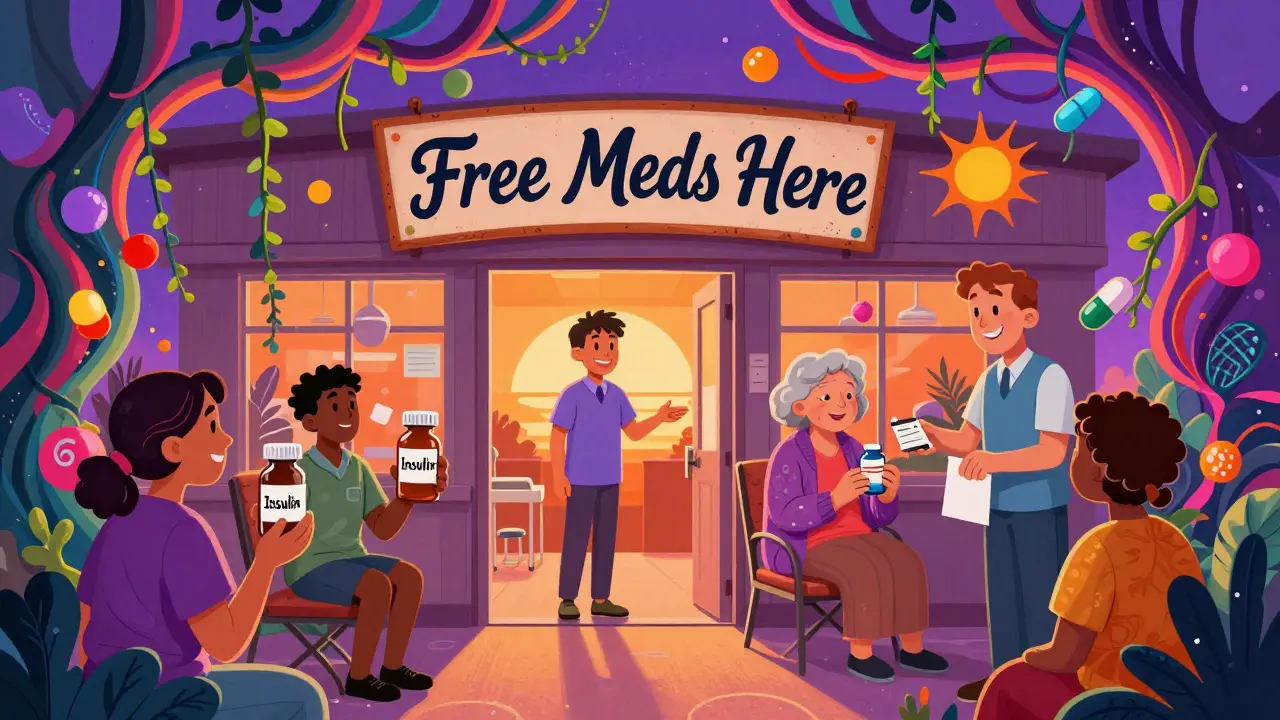
When you need medicine for diabetes, high blood pressure, or asthma-but can’t afford it-you’re not alone. Over 30 million Americans don’t have health insurance, and many more are underinsured, stuck paying hundreds each month just to keep their conditions stable. The good news? You don’t have to choose between paying rent and filling your prescription. Free and low-cost community clinics across the country are stepping in to help, offering medications at no cost or a fraction of the price. But knowing where to look makes all the difference.
What Kind of Clinics Offer Free or Low-Cost Medications?
Not all clinics are the same. There are three main types that provide medication help, each with different rules and benefits.Federally Qualified Health Centers (FQHCs) are government-funded clinics that serve everyone, regardless of income or insurance. They charge on a sliding scale based on your family size and income. If you earn less than $29,160 as a single person in 2023, your visit and medications could cost as little as $20. These clinics often have in-house pharmacies or work directly with local pharmacies to fill prescriptions at reduced prices. You can find them using the HRSA Find a Health Center tool.
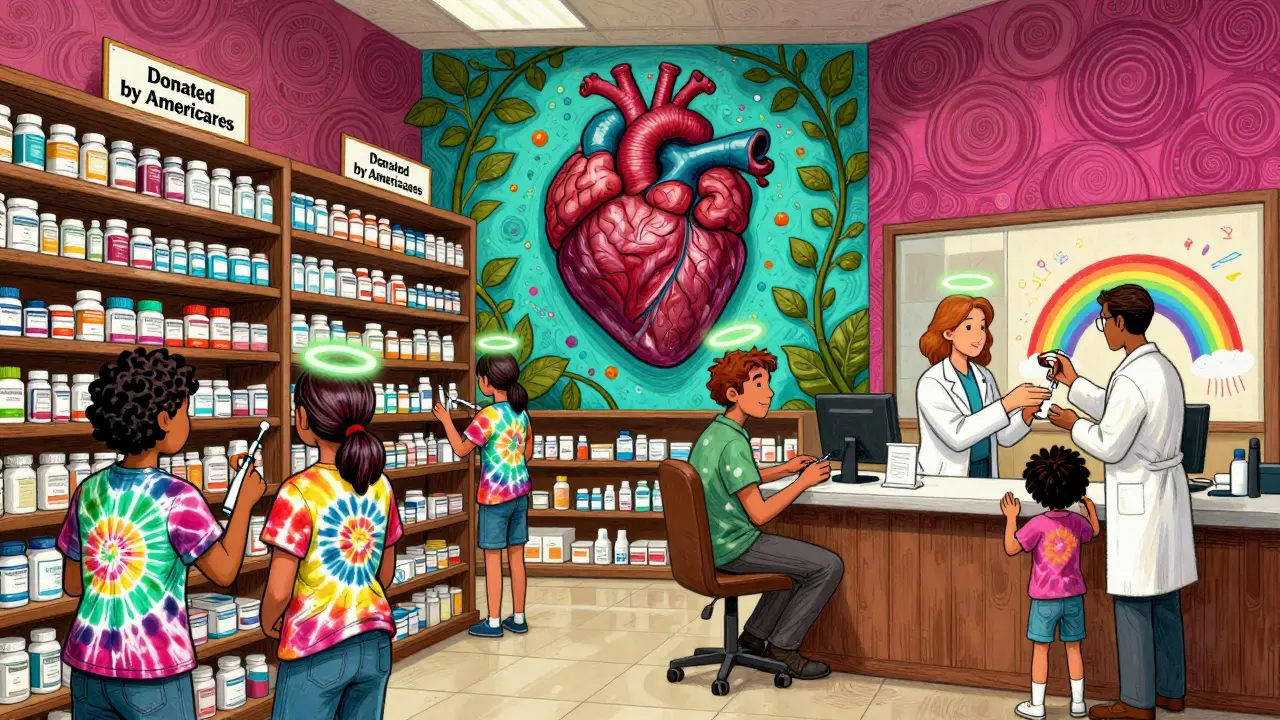
Free and Charitable Clinics are usually nonprofit, volunteer-run, and serve only people without insurance. Most require you to earn less than 200% of the federal poverty level. The key difference? Medications are often completely free. These clinics rely on donated drugs from pharmaceutical companies and nonprofits like Americares. They don’t bill insurance because they don’t accept it. The National Association of Free & Charitable Clinics has a directory listing over 1,000 of these clinics nationwide.
Specialized Medication Programs target specific conditions. For example, the Community Routes: Access to Mental Health Care program, a partnership between Direct Relief, NAFC, and Teva Pharmaceuticals, gives free anxiety and depression meds to clinics in California, Florida, and New Jersey. Similar programs exist for diabetes and heart disease. These aren’t clinics themselves-they’re partnerships that supply drugs to existing clinics.
How Do These Clinics Get the Medications?
You might wonder: where do these free drugs come from? The answer is mostly donations.Pharmaceutical companies have patient assistance programs that give away brand-name and generic medicines to people who can’t afford them. Americares, one of the largest nonprofit distributors, gave out $190 million in medications in 2023 alone. They work with nearly 1,000 clinics, delivering drugs directly to their shelves. Other groups like Direct Relief and the AMA Foundation also help supply clinics with essential meds.
Most of these medications are for chronic conditions-things you need every day. Diabetes insulin, blood pressure pills, asthma inhalers, and antidepressants make up the bulk of what’s distributed. You won’t typically find antibiotics or short-term meds like painkillers for free, because these programs focus on long-term care.
Some clinics even have their own small pharmacies. The Free Clinic of Powhatan in Virginia, for example, keeps a stock of hypertension, diabetes, and asthma medications on-site. Patients walk out with their prescriptions filled-no pharmacy trip needed.
Who Qualifies for Free Medications?
Eligibility is usually based on three things: income, insurance status, and residency.Most clinics require you to earn less than 200% of the federal poverty level. For a single person in 2023, that’s $29,160 a year. For a family of four, it’s about $59,400. You’ll need to prove your income-bring recent pay stubs, tax returns, or a letter from your employer. If you’re unemployed, unemployment documents or a signed statement will work.
You must also be uninsured or underinsured. That means you either have no coverage, or your plan has such high deductibles and copays that you can’t afford to use it. Many people who work full-time but don’t get health benefits through their job fall into this category.
Finally, most clinics serve only people who live in their service area. A clinic in Richmond won’t help someone from Norfolk unless they’re part of a regional network. Check the clinic’s website or call ahead to confirm their catchment zone.
How to Find a Clinic Near You
Finding help starts with two key tools.First, use the HRSA Find a Health Center tool to locate FQHCs. These centers are more likely to have regular hours, full-time staff, and consistent medication availability.
Second, go to the National Association of Free & Charitable Clinics website. Click on your state to see a list of local free clinics. Some states, like Virginia, have their own directories too-like vafreeclinics.org. These sites list what each clinic offers, including whether they have an in-house pharmacy or just help you apply for drug programs.
Don’t skip calling ahead. Many free clinics operate only one or two evenings a week. The HOPES Free Clinic in Virginia, for example, sees patients only on Tuesday and Thursday nights. Wait times for new patients can be 4 to 6 weeks. If you need medication right away, ask if they have emergency supplies or can connect you with a local pharmacy that offers discount programs.
What to Bring to Your First Visit
When you walk in, be prepared. Bring:- Proof of income (pay stubs, tax return, or benefit letter)
- Proof of residency (utility bill, lease, or ID with your address)
- Photo ID
- Current medication bottles or a list of what you take (name, dose, frequency)
- Any recent lab results or doctor notes (if you have them)
Even if you don’t have all the paperwork, go anyway. Many clinics will help you fill out forms on-site. They’ve seen this before. The goal is to get you the meds you need, not to turn you away for missing a document.
What If You Need Mental Health Meds?
Mental health medications are often the hardest to access. Many clinics don’t stock antidepressants or anti-anxiety drugs because they’re expensive and in high demand.But that’s changing. The Community Routes program, launched in early 2023, expanded to seven new states, giving clinics in California, Florida, New Jersey, and others $75,000 grants specifically to stock mental health meds. If you’re in one of those states, ask your clinic if they participate. Even if they don’t, they can still help you apply for patient assistance programs from drugmakers like Teva, Eli Lilly, or Pfizer, which offer free or low-cost psychiatric medications.
Don’t assume you’re out of luck. Mental health is now a top priority for many free clinics. The NAFC reports that 68% of clinics now offer some form of mental health medication support-up from just 45% five years ago.
What You Can’t Expect
It’s important to know the limits. Free clinics aren’t pharmacies. They won’t give you:- Brand-name drugs if a generic is available
- Medications for short-term issues like infections or injuries
- Controlled substances like opioids or ADHD stimulants (these are tightly restricted)
- Over-the-counter meds like ibuprofen or allergy pills (though some clinics give out basic pain relievers)
They also can’t refill prescriptions from outside doctors unless you’re a registered patient. If you’ve been seeing a specialist outside the clinic, you’ll need to transfer care or get a referral.
What’s Next? How to Stay on Track
Once you get your meds, stay connected. Many clinics offer follow-up visits, medication reviews, and even free blood pressure or glucose checks. Use these. They help you stay healthy and avoid costly hospital visits down the line.If you get a job with insurance later, let the clinic know. They’ll help you transition your prescriptions to your new plan. Many have case managers who specialize in navigating insurance paperwork.
And if you know someone else struggling with medication costs, point them here. These clinics rely on word-of-mouth. More people showing up means more funding, more donations, and better services for everyone.
Why This Matters
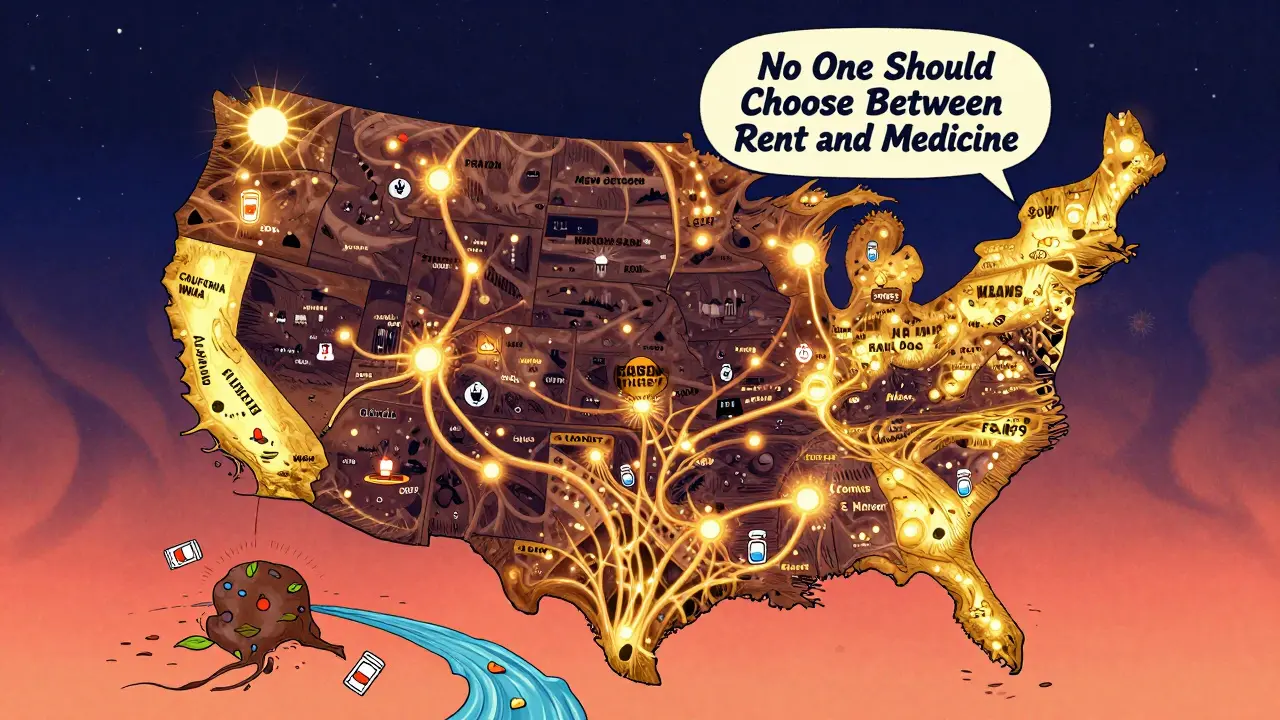
People aren’t just skipping pills because they’re forgetful. They’re choosing between food, rent, and their medicine. Americares says it plainly: “No one should have to choose between paying their bills and buying their medications.”Community clinics are filling a gap that insurance and big pharma won’t. They’re staffed by volunteers, funded by donations, and driven by one simple belief: health care is a right, not a privilege.
You don’t need to be homeless or jobless to qualify. You just need to be struggling. And you don’t have to suffer in silence. There’s help nearby. You just have to ask.
Can I get free medications if I have a job?
Yes. Many people who work full-time still don’t get health insurance through their employer. If your income is below 200% of the federal poverty level ($29,160 for one person in 2023), you qualify for free or low-cost medications at community clinics-even if you’re employed.
Do I need to be a U.S. citizen to get free meds?
No. Most free clinics serve anyone living in their service area, regardless of immigration status. Proof of residency-like a utility bill or lease-is usually enough. Some clinics may ask for an ID, but they won’t report your status to immigration.
How long does it take to get medications after my first visit?
It varies. Some clinics have an on-site pharmacy and can give you your meds the same day. Others need to order from a donor program like Americares, which can take 1-3 weeks. Ask at your appointment if they have emergency supplies available while you wait.
Can I get free insulin?
Yes. Insulin is one of the most commonly distributed medications through free clinic programs. Americares and other donors supply both brand-name and generic insulin. Many clinics now keep it in stock for patients with diabetes.
What if my clinic doesn’t have the medicine I need?
They’ll help you apply for a patient assistance program directly from the drug manufacturer. Most major pharmaceutical companies have programs that give free or low-cost meds to low-income patients. Clinic staff often help fill out the paperwork-you don’t have to do it alone.
Are there clinics that help with mental health meds?
Yes. Programs like Community Routes, funded by Teva and Direct Relief, are expanding access to anxiety and depression medications in 7 states. Even if your clinic isn’t part of that program, many now offer antidepressants and anti-anxiety drugs through donation programs. Always ask.
What to Do If You’re Still Struggling
If you’ve tried the clinics and still can’t get your meds, here’s what else you can try:- Check RxAssist.org-a free database of drug manufacturer assistance programs
- Call the Partnership for Prescription Assistance at 1-888-477-2669
- Ask your doctor if there’s a cheaper generic alternative
- Look into 340B pharmacies-these are pharmacies attached to hospitals that sell drugs at deep discounts to eligible patients
There’s no shame in asking for help. The system is broken in places, but there are people working to fix it-one prescription at a time.
Releted Post

Andy Dargon
Hi, I'm Aiden Lockhart, a pharmaceutical expert with a passion for writing about medications and diseases. With years of experience in the pharmaceutical industry, I enjoy sharing my knowledge with others to help them make informed decisions about their health. I love researching new developments in medication and staying up-to-date with the latest advancements in disease treatment. As a writer, I strive to provide accurate, comprehensive information to my readers and contribute to raising awareness about various health conditions.
Just went to my local FQHC last week for my blood pressure meds. Paid $12. Felt like I won the lottery. Seriously, if you’re struggling, just go. No judgment. They’ve seen it all. 🙏
It is imperative to note that the systemic reliance upon charitable pharmaceutical distribution represents a profound failure of public policy. One cannot morally justify the commodification of human health under the auspices of philanthropy when universal access ought to be a constitutional imperative.
Wait… so you’re telling me Big Pharma donates meds ‘for free’? 🤔 That’s a total scam. They just do it to avoid lawsuits and get tax write-offs. And don’t get me started on HRSA-this is all a psyop to make you think the system works. They’re keeping you dependent. The real solution? Just print the money and give everyone insulin. They’re not gonna stop you. 💸💊
Okay but… how many times do we have to read this? Like… I get it. Clinics exist. But like… do they actually have the meds when you show up? Or is this just another ‘hope you get lucky’ post? 🤷♀️. I went last year. They had… three kinds of pills. That’s it. And I had to wait 45 minutes. For a piece of paper that says ‘apply here.’
This made me cry. Not because I’m sad-because I’m so damn grateful people are doing this. My aunt got her insulin through a free clinic in Texas. She’s still here because of them. Thank you for sharing this. 💕
I’ve volunteered at a free clinic for three years now. The staff is incredible-mostly nurses and retired doctors who show up on their days off. The patients? Mostly just tired people trying to do the right thing. If you’re reading this and you’re scared to go? Just go. They’ll help you. No questions asked.
It’s irresponsible to encourage people to rely on charity instead of demanding systemic reform. This isn’t a Band-Aid-it’s a symptom of a broken system. And we’re all complicit by accepting it as normal.
Why don’t they just make the meds cheaper? Why do we have to beg for pills? I’m tired of this. I work 40 hours a week and still can’t afford my asthma inhaler. And now I’m supposed to go to some ‘clinic’ and wait weeks? That’s not help. That’s humiliation.
Just a quick note-many clinics in rural areas struggle with supply chains, and even if they’re listed on the NAFC site, they might only have meds once a month. Also, please double-check the spelling of ‘HRSA’ in your links-it’s easy to mistype and end up on a scam site. I’ve seen it happen. And if you’re undocumented, know that most clinics are safe zones. They’re not ICE. You’re safe there. 🙏
Real talk: I was skeptical until I needed insulin. My clinic didn’t have it in stock, but they sat with me for an hour and helped me fill out the Teva application. Got it in 10 days. No one handed me a magic pill-but they handed me dignity. That’s what matters. If you’re reading this and you’re scared? You’re not alone. And you’re not broken. You’re just stuck in a system that forgot how to care. Go. Ask. They’re waiting.
So… let me get this straight. You’re telling me that if I’m broke, I get free meds… but if I make $30k, I’m SOL? And the ‘free’ clinics are basically just glorified pharmacies with a 6-week waitlist? And they don’t even carry Adderall? LMAO. This is the American dream. 🤡